When the weight of the patch feels heavier than usual
There are days in this profession when the patch feels light.
Those are the days we remember when we are young. The first save. The first fire. The first promotion. The first time a citizen shakes your hand and thanks you for what you do. They are the moments that end up in department newsletters, recruiting brochures, and retirement speeches. They remind us why we wanted this job in the first place.
Most of us enter the fire service carrying a fairly simple vision of what lies ahead. We expect long shifts, difficult calls, and the occasional sleepless night. We know there will be fires, car crashes, medical emergencies, and moments that test our training and courage. We accept those realities because they are part of the profession we chose.
What nobody really talks about are the other days. The days when the weight of the patch feels heavier than any turnout gear we have ever worn. The days when the most difficult challenge has nothing to do with a fire scene, a mass casualty incident, or a difficult rescue. The days when the heaviest burden is not carried on our backs but in our minds.
The Weight Nobody Sees
After nearly three decades in public service, I have come to understand that some of the hardest moments in a career are not found on emergency scenes at all. Sometimes they occur in offices, conference rooms, hospital waiting rooms, or at kitchen tables at home. Sometimes they come after personal losses, family struggles, health scares, career disappointments, or simply the cumulative effect of years spent carrying responsibilities that few people ever see.
Eventually, every firefighter, paramedic, police officer, dispatcher, and emergency responder reaches a point where they need help. The details may differ, but the reality is universal.
At some point, life catches up to all of us. When that moment arrives, we find out what kind of organization we truly belong to.
We discover whether all the talk about family, brotherhood, wellness, and support is real or simply words printed on a challenge coin or written on a department website. We learn whether our leaders truly value their people or merely value the work those people produce.
When Culture Is Put to the Test
The truth is that some organizations show up. Others do not. I have been fortunate enough throughout my career to witness both.
The departments and agencies that get it right understand something important. They understand that taking care of their people is not a sign of weakness. It is not an inconvenience or a special program reserved for difficult circumstances. It is a responsibility.
Strong organizations recognize that firefighters are not machines. We are not pieces of equipment that can simply be repaired or replaced when something breaks. We are husbands and wives. Mothers and fathers. Sons and daughters. Friends, mentors, caregivers, and human beings who happen to wear a uniform.
Good organizations understand that. Great leaders understand it even sooner.
Leadership Beyond the Emergency Scene
Sometimes support arrives in dramatic ways. A chief officer shows up at a hospital bedside. A department rallying around a member’s family after a tragedy. Crews cover shifts so a coworker can focus on personal matters without worrying about work. Those moments matter.
But in my experience, the support people remember most is often much smaller. A phone call from a captain checking in after a difficult week. A lieutenant is pulling someone aside and asking if everything is OK. A coworker who notices something is off and refuses to ignore it. A chief who remembers that the person wearing the badge matters just as much as the badge itself.
Those moments stay with people for years. Unfortunately, so does the absence of them.
For much of my career, public safety culture rewarded toughness above nearly everything else. We learned to push through exhaustion. Work through pain. Ignore stress. Handle our own problems. Keep moving forward regardless of what is happening around us.
The Limits of Toughness
Some of those traits served us well on emergency scenes. They did not always serve us well in life.
The old model was simple. Show up. Do your job. Keep your mouth shut. Figure it out. And many of us did exactly that, until one day we couldn’t. The problem is that carrying everything alone eventually becomes heavy. Really heavy.
At some point, every responder accumulates enough experiences, responsibilities, disappointments, and losses that the load becomes difficult to manage by themselves. The challenge is many organizations continue to talk about resilience while forgetting a simple truth: resilience requires support.
You cannot tell employees they are your greatest asset while treating them as though they are easily replaceable.
Resilience Requires More Than Words
You cannot preach wellness while creating environments where asking for help feels dangerous.
You cannot call people family only when things are going well. Family is tested when things are not going well. That is when it matters.
Over the years, I have watched organizations move mountains for their people. I have seen chiefs advocate for employees behind closed doors. I have watched supervisors protect their crews during difficult times. I have seen coworkers show up at hospital bedsides, funerals, and family events without being asked. Those moments reveal the true character of an organization.
I have also watched dedicated employees navigate difficult situations alone. I have seen good people feel forgotten after years of loyal service. I have witnessed responders who spent entire careers helping others discover that help was difficult to find when they needed it themselves. The disappointment comes when the support system we believed existed proves weaker than we thought. That realization can be painful.
Actions Define Culture
One of the most valuable lessons I have learned is that organizational culture is not defined by mission statements or slogans. It is not created by banners hanging in training rooms or speeches given at promotional ceremonies.
Culture is defined by behavior: how leaders treat people when nobody is watching, how crews respond when one of their own is struggling, and whether support is available before someone reaches a breaking point.
Culture is not what we say. Culture is what we do.
The best organizations understand that investing in people is not separate from the mission. It is the mission.
People Carry the Mission
Every apparatus, ambulance, command vehicle, disaster team, and emergency operation ultimately depends on people. Equipment matters. Training matters. Technology matters. But people matter most. And people carry weight. Some of it comes from difficult calls, life outside the station, or from the profession itself.
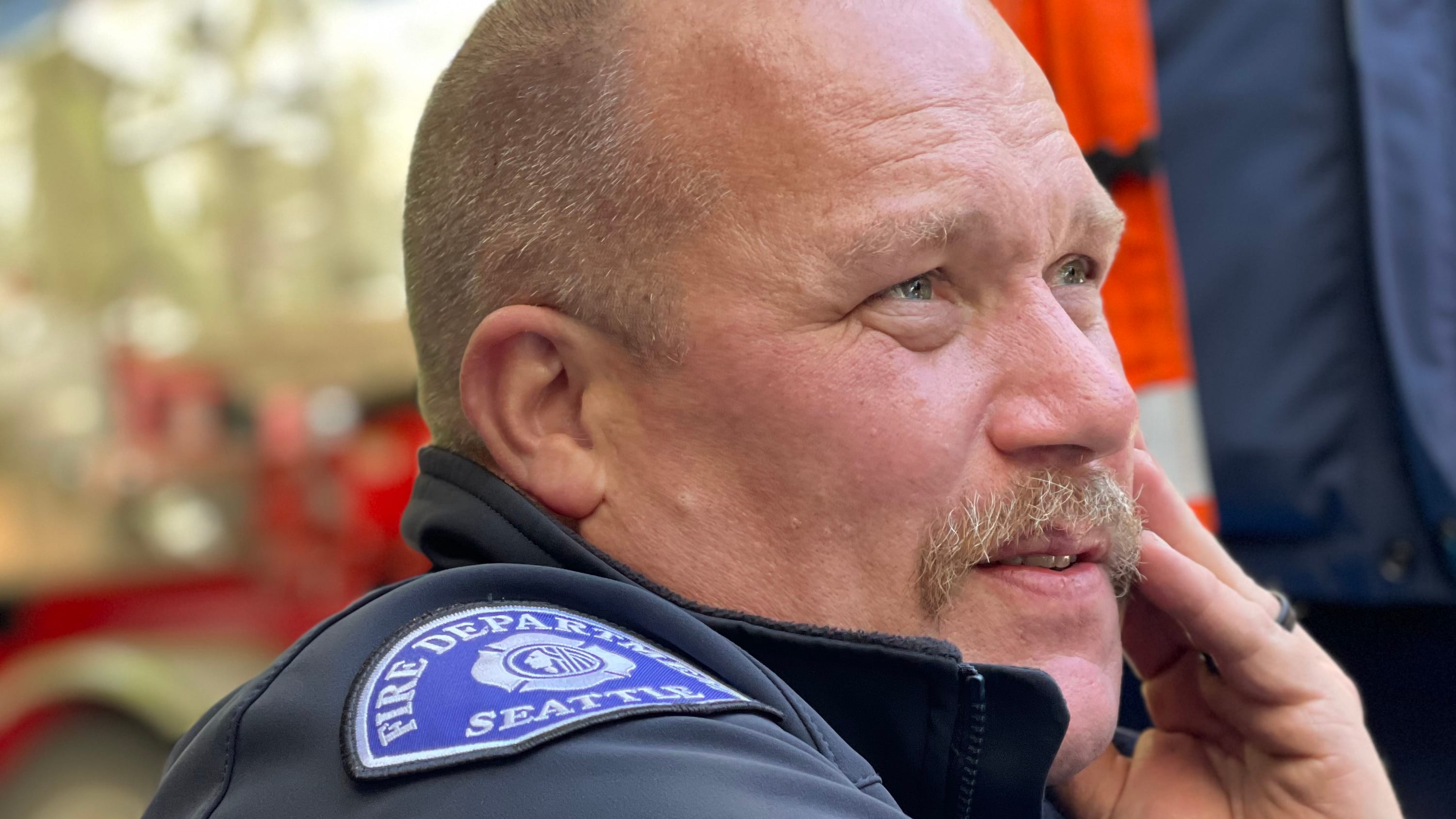
The patch represents many things. Pride. Service. Tradition. Responsibility. Sacrifice. Commitment. But if we are being honest, it also represents a burden. Anyone who has worn it long enough understands exactly what I mean.
There are days when the patch feels heavier than usual—when family struggles collide with work responsibilities, confidence is tested, health becomes a concern, losses begin to outnumber victories, and you wonder whether anyone notices how much you are carrying.
Most responders keep moving. That is what we do. We show up. We answer the call. We take care of the people who depend on us. But moving forward becomes easier when you know someone has your back.
No One Was Meant to Carry It Alone
The older I get, the more I appreciate the leaders who understood that truth. The captains who checked in. The chiefs who cared. The coworkers who called. The organizations that live their values rather than simply talk about them.
Those are the places people remember, and the leaders people follow. Those are the cultures worth building.
Nobody told me there would be days like these. Nobody explained that some of the hardest battles would occur far away from emergency scenes.
Nobody warned me that leadership, loyalty, compassion, and support would eventually matter just as much as technical skills and operational experience.
But after all these years, perhaps that is one of the most important lessons this profession has taught me.
The weight of the patch was never meant to be carried alone. And the organizations that understand that truth will always be stronger because of it.
Photo by Steve Baer | FireDog Photos