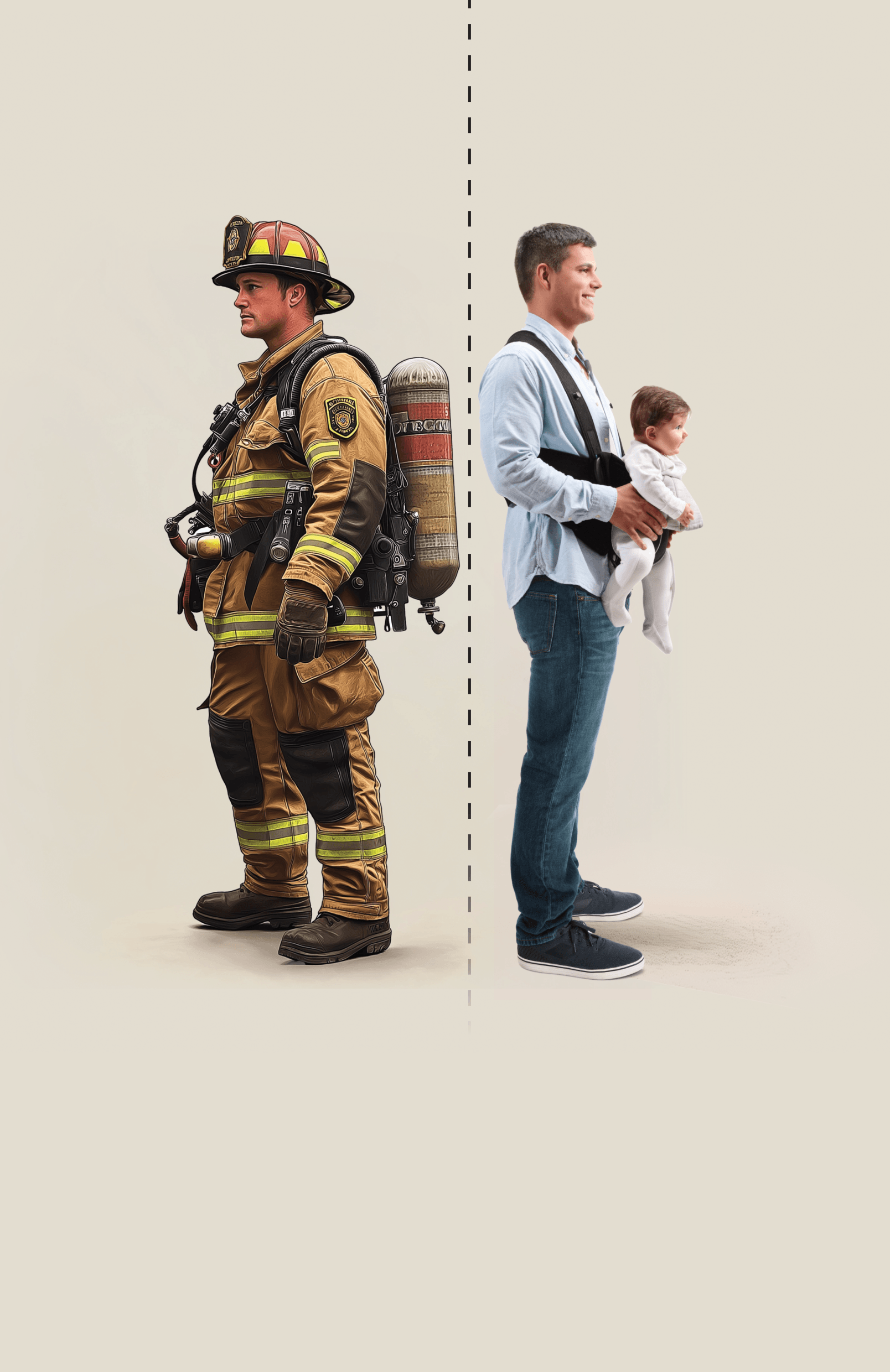
We had the kind of love and marriage that people hope for. There was this energetic and soulful dynamic between us that just made everything work. Both of us had been married before and knew we needed something different. Something deeper. As a firefighter, Ron had this masculine and protective energy that pulled me in. I was tired. Between raising kids and working full time as a teacher, I was burned out. Ron took initiative in everything and was a fantastic decision-maker. As a teacher and mom, I often found myself in decision fatigue. Together we had four kids, and everything seemed to just flow.
Ron prided himself on making me feel loved and seen. He cooked every night, as it was one of his favorite things to do. He once said that cooking was an act of love and he enjoyed giving that to other family members and me. He also took me all over Vancouver, B.C., where he grew up. This was the city where he eventually became a firefighter and then a fire captain so he could serve the city that raised him. Even though I grew up in the suburbs of Vancouver, I didn’t often go into the city. I enjoyed seeing the houses he grew up in and experiencing all the restaurants, beaches, and some firehalls.
What did I bring to the relationship? Ron talked about my “essence,” which brought him a sense of calm. He said he appreciated the wisdom and information I shared with him over many years of teaching and life. He once told me, with tears in his eyes, that I taught him so much. I loved that Ron could be vulnerable. Ron and many other firefighters are sensitive and compassionate people. They may not show it in the halls, but they will often take their armor off at home.
A Love Worth Protecting
We were determined to build a strong foundation together. Ron and I co-created what we wanted our relationship to look and feel like when we first met. We used tools such as “The 5 Love Languages,” and we made up our own tools, such as compiling and then comparing a list of character or personality traits that were important to us. We enjoyed lengthy, deep conversations, some tears of joy together, and lots of laughs. This “honeymoon phase” lasted for seven years. Then something changed.
It didn’t change overnight. It happened so slowly that neither of us could name it.
Looking back, the signs were there. We just didn’t know what they meant.
The Invisible Shift
I knew about PTSD. In fact, I had trauma-informed practice in-services as a teacher and even had a student whose military dad had PTSD.
But he was a veteran. No one told me how prevalent it is in the fire service.
Many firefighters don’t realize they might have PTSD until they get to a breaking point. The symptoms can vary from person to person, depending on childhood experiences and past traumas. They might think:
- I’m exhausted
- I’m burned out
- I’m angry
- My wife doesn’t understand me
- I’m just getting older
- This is what the job does
Their spouses think:
- He’s stressed
- It’s the shift work
- He’s carrying too much (emotionally and physically)
- It’s just midlife. We all get tired or cranky
- Maybe I’ve done something wrong
I am familiar with all of this because this is how we interpreted the changes. The term PTSD only came up once or twice.
I first noticed increasing irritability. Then I noticed he was becoming very picky with things like closing cupboards, putting things in certain spots, and cleaning things “properly.” It was a slow development of one symptom of PTSD. He started subtly blaming or criticizing me for things, which was unlike him. I later realized it was really about his own unhappiness and his deflecting blame. Because PTSD affects the nervous system, it starts to change personality, emotional regulation, sleep, connection, and health.
A Ripple Effect
Unfortunately, because it arrives without warning, you may mistake these things for aging, fatigue, overeating, old injuries, etc. Looking back, I can see signs that were visible while I was living with them, and they also had a profound effect on me. It left me with so much confusion. I knew he loved me deeply, but I couldn’t figure out why he was acting this way. He lost his ability to cherish me because he no longer had the capacity.
Then came the day that Ron was diagnosed with stage 4 gallbladder cancer. While I will never be able to prove that PTSD caused his occupational cancer, science continues to explore the relationship between chronic stress, immune function, and disease. I know that years of unrelenting stress left his body carrying far more than anyone could see.
The cancer journey was the hardest thing either one of us ever endured, but what came out of it was a beautiful return to love. His medical treatment in the last six weeks included ketamine for the extreme pain. Ketamine is a dissociative anesthetic, but it worked like a psychedelic for him. What I believe happened is that the ketamine decreased or even eliminated his PTSD. He was so calm, loving and even happy during this time. He was not “high;” he was at peace. He welcomed many brothers and sisters from the halls, family and friends into his hospice, and they all noticed the same thing. He returned to the man I married, and I could feel his love again. That was the best gift ever for both of us before he passed away.
I write this article to share my experience with other firefighter families in hopes that even if it helps one firefighter recognize PTSD sooner and seek help, it was all worth it. I also stand in solidarity with other firefighter spouses. I know how challenging it can be to hold the line at home and be the one he or she comes home to after the call.