For Firefighters, Food Swamp Life is Treacherous
Subheadline: Even in a land of drive-thrus, awareness and smarter choices will help you outsmart the lure of quick and convenient meals
By: Rick Markley, Executive Editor, CRACKYL Magazine
If your firehouse is in a swamp, there’s a good chance you’ll have poorer health. OK, not a real swamp with snakes, skeeters and gators – if that were the case, you’d have bigger problems.
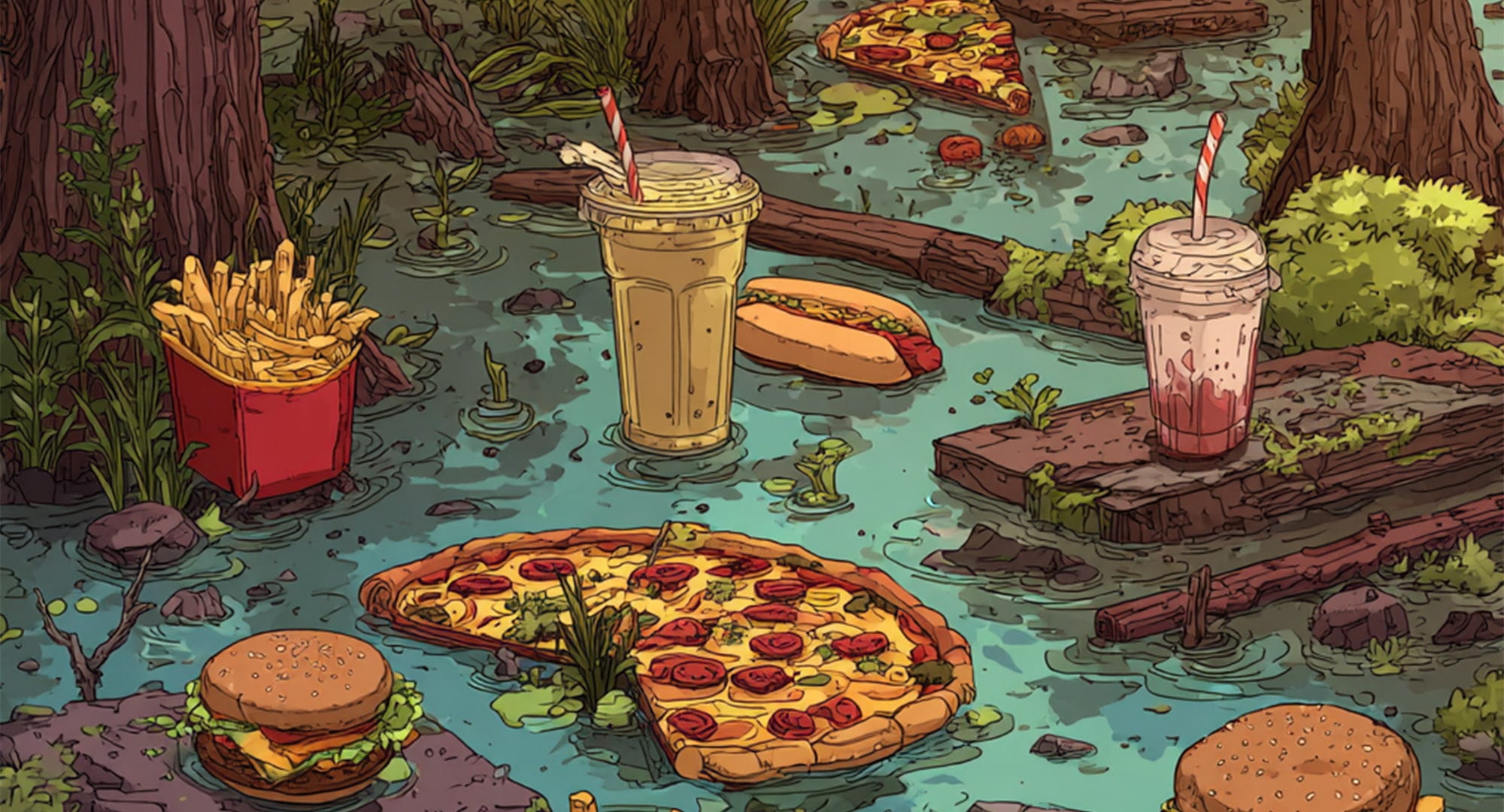
We’re talking about food swamps. Where a food desert is an area with almost no food shopping options, a food swamp is an area rife with fast food joints and other unhealthy food options. The food swamp is kind of the bad alternative to the desert – the evil twin’s evil twin, if you will.
Spend a lot of time in a real swamp, and you run a higher risk of being eaten by what lives in that swamp. Now, research is showing that the more time you spend in or passing through a food swamp, the more likely you are to eat what lives in that swamp. Neither is a good outcome.
A collaborative study from 2024 run by the University of Southern California, the Massachusetts Institute of Technology, and Northeastern University found that people visiting areas with 10% more fast food restaurants were 20% more likely to choose fast food. To learn this, the study looked at a lot of information. Researchers examined mobile phone data – stripped clean of any personal identifiers – for 60 million fast food restaurant visits over six months across 11 cities.
That study also found that no socioeconomic group was more likely than any other to eat at fast food joints. The idea that fast food is associated with any degree of wealth can be safely deemed a farce – the research simply doesn't support it.
“Even when people want to eat healthy, there are too many things in their day-to-day lives and environments that make it hard,” says Kayla de la Haye, founding director of the Institute for Food System Equity at the Center for Economic and Social Research at USC Dornsife College of Letters, Arts and Sciences, in a 2024 article. “Now we’re gaining a more comprehensive understanding of how food environments affect diet beyond the home.”
But, you say, this study looked at only “normal” people; we’re firefighters and far from normal. Even when off-duty career firefighters or volunteers go about their regular business masquerading as “normal people,” we’re not all that normal.
Fortunately, that bit of reality did not slip past fire-service researchers. Three scholars from the University of California Irvine published work in June 2025 that turned their fast-food swamp lens on the fire service. Not surprising, they found a connection between working in the swamp and eating from it.
Those researchers looked at 227 career firefighters from one countywide fire department. All the study participants were male. The youngest was 22, the oldest was 64, and the mean average age was 43. There was a mean average of 10 fast food restaurants within a 3-mile (4.8-kilometer) radius of fire stations; the lowest had 0 and the highest had 27. These researchers acknowledged that the swampiness of where firefighters live will influence their food choices, but they confined this research to the firehouses’ swampiness.
The researchers say that before this work, “no studies to date have examined the influence of the neighborhood fast-food density surrounding firehouses on obesity in firefighters.”
Yes, they not only looked at the relationship between proximity and eating fast food, they looked at the natural outcome – getting fat. We did warn you that living in a swamp could be bad for your health.
As with the 2024 study, the University of California Irvine team also found that location does matter.
“When fast food is readily available near fire stations, it can shape station-level eating habits, fostering a culture of frequent fast-food consumption,” the researchers wrote. “Furthermore, 85% of firefighters report sometimes or always eating out in restaurants or fast-food outlets while on duty, and firefighters report preferring to stop at a fast-food restaurant for a bite or to bring back food to the workplace rather than preparing a meal at the station.”
85% of firefighters report sometimes or always eating out in restaurants or fast-food outlets while on duty
The authors went on to write, “when fast food is readily available near fire stations, it can shape station-level eating habits, fostering a culture of frequent fast-food consumption. This shared environment influences individual firefighters’ dietary patterns, reinforcing unhealthy eating behaviors, such as a higher intake of high-fat, low-nutrient foods and reduced consumption of fruits and vegetables. Over time, these behaviors contribute to an increased risk of obesity.”
None of this comes as a surprise to those working with firefighter nutrition every day.
“The research is still fairly limited, but from what I see day-to-day, fast food is definitely a frequent fallback for firefighters,” says Kim Cairns, a functional nutritionist with HeartFit for Duty. “Convenience, cost, and the ‘drive-thru culture’ around stations all play a role. For example, when I taught at Scottsdale Fire Department last year, the stations closer to urban areas seemed more likely to grab quick coffee or food, while the more remote stations tended to be more intentional with grocery shopping and meal preparation.”
But being in a swamp does not condemn you to a life of eating toads and leeches.
“We’re probably never going to be able to control how many fast food spots pop up near our fire stations, except maybe by not spending money at them,” says Sara Janke. She launched Science to the Station: A Health and Wellness Alliance, which is a platform to bring important firefighter health and wellness science to firefighters. “And we can’t expect department policies to save us. We can’t legislate or policy our way out of the swamp. We have to own it by making good choices and setting good examples.”
Janke and Cairns agreed other factors like job stress and poor sleep can have an outsized influence on what we crave and eat. But there is hope.
“I’ve noticed a shift among younger firefighters, many are becoming more mindful about cooking, hydration, protein intake, and limiting processed foods,” Cairns says. “Leadership plays a big role here: when command staff sets the expectation and supports a culture of healthier eating, that influence trickles down. Something as simple as a captain choosing to cook at the station or keeping healthy snacks visible (nuts, cut-up veggies, etc.) can make a noticeable difference.”
Sometimes, despite best intentions, you cave to the cravings of swamp life. Megan Lautz, a first responder-focused registered dietician who runs RescueRD says, “I have had firefighters lose 20 pounds on healthier fast food choices, which helps meet them where they are at if they don't have time or energy to cook.”
Cairns agrees. “When it’s the only option, I encourage better choices on the go: grilled proteins to stabilize blood sugar and improve satiety, water instead of soda, and swapping fries for a salad or fruit to boost fiber,” she says.
You may not be able to change the swamp, but knowing it is trying to suck you in will help you find solid ground to stand on.