GPSing Life: Remembering Why You Started
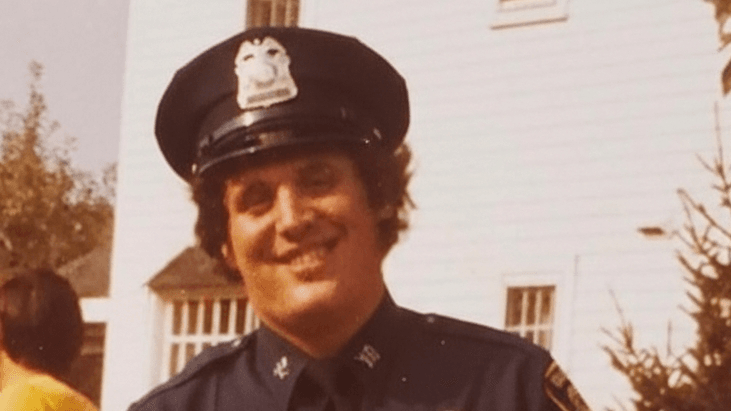
Kevin*’*s Uncle, Rusty Anderson, who lost his leg in an on-duty motorcycle accident not very long after this picture was taken.
Purpose, ambition and the call to serve take root in the early ‘Ambition Season’ of first responders
If there’s one thing I understand about the first responder life, it is this: there are seasons that ebb and flow throughout the career. Much like the seasons we experience in nature — spring, summer, fall, and winter — these phases are part of a cycle, a ritual, a rite of passage. They are a process of learning, growing, and maturing. Through these seasons, we have the opportunity not just to survive the job, but to truly thrive in it.
In the work I do today, I often describe these phases as the Ambition, Family, Recovery, and Legacy seasons**.** Each one carries its own demands, lessons, and transitions. Our responsibility is not to fight the seasons or rush through them, but to recognize them, accept them, and learn how to move through them with intention.
Why Coaching Matters in Navigating These Seasons
One powerful way to do that is through coaching — creating space to pause, reflect, and make sense of the road we’re traveling.
Let’s begin with the Ambition Season.
This is the season of new beginnings. The thrill. The excitement. The moment when a dream becomes a uniform hanging in your locker.
It’s the academy graduation.
The pinning ceremony.
The first time you sign on for shift.
It’s the moment you officially become one of the people who run towarddanger, not away from it.
But what brought you there?
What was the moment — sometimes years earlier — that planted that seed?
Early Experiences That Shape a First Responder
For some, it was an experience as a child. Maybe someone you loved was hurt and you felt powerless to help. Maybe you witnessed something that made you quietly promise yourself, “When I grow up, I’m going to be the one who protects people.”
I know through my own first responder, Kevin, that there can be many reasons.
One of his was a deep feeling that he couldn’t save someone. As a child, he didn’t fully understand what was happening around him — only that someone who should have been safe and trusted was harming someone he cared about. Even as a kid, something inside him knew he wanted to be strong enough someday to stop that kind of harm.
Sometimes the path begins from the opposite direction.
Maybe someone saved you.
Protection Received, Protection Given
Kevin was bullied growing up. At a time when confidence should have been forming, he was being knocked down, pushed around, and picked on. He had big glasses, big ears, and was what many kids cruelly called a nerd.
But in those moments, he had his brother.
While “little brother” was technically the younger one, he was bigger, stronger, and fiercely loyal. When Kevin needed someone, his brother showed up. He stood beside him. Protected him. Even today, that instinct to defend and stand up for him hasn’t faded.
For many first responders, that early experience of protection — either giving it or receiving it — plants something deep inside.
And for others, inspiration comes from admiration.
Maybe it was the firefighter with the big helmet who taught you to stop, drop, and roll.
The uncle police officer who risked life and limb to protect and serve.
The mom in scrubs who never seemed to panic no matter how chaotic the situation became.
Maybe in third grade you already knew.
You were going to be just like them.
The person who protects.
The one who shows up when people are having the worst day of their lives.
The Ambition Season is fueled by pride, purpose, and the powerful belief that you can make a difference. And that belief matters.
But ambition can also move fast. Faster than reflection. Faster than understanding the deeper motivations driving us. The job can quickly become the center of everything — identity, energy, attention.
That’s why one of the most valuable habits a first responder can build early in their career is the habit of checking in with themselves.
Not during a crisis.
Not when things are falling apart.
But regularly, quietly, intentionally.
Coaching helps create that moment.
So here is a simple coaching tool you can use this week.
The 3–Question Ambition Check-In
Take two minutes and ask yourself:
1. What originally drew me to this job?
Think back to the earliest moment you can remember wanting this life.
2. What part of that motivation still drives me today?
Is it helping people? Being part of a team? Making a difference? Pride?
3. What kind of responder — and person — do I want to become during this season?
Not just what you want to do, but who you want to be.
Write your answers down if you can. Even a few words.
Because when ambition is paired with awareness, something powerful happens.
You stop simply reacting to the career.
You start navigating it.
And that navigation is what will eventually help carry you through the next seasons of the first responder life cycle.
Next week, we’ll talk about what often comes next: the Family Season, when the job that once defined everything begins sharing space with the people and responsibilities waiting at home.
Until then, take a moment this week to remember why you started.
Sometimes the strongest compass we have is the one that was set long before our first shift ever began.