
If You Weren’t So Good, I Wouldn’t Have to Be: The Illusion of Alignment
Comparison distorts our sense of progress and blinds us to the work happening beneath the surface
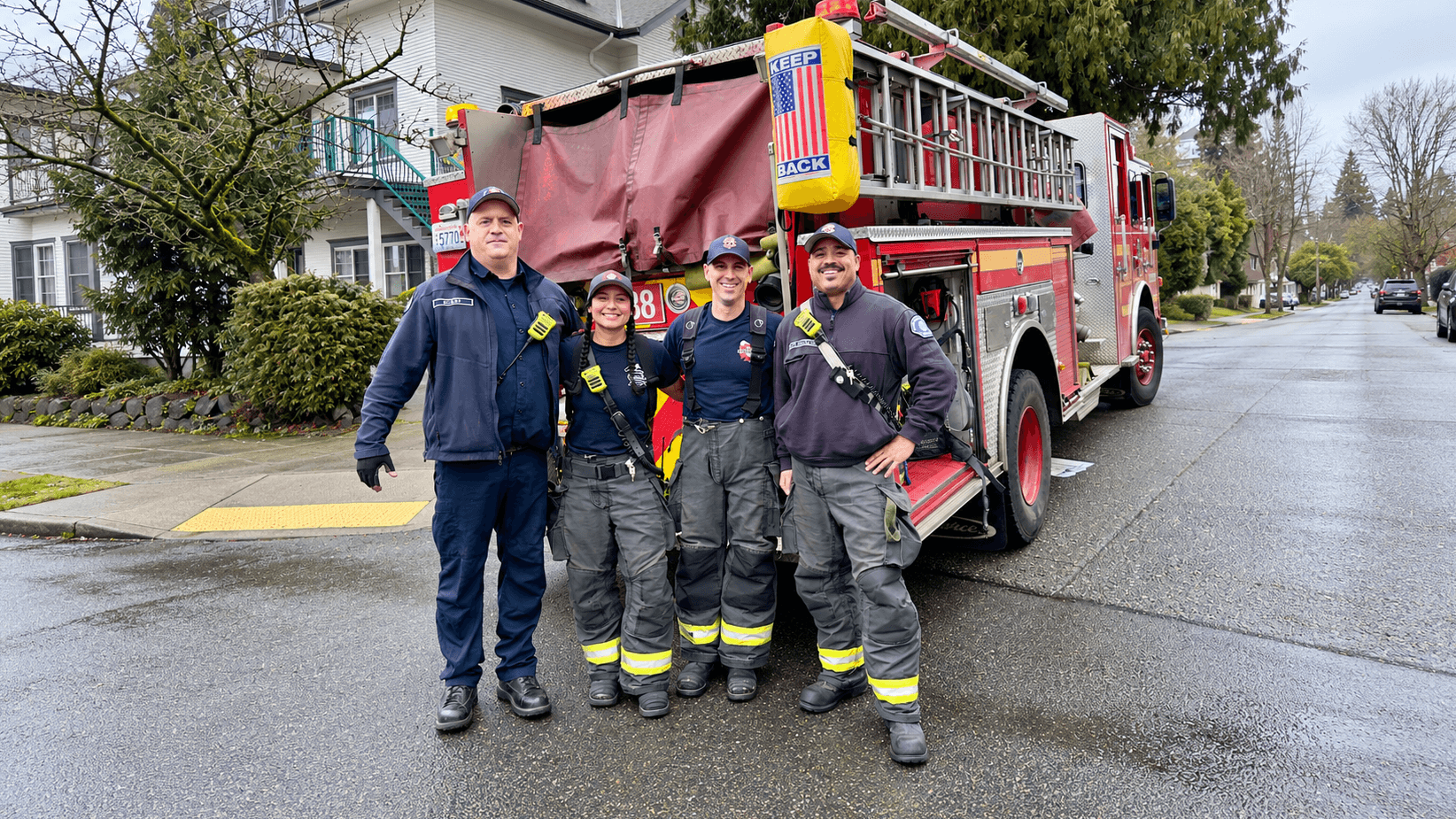
Coming out of the IAFF STRIVE Conference, what stayed with me wasn’t any one moment — it was the room. You look across it and there’s a sameness to us that’s hard to ignore. Clean cut. Strong. Composed. From a distance, it almost feels like we’re all operating off the same template, like the gap between us is smaller than it actually is. When everything looks that uniform, it’s easy to assume what you’re seeing is the standard.
Just to be clear, I’m not talking about walking around constantly comparing myself to everyone in the room. It’s not that obvious or that deliberate. It’s simpler than that. It’s not even something you consciously decide to do. It just happens. Someone buys a truck, and you start thinking about buying a truck. Someone books a trip, and suddenly you’re thinking about getting away. Someone gets promoted, and it makes you look at your own spot. That’s how we’re wired. We compare. Constantly. Not in some dramatic way — just under the surface, running in the background.
That same wiring doesn’t shut off when things aren’t going well. I remember when I was sick and couldn’t be on the job. I wasn’t comparing myself to some version of me at my best. I was comparing myself to everyone who was still out there doing it. The ones showing up. The ones riding the truck. The ones still in the game. That became the reference point, whether I wanted it to or not.
When Comparison Becomes the Standard
So you look around and everything seems to be moving without you. Everyone else looks like they’re where they’re supposed to be, and you’re the one that isn’t. Like the system is intact and you’re the piece that’s out of place. A broken spoke in a wheel that keeps turning. When you’re not at your best, it can feel like you’ve been cast away to the land of the broken toys — watching everything keep moving without you. Once that thought sets in, it sticks, because it feels real.
What took me longer to understand — and didn’t start as a choice — was what that time away was actually doing for me. At first, it just felt like I was on the outside. Like the one kid who couldn’t play. Sitting on the bench, watching everything continue without me, trying to make sense of where I fit in it all. Enough time passed that I had to accept it. I got used to being on the sidelines. Somewhere in that, something shifted. My nervous system finally started to settle. I was in my own bed every night. I found a different rhythm. One that didn’t have me constantly in go-mode, constantly in that low-grade fight state you don’t even realize you’re carrying until it’s gone. On the surface, it looked like I was falling behind, especially when I compared myself to everyone still doing the job. Underneath that, I was getting exactly what I needed.
That’s the part I couldn’t see at the time.
The Work That Happens When You Stop Moving
Looking back now, with some distance from it, I can see it differently. I can walk into a room like that and just enjoy the people in it. I’m not scanning for where I measure up. I’m not trying to find my place in it. That shift didn’t come from deciding to think differently. It came from going through it the hard way and realizing that the only version of me that actually works is the one I can sustain. Not someone else’s pace. Not someone else’s timing. Mine.
Because comparison kept telling me I was out of it. That I wasn’t where I should be. That I needed to get back, catch up, close the gap. The reality was different. I wasn’t behind — I was just in a different place than everyone else, doing a different kind of work that didn’t show up the same way.
That’s where the shift happened. Miss that, and it’s easy to chase something that isn’t real and overlook what’s actually happening right in front of you.
Alignment Isn’t Uniform — It’s Individual
What you see in that room isn’t the full story — it’s an illusion of alignment. You’re not surrounded by people who are all ahead of you. You’re surrounded by your peers, each carrying their own version of the job. Our careers don’t line up the way it looks. We all hit snags at different times. We all have stretches where things click, and stretches where they don’t. When someone’s on an upswing, it’s good to see — it reminds you what’s possible. When someone’s on a downswing, that’s part of it, too. Same cycle, different timing. It just doesn’t show up the same way at the same time. If you don’t account for that, you’ll keep mistaking that illusion for reality.
The truth is, I stopped trying to measure myself against what everyone else was doing. Not completely — because that wiring doesn’t just disappear — but enough to start paying attention to my own pace. Staying in my own lane. Pushing when I could push, and sitting when I needed to sit, without turning that into something negative. Being around great people should raise your standard — not replace your sense of where you actually stand.