
I really enjoyed Kory Pearn's recent article, The Formula for Staying Relevant, because it captures something I don't think we talk about enough. Growing older isn't really the challenge. Staying engaged is.
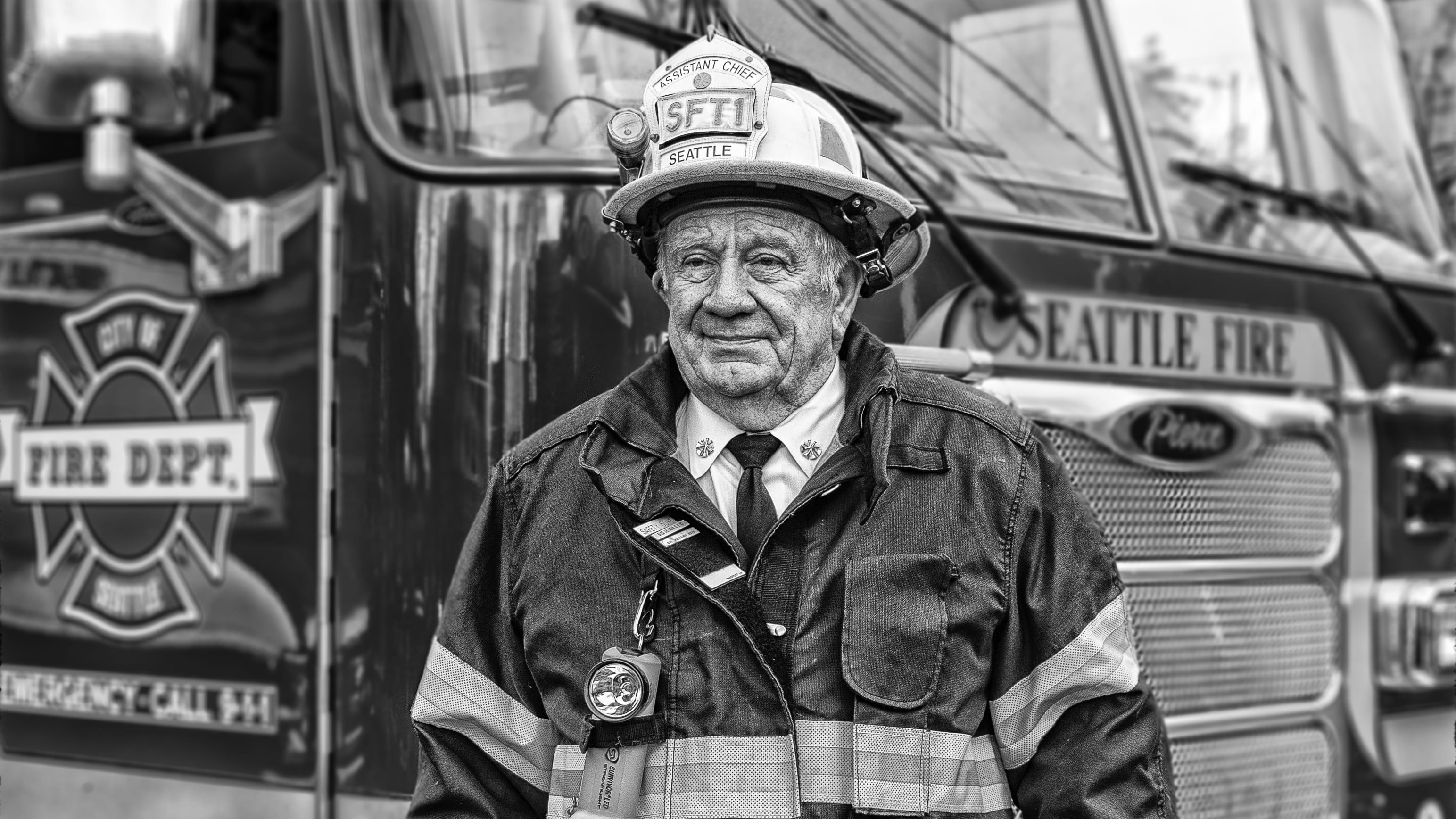
Meeting someone like Chief Vincent Dunn reminds us that experience alone isn't what keeps someone influential. Plenty of people accumulate decades of experience and then spend the next 20 years talking about the way things used to be. Chief Dunn doesn't seem interested in living in the past. He's still curious, continually learning and always contributing. These are choices he made.
For years I've worked with veterans, first responders, and military leaders who were trying to figure out life after the uniform. One of the biggest surprises for many of them wasn't losing the job itself. It was realizing how much of their identity had become wrapped around the role they played inside the organization.
When Jason Roncoroni and I were writing BEYOND THE MILITARY: A Leader’s Handbook for Warrior Reintegration, we kept coming back to one idea that became almost a compass for the book. The military doesn't create extraordinary people. Extraordinary people give meaning to the uniform. The same is true in the fire service. The badge doesn't make someone respected. The person wearing it does.
That's actually good news.
Because if the qualities that made you valuable were never the uniform, then retirement doesn't take those qualities away. It just removes one place where you’ve expressed them.
The problem is that retirement often creates a kind of psychological vacuum. For 30 years someone else decided where you needed to be, what your mission was, who depended on you, and whether today mattered. Then one day the pager stops. The schedule disappears. The phone goes silent. People who used to need your opinion are solving problems without calling you.
If we're not careful, it's easy to mistake these kinds of shifts for evidence that we've become less valuable.
Psychology has a name for what sometimes happens next: learned helplessness. It's the gradual belief that your actions don't really matter anymore. You stop trying new things because you've convinced yourself the world has moved on without you. Technology changes. Younger firefighters start talking about things you've never heard of. AI shows up. The culture shifts. It's tempting to quietly step back and conclude, "This just isn't my world anymore."
But that's a personal interpretation - not a fact.
I’ve been wondering lately if this tendency is more likely to happen with people of ACTION. As I’ve written about many times, I’ve come to understand that helplessness is one of the most intolerable feelings for people with a warrior spirit, a term which applies to many in the fire service.
When people of action experience a radical shift in both their physical environment and their relationship structure, I think this stimulates intense feelings of helplessness for some and creates a very deep identity impact as a result. When this happens, their warrior spirit can go dormant in response. (But, as I’ve witnessed countless times, you can take it on good faith that what is dormant can be reclaimed and revitalized, with the right insights and the right support).
One of the healthiest things I see in people who transition well is that they refuse to surrender their sense of agency. They don't spend all their energy wishing things were the way they used to be. They ask different questions. What can I still learn? Who can I help? Where can I be useful? What part of my experience still matters?
These kinds of questions keep people moving – they generate the kinds of challenges that help the warrior spirit continue to thrive.
One of the ideas Jason and I wrote about in BEYOND THE MILITARY is that transition isn't about replacing one identity with another. It's about rediscovering parts of yourself that may have been sitting quietly in the background for years. In other words, it may be about bringing those facets of your identity out of dormancy in the context of a continued warrior spirit.
Sometimes that means mentoring younger firefighters. Sometimes it means becoming a better husband, wife, partner, or friend. Sometimes it means starting a business, learning a completely new technology, volunteering, writing, traveling, or finally making time for interests that existed long before the fire academy.
I often ask people, "What did you love doing before anyone handed you a badge?"
It's a surprisingly difficult question for many.
Not because the answer is gone, but because quite often people haven't asked themselves this in forty years.
The people who seem to thrive after retirement aren't trying to recreate the firehouse in civilian life. They're willing to become beginners again. They understand that learning something new doesn't diminish the wisdom they've accumulated. It gives that wisdom somewhere new to go.
That's what I admired most about Chief Dunn in this article. He isn't trying to preserve the profession in amber. He brings decades of hard-earned experience into conversations about where the profession is headed next.
That may be the best model for all of us.
Staying relevant isn't something the world gives us. It isn't reserved for people who are younger or better with technology or lucky enough to still be working.
It's a choice we make, over and over again.
Shauna ‘Doc’ Springer, PhD is a pioneering psychologist, award-winning Military Times podcast host, and one of the world’s leading experts on psychological trauma, moral injury, suicide prevention, close relationships and the unique needs of the military and first responder communities. Doc Springer provides highly specialized consultation and confidential advising to organizations and public safety agencies that support protectors and defenders through her company THIN LINE ADVISORY.