
Has anyone ever told you to “just relax” when you were already stressed out? If so, you probably know there are few things less relaxing than being told to relax. Depending on who says it and how they say it, those two little words can actually make you want to do the exact opposite.
The same principle applies when you’re working with a psychologist. A good psychologist doesn’t just tell you to “calm down.” They help you understand what’s happening in your body and give you practical ways to move from a state of activation toward a state of relaxation. Because knowing you need to relax and knowing how to get there are two very different things.
I want to share an unusual way to practice this skill, especially for people who are much better at taking action than sitting still. And the best part is that it involves a dog. Although, depending on what (and who) you’ve got at home, there are a few other candidates worth considering.
What I Learned at Puppy Yoga
My friend Mary Cortani runs Operation Freedom Paws, an organization that helps veterans and first responders build partnerships with service dogs. Mary invited me to attend something called puppy yoga, which is pretty much what it sounds like. You do yoga with dogs.
Now, I know some firefighters would rather run into a burning building than attend a yoga class, especially one involving puppies. But stay with me, because there’s something interesting here.
During the class, one of the exercises involved having a dog lie on your chest while you tried to settle into a relaxed state together. Instead of concentrating exclusively on your own breathing or muscle tension, you had this warm, breathing animal resting against you.
I loved the idea, but it got me thinking about how to adapt it for people who struggle to relax on command. What if, instead of making relaxation the goal, we gave people something else to focus on?
Specifically, what if your assignment was to help someone else relax?
Finding the Right Candidate
For this experiment, your best bet is probably a dog. Ideally, one that’s already pretty good at relaxing. If you have a dog that spends a respectable portion of the day sprawled across the couch, sleeping in ridiculous positions, or melting into your lap, you’ve found an excellent candidate.
A cat could also work, provided you have the right kind of cat. I’m talking about the kind that stretches out in a patch of sunlight and seems to have made relaxation its primary occupation. If your cat is more inclined to scratch you and launch itself across the room when you attempt physical contact, this particular exercise may take your nervous system in the wrong direction.
You could even try this with your own child, especially a younger one who enjoys cuddling and naturally settles into physical closeness. Although temperament matters here, too. A child who’s bouncing off the furniture and struggling to settle may not be your ideal partner for this particular experiment.
And please make sure it’s your own kid, or one you’re actually responsible for. Borrowing someone else’s child for a relaxation exercise could lead to some fairly awkward conversations.
The important thing is to choose someone who enjoys physical closeness, feels safe with you, and has a natural ability to settle down. We’re not trying to restrain an unwilling animal or convince an overstimulated toddler to cooperate with a psychological experiment.
The Melt Test
Once you’ve found your willing participant, get comfortable somewhere you can recline. Invite your dog to lie across your chest or against your body, or let your cat curl up on your lap. With a child, find a comfortable cuddling position that works for both of you.
Now here’s the part that makes this exercise different.
Your job is not to relax yourself. Your job is to help your companion relax.
Start by noticing their current state. Is your dog’s body still a little tense? Are their muscles engaged, their head lifted, or their attention focused on what’s happening around them? Can you feel their breathing or notice small changes in how they’re holding their body?
Rather than telling yourself to calm down, focus on creating the conditions that help them settle. Maybe you slow your own breathing. Maybe you soften the muscles in your shoulders and chest, or gently stroke your dog’s fur in a rhythm they seem to enjoy. You’re paying attention to their responses and adjusting what you’re doing based on what seems to help.
If you’ve ever had a dog really relax against you, you know what I’m talking about. There’s a point where they seem to surrender every unnecessary muscle contraction and become this wonderfully heavy, warm pile of dog. Their body softens, their breathing becomes easy, and they seem perfectly content to stay right where they are.
I think of that as “the melt.”
And when it happens, something interesting may be happening in your own body, as well.
Why Helping Someone Else Relax May Work Better
Human beings are built for connection, and our nervous systems are responsive to the signals we receive from others. We often describe this as co-regulation, the process through which one individual’s emotional and physiological state can influence another’s.
You may have heard of mirror neurons, which are involved in aspects of observing and responding to other people’s actions. But the science of co-regulation is broader than mirror neurons alone. Breathing patterns, physical contact, attention, familiarity, and signals of safety can all contribute to how we respond to one another.
There’s growing interest in how human-animal interactions may influence stress and physiological regulation as well. The effects aren’t identical for everyone, and not every dog is a calming influence. But anyone who’s spent time with a deeply relaxed dog resting against them can probably appreciate the appeal.
Here’s why I think this approach may be especially useful for firefighters.
People who are accustomed to taking action often find it difficult to make relaxation their immediate goal. When you tell yourself to relax, you may become more aware of how tense you are, frustrated that you can’t turn it off, and increasingly focused on the fact you’re not succeeding.
But give that same person a mission, particularly one that involves helping someone else, and you’ve changed the task.
Instead of monitoring your own failure to relax, you’re paying attention to another living being. You’re noticing their muscle tension, adjusting your breathing, responding to their signals, and trying to help them feel comfortable enough to let go.
And because your own breathing, muscle tension, and movements influence the experience, you may find yourself beginning to settle as part of the process.
You’re practicing regulation without making your own relaxation the immediate target.
Building Elasticity Through Connection
I often talk about the importance of developing greater elasticity in your nervous system. For firefighters, that means being able to mobilize quickly when circumstances demand it, but also being able to recover when the emergency is over.
The ability to activate is something most firefighters have practiced extensively. The ability to deliberately downshift often gets far less attention.
That’s what I like about this exercise. It gives you something concrete to do rather than asking you to achieve a feeling through sheer willpower. And it allows you to practice noticing the subtle physical changes that accompany relaxation, both in your companion and potentially in yourself.
You may discover that you can’t help your dog settle while you’re still holding your breath, keeping your shoulders rigid, or moving around impatiently. You might notice that when you soften your own body, your dog becomes more comfortable. Or perhaps you’ll find that simply paying attention to the slow breathing of an already sleepy animal makes it easier for you to slow down, too.
None of this requires your dog to achieve some perfect state of relaxation, and it certainly doesn’t mean you should keep trying if your companion wants to get up and leave. The exercise works best when both of you are comfortable and free to move.
The goal is to experiment with the relationship between attention, physical connection, and your ability to shift states.
Your Challenge This Week
Find the best napper in your household. Ideally, a dog who has perfected the art of turning into a warm, boneless heap of fur. A cooperative cat or cuddly child may also qualify.
Settle in somewhere comfortable and give yourself a few minutes to focus entirely on helping your companion relax. Pay attention to their breathing, muscle tension, and movements. Experiment with slowing your own breathing, softening your body, and creating a sense of calm through your presence.
See whether you can help them reach that wonderful point where they seem to melt into you. Then notice what has happened to your own body along the way.
You may find that one of the easiest ways to practice relaxing is to stop trying so hard to relax yourself.
And if anyone interrupts to tell you to “just relax,” you have my permission to tell them you’re already working on it. You’ve just outsourced the assignment to the dog.
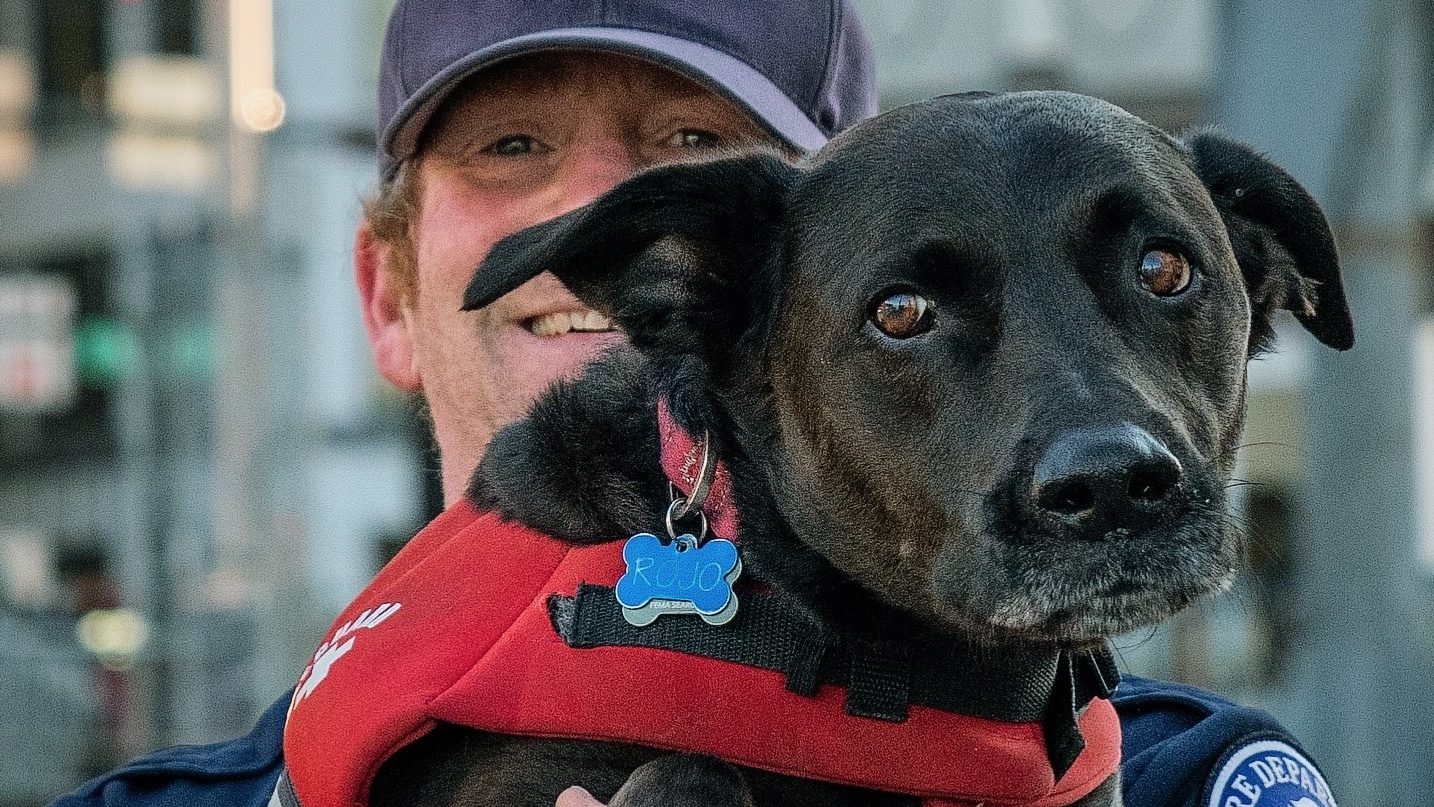
Photo by Steve Baer | FireDog Photos
Shauna ‘Doc’ Springer, PhD is a pioneering psychologist, award-winning Military Times podcast host, and one of the world’s leading experts on psychological trauma, moral injury, suicide prevention, close relationships and the unique needs of the military and first responder communities. Doc Springer provides highly specialized consultation and confidential advising to organizations and public safety agencies that support protectors and defenders through her company THIN LINE ADVISORY.