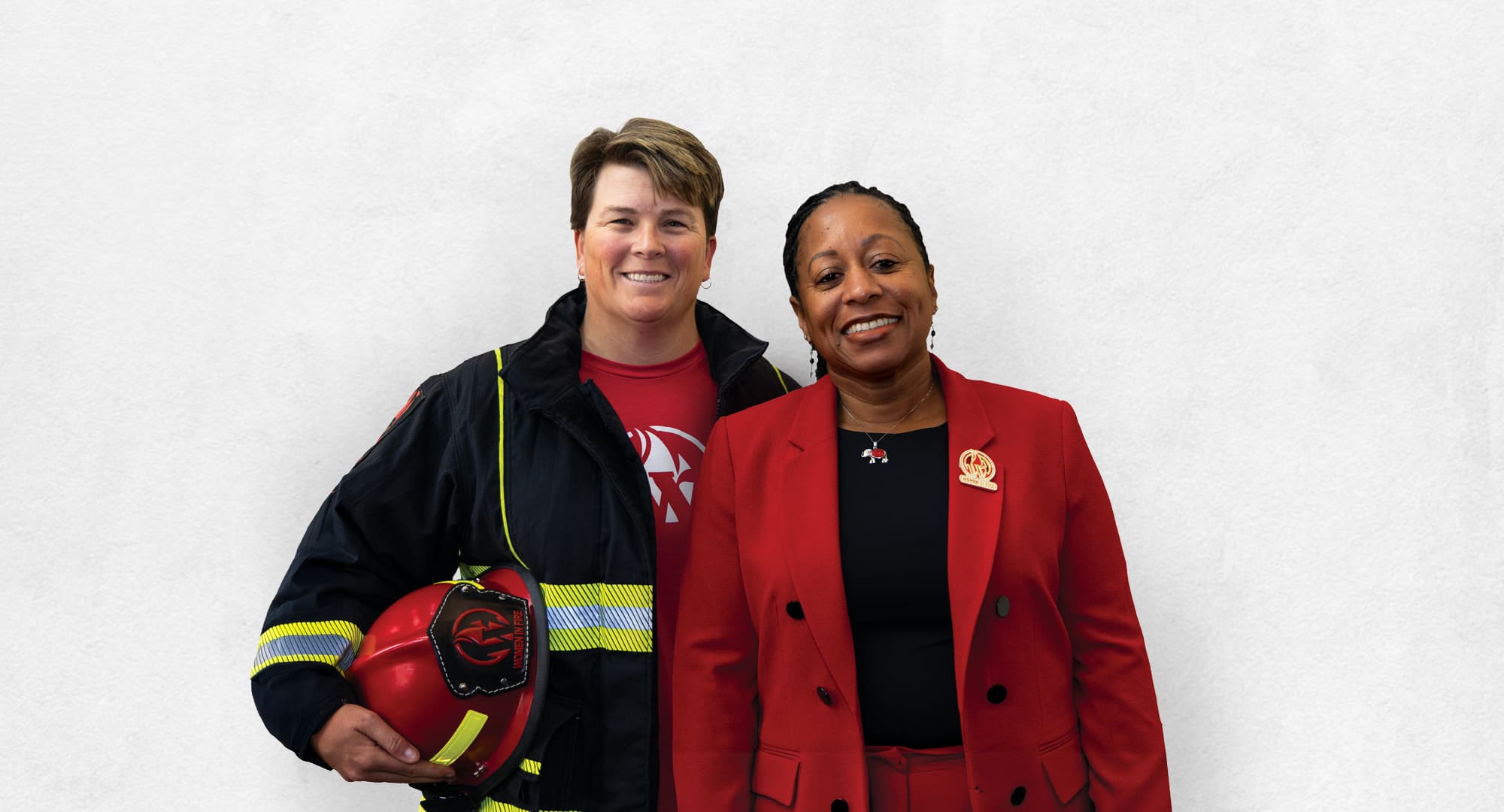

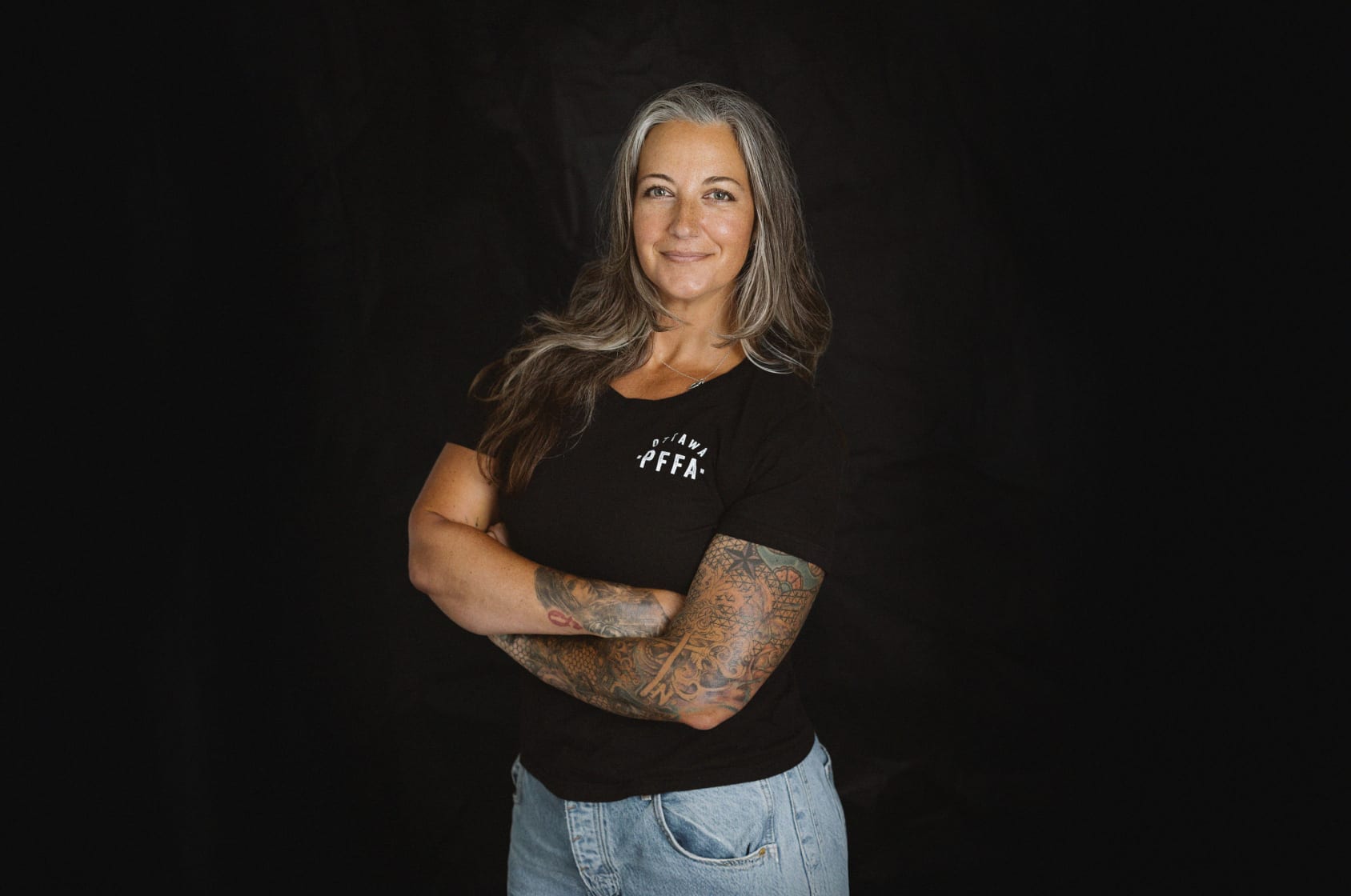
Genna McMillan grew up on a farm, surrounded by hardworking women. Her mother, a city girl by upbringing, became a backhoe operator in the family's tile drainage business and drove tractors alongside the men. McMillan never accepted the idea that firefighting was somehow off-limits to her. The only real question was whether she wanted the job, not whether a woman could do it.
As a firefighter, association president, health advocate, and living liver donor, McMillan wants women in the fire service to stop measuring themselves against impossible standards and to start trusting the experience, abilities, and relationships that have brought them this far.
McMillan has spent much of her career looking out for firefighters, though she would likely resist any attempt to make that sound exceptional. To her, supporting the people beside you is part of accepting the job.
It means paying attention to their health, defending their interests, recognizing when they need help, and understanding that today's decisions can follow a firefighter and their family for decades.
Her work as president of the Ottawa Professional Fire Fighters Association has given her a wider view of those responsibilities. But the position did not create her interest in advocacy. It gave her another way to act on beliefs that were already there.
McMillan became association president sooner than expected after the previous president accepted a deputy chief position. She had considered pursuing the role and had built what she describes as a three-year plan, but the change placed her in the position almost immediately.
She had served as vice president and understood much of the work, yet becoming president introduced a different level of responsibility. Positive developments, complaints, difficult member situations, staffing concerns, accommodations, mental health issues, and labor matters all began reaching the same desk. Understanding an organization, she learned quickly, is not the same as being the person ultimately responsible for directing it. The number of worthwhile projects can be overwhelming. McMillan may see five, seven, or even 10 issues deserving attention, while knowing the association can’t advance all of them at once. Her approach is to identify the initiatives most likely to improve the lives of members, families, and the community, then give those priorities the attention needed to produce results. She’s careful not to assume her own priorities automatically represent everyone else’s.
After several months working with the current executive, she met individually with board members and committee chairs to ask what they hoped to accomplish, which projects needed more support, and whether the association had spent too much energy on issues no longer producing value.
Those conversations revealed more than a list of initiatives. They showed her how differently people communicate, what motivates them, and what they expect from their involvement. McMillan has studied generational differences in the workplace and believes organizations grow stronger when leaders take the time to understand the people who serve within them. A newer firefighter may want something different from the profession than someone nearing retirement. A committee member may see a problem the president has missed. McMillan doesn’t view that as a challenge to her authority. She wants people to tell her when she’s missing something.
“If I have something stuck in my teeth, I want someone to tell me,” she says. “It’s not rude. It’s honest.”
That willingness to hear criticism is central to how she makes decisions.
When an initiative stalls or a proposed solution fails, she reaches out to people who understand the issue and asks them to review it. She values colleagues who support her while also offering a different perspective, and has no interest in surrounding herself with people who agree with everything she says. The fire service is too complicated, and the stakes of getting the important calls wrong are too high for leadership to become an exercise in protecting personal pride.
Health advocacy is one of her main priorities. Early in her career, while serving as a volunteer firefighter, McMillan lost a mentor to lung cancer, which was eventually recognized as an occupational illness. Until then, she understood firefighting involved risk in the abstract; his death showed her what occupational exposure could mean years after the calls ended. It reshaped how she thought about what fire organizations owe their members. Hazards would always come with the job. Illness, delayed diagnosis, and shortened retirements did not have to.
She now spends considerable time on screening programs, blood work, cardiac testing, and earlier access to specialists. Her association has worked with organizations that offer firefighter-specific health assessments, including a screening program that detected an aortic dissection in a firefighter who had competed in Ironman events for years. He looked exceptionally fit. The condition might never have surfaced through routine blood work alone. After surgery, he returned to running. For McMillan, his case confirmed something she’d suspected: firefighters can look capable, train hard, and keep answering calls while a serious problem develops with no visible warning.
She’s also learned to be selective. More companies recognize the fire service as a potential market, but not all are equally motivated. Some are committed to improving outcomes; others are more interested in selling a product. McMillan wants partners who understand the profession, respect those in it, and can demonstrate that their services offer more than a polished pitch. Her standard is simple: will this help firefighters stay healthy enough to reach the retirement they spent their careers earning?
“I want to make sure that you’ve got more pension checks than you had paychecks,” she says. That, to her, is what fire family and union advocacy actually mean. Friendship and station relationships matter, but real support has to extend past the language firefighters use to describe one another. It has to show up in prevention programs, workplace protections, family resources, medical care, and decisions that give members a better chance at living well once the uniform comes off.
Giving that much attention to others has a cost. McMillan describes herself as an empath and a people-pleaser, traits that help her read what others are experiencing but also make it hard to leave difficult conversations at the office. A bad email or a painful member situation can linger with her long after the work itself is finished. She understands why a decision has to be made and can remain respectful while making it, but that doesn’t stop her from feeling the weight of it afterward.
Her response has been to get deliberate about her own recovery. After a shift full of difficult conversations, she might have coffee, put on music for the drive home, and take her dog Winston for an easy run.
Some days call for structured endurance training; other days call for a couple of miles at a pace that just feels good.
She’s learned to notice when she needs movement, time outside, or a break from demands that can wait. Earlier in her life, she used exercise as a release without understanding why it worked. Experience has taught her to catch the signs before stress has a chance to pile up.
That same awareness shapes how she mentors other firefighters. **She believes supervisors owe new people more than tactics and procedure.**New firefighters learn the apparatus, the equipment, the operating guidelines — and get far less guidance on processing hard calls, protecting relationships, or noticing changes in their own behavior. McMillan wants those conversations to start before someone hits a wall. Advocating for mental and physical health only means something if you hold yourself to the same standard you’re asking of everyone else.
She knows that many women enter the fire service without the same “I can do anything” starting point she had. Many arrive believing they have to outwork everyone around them just to earn a place. They take every assignment, volunteer for everything, train beyond what’s required, and treat each mistake as proof they don’t belong.
McMillan has watched commitment curdle into a demand for perfection, made worse by station talk that picks apart someone for not pulling their weight on a call or missing some unwritten expectation.
A firefighter already doubting herself hears that kind of talk and concludes the only safe move is to give more and never let anyone see her tired.
McMillan has lived a version of that pattern herself. After recently stepping in to act as captain, she caught herself second-guessing routine radio communications — nothing had gone wrong, she just couldn’t stop replaying it. She had to remind herself that she’d earned the opportunity: the training, the years of experience, the track record that got her the role in the first place.
Her advice to other women rests on that same recognition. You made it through testing, interviews, recruit training, and everything after. You don’t have to win the job back every morning.
“You deserve to be sitting in this seat,” she says. “You’ve worked hard. You deserve it.”
She’s equally direct about the fire service needing better education on physiology. During an extreme heat event, McMillan worked three fires and reached a point where she couldn’t regulate her own temperature. She told her captain she needed rehab and received a comment questioning whether she was tough enough for the job. Later, she found an article explaining how women and men regulate heat differently and brought it back to her station — not to make an excuse, but to shift the conversation from judgment to physiology.
**Recognizing physical differences doesn’t lower the standard.**It helps officers make better decisions about work cycles, rehab, and crew rotation. McMillan sees the same need regarding aging, hormonal changes, and the physical demands of a long career. Everyone is expected to do the job, but treating every body as though it responds the same way creates unnecessary risk.
Better education helps firefighters recognize their own limits without mistaking that recognition for weakness.
Her belief in showing up for others was tested in a far more personal way when her colleague, Matt Gobey, needed a liver transplant. McMillan had worked with him at a hazmat station and had taught his sister years earlier in a college fire program. She also knew the family from work she’d done after Gobey’s father died of an occupational cancer.
When Gobey and his wife launched a public search for a living donor, McMillan helped push the campaign through association channels. The next morning, she printed the application and told her husband that she was putting her name in.
The screening process included an extensive medical history review, interviews, imaging, and blood work. Living liver donation demands more than blood-type compatibility — a donor’s anatomy, down to the size of their veins and arteries, has to match the recipient’s. Several days into testing, McMillan realized she hadn’t gotten the call that would have ruled her out. She started to wonder if she might actually be the match.
Confirmation came while she was in Washington, D.C., at the IAFF’s first-ever female health and safety committee meeting. She was a match, and surgery would happen within the month.
Standing in a small kitchen closet at IAFF headquarters, she phoned Gobey. He already knew why she was calling.
They laughed, cried, and tried to process what was coming. Minutes later, both of their phones buzzed with the same update — the surgery had been moved up. One week out, not one month.
Before McMillan even made it home from Washington, her department had already covered every shift she’d miss that summer. She didn’t touch her sick leave or have to solve the scheduling problem herself. Firefighters simply volunteered to cover for her so she could go through surgery and recover. She’d offered to give part of her liver to save a coworker, and her coworkers made sure she’d be taken care of in return.
The second day after surgery was rough. She’d gone into the operating room healthy and woke up having lost roughly 60% of her liver. Still on a walker, she looked down the hallway and saw Gobey moving past with his IV pole. His mother had visited her the day before, describing the change already underway — his eyes clearing, his skin no longer yellow. Within a day, he looked like a different person. Seeing him reminded McMillan exactly what the pain had bought: a man with young kids and a new wife, getting his life back.
The campaign did more than save one life. Toronto’s transplant program received so many applications from firefighters across the country that staff eventually asked the family to stop recruiting. Some of those applicants weren’t a match for Gobey, but became a match for someone else. McMillan’s decision saved a coworker. The fire service’s response, once it mobilized, created chances for people none of them had ever met.
Just over a year later, McMillan and Gobey were both back on shift and ended up at the same fire. She calls the donation the most remarkable thing she’s done outside of raising her own kids, and she’s clear-eyed about what made it possible: years of taking her own health seriously, cutting back on alcohol, staying fit. The choices she’d made for herself were what let her give someone else a future.
It’s the same logic she applies to everything else. She wants firefighters to give fully to the job, without disappearing into it. She wants women to chase opportunity without exhausting themselves trying to prove they’ve earned the right to be there. She believes in the idea of a fire family.