
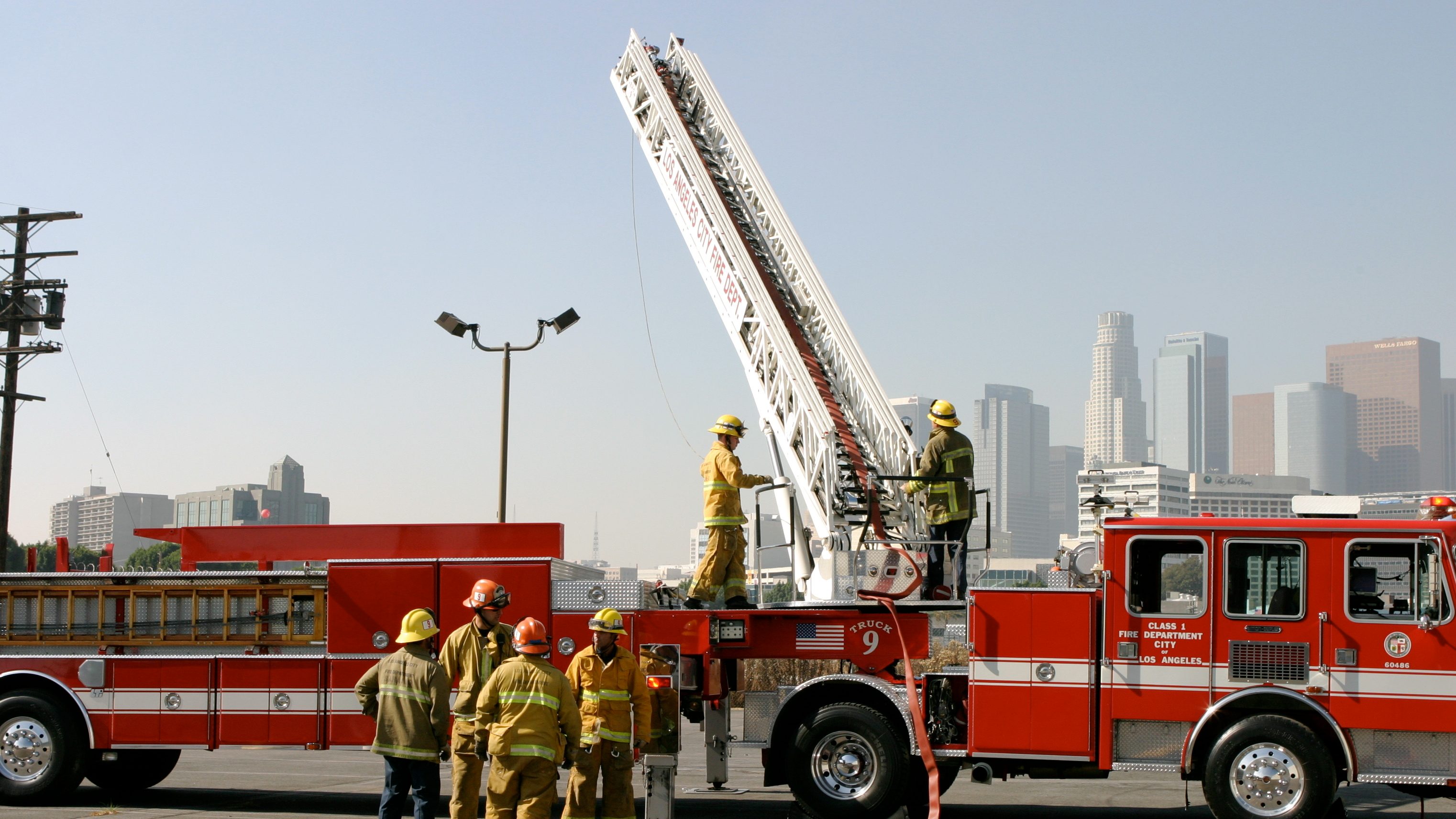
In 2007, I was a truck captain assigned to a fire station in Central Los Angeles. One evening, just after dinner, our crew was called to a structure fire. While operating on the roof, I watched one of my members, an apparatus operator, fall through the roof directly into the main body of the fire below. It was our first day working together, and ultimately, he was my responsibility.
That incident stayed with me long after the last company returned to quarters. I have spent years thinking about what happened, what I could have done differently, and how to carry the responsibility that came with it. I didn’t fully understand the lessons that night, and some of them took years to work through.
After nearly 39 years with the Los Angeles Fire Department (LAFD), I understand the burden of command very differently than I did as a young firefighter who was just happy to swing an axe or man a hoseline.
Back then, I looked up to the incident commanders I worked under and respected their judgment, but I didn’t fully understand the weight of their responsibility or the challenges behind their decisions. Today, I see the burden of command as something much larger: accepting responsibility for decisions that affect people, in some cases entire communities, when information is incomplete, time is limited, and there is no certainty. It also means accepting that the weight of that responsibility doesn’t end when the incident does.
One lesson I have come to recognize over the years is this: command and leadership are not necessarily the same thing. Leadership begins well before command, and if done well, it prepares us for the moments when we are called to command.
Before the Burden: Leadership Starts Long Before the Alarm
We tend to notice leadership when something happens: a major incident, a difficult decision, someone who has to step forward. But the leadership that matters most is built earlier, and it is built by people. I was shaped by the officers I worked for, the people I worked beside, and eventually the people I was entrusted to lead. The best of them created a culture, built relationships, and earned credibility when nobody was watching. They also set clear expectations and had tough conversations when those expectations weren’t met.
I have been on both sides of those conversations. As a young firefighter, there were times when my officers had to address my engagement on EMS calls, my professionalism, or an operation I hadn’t performed to standard. Over the years, I have had to have those same types of conversations with members. Those conversations played out differently. Some led to meaningful improvement, while others took continued guidance and follow-up. At times, they helped a member recognize that a different assignment might be a better fit.
I have also seen what happens when those conversations don’t take place: unhealthy work environments, burned-out members, stations where a group of people simply could not get along. That doesn’t stay inside the station. It affects everyone in the building, and I believe it shows up in our service to the public. We cannot consistently perform at our highest level on the fireground if the environment behind the station doors is filled with division and a lack of trust. When the plan falls apart, what we built beforehand is all we have.
So leaders should ask themselves: Can ideas flow up and down your command without members fearing they’ll be belittled? Do your people have real opportunities to develop, or are those reserved for a select few? Will they tell you something you don’t want to hear if someone’s safety depends on it?
Leadership is what prepares us for the moments when we must command.
Systems vs. People: Breaking the Default Blame Mindset
When something goes wrong, it is easy to start with the person. Who wasn’t performing? Who wasn’t paying attention? Who needs to change? Sometimes the answer really does involve an individual’s performance, and as leaders we cannot avoid those difficult conversations. But if we stop there, we may miss the real problem.
Consider an ambulance accident. Was it simply a mistake by the member behind the wheel? Or did the size of the apparatus, a demanding assignment, fatigue, or an extraordinary number of consecutive hours contribute? Those questions don’t eliminate personal responsibility. They make us look at the entire system instead of assuming we already know the cause.
I learned a great deal about this while managing Metropolitan Fire Communications (MFC), LAFD’s fire and EMS dispatch center. From time to time, the chief deputy would come to the floor during large-scale incidents with requests that were reasonable and important, but I wasn’t always prepared to deliver what he needed. We had tremendous experience and expertise on the dispatch floor. What we didn’t have, in my view, was a clearly defined system of roles, responsibilities, expectations, and span of control to bring all that expertise together.
We were all familiar with the Incident Command System to some degree, and I believed those same organizational principles could help us at MFC. But implementing them was another story. The changes challenged years of established practices, and I met a fair amount of resistance. Some of the debates became so passionate that one day a member came into my office with a transfer request in hand, and others figured I wanted them gone.
That couldn’t have been further from the truth. I didn’t know their jobs better than they did, and I couldn’t build the organization I envisioned without their expertise. I needed them to challenge my ideas, disagree professionally, and keep working toward the same goal. This became a trust-building moment.
I had something to learn, too. My passion for an idea can come across pretty strong. I was asking people to change the way they had worked for years, and bringing them along was going to be an evolution, not an overnight change. I needed to explain the vision, listen to their concerns, and create an environment where they could help make it better.
We eventually built a system I was extremely proud of, with clearer responsibilities and an organizational structure that could support the performance expected of us during some of the city’s most challenging incidents. But the greater lesson wasn’t about an organizational chart. When you change a process, you are also challenging habits, comfort, and culture. As the saying goes, culture eats strategy for breakfast.
Before you can manage a problem, you have to make sure you’re seeing it correctly.
Perception vs. Reality: Assumptions or Facts?
When we’re in command, we make decisions based on our perception of reality. At an active incident, information is incomplete, changing, and sometimes wrong, and we can’t wait until we know everything before we act. Experience helps us recognize patterns, make reasonable assumptions, and begin making decisions. The danger isn’t making an assumption. The danger is forgetting it is an assumption and allowing it to become a fact in our minds. Assumptions live in the space between perception and reality, and that is where the risk lives.
I was reminded of that at a large residential fire in the Bel Air area of Los Angeles. The initial information described a home of approximately 4,000 square feet with light smoke in the attic, possibly related to a generator test. What we actually had was a mansion of roughly 20,000 square feet with fire involvement in the attic. The building’s size, complex layout, and concealed spaces made access extremely difficult. There were areas of the home that we couldn’t easily reach, and conditions continued to evolve as the incident progressed.
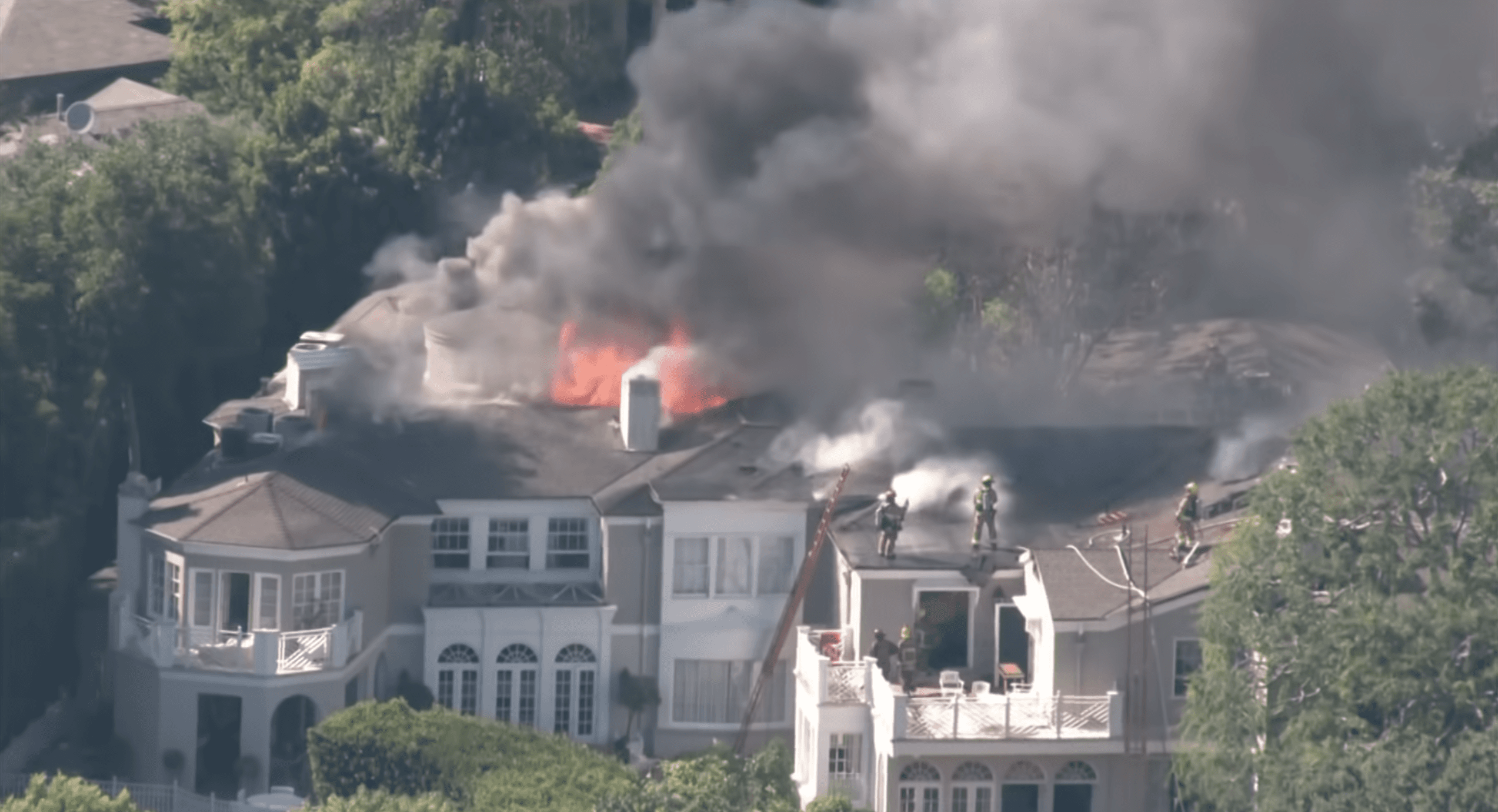
Once I understood the actual scale of the problem, my experience told me we were in for a difficult firefight. But what has stayed with me was the distance between my initial picture of the incident and the problem that was really in front of us.
The incident didn’t suddenly change. Our understanding of the incident changed.
That is what situational awareness really requires: a continuous effort to bring our perception closer to reality. What do I know? What do I think I know? What am I assuming? And what information would cause me to change the plan?
After a long firefight without the progress we wanted, we took a tactical pause and met face-to-face with our division and group supervisors. We challenged the current strategy and the picture we were operating from. We changed our strategy and began seeing the improvement in conditions we were looking for. That’s not indecision. Sometimes that’s exactly what experience and wisdom look like.
But there’s another problem. I can have a reasonably accurate understanding of the incident and still be leading an organization in which everybody else is seeing something different.
A Common Operating Picture: Communication Is Not Confirmation
At a major structure fire in South Los Angeles, we had multiple companies working in different divisions and groups, each with a different vantage point. There was plenty of radio traffic and a great deal of effort to organize resources and account for the structures involved. When I arrived, the incident commander briefed me on the organization, resource placement, and plan.
After that briefing, I walked the perimeter of the incident. What I found was that the incident commander had one understanding of the organization and what was happening, while some of the division and group supervisors had very different understandings of their assignments, responsibilities, and the conditions in their areas. They weren’t all operating from the same plan, and at that point they didn’t realize just how different their pictures had become.
It wasn’t a matter of officers not caring or failing to communicate. They were experienced, engaged, and working hard. But despite all that communication, we had not created a shared understanding. And that is a very different problem.
People can hear the same radio traffic and still build different pictures based on where they are standing, what they can see, and how they understand their roles. A common operating picture is alignment around what is happening, what we are trying to accomplish, who is responsible for what, and how all the pieces fit together.
So the question isn’t simply, did we communicate? Did we confirm that the message was received the way we intended? Are the division and group supervisors operating in support of the same incident objectives?
Communication alone is not confirmation. Without shared understanding, good people can make reasonable decisions based on completely different pictures of reality. That is a safety issue, and it can waste resources, time, and effort when we can least afford it.
I believe technology can help us develop that common operating picture. Tools such as digital mapping, Fire Integrated Real-Time Intelligence System (FIRIS), and Tablet Command can give incident commanders access to information that was much harder to obtain in the past. But the technology must be developed with the end user in mind and be easy to access and understand. The initial action phase of an incident can be chaotic. More information, poorly presented, can simply create more noise.
Technology doesn’t replace the incident commander’s experience, instincts, or responsibility to make the decision. It gives us another tool to challenge what we think we know. And if useful information is available, we have a responsibility to consider it, especially when it could change a critical decision.
Recognizing Scale and Complexity: The ONE Henry Hudson
Now take those same challenges—incomplete information, assumptions, changing conditions, and the need for a common operating picture—and scale them up.
The ONE Henry Hudson ship fire at the Port of Los Angeles wasn’t simply a fire problem. We had to think about the political, economic, environmental, social, operational, and community impacts. We use the acronym PEESOC to remind ourselves to look at the entire problem. Are we seeing the incident through every lens that matters, or only through the one we know best?
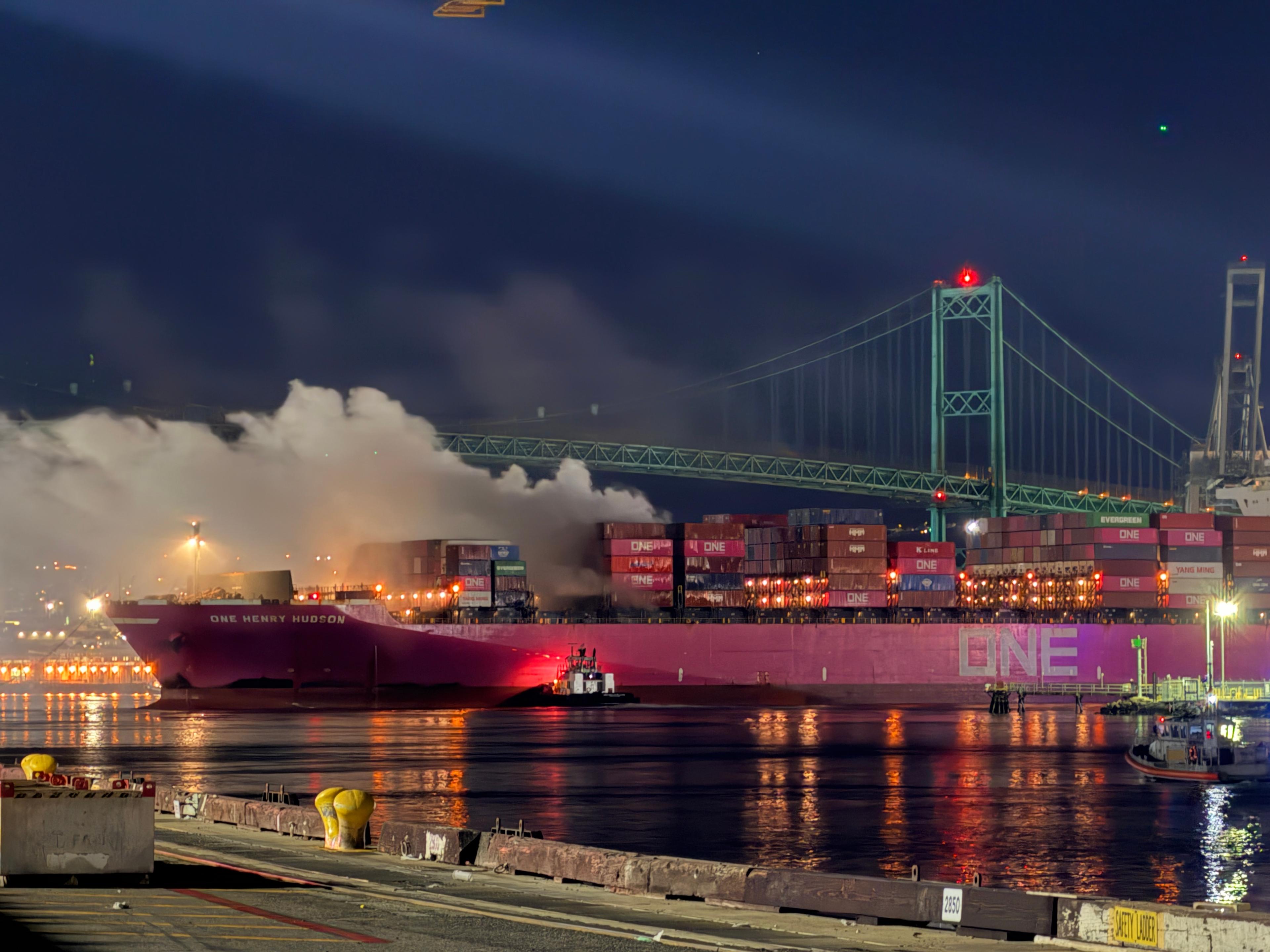
Firefighters were understandably focused on the fire and the safety of our members. Port officials had to consider continuity of operations, knowing a prolonged shutdown could affect commerce by billions of dollars. Environmental agencies had their own responsibilities, and what if a catastrophic failure sent roughly 1,000 containers, potentially including hazardous materials, into the water? Elected officials needed to understand the consequences for the surrounding community. Every discipline brought information we needed, but no one had the complete picture.
That forced us to ask a different set of questions. Who needs to be at the table? Who has information we don’t have? Who has authority we don’t have? Who owns a piece of the problem? We didn’t need more people for the sake of a larger command organization. We needed the decision-makers, problem-solvers, and agency representatives responsible for the different parts of the incident.
That’s the purpose of Unified Command: bringing the necessary disciplines together to establish common objectives, make decisions, and accept our respective responsibilities. It only works when those disciplines are truly unified, rather than each operating from its own version of the problem.
With that much happening at once, I relied on the process to help organize our response. We established initial objectives and built an organization to carry them out. As other agencies and disciplines came together, my role was to help us work toward shared objectives, with each understanding its responsibilities within the larger effort.
There was no single perfect decision waiting for us. We gathered information, established priorities, weighed the consequences of different courses of action, and kept reassessing as conditions changed. One of the most difficult questions we faced in Unified Command was how long we could continue operating aboard the ship before conditions became catastrophic. We did not know with certainty how the heat was affecting the hull, how much water the ship could take, or how much time we had. We understood the potential consequences of a failure with crews aboard. For me, the possibility of losing firefighters weighed heavily on every decision.
Ultimately, the incident involved moving the burning ship from its berth to anchorage outside the port, an operation that demanded coordination across agencies and disciplines. It was the heaviest decision of the incident. We made it together, but the authority belonged to the Coast Guard through the Captain of the Port. We needed both the expertise to develop the plan and the authority to approve it.
Recognizing scale and complexity early matters. The sooner we understand we’re dealing with something larger than a normal incident, the sooner we can bring in the people, information, and authority necessary to manage it.
Command Is a Continuous Process
One thing I used to preach at the Department Operations Center (DOC) was that we don’t know what we’re going to be faced with. We can train for likely scenarios, but we cannot possibly anticipate every incident or every problem that will land in front of us. When that day comes, we need to know the process and understand our responsibilities within it.
We may not recognize the incident, but we should recognize the process.
To me, that means knowing how information is gathered and shared, who has decision-making authority, when a problem needs to be elevated, and how our own assignment fits into the larger organization. If everyone is waiting to be told what to do because the circumstances are unfamiliar, we are already behind. We have to prepare our people to function within the process before an unfamiliar incident occurs.
Whether I’m managing a project or an emergency, I come back to the same basic process. Recognize the issues in front of us: what are we actually dealing with, and what are we trying to accomplish? Establish clear objectives, develop strategies to meet them, identify the resources we need, and organize those resources with an effective span of control. Then observe. Did the decision have the intended effect? Did conditions change? Is the information we relied on still accurate? If not, we adjust the objectives, the strategy, the resources, or the organization, and the cycle begins again.
That sounds simple on paper. During an emergency, you may be making those decisions with incomplete information, competing priorities, and very little time, and the consequences may be irreversible. The process doesn’t replace judgment, and it isn’t a rigid checklist that fits every incident. It gives us a disciplined way to work through a problem we’ve never seen before, including knowing when to change the plan. And sometimes changing the plan doesn’t mean the original plan was wrong. Sometimes it means the process is working.
Beyond the Burden: The Work That Comes After
We talk a great deal about what happens before and during an incident. But there is another part of command that has become increasingly important to me over the years: what happens afterward.
In the fire service, we conduct after-action reviews. We ask what happened, why it happened, what worked, what didn’t, and what needs to change. A meaningful review examines the decisions we made, the information we had, the assumptions we carried, and the systems that supported us or made the work harder.
Experience alone doesn’t necessarily make us better. We have to examine the decisions that worked and the ones that didn’t, acknowledge what was ours to own, and use that knowledge to prepare the next person who will sit in the command position.
And this takes us right back to the culture we created before the incident. Will members speak openly about mistakes, close calls, and missed information? Will they trust that an honest discussion is intended to improve the organization rather than embarrass someone? If we don't build that environment beforehand, we shouldn't be surprised when people are reluctant to speak afterward.
Some of my most important growth has come from incidents and decisions that were very difficult to revisit.
I encourage leaders to capture as much information as they can after an incident. Have the officers under your command write and submit their own after-action reviews. That gives you something tangible to work with and helps you put together a more complete picture rather than relying only on your own point of view. Then bring your leaders together, work through what happened, and learn from one another. This is where the leadership work really ties together knowledge, experience, and most importantly, trust.
Back to the Burden: What Was Mine to Own?
Eventually somebody has to make the decision. We may never have all the information we want. Good people may disagree. There may be several reasonable choices, and none without consequences. Collaboration is essential, but it doesn’t eliminate accountability. The responsibility still belongs to the person or people in command.
This is where the burden of command stops being theoretical for me.
On an LAFD truck company, the Apparatus Operator is a promoted position with an important leadership role in the ventilation operation. After the roof fall I described at the beginning, I kept thinking about what I had assumed. I assumed he would meet with me before crossing a division wall into another area of the roof. I assumed he would stay with the company and lead the ventilation operation while I served as Roof Division Supervisor. Those expectations made sense to me, but I had not clearly shared them with him beforehand or confirmed that we were operating from the same understanding.
I had confused what I expected with what we had actually established. That distinction became one of the hardest lessons I carried forward: an assumption is not shared understanding. When something matters to the safety of our people or the success of the operation, we cannot leave that understanding to chance.
I’m sharing that experience because of what it taught me about my own responsibility, not to revisit anyone else’s decisions. The incident shook my confidence. I didn’t know how to process what had happened, how to face him and show him the respect he deserved, or even how to sort through what was mine to own. It took years to come to terms with parts of that experience, and I still carry the lessons.
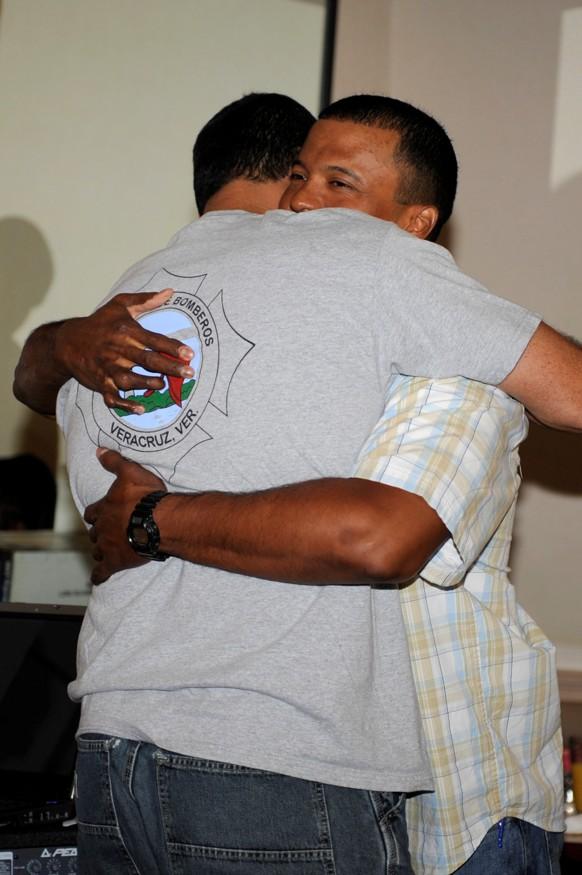
I am grateful that today I have a wonderful relationship with this member, and we are both grateful for his life and the lives he has touched. I am also grateful that the fire service has a greater awareness of the personal impact these incidents can have and better conversations about supporting one another. We can be extraordinarily critical of each other after something goes wrong. But sometimes what a member or an officer needs most at that moment is someone willing to check in, listen, and help them work through it in a healthy way. We still need honest accountability. We also need to remember that the people carrying that responsibility are human.
The burden of command isn’t owning everything that happened. It’s owning everything that was yours. And sometimes learning to understand the difference is part of the burden itself.
What We Pass Forward
As I approach the end of my LAFD career, I find myself thinking more about legacy. I don’t believe our legacy is defined by the incidents we commanded, the positions we held, or the titles we earned. It’s what we leave in the people who come after us.
Did we prepare them? Did we build the relationships and systems they will need? Did we create an environment where they can question assumptions, speak up when something doesn’t look right, and learn from mistakes without being afraid to tell the truth? Did we share the lessons we learned the hard way, instead of letting the next generation discover every one of them on their own?
I’ve had times when I felt I knocked it out of the park and other times when I know I could have done better. I certainly don’t have all the answers. I’m still learning, and I hope I keep learning right up to the end.
Leadership prepares us for command. Command reveals our leadership. And afterward, we have a responsibility to examine the experience, improve the process, and pass along what we learned. Sooner or later, every one of us hands that responsibility to somebody else.
I leave with gratitude, humility, and a deep appreciation for the people who have surrounded me along the way. I have learned from chiefs, officers, firefighters, and members at every level of this Department. Some of those lessons came during major incidents and difficult decisions. Others came sitting around a kitchen table, where somehow every problem in the world could be solved. And still others came in the simplest moments: someone showing me how to fix something, drive a piece of apparatus, throw a ladder, or simply do the job a little better.
They taught me about the fire service, but more importantly, they taught me about life. And when things didn’t go as planned, they taught me something else too: how to own it, learn from it, and keep moving forward.
Thank you, LAFD, for the experience, and even more, for the people who made it what it was.
© 2026 Carlos Calvillo. All rights reserved.