
By Jeff Fields, Author of Sober from Sin
“A Law Enforcement veteran’s journey to unraveling addiction and faith.”
What is important to you? Is it your title, salary, or pension? This question is answered easily if you ask someone while they’re at work. Their mind is set on self-promotion and envisioning a solid retirement. But what if you asked this question to someone when they are off duty? Would their answer change? “Money,” “family,” “my kids’ education?” I think the question is harder to answer for someone who just sat down after mowing their lawn. Why is this?
Do you know what your priorities are?
It all comes down to priorities. Often, our priorities are skewed at different points in our lives. When I was a young police officer and firefighter, I would have told you that my priorities were to save lives, make good money, and hang out with my friends. As I got older, my priorities shifted to job promotions, a better house and car, and meeting my wife. Later in my career, my focus turned to title, money, and notoriety. This progression may not look the same for everyone, but ultimately, as we settle into our careers, we often drift from the truly important things. I know this from personal experience and from speaking with other first responders.
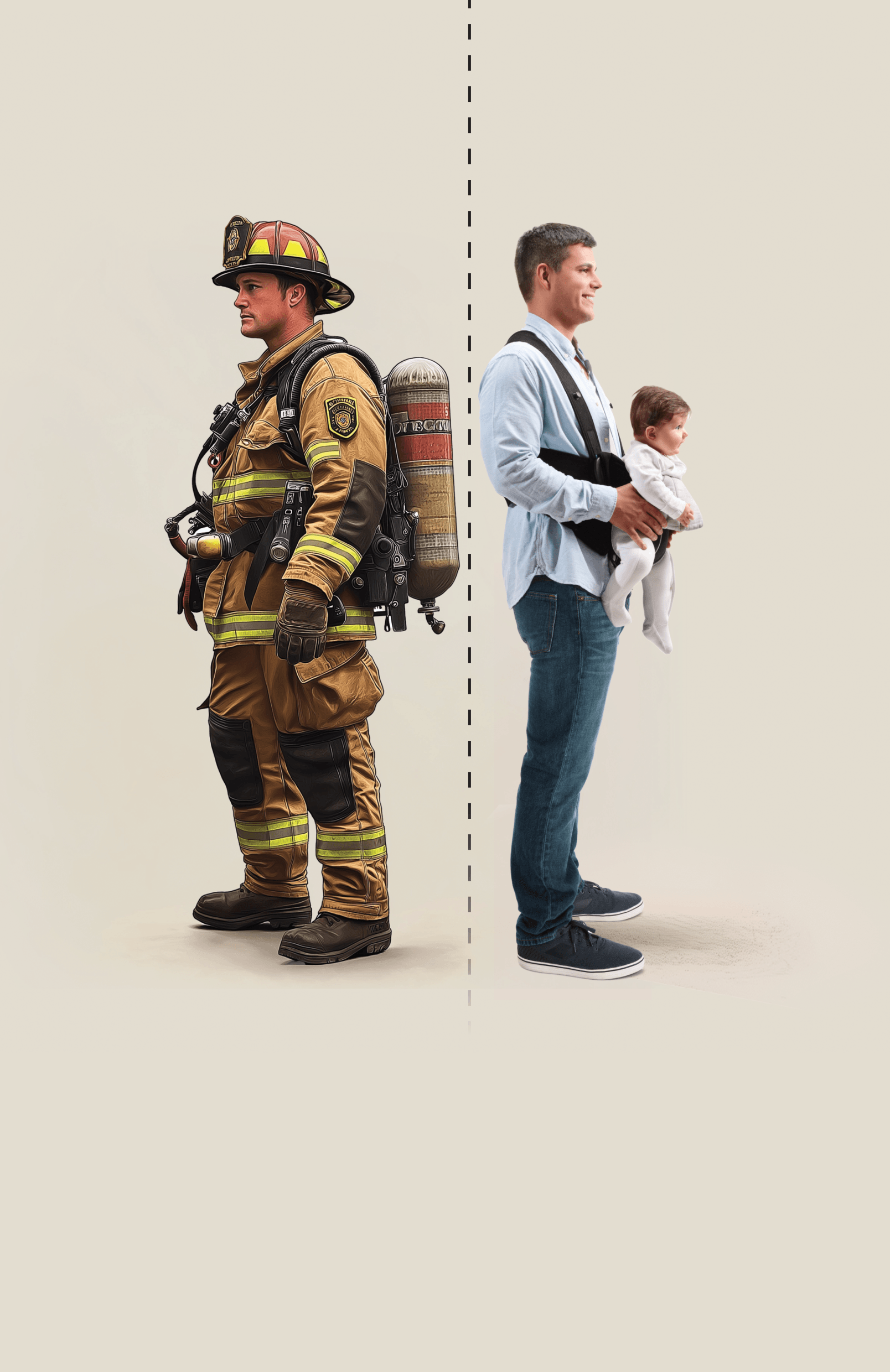
This drift happens in every profession, but first responders may have a more grandiose perception of themselves, so often, family comes second. We control the scene, knock down fires, create calm in chaos; we are doers. But what happens when we get home and can’t calm the scene or extinguish the fires of personal relationships? It made me gravitate closer to my career than my family because I had control there. It was structured, and I was getting paid.
Life is always waiting
But when I clocked out, I was still left with, well, life. It has always been curious that when we decided to go into a career as first responders, we underwent rigorous academies, field training, and quarterly training to learn how to do our jobs well and safely. If you were like me, I got into my career young, and it was my first “real job,” so I hadn’t picked up too many life skills yet. All I did was add a bunch of technical career skills on top of limited life skills. I can’t speak to others’ experiences, but my academy experience was limited to the “work stuff,” not the “family stuff.” They warned us against getting too wrapped up in our jobs to prioritize caring for our family. But this advice was brushed aside by a 23-year-old eager to start his career. The topic of family life or family wellness was brief and lacked substance. This gave me the impression that I wouldn’t have issues with my personal life because it wasn’t built into the curriculum. Boy, was I wrong?
Balancing careers
I spent 22 years in law enforcement, both locally and federally. I spent four years as a firefighter and 2.5 years working as an investigator for the medical examiner’s office. My firefighter and death investigator roles were collateral to my duties in law enforcement. I lived and breathed my career; I didn’t have time for anyone else. But towards the end of my career, I started to see things differently after I was married and had a child. This wasn’t because I lost my love for my job, which I did, but because my family told me they would leave me. Why? During the last quarter of my career, I became very dissatisfied with my job. Topped with unaddressed traumas, I started to drink alcohol to create some sort of, albeit fleeting, peace. This turned into an addiction, and any free time I had from work was spent either drinking, recovering from drinking or figuring out my next drink.
Family became background noise to me. But when my wife told me she was leaving me and taking my daughter with her, a realization came over me. Now, this wasn’t the first time my wife had threatened me with this, but for some reason, this time, the 128th time (or so it felt), it scared me. I felt like my foundation was about to break apart. You see, this whole time, my career successes and the comfort of my days off were contingent on having a home. When I say home, I mean a family who loves and supports you. I took this for granted, never thinking about what would happen if I didn’t have it.
What comes first?
For many years, I placed my career first, myself second, and my family last, never thinking about how I would survive without my job. I had seen so many colleagues divorced, remarried, and then divorced again. Some were paying child support to multiple ex-spouses, dealing with domestic violence, and other personal crises. When I started to reflect on all of this, I began to see patterns. There was almost always a common thread in these people’s lives falling apart: their job was everything to them. They would work overtime constantly, avoid family functions, and skip their kids’ events. Reflecting now, with sober eyes, it is sad. But even though it is sad, this behavior seems accepted in many first responder roles. However, acceptance doesn’t make it right.
An uncertain future
One of the hardest-hitting realizations for many comes when they retire. They no longer have the title, structure, or importance they once had; now, they have their family. But often, the family is now scorned, scattered, or disinterested in a parent who wants to put them first. Studies have shown, and I have witnessed this numerous times, that children of an absent parent are more rebellious and are more likely to go down dark paths in their lives. All this because a parent made work their priority over them.
I want to make this point: you don’t have all the time in the world when it comes to family. The moments where you are needed will never be convenient or as gratifying as you may expect, but the operative word here is “needed.” You are needed as a spouse, parent, sibling, or friend. Your need will always be there, as long as you don’t mess it up, whereas you will only be needed in your career for a limited time. Once you are gone, you will be replaced, and you will be forgotten. But to your family, you are irreplaceable. You will never be forgotten.
So, if anyone ever asks you what is important, think hard about your foundation. Think hard about who makes your house a home. Whatever your family dynamic looks like, family comes first. Be intentional with your time with them. Your family shouldn’t be your retirement plan. Your family should be the reason you want to leave work as fast as you can every day. Trust me, they will thank you later.