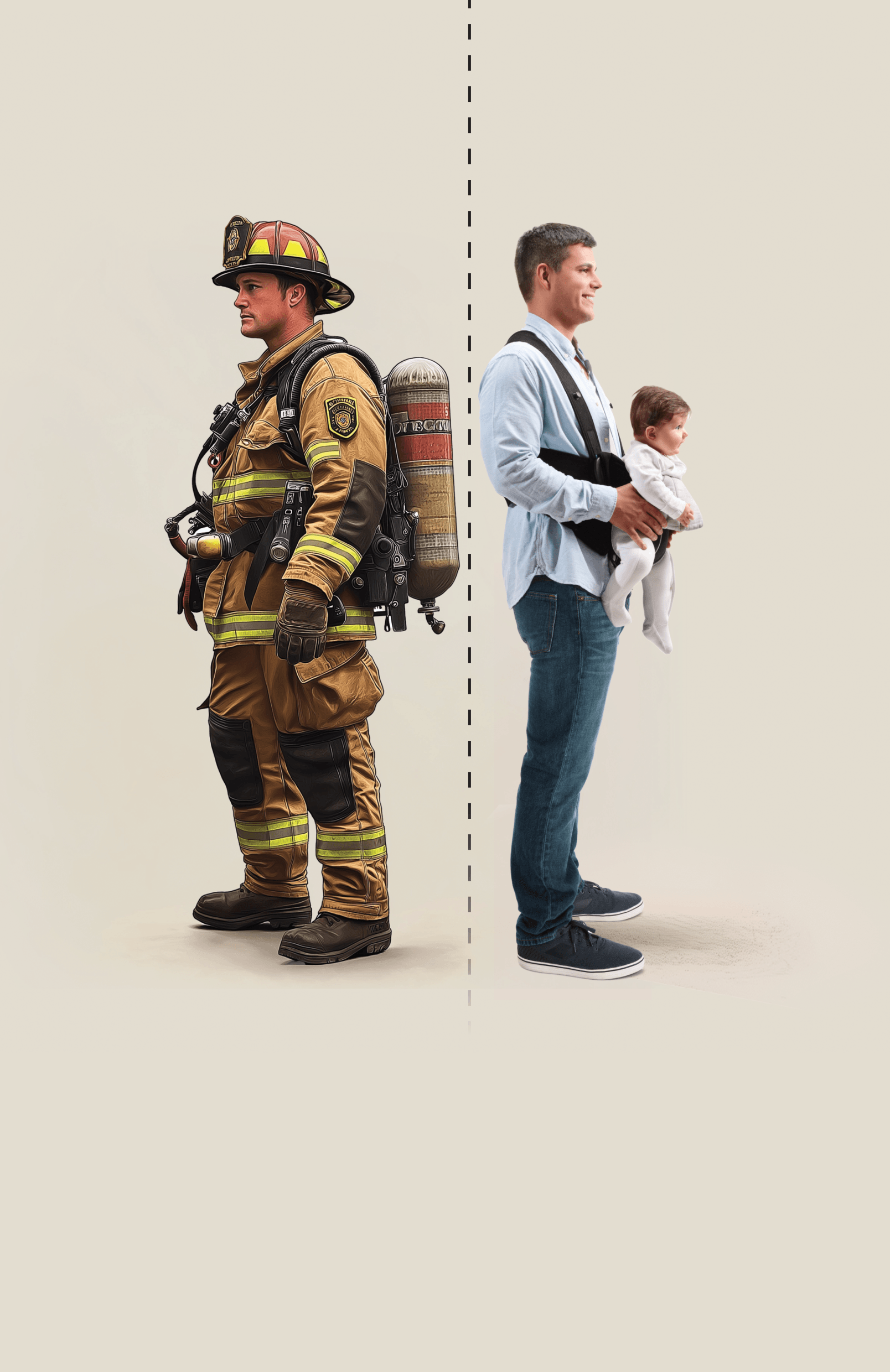
Communication in marriage is challenging, but the fire service adds a whole new level of complexity, including long absences, emotional strain, and constant stress. As a psychologist specializing in supporting firefighters, I understand why you avoid bringing work home. You want to protect your family, and maybe you just don’t think your partner will “get it” – the downtime that’s actually crucial for decompression, the tragic calls that linger in your mind, the everyday frustrations with administrators that seem so trivial to explain.
Despite these understandable reasons, as someone married to a firefighter myself, I can tell you that work inevitably comes home, whether you like it or not. Those experiences subtly shift how you behave and feel, and your spouse notices! We notice the changes in your mood, outlook, and behavior – and we can tell when something isn’t quite right. Without open conversations about what is going on for you, our sense of connection can diminish, leading to loneliness and frustration within relationships.
If you answer “fine” to your spouse for the next 10 years, you risk unintentionally distancing yourself from the person you love most. In effect, your attempt to “protect” them may actually create a deeper divide that’s hard to bridge.
Dr. John Gottman, one of the world’s leading relationship experts, found that when couples support each other through life’s stressors, their marriage remains strong. I want that for you throughout this career. So, here’s how you can turn this around before it’s too late.
Set The Stage
Good communication starts with having a pre-conversation. I know – super annoying, right? But just like at work, effective change always requires some planning. Find a good time to chat with your spouse. You might say something like, “I’d like to talk more about work with you … but I also want to discuss what that might look like for us.” Or you could ask, “Do you ever wish I talked about work more? Are there aspects you’d like to hear about?”
Set Boundaries and Expectations
Like supervisors with new hires, have “the expectations talk” to clarify boundaries. This establishes and clarifies everyone’s boundaries. You can outline what you feel comfortable talking about, when the best time to do that is, and what you’d rather not talk about, and your spouse can do the same. It’s a collaborative conversation where you both find a happy middle ground.
My husband and I talk about his work at some point after every shift (not right when he gets home). He knows I’m interested in the impact events have on him, not the trauma details. If he did have a tough call, he could say something like, “We had a really tough call this tour involving multiple child fatalities.” From there, he can discuss how he’s doing or how the crew responded, without reliving any traumatic details. When we understand each other’s boundaries, it allows us to discuss whatever happened on his shift.
If your partner isn’t a firefighter, it’s natural that they won’t fully understand all the nuances. That’s OK. Your job is to help them better understand the aspects they don’t get. When you explain things in a way they can grasp, you’re building a bridge to understanding. It takes patience, but the benefits are worth it.
Ground Rules to Keep You Both on Track
Even simple conversations in serious relationships can get off track and unintentionally lead to more stress. To keep these check-ins on track, I teach couples these rules inspired by Dr. Gottman’s research on happy couples:
Consider Timing
Choose a calm moment, free from distractions. Avoid starting a deep conversation when the kids are screaming or during a game. Also, right when you get off shift might be the worst time due to lack of sleep and exhaustion.
Let them know you’re seeking their understanding and support, not a contrasting opinion
When your partner truly tries to understand your perspective and offers support, it builds connection instead of frustration. (This is especially crucial if you’re both firefighters or first responders.)
Let them know you’re looking for a listening ear, not advice
When your partner listens with empathy and validates your experience – without trying to “fix” it – you feel less alone. Pro tip: Remember this when you’re the listener.
Share the good stuff, too
It’s important to vent, but remember to share moments of pride and success, too!
The firehouse is your safe space at work; by making your home a safe space and letting your spouse in, you not only strengthen your relationship for the long term but also build the resilience you both need to handle whatever challenges life throws your way.
Ready to take the first step? Challenge yourself to set the stage with your partner this week.