What The Best-Known Fitness Guru Thinks AboutFirefighter Wellness And Strength
”The more focused you stay,the better the results.
Advice you never asked for is often the worst kind – especially when it comes wrapped in good intentions that spark resentment instead of change. We’ve all been there, trying to crack the stubborn nut that is first responders’ resistance to wellness guidance. So, how do we get through the wall they've built, preventing them from seeing the very hurdles they’re recklessly climbing?
Anyone who grew up in the early 2000s probably has vivid memories of spending time in front of the TV, watching the now-vintage commercials, talk shows, “Star Trek” episodes, and, more importantly, infomercials. You couldn’t escape them. With big personalities (think Flex Tape, OxiClean), persuasive salespeople, the sidekick amazed by the results, and all the shiny gadgets, it took something special to persuade viewers to make that coveted call with their credit card. And when something enticing hit the market, it spread like wildfire.
Enter Tony Horton and P90X – a fitness system and plan that broke the mold – promising a year’s worth of results in just 90 days. Is it intense? Yes – by design, it’s meant to be tough. Does it promise results if you stick to the program? Another yes. But that makes sense, doesn’t it?The more focused you stay, the better the results.
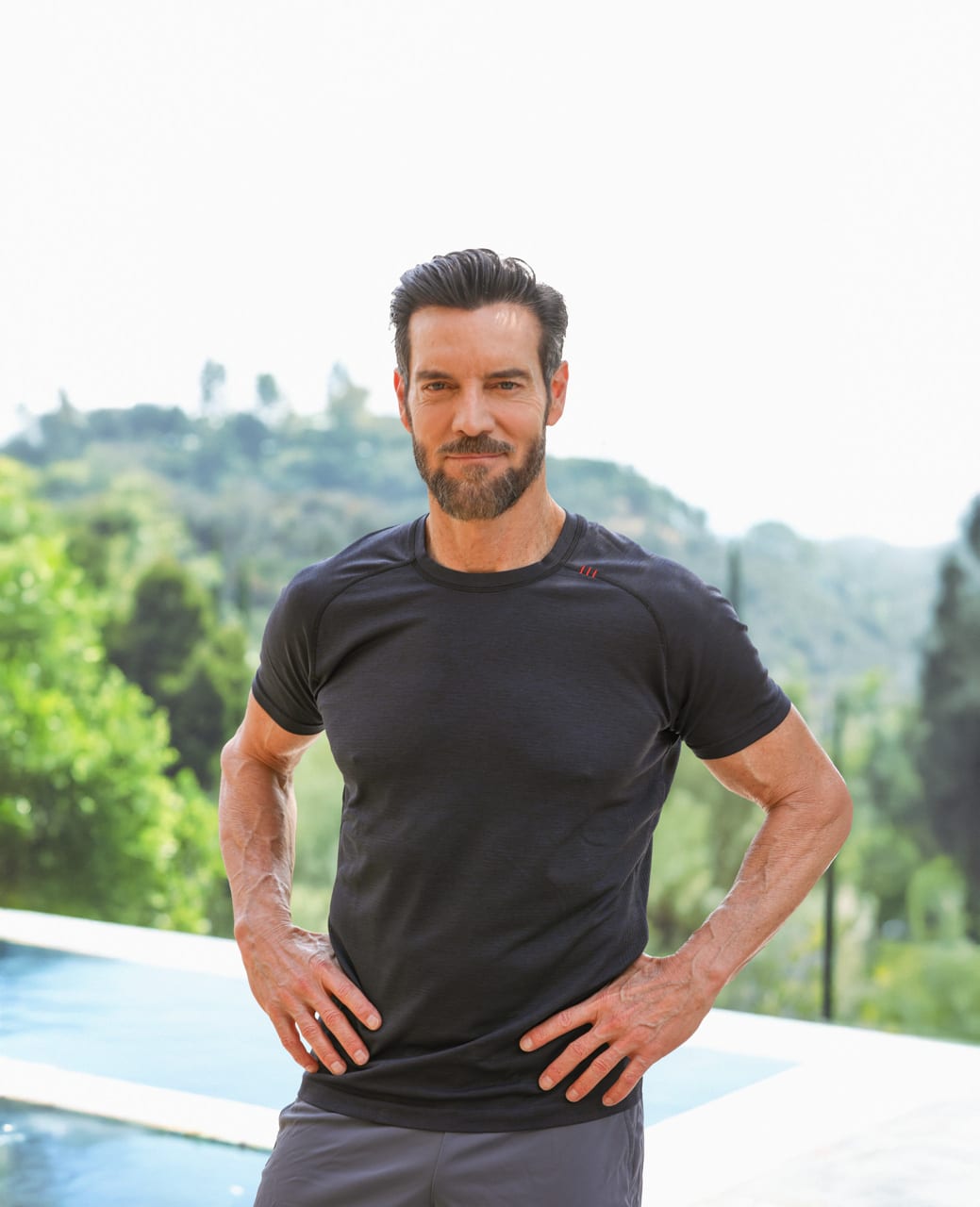
It helped that fitness advocate Tony Horton was showcasing workouts with testimonials that even the shopping networks couldn't deny. P90X became an undeniable force, selling more than 11 million copies. And those faces you saw in his infomercials, sweating alongside Horton, were some of his many success stories. Today, Horton, at 67, works out almost every day, following a schedule that keeps him on track and helps him feel great.
But it’s the “why” that fuels his lifelong dedication.
Horton explains, “The reason why is just as essential as breathing, eating, going to work, paying your bills, and everything else. If you’re caught in that cycle of winning one day and screwing up the next, and you know it’s not working, then that means your reason why sucks.My reason is obviously longevity, but the quality of my life is the other part of it. Being happy and present more often is another significant benefit. Those three things matter to me immensely.”
What are his behaviors to sustain his “why?”
“I’m going to have good and bad days based on all kinds of things that are out of my control. My solution always starts with moving. So, that’s where the plan comes into play.What is your activity plan – what are your fitness, wellness, and recovery plans? Those need to be at the top of the list, or at least in the top three. These are things you can’t just wing. If you wing it, it won’t happen. If you plan it, it will.”
He continues, “This is what I do for a living: I create fitness programs, write books, hold seminars, and run four-day Paragon camps at my home to help people break out of their ruts. Not just physically; it’s not only about having big arms and a big chest or looking a certain way.It’s about quality of life, pure and simple. And whenever you move physically, it alters your emotions and mental state. Your brain chemistry shifts, and 10 minutes of whatever you’re doing – whether it’s going for a walk, doing a few yoga sun salutations, sprinting up some hills, lifting weights, or maybe practicing martial arts – it’s invaluable. That way, you don’t need the pharmacist, a doctor, or pills and powders to fix all your problems.”
”My solution always starts with moving.
Horton did it his way, starting in the 1980s with personal training sessions that included famous clients like Billy Idol, Bruce Springsteen, Tom Petty, and Ewan McGregor. But what earned him airtime, often around two in the morning, was his infectious enthusiasm for connecting with people where they were and challenging their “why.”
“You need to understand genetics and epigenetics,” Horton explains.“Epigenetics is healthy behavior that alters your genetics. If you’re not drinking, smoking and stressing all the time, but instead you’re eating healthy food, exercising regularly, doing your breath-work, taking needed naps, going to a physical therapist, foam rolling, and hopping into a cold plunge, you’re choosing to do these things, and it’s a decision to change your genetics in your lifetime. Transformation and change are hard: people will say, I know what I know, based on what I’ve learned in life, and I like what I know, and I don’t want to know anything new, thank you. I say, good luck with that. The second half of your life is going to be a whole lot harder than it has to be. You’ve got your own specific genetics, now you need to decide what you’re going to do with them.”
Horton is also passionate about how we age, or more specifically, not aging in the traditional sense.
“I would compare how first responders’ age to what a professional athlete goes through. They'll get slammed around, beaten, and banged up, and as a result, their cortisol levels and adrenal glands can get fried. And they’re having to perform at a high level because their quality of life depends on it. Like athletes, if you push hard, train hard, and perform well, you’re much more durable and less vulnerable to the constant barrage of physical, mental, and emotional stressors. This means there needs to be some healing behavior on the other end that allows you to come back the next day. For those training hard and getting older, there has to be an equal or more so amount of mindfulness and recovery behavior on top of whatever else you’re doing that causes all the emotional, mental, and physical stress.”
So, first responders need to remember that while our job can sometimes be overwhelming, all-encompassing, and stressful when paired with our personal lives, we still need to invest time in ourselves.
“Recovery and mindfulness activities take many forms: from what you eat and think, to the behaviors you participate in, as well as a variety of other tools such as foam rollers, infrared saunas, cold plunges, massages, and good old-fashioned physical and emotional therapy,” Horton explains. “Looking at my list of rest and mindfulness practices, breath-work, and listening to music stand out as a few of my most powerful tools.
I have music playing almost constantly; it’s a tremendous form of therapy for me.
“Altruism is another important healing behavior – there are a lot of people who are way too self-absorbed these days. Reminds me of that Beatles song, ‘I, Me, Mine.’ Try to be more altruistic, more giving, loving, and thoughtful – think outside of what you need and spend some time with others who need you. For every firefighter or first responder out there, how are you training and recovering, and what is your overall wellness strategy? Do you have a rest and recovery practice? Figure this stuff out and make a list of healthy behaviors, and post it on your fridge or the back of your front door and look at it often, and ask, ‘What am I really dealing with right now’ – am I going to drink a pot of coffee, take a few shots of tequila, or down a six pack again to mask my situation, or am I going to be the one source that finds the solutions to my problems? If I use these unhealthy sources outside of myself, well, guess what, there will be consequences. You'll make the situation worse, despite thinking you’re making it better. Comfort food and booze make you comfortable while you’re eating and drinking it, but it creates a whole lot of havoc later.”
However, Horton understands how easy it is to fail and remain stuck in a fitness rut, remembering that a rut has three distinct parts: the beginning, middle, and end. We can all get caught in some part of the rut, whether it’s our struggle to get started, being stuck in the middle with little progress, or getting to “the end” of a workout program or journey, only to realize how unhappy and unfulfilled we are.
“There is a lack of consistency and continuity there; you need a purpose, you need a plan, and you need to be accountable,” Horton says. “If those three things aren’t locked and loaded, then you’re very vulnerable to failure and disappointment.”
Horton strongly believes that if we spend more time focusing on the things we struggle with, rather than the things that come easily, we can begin to shift our focus more towards our weaknesses than our strengths.He wants first responders to be open to learning new things about what their bodies are capable of and to stop judging how the journey unfolds. Showing up and being open to the experience is the key.
“These are methodically planned in advance, and my accountability comes from calling, emailing, and texting my crew to show up. One of the great things about firefighters, first responders, and EMS is that your crew is always right there with you. You don’t have to hunt them down every day like me. They are shoulder to shoulder with you on the job daily. Someone has to say, ‘Hey – we’ve got 20 minutes – let’s get on the deck and knock out some push-ups, crunches, squats, and lunges.’ Consistency is everything. These guys and gals will attack their workouts for a few days with the intention of making big changes. On top of that, they have to deal with work, family, and life, so at that point, they're completely wasted, and all their good intentions go out the window.Fitness needs to be a way of life, like brushing your teeth every day. It’s best to be the tortoise, not the hare.”
Tony Horton’s dedication to the fitness industry isn’t capped at P90X. With multiple workout programs, speaking engagements, books, YouTube exclusives, and enough interviews to occupy your long drives to and from work, there is no end of motivation from a guy who’s just as real as you.
Forty years later, Horton is still just as excited about his mission, and it’s for one simple reason.
“Regular exercise is the one thing I know that makes me a better person,” Horton says. “I love skiing, I really enjoy my four-hour Sunday workouts, and I have to do everything right in between these activities, and others, to continue enjoying them all. For me, straying in any way is a disaster. That’s the reason why P90X, for example, was 90 days with calendars to track your progress, and we told folks what to eat, and what to avoid; either you do it the right way or you don’t ... I wish I had the magic elixir that would help the average person struggling to make the healthy switch.**But if you surround yourself with like-minded people who want to kick ass and take names, then you will, too.**However, many people lack that support around them. You have to ingest these strategies and techniques and apply them. I can’t hold your hand; I’m only here to share what I know, then it’s up to you to make the decision to do it. If there were an easy answer, I have yet to find it.
So, how do we show first responders that working out has direct benefits on their lives outside of making the job easier?
“A lot of the time when I have these conversations, I ask folks what it is they plan on doing to achieve their goals, and quite often they don’t have much of an answer. People often say, ‘I’m not wired to be that kind of person, no way I’m going to be vegan or work out six days a week, etc.’ The mindset should be: Maybe not yet – instead of I can’t. It sets you up for showing up and being open-minded to learn how to get from being stuck to being successful and happy.”
“I love pressing the flesh, meeting people, and disseminating information. I could do that every day of my life. Conducting seminars, Masterminds, Zoom calls, and live events allows me to meet people where they are.”
And Horton isn’t gun-shy when it comes to growth. He understands intimately how much dedication it takes to change a mindset – but the stakes are the same for anyone reading this.Either you choose to ignore the facets of your life that make you tired, weak, and unmotivated, or you embrace the hard and see where life might take you if you get a bit uncomfortable.
“I work on my weaknesses, and that will never change. There are a lot of things I do because I’m not very good at them, and I understand that it creates greater physical, emotional, and mental changes in me than just, you know, bench pressing and deadlifting. Many people begin this way – they arrive at the gym, lift some weights, and hop on the elliptical, and that’s it. They never think of taking a class because they don’t want to get out of their comfort zone and 'look' bad.
Being bad at something is the start of a brand new learning experience. Be awful for awhile, until you’re not.”