Sports offers us lessons on rebuilding teams, rethinking strategy, and finding overlooked talent in the fire service
Have you ever watched a movie and experienced an unexpected moment of clarity? A scene that creates an “aha moment” and suddenly connects to a challenge you see in the workplace, lighting up a proverbial light bulb? That happened to me while watching three films: “We Are Marshall,” “Miracle,” and “Moneyball.” Although these stories come from different worlds – college football, Olympic hockey, and professional baseball – they all share a common theme: how organizations rebuild, adapt, and identify talent when faced with overwhelming challenges.
The fire service has long been built on teamwork, tradition, and service. However, building a successful organization requires more than filling vacancies: it requires intentionally developing people and creating a culture where they want to stay. Whether developing a probationary firefighter, preparing future officers, or creating a leadership pipeline for future chief officers there are a plethora of lessons the fire service can use from sports’ true events.
“Marshall” faced the unimaginable loss of an entire football team program and had to rebuild from nothing. “Miracle” faced an unbeatable opponent and had to rethink how the game was played. And “Moneyball” faced losing key players while operating with limited resources. Yet, it was their solutions, not their predicaments, that when viewed through three themes, can help the fire service with respect to talent management: rebuilding, restrategizing, and recruitment.
Rebuilding: Creating a Competitive Team (Marshall University – Starting Over After Tragedy)
In 1970, Marshall University faced an unimaginable loss when a plane crash claimed the lives of players, coaches, trainers, and supporters of the Thundering Herd football program. With an unprecedented situation, the university faced a difficult decision: continue or walk away. Choosing to continue meant rebuilding an entire organization from the ground up. To do that, they needed a head coach, coaching staff, players, a new system, and community support (fans and boosters). Since the head coaching position was considered one of the most difficult jobs in sports, the person who accepted it would inherit a program with little immediate hope. The NCAA had a rule that prevented freshman players from playing in their first year; the program would not start until Year 2.
The lessons from “Marshall” are powerful and ones that offer insights for fire service leaders. First, rebuilding requires courage. Leaders must be willing to step into demanding situations and create something new. Second, successful organizations find leaders who believe in the mission. The right leader can inspire people to believe in possibilities rather than limitations, evidenced by petitioning the NCAA to allow freshmen to play. Third, systems must match the talent available. Marshall could not simply recreate the past; they had to adapt and develop a strategy that fit their current circumstances. To get there, the head coach demonstrated humility by seeking help from neighboring West Virginia University.
The fire service can face similar challenges. Recruitment, unexpected departures, and changing demographics require fire departments to rebuild talent pipelines, develop new leaders, and create opportunities for the next generation.
Restrategizing: Changing How the Game is Played (‘Miracle’ – Competing Against the Impossible)
The 1980 United States Olympic Hockey Team faced what appeared to be an impossible challenge. The Soviet Union had dominated international hockey for decades. In fact, they had won gold in the last four Olympics. The Soviets were experienced, disciplined, and revered as the best team in the world. The Americans could not beat the Soviets simply by copying what they did – they needed to think unconventionally.
When Herb Brooks faced the United States Olympic Committee for the top job, he understood that success required a different approach. He had studied the competition, evaluated available talent, and conceptualized a hybrid-style that combined Canadian creativity with Soviet structure. Being a student of psychology, Brooks selected players based not only on individual skill but on how they would function together as a team. One of the biggest lessons he taught this amateur team was that the name on the front of their jersey mattered more than the one on the back.
The fire service can learn from this approach. Organizations cannot rely solely on “the way we have always done things.” As challenges evolve, training methods, leadership development, and recruitment strategies must all evolve, as well. The best teams in organizations are not simply collections of talented individuals; they are groups of people all committed to a shared purpose.
Recruitment: Finding Talent Others Overlook (Moneyball – Building Success via Limited Resources)
The Oakland Athletics (A’s) faced a familiar problem from both the private and public sectors: they could not financially compete with larger organizations and their budgets. After losing key (star) players, general manager Billy Beane needed an innovative approach.
Instead of trying to purchase the same talent as wealthier teams, the organization changed how they evaluated players. Through data analysis and unconventional thinking, the Oakland A’s identified overlooked individuals who could contribute to team success. Known as Sabermetrics, it was an unorthodox means to build a team. The lesson was simple: talent is not always obvious; and choosing to look deeper into who someone is might unearth potential yet undiscovered. Surprisingly, after being ostracized by the league unwilling to change how they evaluated talent, the Oakland Athletics put together a winning team with their radical ideas.
The fire service can apply the same principle. Recruitment should not focus only on finding people who fit the traditional image of a firefighter. Departments should look for individuals with leadership potential, emotional intelligence, adaptability, and a commitment to the service. It’s these abilities that can go a long way to building a leadership pipeline; and sometimes they do not always show up in conventional spaces.
Building the Future Fire Service (Transforming the Fire Service via an Athletic Lens)
The lessons from “We Are Marshall,” “Miracle,” and “Moneyball” are not really about football, hockey, or baseball. They are about leadership, showing us that successful organizations:
- Rebuild after adversity
- Adapt when old strategies no longer work
- Identify potential in unexpected places
- Develop people purposely
- Create and nurture cultures where people want to belong
The future of the fire service depends on more than recruiting firefighters. It depends on building teams. Talent management is not simply about finding the right people; it is about creating an organization where the right people want to stay. This is what these three true events have taught us: anything is possible when we choose to not just look at the path always taken.
Given that the Marshall University Thundering Herd football team eventually won a national championship, the U.S.A. Olympic Hockey Team won gold, and the Oakland A’s baseball team achieved the most baseball wins in a row (20) – there is something to be said when it comes to talent management for the fire service. There are a myriad of lessons that can be explored further and applied to fire service traditions.
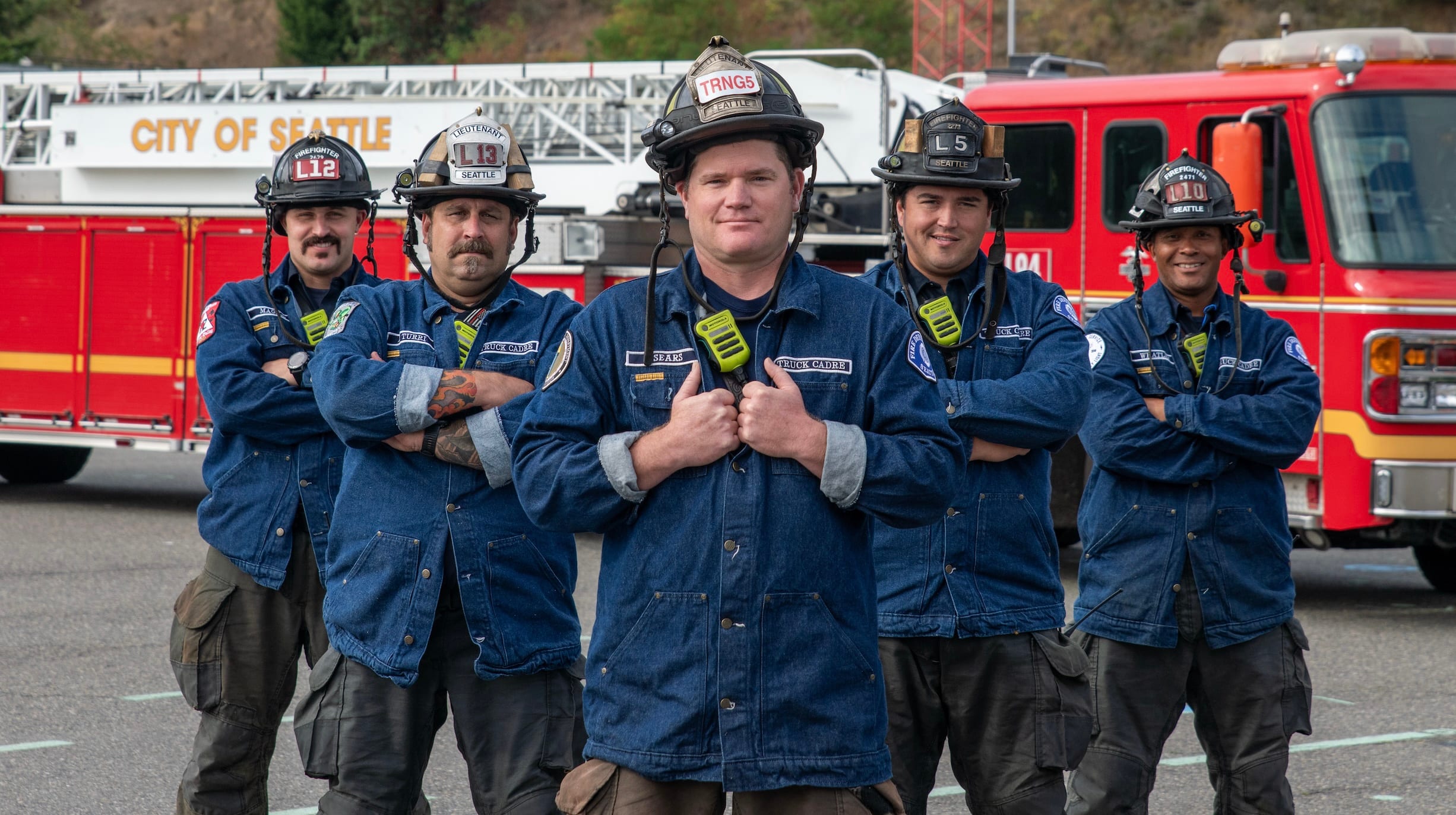
Photo by Steve Baer | FireDog Photos