A near-tragedy reveals the true meaning of brotherhood, resilience, and the people who show up when everything falls apart
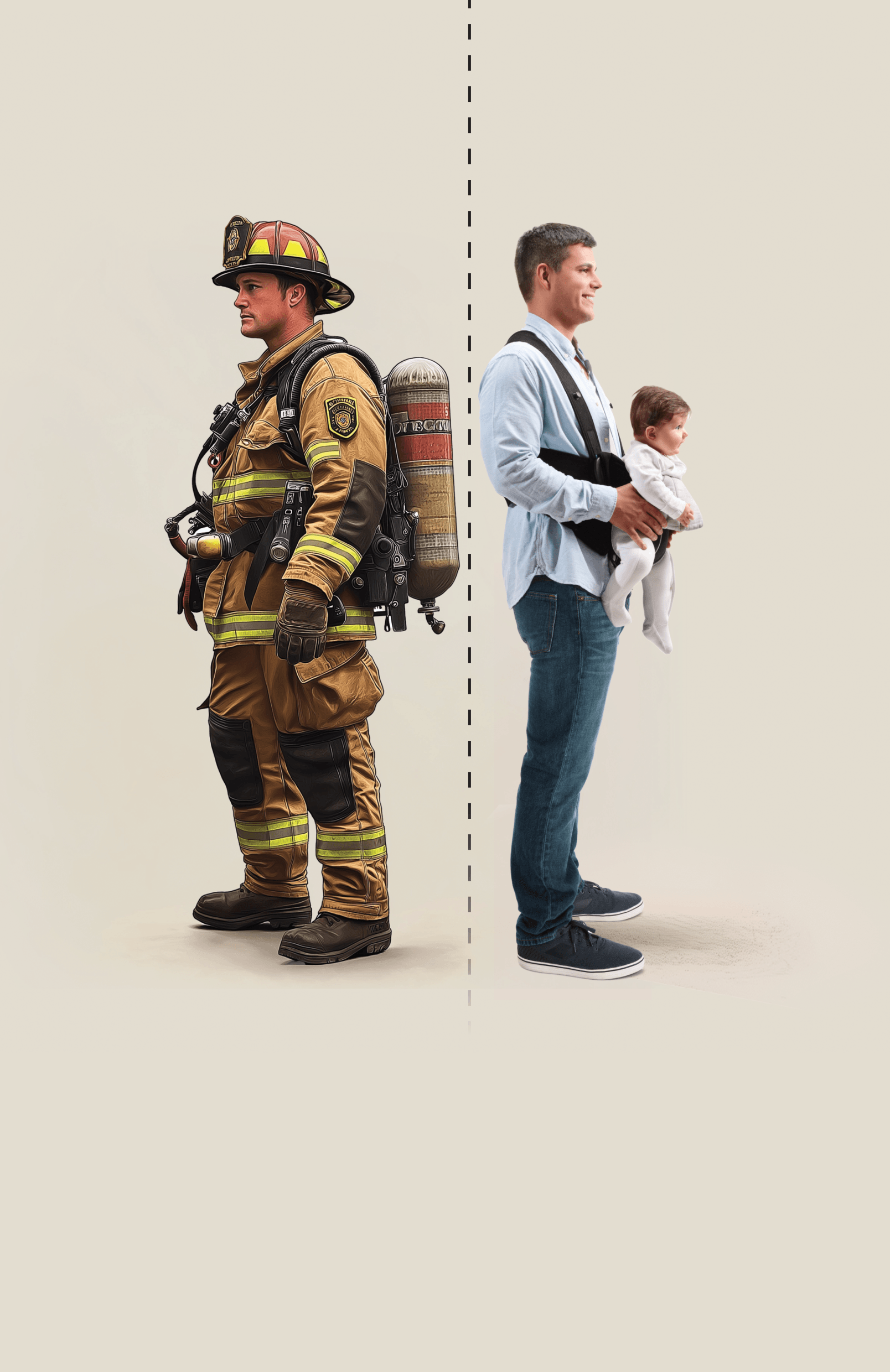
In the fire service, we like to believe we can handle anything. Structure fire at three in the morning? No problem. Vehicle entrapment on the interstate? Let’s go. Hazmat spills, hurricanes, bad calls, sleepless nights, and the kind of exhaustion only firefighters and paramedics understand? That’s just another Tuesday.
We train for chaos. We prepare for worst-case scenarios. We wear confidence like bunker gear and convince ourselves that somehow, we are bulletproof.
Until life reminds you, you are not.
Back in October of 2008, I was doing what a lot of us do when we are younger in this profession: trying to do absolutely everything. I was leading the EMT program at the local technical college, handling day classes and night classes like sleep was some optional hobby. I had a paint business on the side because, apparently, I thought free time was for weak people. I had completed my fire officer courses and was “acting up” whenever the lieutenant was on Kelly Day. I was deep into the Firefighter Combat Challenge world, chasing better times, chasing pride, and chasing the respect of the older studs in our department.
These were the Lion’s Den guys, the legends. The over-40 and over-50 warriors who still ran individual events and relay teams like Father Time was just another rookie they could haze. They were old-school tough, polished boots, sharp uniforms, and they backed every bit of it up.
I wanted that torch.
The Foundation at Home
At home, both of my kids were deep into sports, and we traveled all over the state for games. I rarely missed one if I could help it. My wife — my rock — somehow held all of this together. She fed us, managed the household, kept the ship afloat, and somehow smiled through the madness while starting a new career of her own.
I thought I was managing life. Turns out, life was about to manage me.
That October, I was in Atlanta competing at Firefighter Combat Challenge Nationals. I had run an OK time in the individual event — not my best, but respectable enough so my ego was still alive and well. We had already qualified for Worlds in Las Vegas the following month, but like most firefighters with a competitive streak and questionable judgment, “good enough” wasn’t good enough.
So I talked one of my fellow competitors into running another relay. Because clearly, nothing bad has ever happened after a firefighter says, “One more time.” Everything was going great until Rescue Randy.
For those unfamiliar, Rescue Randy is the dummy drag — the final insult of the event. By then your lungs are on fire, your legs are questioning your life choices, and your pride is usually the only thing still moving.
That’s where I went down. Pop. I heard and felt it. And I knew immediately my knee had officially resigned from duty.
There I was, laid out in Atlanta, staring at the sky, not thinking about pain, but about bills. Work. Missed shifts. Overtime gone. How am I going to explain this? Typical firefighter logic.
I thought that was the worst thing that could happen. It wasn’t even close. I called my wife. After the initial panic and the usual back-and-forth, she said what she always said: “Come home. I went shopping, I’m making dinner, I got your favorite beer, and you’re going to lie there and watch sports. I’ll take care of everything.”
That woman had been saving me long before I knew I needed saving.
More to Come
The nine-hour drive home felt like 12. Every stop to stretch, every awkward limp into a gas station bathroom, every mile reminded me how badly I had messed up.
I got home, and she helped me inside. She propped me up on the bed, turned on the baseball, and let me sulk like a grown man with a bruised ego and a blown knee. I think my Red Sox were busy disappointing me in the American League pennant race. Still, not the worst part of the day.
Sometime in the middle of the night, I woke up to strange noises. Moaning. Dry heaving. The kind of sound that makes your stomach drop before your brain even catches up.
I yelled for my wife. Nothing. Just more muffled sounds coming from the master bathroom.
I managed to stand, hobble across the room, and found her face down in the shower pan. That moment changes you forever.
I yelled for my son. Together, we got her toward the bed. She couldn’t help us. She was mumbling, barely responsive. My first stupid thought? Maybe the flu. Because apparently, I had earned my medical degree from denial.
We got her into the truck, and my son drove us to the emergency department. Yes, I know what you’re thinking. “Why didn’t you call rescue?” Because in firefighter households, we only call 911 if someone is actively on fire. That joke stopped being funny a long time ago.
At the Emergency Department
It was around two or three in the morning on a Sunday, and by the grace of God, the emergency department was empty. Completely empty. Ghost town.
They took her from us. Less than an hour later, they came back and said they were prepping her for surgery. Not the flu. Brain bleed. Increased intracranial pressure.
And suddenly, the guy who had spent years helping hundreds of patients stood there completely helpless for the one person he needed to save most. My best friend. My wife. The mother of our two teenage children. The person holding our entire life together. And I could do nothing.
That was the beginning of true perspective. Thankfully, someone upstairs was working overtime.
The head of neuro happened to be there that night and realized that for that hospital, she needed more definitive care immediately. Within hours, she had been seen, diagnosed, decompressed surgically, and arrangements were being made to fly her where she needed to be.
That is where the brotherhood and sisterhood took over.
Support System Kicks In
My rescue partner handled the transport to the airport. My inner circle showed up before I could even think to ask. My battalion chief had me off work, and coverage was already being arranged. Somebody notified family. Someone else made sure my daughter, my little princess, who I had let stay asleep at home because I still thought this was temporary, was taken care of.
One of my closest brothers grabbed our SUV and drove me north like he was running a private emergency response unit.
No lights. But definitely some strong motivational speeches directed out the driver’s side window at slower motorists.
My mother-in-law was flown in. My kids were fed. My house stayed standing. My dogs somehow still looked happy.
I learned something hard in those days. I was never carrying this life alone. I just thought I was.
Tough Conversations
My wife spent several weeks in the neuro ICU, then another few weeks in a stepdown unit. Multiple scans. Endless waiting. Conversations no spouse ever wants to hear. Two separate chaplains prayed over her with me. My faith wasn’t just tested; it was dragged through the mud and rebuilt stronger. The knee was bad, but I still got down on the chapel floor when they carted her off.
I watched families gather outside patient rooms for the conversations. The conversations. The ones nobody wants. The ones where decisions get made that change everything. I prayed it would not be me. I was selfish. I did not want my kids to lose their mother. I did not want to discover how much I had taken her for granted after it was too late.
The diagnosis came: an arteriovenous malformation, an AVM, from birth that had developed until it ruptured. Once they relieved the pressure, they also found an aneurysm.
They performed a craniectomy, removed the AVM, and repaired the aneurysm. Then we waited. We got her home around Thanksgiving.
Life Goes On
She had to relearn things most of us never think about, walking, balance, bathing, and normal daily life. Meanwhile, my son was on an undefeated football team during his senior year. My daughter was trying to stay strong. Life somehow kept moving.
Cops, firefighters, and dispatchers were feeding my kids. My department gave me cash for fuel and food. Friends cleaned my house. There was food in the fridge. My clothes were washed. Somehow, the machine kept moving. That is what this profession does when it is real.
We say “brotherhood” and “sisterhood” a lot in the fire service. Sometimes too much. Sometimes it sounds like a slogan. But when life drops a ceiling on your chest, and you can’t breathe, that is when you find out if it is real. For me, it was. That was 2008.
Today, my wife walks without a cane. She walks on the treadmill farther than I would voluntarily travel under any circumstances. She works out multiple times a week, which frankly feels like she is showing off at this point.
One of her attendings told me later that they did not give her much of a chance. They expected permanent deficits. They underestimated her. A lot of people did. She pulled through. And then some. Because of great doctors, nurses, faith, and a fire service family that refused to let us fall apart, we are still here. Stronger than ever.
‘Love Your People Loudly’
I still have my best friend. My No. 1 fan. The love of my life.
I never had to have those impossible conversations with my kids. And one of my brothers from that inner circle even stood beside my son on senior night of his final home football game while I sat in the ICU holding onto hope. That matters.
So why tell this story?
Because somewhere out there, someone reading this is trying to do it all. Working too much. Missing the warning signs. Assuming tomorrow is guaranteed. Taking the people holding your world together for granted.
Listen to me: Do not wait for life to throw you through the windshield to gain perspective. Love your people loudly. Accept help when it is offered. Stop pretending strength means carrying everything alone.
And for the love of God, if your wife is the one keeping the entire circus running, maybe say thank you before the universe teaches you that lesson the hard way.
Also, and this is important, if your knee says do not run Rescue Randy again … listen. Trust me on that one.
This article is dedicated to my close circle, my brothers and sisters in this profession, and the people who showed up when life hit the alarm. You know who you are. Blood could not have made us any closer. Thank you for carrying my family when I could not, for standing in the gap, and for proving that brotherhood and sisterhood in the fire service are not just words, they are lived.