

I’ve been sitting with a potentially provocative idea for some time.
It keeps rekindling in my mind, resurfacing in different contexts — in data, private conversations, and personal observations — until I’ve started to wonder whether it points to something larger than a single trend. Not a firm conclusion. But what could be the front edge of a critical convergence that will mark a fundamental inflection point for the fire service.
The fire service was built for fires.
This sounds almost too obvious for words. But most systems are built in response to a dominant environmental condition, and they continue carrying the imprint of that condition long after the environment has changed.
For example, imagine a professional baseball team built around a very specific style of play. Recruiting, training, conditioning, strategy, even the mythology of what makes a great player develop in response to what success requires most consistently.
Baseball great Ted Williams was the mold other players followed because he hit for such a high average season after season after season.
Then the game changes.
Not overnight. Not in a way that forces a complete redesign. The scoreboard stays the same. The uniforms stay the same. The rituals stay the same.
But the conditions that determine success begin to drift beneath the surface.
Batting average is rarely talked about now. A hitter’s worth is measured in launch angle, exit velocity, and slugging percentage.
If you’re inside the system, you may not even notice this happening because you experience it as adaptation. You solve the next version of the problem using the same training and tactical skills you’ve always relied on, even as the environment evolves.
But eventually, the game is no longer the same game that produced the system in the first place.
Perhaps this is similar to what has happened in the fire service.
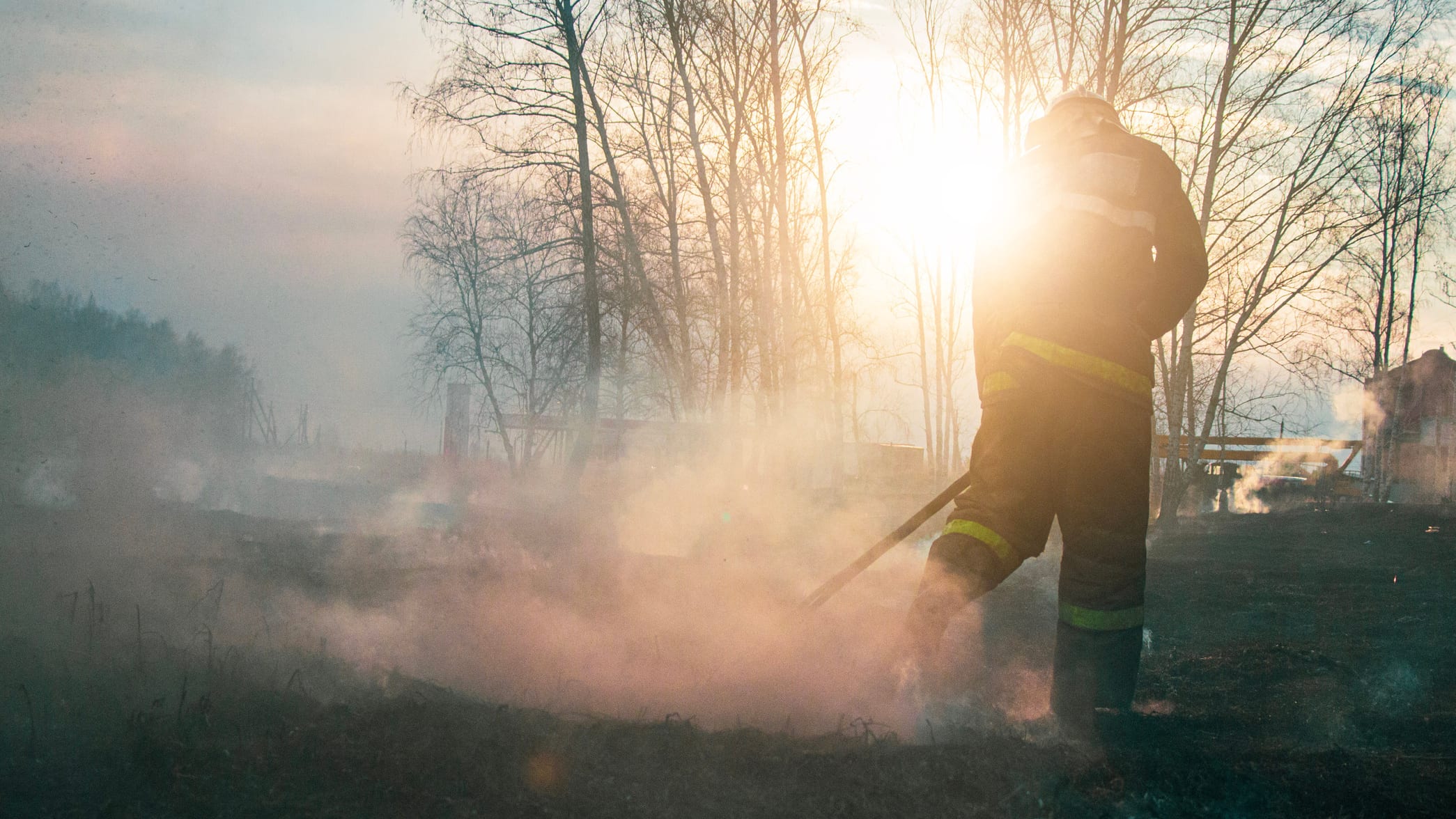
For those like me who live in California, the threat of wildfires is now part of our psychological landscape.
For us, “fire season” is not a figure of speech. It’s a seasonal shift in our fight-or-flight systems. It’s heat waves and Santa Ana winds. It’s an involuntary startle response to the Watch Duty tone on our phones — a notification system for fires and evacuation orders. It’s updating go bags and knowing where important documents are located. It’s knowing that mandatory evacuations are not something that happen to other people.
While ignition counts fluctuate, the most consequential fires are growing larger, faster, and more destructive.
Wildfires that can’t be contained can wipe out an entire community in a few hours.
So, the fire service must continue to fight fires.
Yet, if we zoom out from those catastrophic events and look at the profession as a whole, another reality emerges.
Most calls are no longer fire related.
The majority involve medical emergencies, overdoses, behavioral health crises, welfare checks, and situations where the primary challenge is human distress. What used to be non-emergency is now an emergency. Residential and commercial false alarms and EMS transports where no medical urgency exists dominate the run logs.
This matters because the capabilities required to excel at a mission must evolve along with the mission.
The fire service remains extraordinarily skilled at reading smoke. Firefighters know how to detect subtle changes in heat, pressure, airflow, color, and structural elements that most people would never consciously register. A seasoned firefighter knows how to read the edge of catastrophe before catastrophe fully arrives.
These skills remain essential. But increasingly, the profession is being asked to read something else alongside smoke.
People.
Reading smoke is the interpretation of external signals that point toward internal conditions.
Reading people is the interpretation of internal conditions that express themselves through external signals.
One is governed primarily by physics. The other is governed by psychology. And this is where another trend begins to intersect with this one.
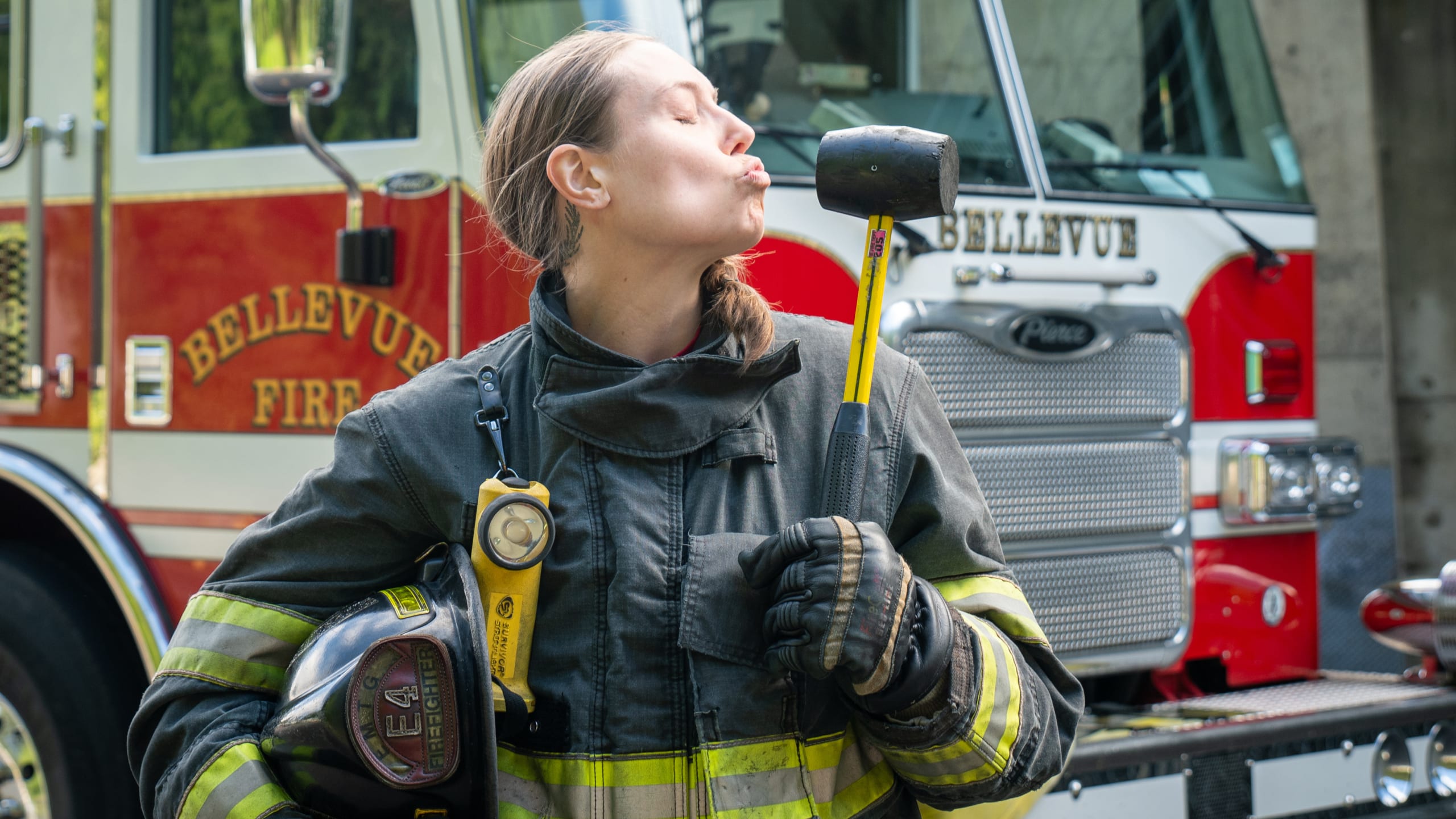
Women have entered the fire service in greater numbers during roughly the same period when the nature of the work has expanded.
I’m not suggesting that women caused this shift. Nor am I suggesting that men are somehow incapable of relational work. Some of the finest communicators, mentors, culture-builders, and leaders I have encountered in the fire service are men.
What I’m wondering about is timing. Because the timing of converging things often catalyzes inflection points in professions.
A critical mass of women entering the profession might influence the future in several ways.
For example, women often enter male-dominated environments with past experiences that shape what they notice. Many women accumulate thousands of hours of social interaction that look different from the interaction patterns many boys experience growing up.
Men often build connections shoulder to shoulder through shared activities.
Women often build connection face-to-face through conversation.
One is not better than the other — they develop different muscles. And the modern fire service increasingly requires both.
There’s another possibility worth considering.
Sometimes capability is not simply about what a person can do.
Sometimes it’s about what becomes possible because of how other people respond to us.
One of the more interesting lessons I’ve learned from working with military warfighters came from programs that deliberately integrated women into operational environments where traditional approaches had limitations. The Marine Corps established Team Lioness in the early 2000s, expanding what the unit could see, access, and understand.
Modern military conflict often unfolds within communities rather than separate from them. Information lives inside relationships. Trust matters. Access matters.
People reveal different things to different people.
The presence of women gave military units access to conversations, communities, intelligence, and relationships that might otherwise have remained inaccessible.
The team's capability increased not because the men became less capable, but because the team gained additional ways to gather information and solve problems.
I sometimes wonder whether a similar dynamic exists in the fire service.
Human beings carry powerful associations about gender that operate below conscious awareness.
We respond differently to different people, often without realizing we are doing it. A woman walking into a room does not always trigger the same reactions as a man walking into a room. Sometimes that creates challenges. Sometimes it creates opportunities.
People carry deep emotional associations with mothers, sisters, wives, daughters, female teachers, and female caregivers. Of course, females may also be a source of trauma, so positive associations are not universal.
However, they are common enough that they influence how trust forms, how vulnerability is expressed, and how defensiveness appears.
A frightened teenager, an elderly patient, a person struggling with addiction, someone experiencing a behavioral health crisis, or a family member experiencing their worst day may respond differently depending on who is standing in front of them. Not because women possess some magical relational ability.
But because perception influences human behavior.
The same message delivered by two different people can land in two completely different ways. Anyone who has spent time in high-stakes environments understands this intuitively.
The question is often not simply, “Who is the most qualified person in the room?” It is, “Who can reach this particular person right now?”
As the fire service spends more of its time responding to human crises alongside fires, that becomes more than an interpersonal consideration. It becomes an operational one.
Women in the fire service also encounter something I have experienced throughout my own career: the outsider advantage.
When I first began working with warfighters, first responders, and elite performers, trust was not automatically extended to me.
And it shouldn’t have been.
Trust has to be earned in professions that carry life-or-death consequences.
But I learned something valuable from occupying this position. When you’re not immediately accepted into a culture, you study it.
You notice things that insiders stopped noticing years ago.
You notice what requires translation. You notice what is rewarded. You notice the gap between what people say they value and what they actually reward.
You become a student of the operating system rather than a fish swimming in the stream of an existing culture. Which brings up another analogy. My son recently caught a Pacific staghorn sculpin off a California pier. It was one of the strangest-looking fish I’ve ever seen up close. Armored ridges. Venomous spines. A face and body that look prehistoric.
Looking at his catch, a marine biologist would have seen adaptations, environmental pressures, and survival strategies. Evolution written directly into physical form. A chef would have seen fillet size, density, texture, and oiliness.
The same fish but two different ways of seeing — not a difference in intelligence, but rather vantage points. And I sometimes wonder whether women entering the fire service occupy a similar vantage point. Not fully outside the culture. Not fully shaped by its historical assumptions.
Close enough to understand it. And far enough away to notice things.
Being in this position can be uncomfortable. But it can also be valuable during periods of change. Because stable systems become very good at seeing what they were designed to see.
The challenge is recognizing what is emerging just beyond the edge of that vision.
So, when I zoom out, what strikes me as particularly interesting is that the fire service’s evolution toward a more people-centered mission has happened at roughly the same historical moment that women began entering the profession in greater numbers.
Again, I’m not arguing causation. I’m observing convergence. A profession built around mastering fire increasingly finds itself responding to human complexity. At precisely the same moment, it begins welcoming more people who have often spent their lives navigating systems from a slightly different viewpoint.
Maybe this timing means nothing.
Or maybe some of the people best positioned to notice where the profession was headed were those who arrived just as the landscape itself was beginning to change.
And maybe female chiefs and other leaders will instinctively understand the value of integrating psychological advisors like myself into their departments.
I wonder whether women have arrived in significant numbers at exactly the moment the profession needed more people who could help it see that expansion clearly — not because they were better firefighters. But because they have a vantage point that allows them to notice it happening and shape forward progress in meaningful ways for the benefit of the profession and the communities it supports.