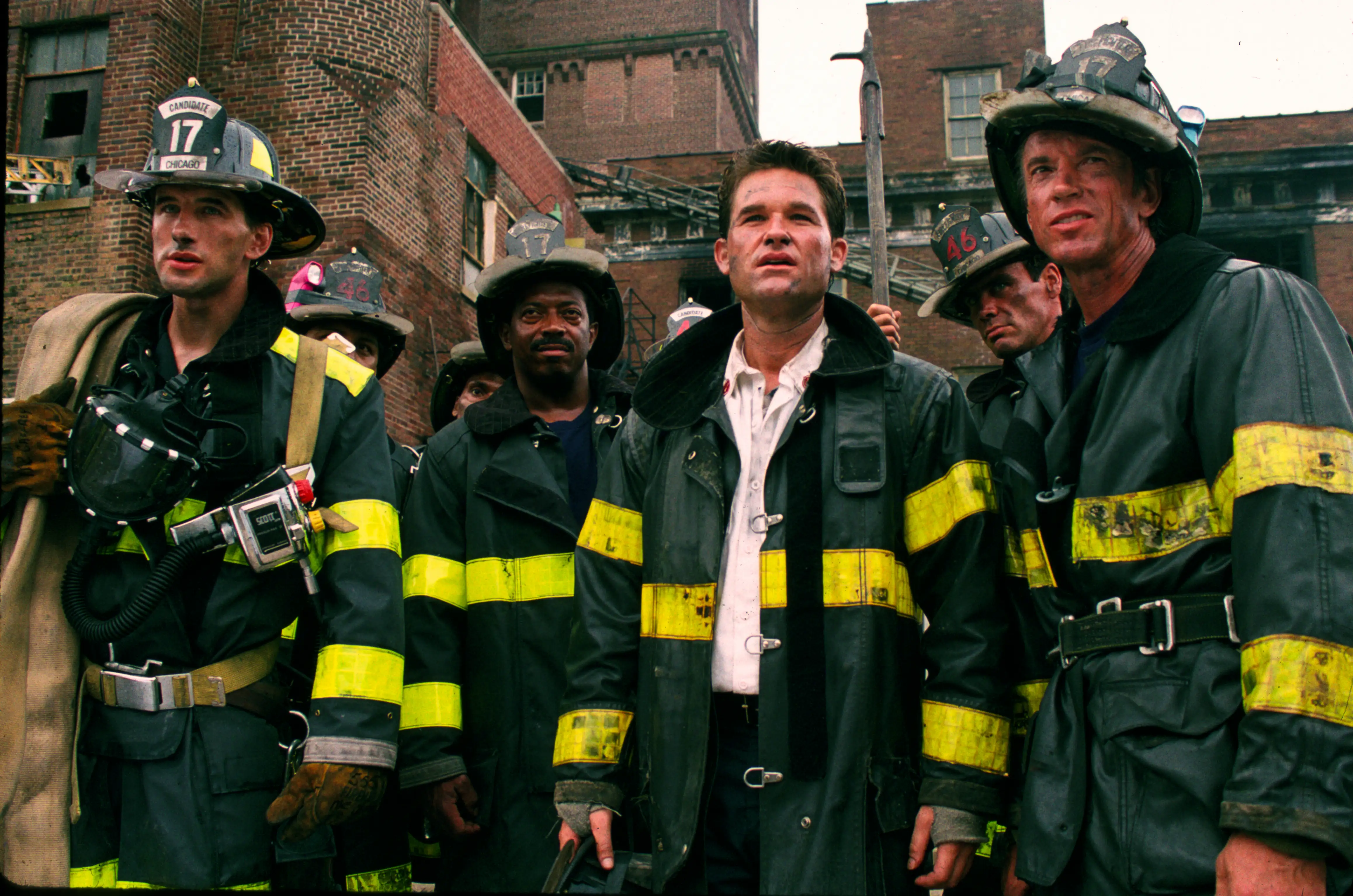
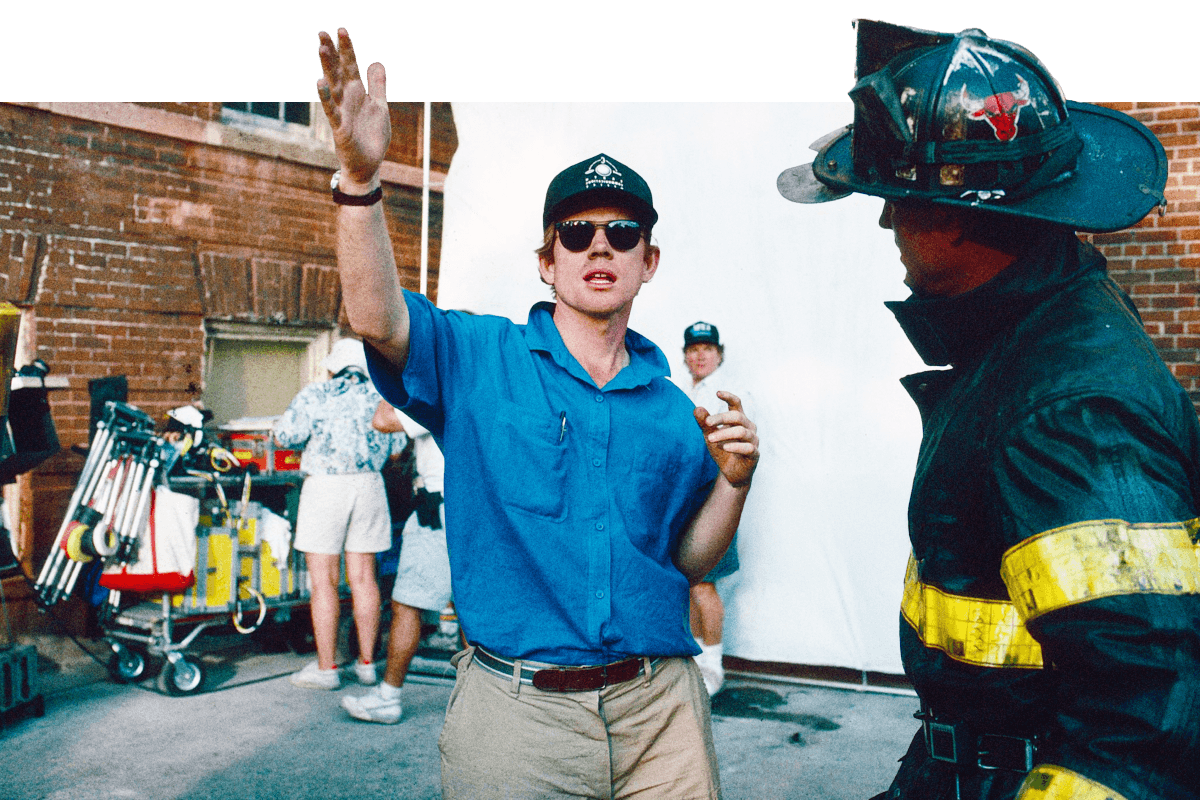
In an interview with Jimmy Carter (journalist, not president) about 16 years ago, director Ron Howard reflected on making Backdraft. He didn’t describe it as just another Hollywood production built on explosions, spectacle, and movie-star heroics.
Howard explained he approached the film as an action movie, yes, but one rooted in something far more difficult to capture on screen: the real weight, danger, humor, grief, and pride of the fire service. It was, he said, “far and away the most difficult movie I’ve ever done.”
More than three decades later, that difficulty is part of what gives Backdraft its staying power. Technology has changed. Fireground tactics have evolved. The culture around health, wellness, training, and leadership has shifted in ways the firefighters of 1991 could scarcely have imagined. Yet the film still occupies sacred ground inside the fire service.
It was entertainment, but it was also a mirror.
For many firefighters, it was the first time their world — the kitchen table, the brotherhood, the dark humor, the hidden dangers, and the private cost carried home after the alarm — felt visible to everyone else.
To understand why Backdraft still resonates, we turned to two men whose lives and careers sit close to the film’s incarnation. Bobby Hoff is one of the Chicago firefighting brothers whose family story helped shape the movie’s emotional core. Steve Chikerotis, a longtime Chicago firefighter, technical advisor, and consulting producer for Backdraft and Chicago Fire, brings the other side of that legacy: the responsibility of translating that world for audiences who may never see what happens beyond the smoke.
Together, their memories offer a look back at a landmark film, revealing the real people and brotherhood behind the story.
Chikerotis explained, “For a lot of the older guys, that’s why they became firefighters, because of Backdraft. And even some of the younger guys, surprisingly, and now a lot of them, because of Chicago Fire. Going back to when I was a kid, there weren’t shows like that. So, unless you knew a firefighter and were in that world, like Bobby, who grew up in it. His father, grandfather, and brothers were all on the job.
Film producer Raffaella De Laurentiis, daughter of Dino De Laurentiis, one of Hollywood’s most famous producers, had a production company in L.A. with a partner. Chikerotis explained that when De Laurentiis saw Top Gun, she wondered what other group of heroes could be turned into a story like it. And right away, it hit her: firefighters. They’re heroic, and the public knows very little about them because cameras didn’t follow firefighters to work.
“She hired some writers, and they put an attempt together to make Top Gun out of a firefighter movie, using the best of the bunch … the best story that she liked was by this guy named Greg Wyden, who had been a volunteer firefighter in California for a minute, so he had a little understanding of our world… and then, as luck would have it, De Laurentiis and her business partner had a falling out, and sold off their projects so they could each go their own way. And Ron Howard and Imagine Films bought Backdraft, and that’s why it came to be,” said Chikerotis.
When reflecting on believability, Chikerotis explained, “They have their angle of what they need for entertainment. We have our thing, what we want from reality and from the heart. And I think they have faith in me now… Firefighters are going to like it, and if firefighters like it, civilians are going to like it, too. You know, they’ll buy in. And if we don’t, if we stretch something too far, like there’s been a couple other fire shows because of ours that jumped on and came up with some really goofy things, then you kind of get bucketed into the same category, and you need to stay in your thing. I mean, are you writing for civilians or are you writing for the fire department?”
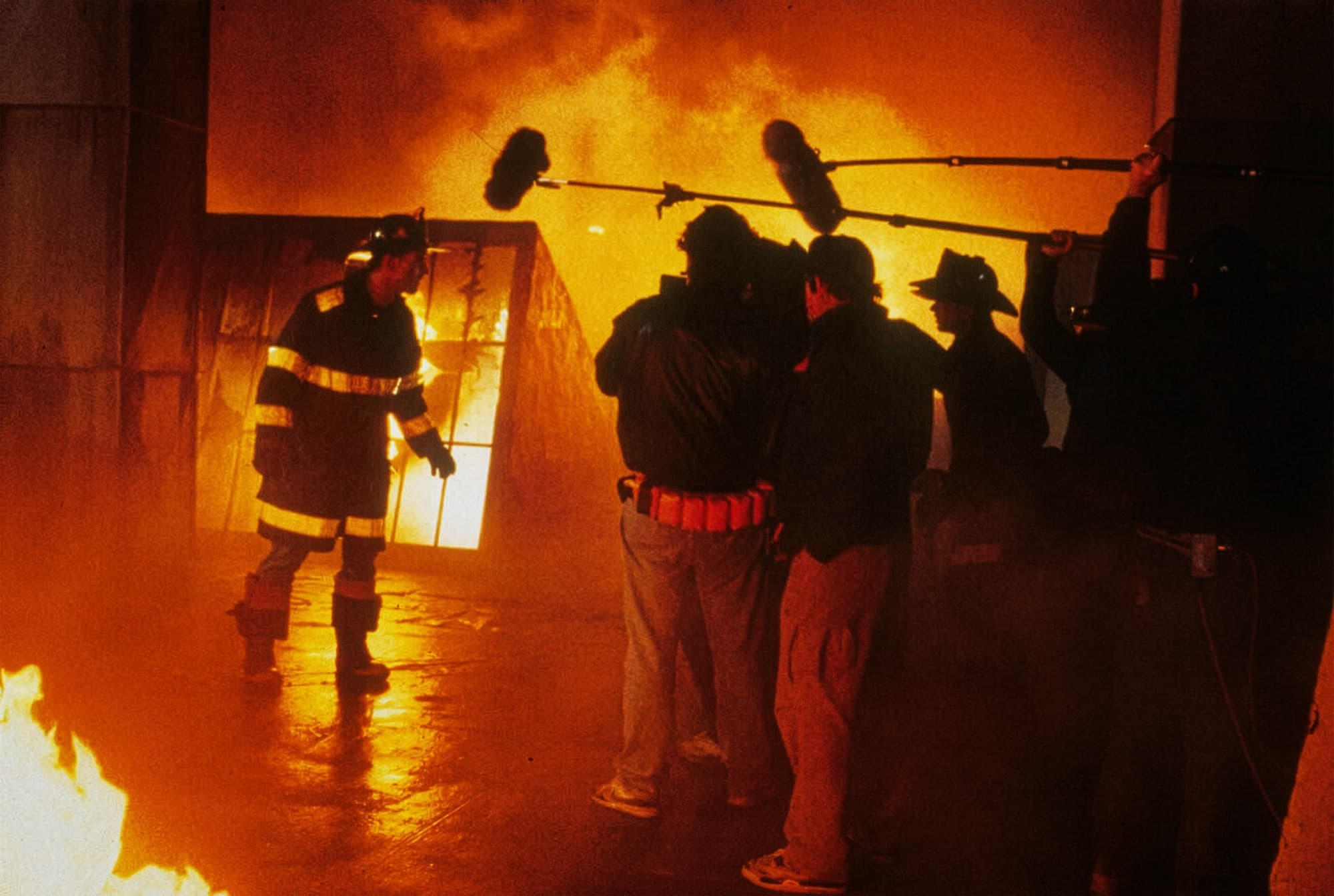
In the case of Backdraft, it was clear that the film was written for both, given its uncanny success at the box office, grossing somewhere around $152.4 million worldwide, receiving three Academy Award nominations, and planting the seed for not only Backdraft 2, but firefighter movies and shows alike.
But the all-star cast brought it to life, with powerhouses like Kurt Russell, William Baldwin, Scott Glenn, Jennifer Leigh, Rebecca De Mornay, Robert De Niro, and Donald Sutherland, to name a few.
As we and the firefighting world celebrate Backdraft 35 years later, Hoff, who’s still active in the firefighting world, reflected on what’s come out of the movie since its release and the impact it’s had on not only him, but his career.
“When this all started, I was a relief battalion chief, and my brother was a captain, and Ronnie Howard contacted us. Then we sat at my brother’s firehouse for a few hours and told him our life story. I never met a man nicer than him. He just sat there and listened. And from what I understood, the story was somewhat based on another family in California, too. I just know what he took from us to do the movie. He asked us, ‘Do you want to be part of it?’ And at the time, both my brother and I said, ‘You know what? We’d love to, but it’s too close to home, and it still is.’”
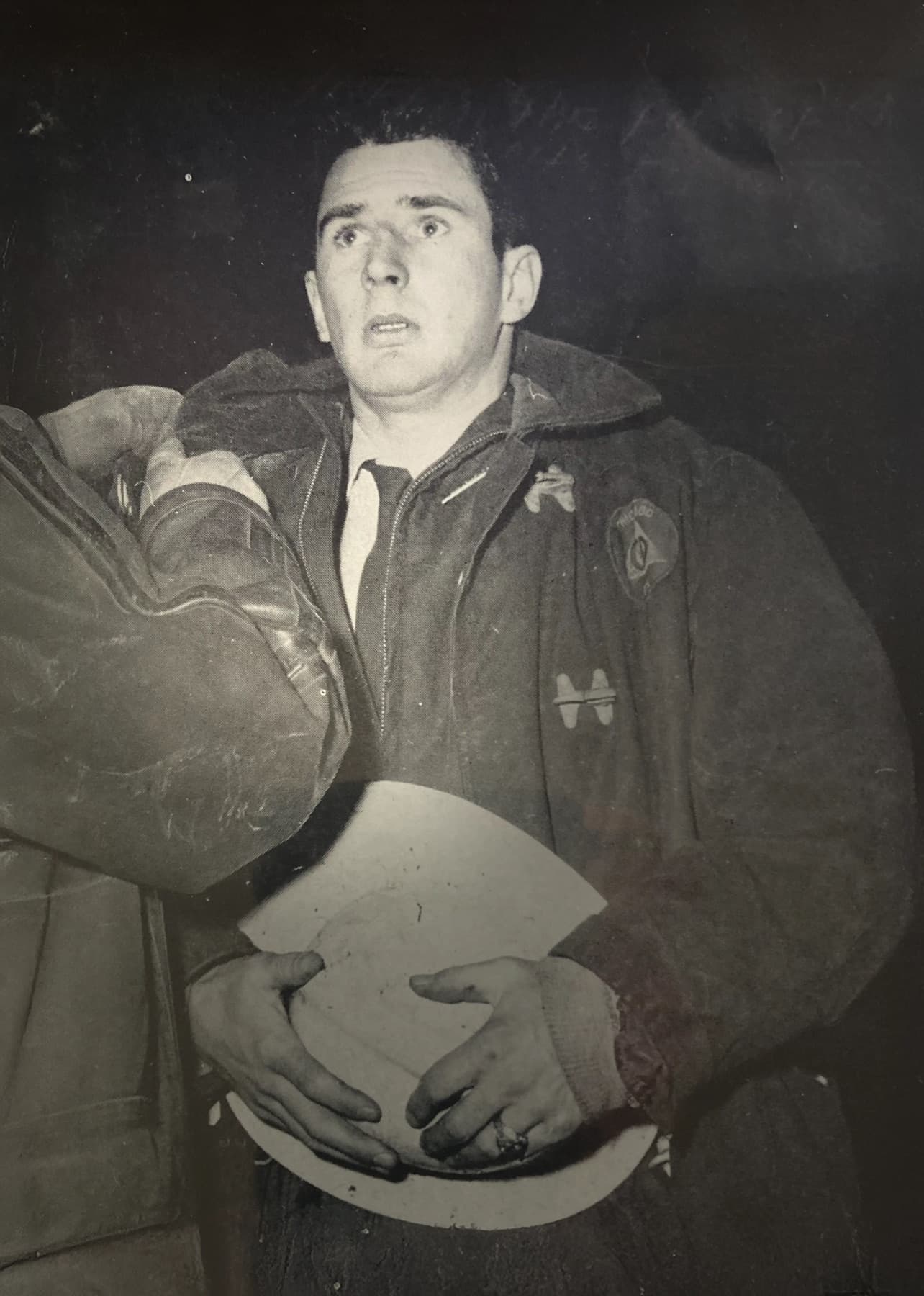
He continued, “Some of the stuff in the beginning scene, where the father gets killed, mimics my father getting killed. There was a picture of my oldest brother in Life or Look magazine holding my dad’s helmet, where my dad was trapped. His helmet rolled out of the building, and like in the movie, he picked it up. But in the movie, they changed it to the youngest son holding the helmet.”
While some details changed, the storyline still loosely followed the Hoff brothers, specifically Bobby and Ray, two of six children who were essentially raised by the firehouse after they lost their parents at 14. Bob lived with his brother Ray, who taught him the job, along with all the other firefighters who worked with Ray.
Author’s Note: The Hoff brothers had no rivalry, unlike the brothers in Backdraft. That part was fictional.
Hoff said, “When we talked about all that stuff with Ronnie Howard, got into depth with it, as the movie went on, a guy named Bill Cosgrove said Robert De Niro would like to interview you… and I said, I’ll have him come by for coffee.” De Niro did come by, but since he isn’t a fan of crowds, he met with Hoff inside the chief’s car in Chicago’s Humboldt Park neighborhood, and they chatted for almost 2.5 hours while De Niro audio-taped Hoff, asking him questions about his family and such.
Hoff explained that the interaction with De Niro really gave him a real sense of how intensely some actors study their roles. “Two weeks later (in 1984), I got burned on the job, and Cosgrove called me up and said, ‘Hey, I got a favor. Can we take pictures of your back?’ And I said, ‘For what?’ He said, 'Well De Niro's going to get burned in the movie, and they want to use your burns to make his burns.' So, Cosgrove came over, took pictures, and that was used in the movie."
Chikerotis added, “We didn’t have these cellphones in our pockets, and I’m off shift, and the guy we’re putting a roof on came out saying he just heard firefighters got burned pretty badly, and he told me in which neighborhood. Well, that’s our area, so I said I got to use your phone.
"I called the alarm office, and I found out it was Bobby, and they had taken him to the University of Chicago burn unit. I drove there like a madman. I lied and said I was family... He was so badly burned, and most people would have taken their helmet off and been afraid to come back to the job. And you never seen a guy come back faster than Bobby after wearing a nylon suit for, what’d you wear it for, Bobby, six months or a year, or something?”
Hoff corrected him, almost two years.
“I got to tell you this because it’s funny,” Hoff said. “When I got burned, they took me to a hospital on the north side of the city where they had me in the ER, and I was face down; they couldn’t give me enough morphine. I was like a dog shitting razor blades, in pain. My brother shows up there, and the doctor says, ‘We got to get a helicopter and fly into the burn unit.’ So, I got a sheet over my head, and I’m just telling him, ‘Give me something for the pain. Give me something for the pain.’ And I hear the doctor and nurses saying, ‘We got to move our cars now,’ and I’m like, ‘You got to what? I’m lying here dying, burning up, and you got to move your cars?’ Well, there was a small parking lot for the ER docs and nurses, and they had to move their cars so the helicopter could land. And this is before they put a heliport there … so the helicopter lands and they’re wheeling me out, and again I can’t see because the sheets are still over my head, and I’m face down. And the nurse goes to the pilot, ‘Oh my God, how did you land that helicopter between those wires?’ And I’m like, ‘Fuck! I’m burned up now. I’m going to die in a helicopter crash!’
Author’s Note: They made it safely to the burn hospital.
And now, 35 years later, Hoff firmly believes the movie still shows the brotherhood and how it stays together.
Chikerotis shared Hoff’s sentiment about Howard. “He is one of the nicest men that I’ve ever met in my life, and just full of compassion. That’s why his work is so good, especially, you know, as a director, because it’s from the heart, and he had great respect for the fire service.”
Chikerotis didn’t grow up in the firehouse like Hoff; he stumbled upon it after a close brush with death while roofing.
“There was an explosion in this steel plating factory that almost knocked us off our feet. We had to get off this roof; all the workers were running in shock. We were standing on the edge of the roof watching them at first when this young office girl kicked off her high heels to run faster and yelled, ‘Get off of there, run!’
“And so we go across the street, and then I hear sirens coming, and the next thing I see is lights.
I watch what to me was this noble breed of men pull up. I watch them gearing up and disappearing into the smoke we just ran from, and I’m thinking, ‘Holy fuck, I want that job.’ That’s what drew me.’ That night, I went to a Bedford Park fire station ... . They took the time to sit and talk to me, told me Chicago had a test coming up, and lit a fire under me. They inspired me, and then I caught it from that moment on.”
Sadly, lives were lost in that explosion.
Earlier, we mentioned Hoff was raised by the firehouse, but his memory of his dad’s death is a big part of his reason why.
The story: Hoff recounted that he remembers the day like it was yesterday. He was only five years old at the time, and the date was Feb. 14, 1962 — Valentine’s Day, and he was home with the measles.
He watched his father eat breakfast, a bowl of milk and bananas, before he left with his driver, who picked him up for work. At that time, the chiefs and upper echelon had response duties, as they do now. That day, his dad, the assistant director of training, responded to a fire at an apartment building with brick veneer. Long story short, it was a boiler room fire in the basement, and they had fire on all the floors and in the cockloft. The fire commissioner was there, and there were no portable radios at the time, so he instructed Hoff’s father and Chief O’Brien to go in and get the guys out.
“My dad went in with his driver, and Chief O’Brien went in with his driver, and they went floor by floor. My dad went up to the third floor and hollered to the guys on a hose line. He said, ‘Hey, let’s back out, guys. We’re losing.’ The commissioner noticed a crack in the side wall toward the rear of the building, so they went up, and they started backing people out. The lieutenant who was on the hose line, my dad told him a second time. He goes, ‘Hey, Bill, let’s go.’ And he said, ‘Give us five more minutes.’ And my dad had to go in, grab him by the shoulder, and say, ‘No, we’re losing. Let’s go.’
“So when they were backing out, my dad was the last one in the kitchen. Chief O’Brien was in the doorway with his driver, and my dad’s driver was right next to him. And the roof came in, and Chief O’Brien went straight down, getting trapped under the doorway on the first floor. My dad plummeted into the basement. Because of the push of the percussion, my dad’s driver, Ed Stack, rolled out onto the second-floor porch and got up, and he had bruises and stuff. Took him about 25 minutes to get Chief O’Brien out, who was dead.
“The other driver was in a void in the basement, and he talked to my dad for like 45 minutes, then the building shifted, and he didn’t hear from my dad anymore... One of the chiefs, Chief Daley, who was one of the fire marshals, asked the driver, ‘Where did you hear the voice coming from?’ and they kind of pinpointed the area. So a crew from Old Squad Side went in, and they started digging where the wall was leaning.”
“The commissioner ordered everybody out of the building. They had to bring in a crane, and it took five hours. But in the meantime, at home, my mom gets a phone call from a friend of ours who asked, ‘Is Tom (Hoff’s dad) at that fire?’ and she says, ‘No, he’s not due to respond this week.’ Well, she didn’t know. So, the next thing that happens is my uncle, a lieutenant on Squad 8, pulls up in his fire clothes, and he’s in the commissioner’s car, and he knocks on the door. My mom goes out on the porch, then comes in, puts her coat on, and leaves."
At seven o’clock that night, she returned and told everyone that Tom, their dad, was dead. Both of Hoff’s brothers, Tommy and Ray, went to the fire.
Author’s note: Hoff’s mother made it to the apartment building where she watched and waited for her husband to be found. In the end, she was there when they found his body and carried him out.
“My brother and I talked a lot (Ray has since died) about what happened, and you know how fortunate we were to be able to come on the job and follow in his footsteps. And we always said, and I tell this when I do the class, we would have rather had a father than a dead hero.”
The lieutenant who Hoff’s dad had to physically go in and tap on the shoulder and say, ‘Let’s go,’ retired as a chief officer 30 years later. On his last day, he grabbed Hoff and shared he was the reason Hoff’s dad died. Hoff, of course, blamed the building’s 15 code violations. But that officer lived with survivor’s guilt and the belief it was his fault for 30 years.
That was the heart of the movie Backdraft. It came from a story about firefighters that was real in every sense of the word.
After Hoff’s retelling of his dad’s death, Chikerotis reflected and shared something Hoff hadn’t heard before. “Bobby, I never told you this. I hardly saw my dad. He died when I was a kid, but not as a hero. You know, he was an alcoholic and never came home, and then he was gone. That was my youth. So I probably talked to your dad more than I talked to my dad, and I never met Bob’s dad.
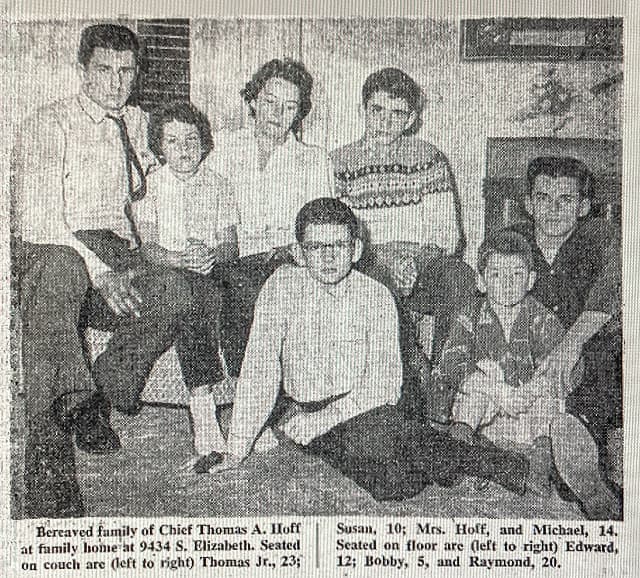
“Bob and I were kids when his dad died in that fire, but years later I would take that same job, assistant director of training. And I took it to heart because I was taking a job that Tom Hoff had taken... Every morning I would come to work, and in my prayers, I would tap that brass plate above the elevator with your dad’s name, and I would talk to him.”
The Chicago firefighting legacy runs deep, especially within the Hoff bloodline, with several generations of firefighters, some still active, keeping the family fire tradition alive.
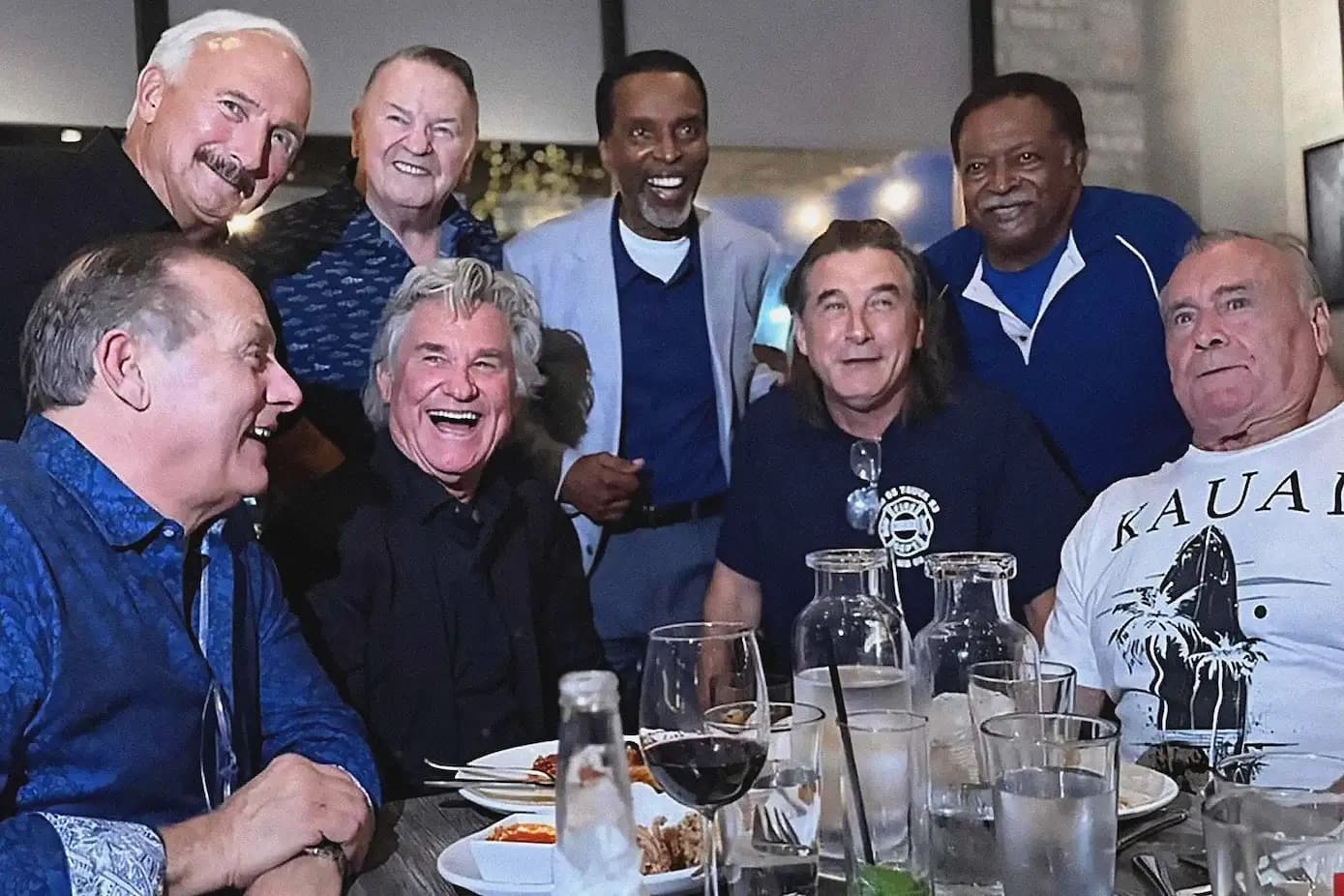
Bringing things back around to the movie, Chikerotis talked more about the recent get-together between Kurt Russell, Billy Baldwin, Cedric Young, Kevin Casey, Juan Ramirez, Rashard Lexi (Juan had just died, and so had Stan Span). “All of them, 100%, talk about the impact Backdraft had on them, more so than others.
“They feel that connection with the fire service, and they get the representation. I think it shows the noble breed, the noble occupation — where you don’t know if you’re going to come home, and you’re risking your life every day for total strangers. That’s the real meaning of any movie or television show, and what it does for people like me, who did grow up like Bob, smelling the smoke and hearing the stories.”
What do the next 20 years look like for recruitment and retention? Especially when firefighting conversations focus heavily on the doom-and-gloom side of the job? And there can only be so many re-releases of Backdraft and Chicago Fire to inspire the next generation.
Hoff explained, “You fix it through culture. We’re working with a department right now where the troops, from the battalion chiefs down, are game on, but their bosses get put in these positions sometimes, through no fault of their own. But they get fast-tracked into positions, and they don’t know how to handle human beings. And most of our stuff’s in the firehouse, and that’s a big deal. And that’s where shit falls apart.”
He continued, “And the reality of going back to the movie and the smoking and joking, that’s all part of our culture. But today you got to be careful what you do. Obviously, there’s no mystery there. But you can still have that camaraderie.”
This interview could have spanned an entire day, with the amount of storytelling, recounting, and sharing that happened in the small, two-hour window. It’s too much to write, but if there was any doubt about how deep the friendship goes between Hoff and Chikerotis, you can take our word for it; it’s solid and one of a kind. Think, “I’ll help set up your waterbed because your ass and back are so badly burned” kind of friendship.
What’s left to talk about? How about everything that happened after Backdraft.
For Steve Chikerotis: “I ended up with a 36-year career on the fire department. And I’m in my 36th year working in the film industry, which really kicked off with Backdraft and carried on through a whole bunch of works, until I eventually got what I was always pushing for — our own fire show, and now we’re in season 15.
“So yeah, I’m happy to have a fire show, and I’m happy to have that movie that represented the fire service. I don’t ever think of it as just Chicago. I think we kind of represent the fire service, you know, throughout the world, really. But I’m really proud that they wore the same uniforms as us and represented Chicago.”
For Bob Hoff: After Backdraft, there were lots of feelings. “It was emotional, but it was a pride thing, too. I was very, very proud. But there wasn’t a dry eye for the whole movie. I laughed a little bit at some of the stuff, but it was a reenactment for real. You know, I think the hardest part was that my mom was gone, and I always talk about her.
“You know, we talk about the movie and the hero part. But when a firefighter dies in the line of duty, someone could now be a widow. My mom was our angel. She finished raising us. That part wasn’t in the movie, but that part of life is a reality... She had to fend for what she had, what she got, and that was a tough part of watching that movie to know that she was really part of that but wasn’t.”
“And Bobby, you taught me something today that I never knew,” Chikerotis added. “We talked about his brother just briefly. Ray Hoff is another guy who did so much for the fire service. He’s one of the greatest fire service leaders ever to come out of Chicago. He did some teaching, you know, all over the country, and everybody hung on every word that Ray Hoff said. We lost him a couple of years ago.”
Hoff also added, “The next day after my dad died, my brother, Ray, threw me in the car with him, and as I said, I was sick with the measles.’ And he drove to the scene of the fire, and he yelled at me. Parked in the alley where half of the building was down, and half of it was up. He said, ‘Don’t get out of the car.’ Well, I didn’t get out of the car, but I watched what he was doing. He got on the pile and started digging through it, and he found my dad’s boot. So, I have my dad’s helmet that my brother held. It’s sitting right here on my credenza. And I have his boot in the garage. And this bracelet I’m wearing today – they cut it off him, and I clipped it up.”
The takeaway from today’s interview with Steve Chikerotis and Bobby Hoff? The training never ends. Both on and off the job, be it with tools or your health.
“I’ll speak for Steve because I know he’s in excellent shape,” Hoff said. “I work out, and at 70, when I go to class to do hands-on, I’ll throw a ladder and do it faster than a 25-year-old, and I want them to see that and say, ‘Hey, oh, I’m 40, or I’m 50. Stay in shape, work out. The internal part, you know, the cancer, cleaning your gear — that’s all stuff that we’ve adapted and is changing. But as far as your personal being, be true to yourself. You know, you can sit and bitch at a kitchen table saying, ‘This is wrong. That’s wrong.’ But what are you doing for yourself? Are you training? Are you taking care of yourself? I mean, that’s why we do what we do.”
This is a gentle reminder that Bobby Hoff has set the bar, er, ladder, high and plans to kick your butt at the gym. Still putting off that workout?
Chikerotis added, “The only thing we really can control is the version of ourselves that shows up for duty... Come to work and be mission-oriented. Why are we here?”
If the Hoff family story can inspire a Hollywood blockbuster, and that film can inspire such enduring passion in so many firefighters, including Steve Chikerotis, Bobby Hoff, and generations of the Hoff family, it raises a larger question: How far has Backdraft’s influence actually reached?
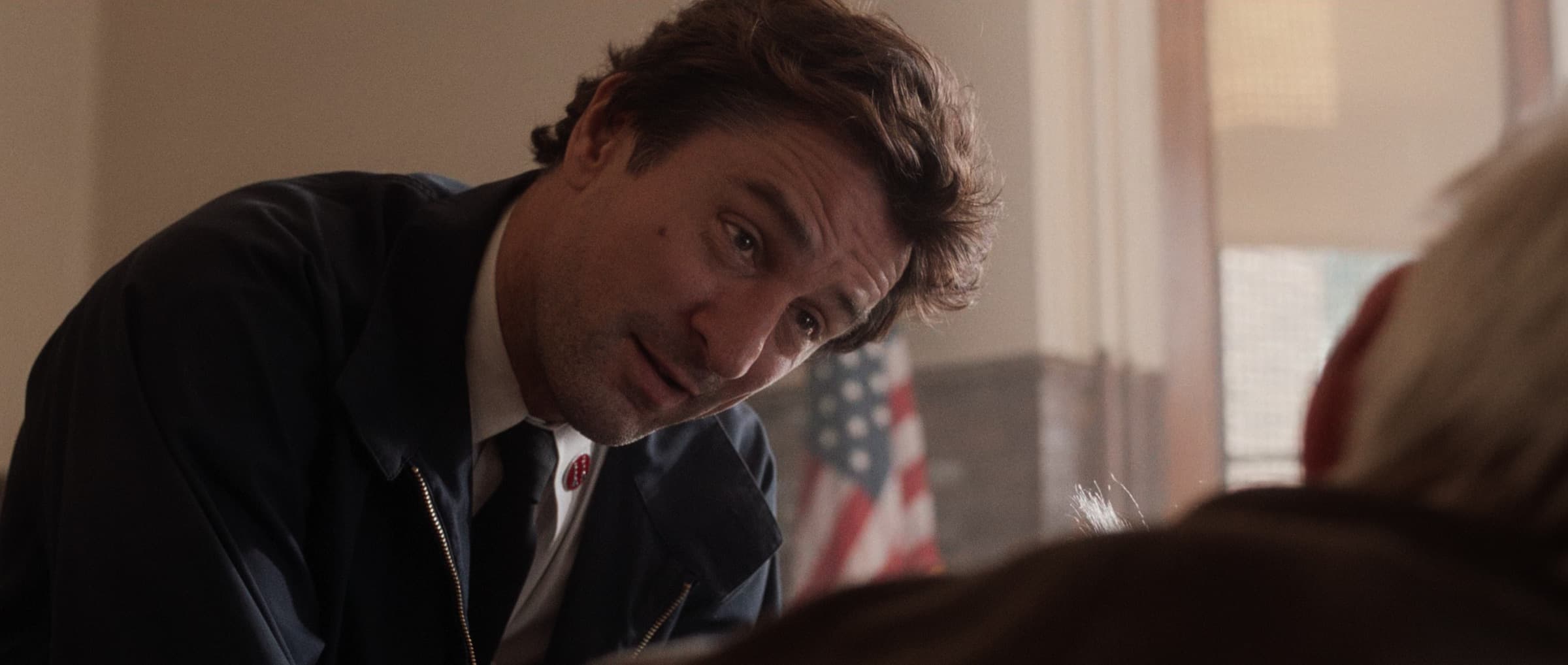
And will there ever be a time when someone doesn’t reference Donald “Shadow” Rimgale (Robert De Niro) as he says, “It’s a living thing, Brian. It breathes, it eats, and it hates. The only way to beat it is to think like it.”