
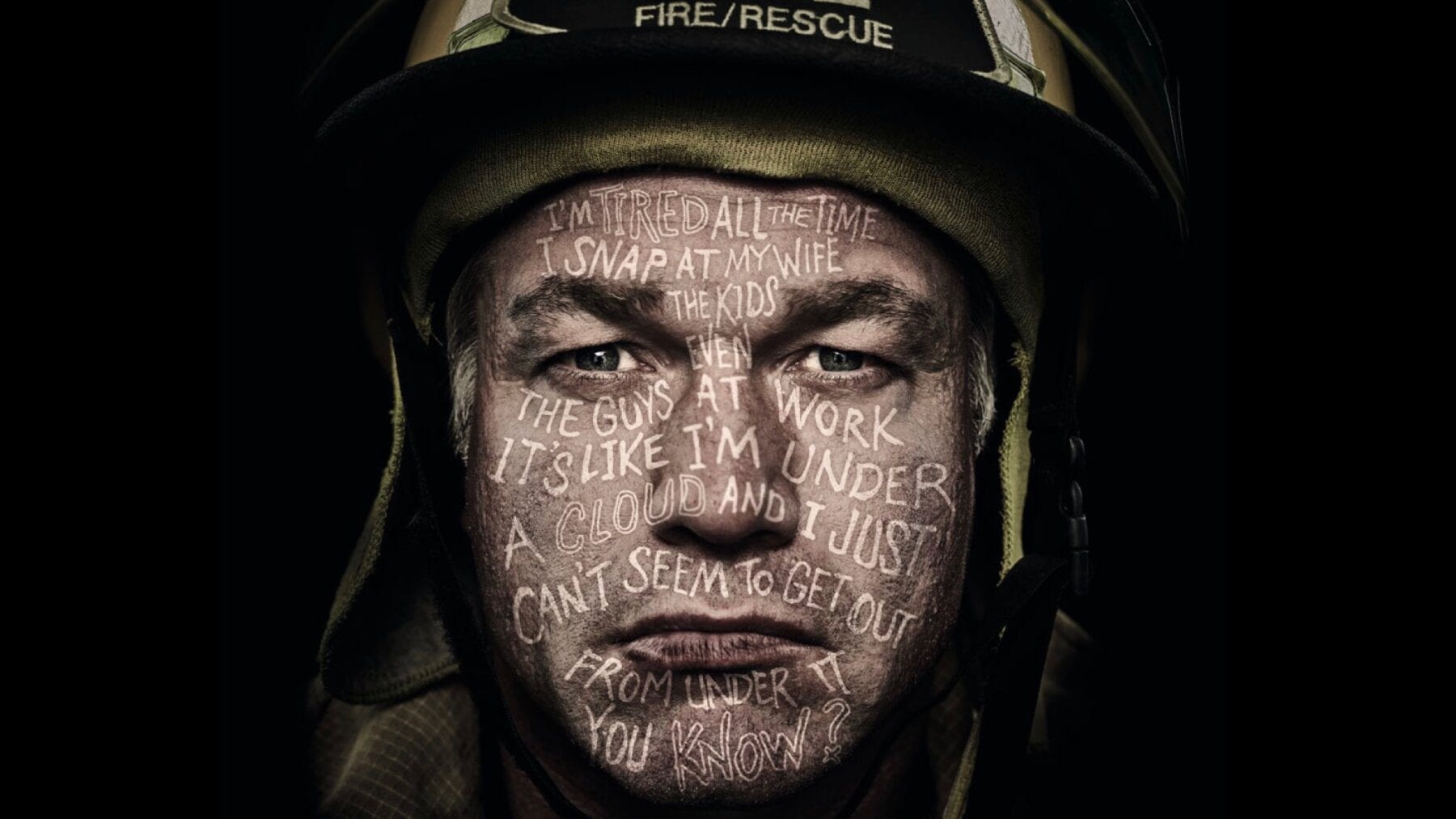
An image from The BC First Responders Mental Health Committee’s “Share it. Don’t wear it” poster campaign.
I first heard the term “check up from the neck up”from a fellow firefighter and peer supporter from Ontario, Hugh Doherty. I later learned Dale C. Bronner wrote a book about it (A Check Up from the Neck Up), and it is also a famous quote by Zig Ziglar: “We all need a daily check-up from the neck up to avoid stinkin’ thinkin’ which ultimately leads to hardening of the attitudes.” What a concept!
In a fire service historically focused on physical health and safety, we often forget about the mental health impact of our occupation. However, there has been a shift in the last decade, with increased awareness and mental-health support for our firefighters. We have seen several education/training programs launched over the last eight years, anti-stigma campaigns, improvements in extended health benefits for psychological services, and multiple conferences, summits and symposiums.
More Mental-Health Challenges
Since 2015, I have observed a dramatic increase in mental-health challenges and psychological injury claims since I became actively involved in supporting mental health within the fire service. This is exactly what we expected. When you raise awareness, reduce stigma, and encourage people to reach out for help, there will be a direct correlation with increased injury claims. It reminds me of what I learned in company officer training; sometimes it will get worse before it gets better.
In 2015, the International Association of Fire Fighters highlighted this issue in their quarterly magazine cover with the headline: Bringing PTSD Out of the Shadows.
In December 2015, the BC First Responders’ Mental HealthCommittee was formed in response to this growing mental-health crisis. It comprised managers and union representatives from 13 organizations, including firefighters, law enforcement, ambulance services, dispatchers, and First Nations emergency services.
One of the initiatives from this committee was launching an anti-stigma campaign targeted at first responders with the catchphrase, “Share it. Don’t wear it.”
First responders developed the campaign for first responders. They based it on a four-month multi-phase market research initiative with first responders in British Columbia.
Opening Up to Healing
The research showed that mental health stigma on the job is real, and it is personal, social, and structural. The committee unanimously agreed this wasn’t just a poster campaign, and that sharing your story is the first step in healing.
The research also revealed that work environments free from stigma have fewer instances of mental-health injuries, and the days of sucking it up are gone and are being replaced with environments of support and understanding.
The committee wanted to start a conversation, and for first responders to recognize the signs and symptoms of a mental-health injury so they can assist themselves or others.
The campaign’s goal has been to normalize the discussion around mental health and that everyone, regardless of rank, is susceptible to mental-health injuries. The message was clear: You are not alone — we are all in this together.
A Multi-Faceted Solution
Both of these initiatives propelled the issue of mental ill-health out of the shadows and onto the priority list for the fire service. We quickly learned the solution is not a set of boxes to tick off. It had to be a multi-faceted, fully integrated approach that educated, resourced and supported firefighters, from recruitment into retirement. This is the responsibility of every fire chief, every fire department and every fire service worker.
We need to create a psychologically safe workplace, especially considering there are known psychological hazards in our occupation.
This is an all-hands-on-deck situation, but what can we do as an individual? This is where the check up from the neck upcomes into play. If we truly want to get upstream and focus on prevention and early intervention, we need to find ourselves a mental health sherpa!
Mental health professionals come in various forms, much like mechanics. Sometimes you need a heavy-duty mechanic for really serious jobs. This is where a psychiatrist or psychologist would be helpful. Sometimes you need a little maintenance or an oil change. This is where a registered clinical counselor could assist. However, knowing what your extended health benefits, insurance or employee assistance plan cover is critical.
Typically, a psychiatrist is covered through a referral from your GP and the health care system, but wait times are long. There are also fewer psychologists than counselors in Canada, so finding out who is near you, or which mental health professionals are available online, is helpful.
Establishing a Relationship with a Mental-Health Professional
This is key:Establish a relationship with your mental health sherpabefore a crisis, and ideally as soon as possible. As a recruit, find one before you start your career or at least right at the beginning. Interview the mental-health professional and ensure a good fit. You must be comfortable talking to them, and there needs to be a level of trust.
Get a baseline, lay out your family history, identify any immediate challenges and gather tools to assist with emotional regulation, stress management, etc. Do not set yourself (or the mental-health professional) up for failure. It is not helpful to the therapeutic process when you are in crisis and you have to establish rapport, build trust, and provide a history of events to your mental-health professional.
Do not wait until you are burned out, stressed to the max, or your relationship is falling apart before you reach out. Much like regular visits to the dentist, get yourself a check up from the neck up,early and often!
Mental-Health Resources
A great place to start here in B.C. is the First Responder Health Directory. It is a VRBO-style directory of mental-health professionals. You can search by location, designation and even modality, such as cognitive behavioral therapy, eye movement desensitization and reprocessing (EMDR), attachment focused therapy, dialectical behavior therapy, emotionally focused therapy, and Gottman couples therapy.
This directory can also provide mental-health professionals for spouses, partners and children. In Canada, there is the Warrior Health Directory. This is a nationwide directory of mental-health professionals. Both of these directories require the completion of an occupational awareness training course to ensure therapists have an understanding of firefighter culture and trauma.
The bottom line is do not wait until you are in the red on the mental health continuum. Connect with your mental health sherpa early in your career and before you are in a crisis. Get a check up from the neck up regularly for yourself and/or your spouse/partner, and your children, as well. This is the first step in maintaining your well-being and being proactive when it comes to your mental health.