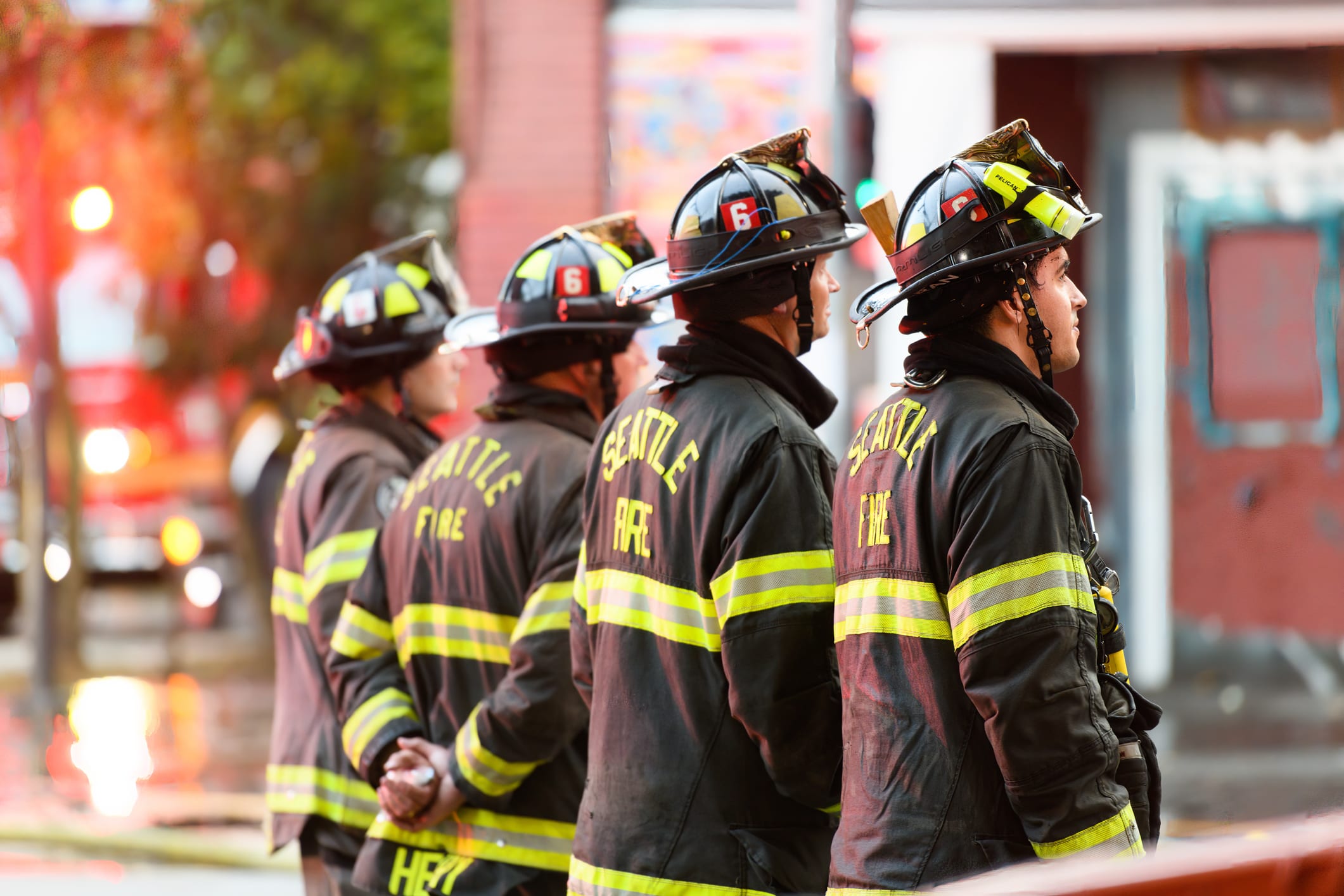
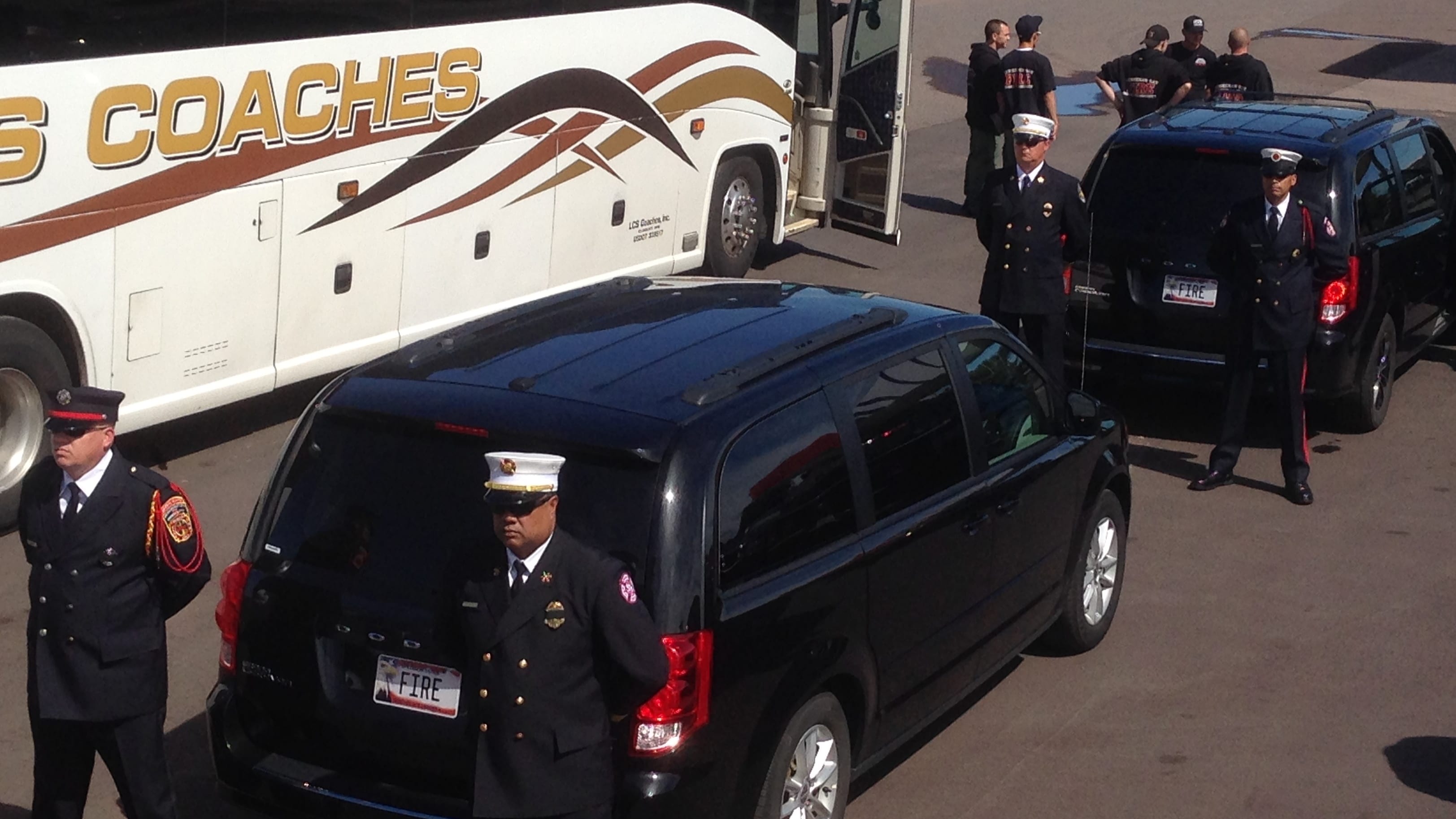
Photo: Fire personnel await the funeral procession of a fallen firefighter
As firefighters, we help people. Ask anyone who’s either in the profession or retired from it, and they’ll tell you some variation of a very basic “why:” We do this job to make an impact in someone’s life.
Ian Bennett is no different. The one-time fire chief from Harrisburg, Va., and 33-year fire service veteran connected with the NFFF in 2001. Back then he was a member of the planning section of the command staff managing the following year’s National Fallen Firefighters Memorial Weekend. In that role, he helped families of the firefighters we memorialized on that weekend, providing the type of wrapping-our-arms-around support that the NFFF has become known for.
And this was in the wake of the Sept. 11 attacks. We had significantly more firefighters and families being honored, which necessitated moving the ceremony and its support services to Washington, D.C.
“To be able to honor the firefighters and families who gave the ultimate sacrifice?” Bennett said of his first months with the NFFF. “It was a no-brainer.”
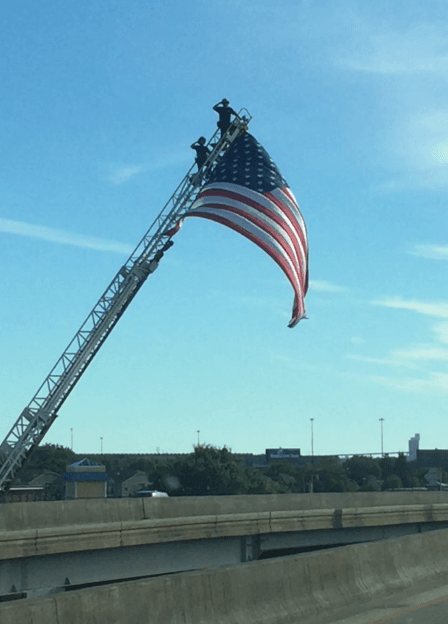
Photo: Firefighters with a flag await a highway procession for a fallen firefighter
After assisting with Memorial Weekends for a few years running, the foundation approached Bennett with a new opportunity to help fallen firefighters and their families. Various fire organizations — including the NFFF, International Fire Safety Council (IFCE), International Association of Firefighters (IAFF), and Federation of Fire Chaplains — had come to the unfortunate conclusion that families and fire departments who’d suffered the crippling loss of a loved one in the line of duty were not getting all the support they needed in the immediate aftermath of those tragedies.
Behavioral health intervention was a major gap for surviving firefighters and family members. So were funeral arrangements, continued counseling, and assistance with the preparation and submission of needed Public Safety Officers Benefit (PSOB) claims.
These needs motivated the creation of the Local Assistance State Team (LAST) Program.
Launched in 2006 as a collaborative effort between the U.S. Department of Justice, Bureau of Justice Assistance, and the NFFF, the LAST Program aims to deliver rapid assistance to families and fire departments who have lost a firefighter in the line of duty. To do so, the LAST Program puts trained personnel on the ground, where they’re best situated to help when requested, with a goal of being on site within six hours of a line-of-duty death.
The NFFF began training its first cohort of LAST Program responders — who would be deployed throughout U.S. states immediately upon notification of an LODD — in October 2006 at the U.S. Fire Administration campus in Emmitsburg, Md.
“A lot of fire departments needed help with everything,” Bennett said of conditions at the start of the program. “They didn’t know how to put a funeral on, provide an honor guard or behavioral health support, chaplain support, or facilitate other state and federal benefits. Many had no idea that process, so that’s been the evolution of these teams. It needed to be more comprehensive than just assisting with PSOB claims.”
Today, LAST team members come from all areas of public safety, as well as survivors of line-of-duty deaths and volunteers from various other professional, non-firefighting lines of work. Team coordinators have a deep knowledge of their home states and firefighting services. They also have a roster of people with specific expertise — whether a chaplain, benefits specialist, or someone who has suffered the loss of a family or department member — available to jump in when the situation calls for it.
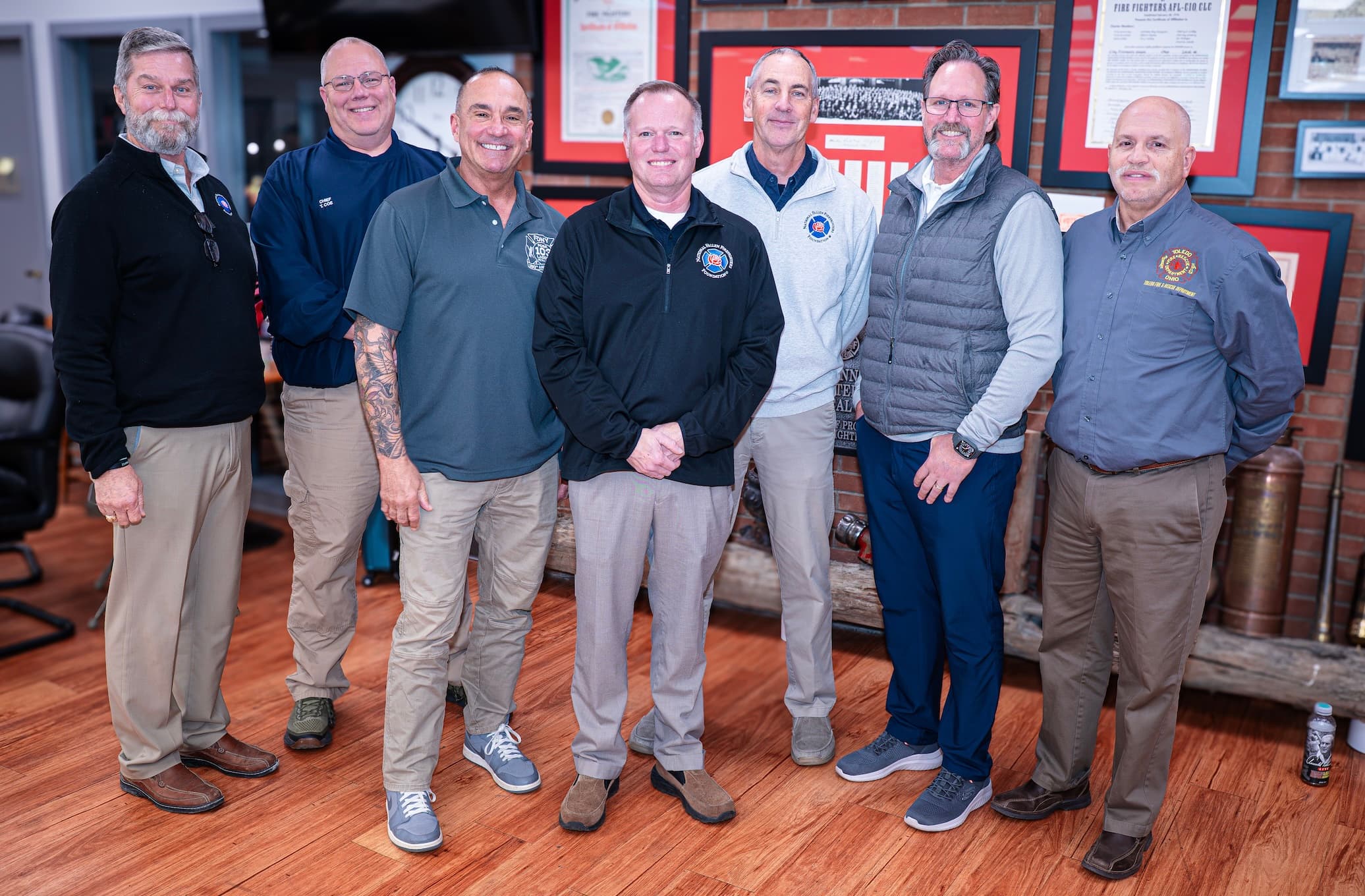
Photo: Ian Bennett and some of the LAST Program team
When a line-of-duty death is reported to the NFFF, the coordinator of the nearest Local Assistance State Team in that state is notified, makes contact with the fire chief of the affected department, and offers their assistance. Support runs the gamut: assistance in obtaining behavioral health counseling for family and department members; planning and coordination of funeral activities; preparation of local, state and federal benefit claims; and a long list of other burdens they can take off the shoulders of the fallen firefighter’s love ones.
But in many cases, for family members and departments far too grief-stricken to deal with complex but necessary paperwork, the benefits task is the biggest.
“Assistance with PSOB paperwork is huge. It’s one of the main reasons the LAST Program was founded,” said Bennett. “It’s a complicated process, and families and departments sometimes need the assistance either initially applying or with the application particulars. There’s a significant amount of money that helps families recover from these events and find a future, and that’s critical in the long-term.”
Since our first teams launched in the field in 2007, the LAST Program has expanded into 49 U.S. states, with the final addition — Hawaii — set to begin by the end of 2026.
How the LAST Program continues to help these states’ families and fire departments is constantly evolving. Concerning benefits, the Public Safety Officer Support Act (2022) added coverage for presumptions of death by suicide linked to substantial on-duty traumatic events (or within 45 days of a traumatic event under a psychiatric diagnosis) and extends permanent and total disability coverage for severe psychological conditions or traumatic self-inflicted injuries.
And with 2025’s Honoring Our Fallen Heroes Act, certain occupational cancers are now considered responsible for line-of-duty deaths, providing crucial benefit support for more families navigating the future without their firefighter spouse or parent.
This means more ways for LAST teams to make an impact, and to satisfy the NFFF’s mission to do whatever it takes for the families and departments of our nation’s fallen firefighters.
“To the families and departments we assist, we always say the same thing: We hope you don’t get good at this,” said Bennett. “We hope they don’t get good at planning funerals or doing paperwork or any of this stuff because we hope it doesn’t become routine. That’s the purpose of our teams, to assist with these difficult situations. That’s what we do, so my message to fire service everywhere is that, if you need help, please call us.”
For more information on the LAST Program, including state-by-state contacts, visit the NFFF's website at firehero.org.