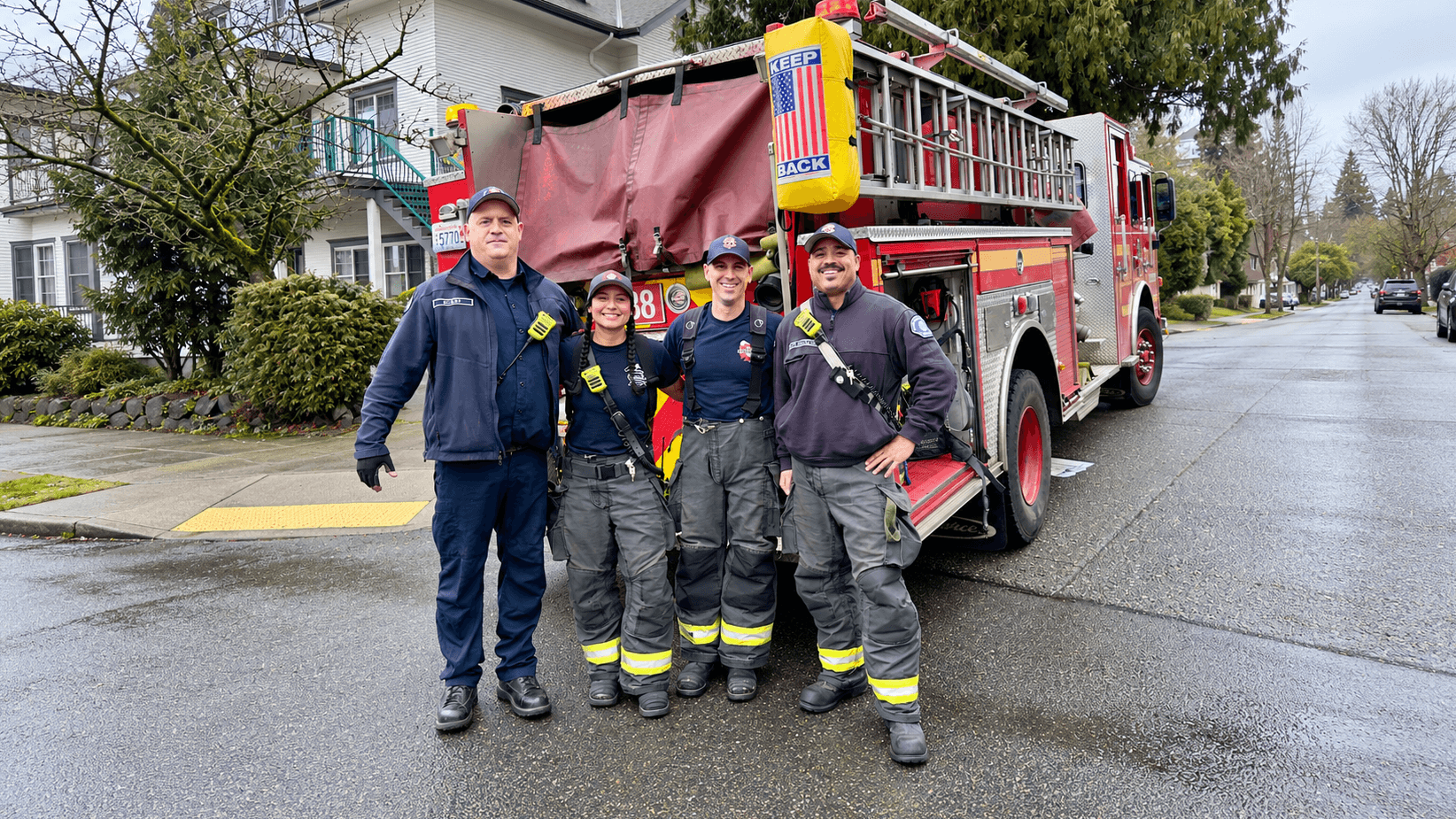


First responders don’t need bubble wrap
A few weeks ago I was recording a podcast for “Men Talking Mindfulness” with my friend, Jon Macaskill, a retired Navy SEAL Commander, and his thoughtful co-host, Will Schneider. Before we started, they asked a simple question: “Would you like to include a trigger warning? We’re going to be talking about suicide.”
I paused. And Will and Jon each had a little hitch as well when we considered this.
Not because I objected to the intention. Quite the opposite. Suicide deserves to be talked about thoughtfully and respectfully. I appreciate wanting to prepare people for a difficult conversation. But something about the phrase trigger warning didn’t sit quite right with me, particularly because I spend so much of my time talking to veterans and first responders.
So I suggested something different.
I said, “Instead of a trigger warning, how about we simply let people know what we’re going to be talking about? We can say that today’s conversation is about suicide, that we’ll discuss it directly and respectfully because suicide should never be treated as something shameful, and that if anything we talk about stirs something up that’s still raw for you, please consider reaching out to someone you trust — a friend, a peer, a clinician, or someone else in your corner.”
They liked the idea, and that’s what we did.
A Different Kind of Warning
I’ve been thinking about that moment ever since because I suspect it’s the approach I’ll use from now on.
Trigger warnings came out of civilian psychology and the trauma-informed movement, and the intent behind them is a compassionate one. The goal is to avoid blindsiding people who have lived through traumatic experiences and to reduce the chance of unnecessarily reactivating painful memories. There’s nothing wrong with wanting to be considerate.
But I’ve also learned that if we’re going to be trauma-informed, we also have to be culture-informed. The culture of protectors and defenders is different.
Ask a firefighter, police officer, combat veteran, paramedic, dispatcher, or corrections officer, “Do you think of yourself as traumatized?” and many of them will instinctively say no.
Then ask a different question.
How many fatal crashes have you worked?
How many dead bodies have you seen?
How many people have you watched die despite doing everything you could?
How many children have you carried?
How many homes have you walked into where someone’s entire world had just fallen apart?
Now the conversation changes. Most will acknowledge that the number isn’t 10 or 20. It’s often in the hundreds.
The exposure is undeniable, but the identity is different.
When Protection Feels Like Fragility
These are people who don’t define themselves by what has happened to them. They define themselves by how they responded when it happened. They are the ones who ran toward the fire, walked into the gunfire, crawled into the wreckage, or stayed calm while everyone else was falling apart. Whether that identity is always helpful is another conversation, but it’s the identity they carry.
That’s why I’ve started wondering whether the language of a trigger warning sometimes communicates something we never intended.
It can unintentionally suggest, “I’m worried this conversation might be too much for you.”
To someone whose identity is built around being capable under pressure, that can feel subtly off. Not because they’re immune to psychological pain, but because they don’t see themselves as fragile. In fact, many would find that implication insulting.
Here’s the irony: the very people who have experienced the most trauma are often the least interested in being treated as though they’re delicate.
That doesn’t mean they don’t have reactions; of course they do.
Respecting the Reaction Without Assuming Weakness
A conversation about suicide might remind someone of the partner they lost. Talking about addiction might bring back memories of their own struggle. A discussion about child fatalities may reopen a door they thought they’d closed years ago. Those reactions are real, and they deserve respect.
But acknowledging that something may have an impact is different from assuming the person hearing it is breakable.
There’s an analogy that comes to mind. Before a difficult physical workout, a good coach doesn’t say, “Be careful. You’re probably too fragile for this.” They say, “This next part is demanding. Pay attention to your body. If something doesn’t feel right, adjust accordingly.” One message assumes weakness. The other assumes strength while respecting limits.
I think we can do the same thing psychologically.
Trusting the Audience
So when I speak about suicide, trauma, grief, or addiction from now on, I’ll probably skip the trigger warning.
Instead, I’ll give people a respectful heads-up about the conversation we’re about to have. I’ll acknowledge that difficult topics can stir difficult emotions. I’ll encourage anyone who finds themselves affected to reach out to someone they trust rather than carrying it alone.
And then I’ll trust the audience. Because in my experience, the men and women who have spent their lives protecting everyone else don’t need to be treated like they’re fragile. They need to be treated with respect. Sometimes those are two very different things.
Shauna ‘Doc’ Springer, PhD is a pioneering psychologist, award-winning Military Times podcast host, and one of the world’s leading experts on psychological trauma, moral injury, suicide prevention, close relationships and the unique needs of the military and first responder communities. Doc Springer provides highly specialized consultation and confidential advising to organizations and public safety agencies that support protectors and defenders through her company THIN LINE ADVISORY.