Slowly, I lift my head from the tears that pooled in the palms of my hands. Wiping them away, I notice my 7-year-old daughter staring from the top of the stairs.She just watched her dad push her little brother to the ground after he screamed and swore in his face.
Everyone is crying.
“What the hell just happened? What did I do?” My wife looks up at me after coming to the aid of my 4-year-old son and says,“You need help.”
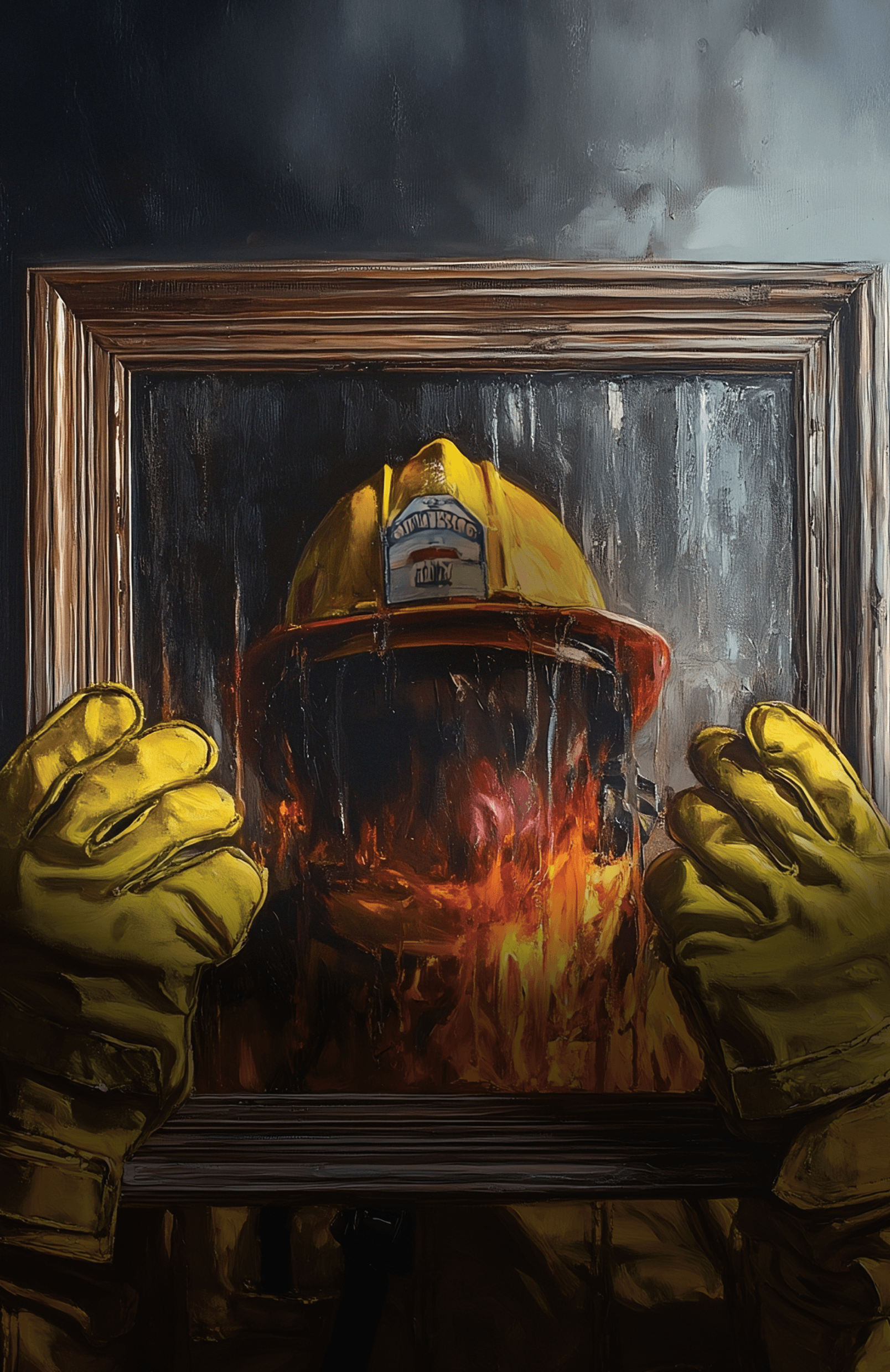
Only a few mornings before, I responded to a fully involved house fire. As the scene unfolded, we discovered the fire had been started as a result of a homicide.** It was “that call” for me.** The one that drove me to the darkest point of my life.It also made me see the light after an intensive year of healing through a variety of modalities – therapies, NLP (neuro-linguistic programming), breath-work sessions, meditations, psilocybin, and finding mentorship.
I began a journey that led to Fire to Light, an organization I foundedthat focuses on the research and development of performance-based, preventative mental health programs we call mental fitness. After navigating a mental health crisis as a firefighter, I took a hard look at the training and programs I was exposed to.
I set out to research the current state of mental health in the fire service. What began as phoning the human resources department of a local fire department in Barrie, Ont., to try to get the chief’s email eventually led to me interviewing more than 104 chiefs and leaders from five continents who represent well over 1.3 million firefighters globally.It became clear the chiefs and leaders care, that mental health concerns are real, and as the United States fire administrator said when I interviewed her,“When it comes to mental health, we are stuck in awareness.”
More than 75% of the fire chiefs and leaders we interviewed personally know a firefighter who has died by suicide.
Our research showed that 64% of the departments we interviewed are seeing an increase in firefighters going on leave, with the majority seeing psychological injury starting to surpass musculoskeletal injury for leaves of absence. Departments worldwide are seeing an increase in call volume and retention, and recruitment challenges are happening everywhere.This means our exposure to traumatic events is rising, and our pool of personnel to draw from is shrinking.
Sadly, the suicide rates of firefighters are roughly double that of the general population.
You may not be entirely surprised by these numbers; after all, we’re aware of the mental toll our profession takes.The shock comes when we learn what the fire service is doing as a response to all of this. Although we are leaps and bounds ahead of where we used to be regarding mental health training and education, it was a real eye-opener to learn that
More than 86% of departments interviewed are only training in mental health programs one or two times in a firefighter’s career.
Fire departments and chiefs are acutely aware of the challenges posed by psychological injuries and firefighter suicides, so much so thatmore than 75% of the chiefs and leaders we interviewed personally know a firefighter who has died by suicide.
On the other hand, after interviewing hundreds of fire service chiefs, leaders, and professionals, it’s clear that while we’re still finding our way,efforts to improve firefighter well-being have steadily increased. Over the past 10 years, significant energy has been invested in raising awareness about firefighters’ mental and psychological challenges.However, we are not mental health professionals – we are the helpers.
Despite this progress, stigma and deeply ingrained traditions still keep many of us silent.
We’re improving, butconsistency is one key factor that separates departments that are making great strides in their firefighters’ well-being from those that continue to struggle.
Departments that consistently train in wellness initiatives see positive results from their investments. These departments haven’t just implemented one or two mental health programs, hoping for a culture shift.
“When it comes to mental health, we are stuck in awareness.
Instead, they prioritize firefighter health year after year, committing to ongoing training that addresses safety in all aspects – physical, emotional, mental, and spiritual – just as they do for other firefighting skills and safety protocols.
We need to wake up to what we are and are not doing for the health of our firefighters.
We’re currently in a stage of burnout in the fire service, with the potential for things to worsen.
We prioritize being reactive versus proactive with wellness initiatives, and have missed the mark on showing our firefighters how to ask for help.
It’s like telling a recruit who has never stepped foot on a fire engine to go and pump water out of it.
They don’t know that the truck needs to be put into pump gear or engaged, and they don’t understand how to get the water flowingbecause they have never been shown how.
The focus now needs to be on teaching tools, education, and exercises that firefighterscan put into practice. We need to get as upstream as possible, and this doesn’t mean spending a few hours during recruit training on mental resilience.We must step into the operational and technical aspects of mental health training and take our health seriously.
We wear our gloves, bunker gear, and SCBAs to a fire for a reason:because we value the importance of our physical safety.
What if we trained for our psychological performance and safety with the same dedication and intensity as we do for our physical safety?
Could we improve the health of firefighters, reduce the rates of suicide, and create happier, healthier cultures? I believe so.