Strength training is just as important in retirement as it is at the height of your time as a firefighter
It was a typical duty day. The rest of the Kensington Green crew and I were beginning our morning routines when the front door buzzer sounded. A Saturday in the West End of London typically meant encountering a holidaying U.S. firefighter looking to swap a T-shirt. However, on this occasion, the firefighter in question was different.
He introduced himself as Shep, who was in London for a boxing match raising funds for the fallen of 9/11. During this period, many of the stations in London’s West End were hosting our brothers and sisters from the FDNY, who had come to visit us and attend fundraisers.
It turned out Shep was new to the FDNY. On 9/11, he had been off-duty and working as a steelworker nearby. He rushed to the scene to help.
Shep spent most of the day with us, assisting in the station kitchen and riding along to incidents. He fit right in. By mid-afternoon, Shep left, and we all wished him well for his upcoming fight.
I have often wondered how life turned out for him. Over time, I realized that for someone who had been through such a monumental experience, it made sense that he sought comfort in the familiar environment of the firehouse and the boxing ring. A few years later, I faced my own challenges when a spinal injury at work ended my career overnight.
As I write these words, more than 20 years have passed. I find myself reflecting more and more on those days, as one by one, my former colleagues retire. After my injury, I lost my income, my wife filed for divorce, my eldest son was diagnosed with a life-changing condition, and my identity as a firefighter was shattered.
Looking back, the only thing that remained constant was my habit of exercising. This ultimately allowed me to reinvent myself and work again — though not as a firefighter. My safe place was exercise, and strength training played a key role in both my mental and physical rehabilitation.
My safe place was exercise, and strength training played a key role in both my mental and physical rehabilitation.
In my new role as an osteopath and healthy aging consultant, I frequently find that strength training is often missing from people’s long-term exercise routines. Worryingly, it is during midlife when our long-term health and independence are most vulnerable. Simply put, strength training is universally important for everyone, but especially for midlifers and those nearing retirement — particularly pertinent for the fire community.
The challenge for many middle-aged individuals are the prevailing and often well-meaning narratives, such as, “take it easy,” “put your feet up,” and my personal favorite, “put out to pasture.” This becomes more acute in the modern, ultra-convenient world, where movement is often optional. In an unfortunate twist of fate, if you find yourself retiring in middle age from a physically demanding job, like the fire service, it is at this time that many conditions associated with older age start to take hold.
Through my work with the U.K. government’s Healthy Ageing Challenge, it has become clear that midlife is a key period in determining our health in older age. For many years, it was assumed the negative physical traits of aging — such as weakness, shortness of breath, chronic pain, falling, osteoporosis/fractures, and poor balance — were inevitable. We now know these characteristics are often the result of lost physical conditioning, and frailty is actually optional.
The key is to find a way to slow this decline — not by taking it easy and hoping for the best, but bytraining for the long game.
The Long GameImagine yourself as a 70-year-old. Perhaps you’re out shopping and step off a curb when you stumble. You now face two scenarios:
- You hope you won’t break your hip, that you will fully recover, and that you won’t have to change your lifestyle due to injury. If you do get injured, you hope you won’t decline further from an infection or worse.
- You decided, in midlife, to start or continue strength training. In this case, the likelihood is you will generate enough force within your thigh muscles to correct your foot position and avoid falling. If you do fall, your bones will be less likely to fracture. And if you do get injured, you will be confident of a full recovery and a functioning immune system, thanks to the proteins stored within the skeletal muscles you’ve maintained.
How many times have you run that call? How many lift-assists have you run just this year for seniors too weak to get off the floor? How many times have you sworn that won’t be you?
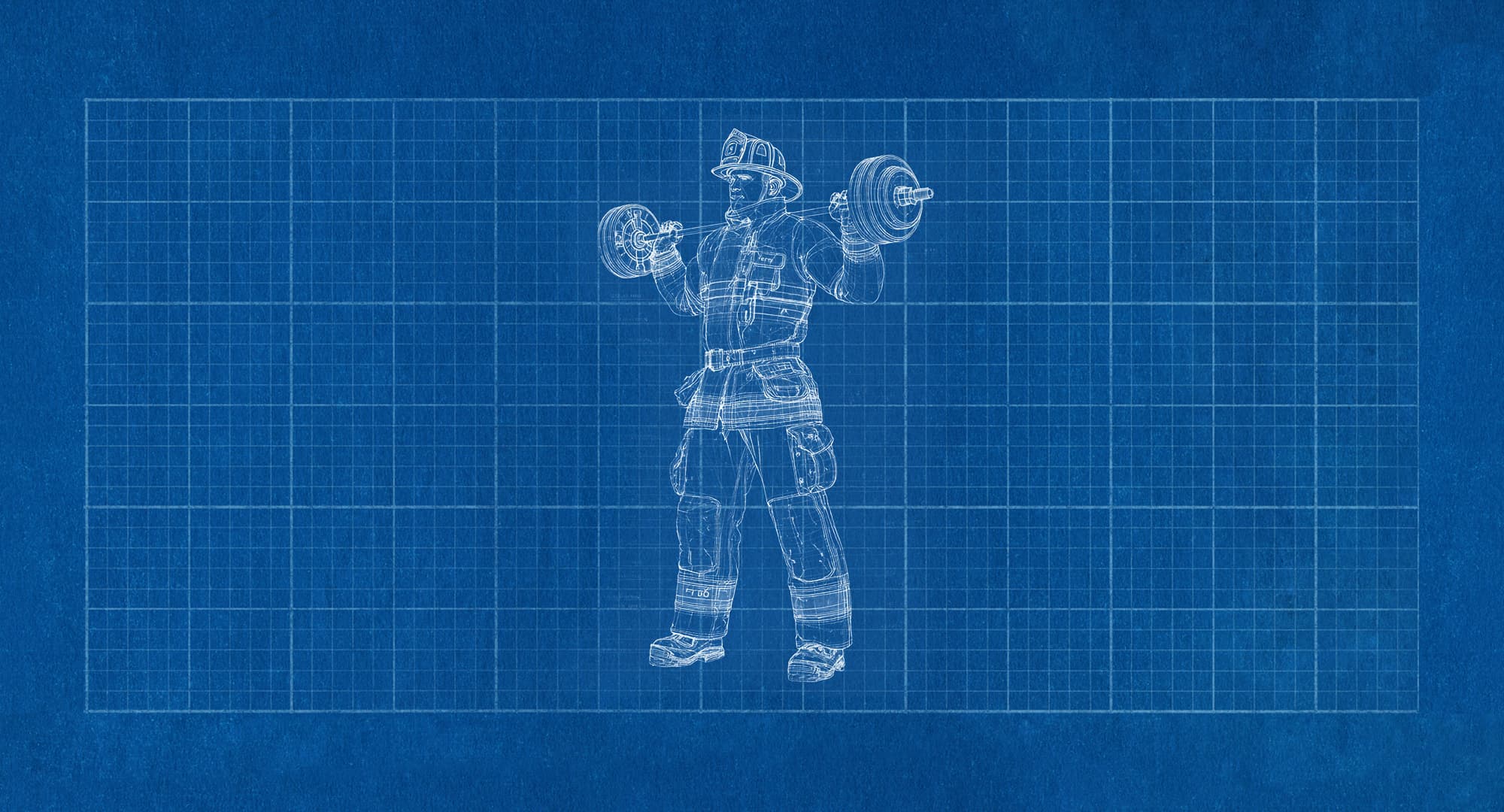
In the long game of aging, strength training is the only way to preserve our larger, more powerful muscle fibers. Endurance exercise is important, but strength training is crucial if we want to safeguard our futures. We need both steps and reps.
Falls are the leading cause of death from injury among individuals over 65
Midlife Strength Checklist
- Start small. Only a few minutes a day, if consistent, will help in the long game
- Avoid focusing on aesthetics; prioritize function
- If you have a niggle or feel overly tired, revert to gentle exercise options
- In strength training, follow the three Cs: consistency, challenge, and control
- Avoid isolation exercises; instead, focus on functional movements: squats, pull-ups, and carries
- Prioritize sleep and track your protein intake
- Whatever you do, don’t stop training – make it a habit. You can train at any age
Permission to be Middle-Aged
In midlife, the focus of training should be function rather than aesthetics. The first step is giving yourself permission to not be perfect — not to set a personal best every time, and not to buy into the “go hard or go home” mentality.
In the long game of aging well, consistency is key. The ability to keep showing up most of the time is crucial. I mention most of the time because, in middle age, it’s highly likely that life will throw us curveballs that take our focus away from training. But that’s OK. Just like trying to eat healthy, if we make an effort to return to sensible strength training most of the time, the future will take care of itself.
The bottom line is that, in times of need, we tend to revert to familiar surroundings and practices to help make sense of the world. My legendary recruit fire instructor, Station Officer Dave Smith, once told me, “When the shit hits the fan and you’re all alone, you fall back on your training and your physical condition.” These words of wisdom are as relevant as ever, especially to anyone in midlife. If it hits the fan in a few years, at least we can rely on our physical strength.
In my case, I intend to continue strength training most of the time and warmly invite you to do the same. Shep, if you are reading this, I truly hope you found the ongoing support and familiarity you needed in the firehouse and beyond — and that you’ve stayed committed to strength training.