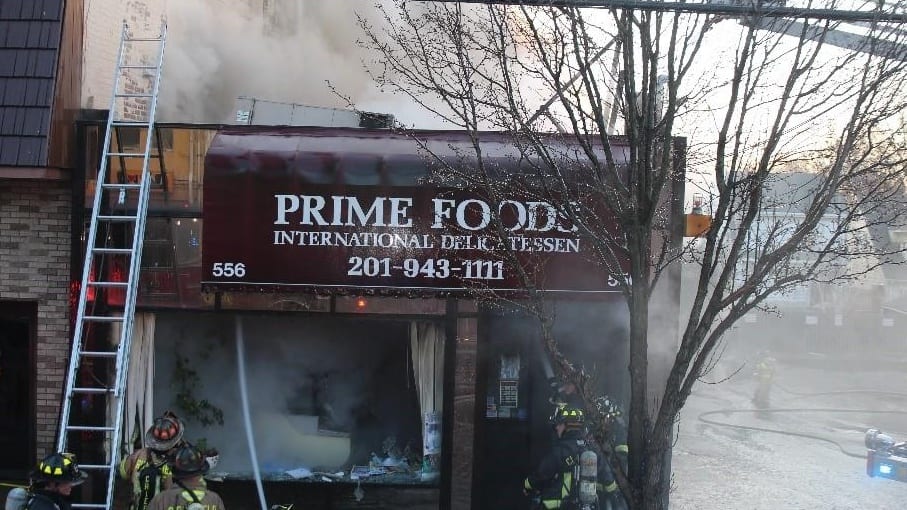

Consider this scenario. It seemed simple enough when the engine arrived on location: black smoke poured from a broken window with an orange flickering glow just beneath that smoke. A recruit firefighter moved to stretch a pre-connected attack line, mask up and wait for the captain.
But the recruit, anxious to do a good job, shouldered the hose load awkwardly and moved too fast. The hose snagged, the loops fell apart, and in an instant, he was yanked off balance, sprawling onto the tangled mess of spaghetti that was once the attack line. Thankfully, the second-in crew quickly knocked down the fire.
Afterward, crews gathered around the front bumper of the engine, anticipating a short hot wash of the incident. But instead of kudos or constructive criticism, the company captain launched into a tirade directed at the recruit who fumbled the hose. He focused on the recruit’s lack of ability, firefighting knowledge, and situational awareness, and even got personal, saying the recruit “chose the wrong profession.”
Years later, that rookie was promoted and, as a newly minted captain, modeled himself after the flawed captain. The cycle of dysfunctional leadership continues.
Now consider the same scene, but two things change:
1. Seeing the recruit stumble, the captain tells another firefighter, Help the new guy. Let’s get him into this firefight the right way.”
2. During the hot wash, the captain guides others to critique themselves. In that safe space, the recruit admits the hose fumble. So, the captain says, “Good catch. How do you solve that?” which prompts a group discussion about the recruit’s mistake. This gives the recruit a valuable lesson, celebrates the incident’s success, commends the recruit’s humility and accountability, and ends with a call for more training.
Here, the captain operates quietly but firmly. His intent is clear, and he creates a psychologically safe space for the crew to self-critique, and more importantly, for the recruit to learn from the experience.
Ask someone what a firefighter looks like, and you’ll often get a snapshot of a two-dimensional tough male archetype. Ask about a firefighter’s qualities, and you’ll get an oversimplified version of a battle-scarred and tested warrior willing to lay everything on the line for the sake of incident success.
The problem with being tough is that it often feels hollow. Simply, true toughness is about grit, resilience after failure, and agility in the face of obstacles and challenges. But grinding through something isn’t the same as presence. And the problem of false toughness is that it insinuates itself into positions of authority and rank.
Defining presence can be a significant challenge. When we say someone “has presence,” we’re describing how a room can collapse around them and how all eyes turn to them when they enter. Their physical movements reside in confidence and competence. Trying to define it has us searching for words about something that evokes feelings, like trying to explain how we felt about our first crush.
But there are physical cues, those outward appearances that help us frame the idea of presence.
It comes down to this: presence is the physical manifestation of a person’s personal and professional qualities – the walking, talking culmination of integrating a person’s experiences into practical application.
In the fire service, when we say someone has presence, we actually mean they command it. In the field, it might look like the outward chill of the incident commander in the face of chaos, their resolute decision-making, how they give direction in a calm, firm, and fully understandable way, and how they move with the poise of command and an economy of action.
An incident commander operating without command presence leads to scenes that devolve into poorly executed events with equally poor outcomes: more property loss, missed or failed rescue opportunities, and a higher risk of citizen or firefighter injury, even death. And so, explaining that bundle of qualities that makes up command presence can be difficult. While elusive, there are traits and behaviors that point to what the leader with true presence embodies.
Hallmarks of Command Presence
All the traits that form the backbone of command presence – quiet authority, steadiness that inspires confidence, motivation that activates crews towards mission success, and all under the umbrella of the virtues of character – translate perfectly into developing and curating a department culture. A culture that operates with the benchmarks of psychological safety: open communication, mutual trust and respect between leadership and peers, ample room for constructive growth, and consistent support.
The problem occurs when a blurred and skewed perception of toughness collides with the true definition of presence, when someone in a position of authority or command equates the brash elements of toughness with leadership, believing that looking, acting, and being tough come down to increased volume, aggressive tone of voice, harsh language, and sometimes outright bravado. Basically, they think that yelling equates to command presence. It does not.
Culture drives everything in a fire department: how it operates, trains, hires, etc. It also drives how people act, and what is both tolerated and allowed. A culture can operate under the misguided belief that being an aggressive firefighter (progressive, smart, with a true sense of toughness) is the same as being an aggressive person (they’re not). It’s then considered OK to be that aggressor, equating the two.
Let’s admit it: the fire service pushes the tough guy narrative.
I’ve been guilty of pushing it myself. I was once told by a fellow instructor, a Gulf War Marine vet, that the 40-strong recruit class we were teaching was afraid of me. I’d bark at them, dressing them down frequently. I rationalized it as their rite of passage and that I was getting them used to the life-or-death situations where fast talking and harsh words were how we communicated. In the end, though, it was all performative.
As for how to balance the legitimate quality of true toughness, the question doesn’t need to be a binary proposition. A fire department can be both tactically aggressive and culturally mature. Department members can possess the traits and soft skills of effective leadership.
That looks like having command presence on scene, while still trusting companies and individual crew members to act independently while knowing the leader’s intent. It’s time to close the book on performative toughness. Keep the grit, keep the standards, but lead with presence.