
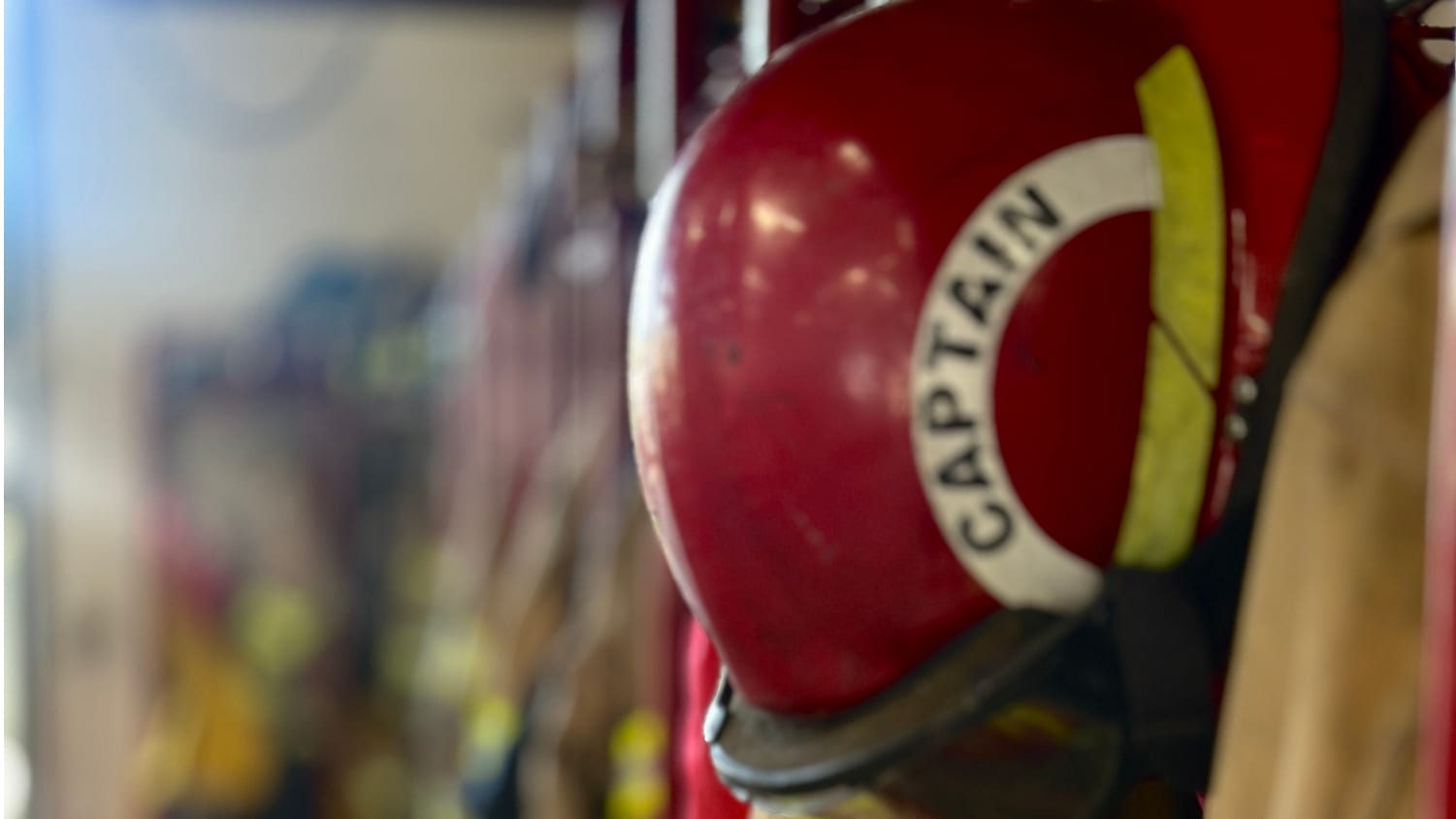
After nearly three decades in the fire and EMS service, you’d think I would have been ready for retirement. I had planned it, dreamed about it, even counted down to it like it was some hard-earned destination. For years, every firefighter I knew talked about the “magic day,” the day the gear goes on the wall, the tones become someone else’s problem, and sleep finally returns like an old friend. And don’t get me wrong, the sleep is great. But no one prepared me for the quiet.
I had a rewarding career. I taught EMTs and paramedics, served as a public safety instructor in “Learn Not to Burn,” a public school program, worked medical calls that changed lives, and even spent time assigned to the marine unit, something the 20-year-old version of me would have thought was the coolest job in the world. I mentored rookies, sat at kitchen tables solving the world’s problems over burnt coffee, and carried the weight of the rough calls that only brothers and sisters in this profession truly understood.
Then, just like that, the tones stopped.
The Shift That Never Ends
Everyone tells you to prepare financially for retirement, but no one talks about preparing emotionally. Over the past few years, I’ve spoken with more retirees than I can count – firefighters who loved the job as much as I did, and I keep hearing the same thing:
“I wasn’t prepared for the abrupt halt.”
“I didn’t know how much I needed to feel needed.”
“I miss my crew, I miss the camaraderie, I miss the purpose.”
The transition is jarring. You go from a life where people depend on you, your crew, your department, and your community, to a world that doesn’t hand you a mission at the start of every shift. When the station doors close behind you for the last time, you step into a version of freedom that feels strangely like loss.
Some retirees thrive in it. Others struggle. And most, like me, wake up one day and realize they need a new “why.”
Golf, Fishing, Boats … and Then What?
I tried it all. I played golf too much, honestly. I fished until the fish got bored with me. I took the boat out with the enthusiasm of a man trying to convince himself that this was now his life’s purpose.
And don’t get me wrong, it was fun. But it wasn’t fulfilling.
Firefighters don’t retire from a job; they retire from a calling. And a calling leaves a void.
Eventually, my wife looked at me the way spouses do when they love you deeply but are also trying to figure out what in the world they’re supposed to do with you now that you’re home 24/7. And that’s when I realized something important:
If you don’t find a new purpose, your spouse or significant other will find one for you.
So, I went back to school at an age when most people were thinking about slowing down, not picking up textbooks. First came finishing my associate’s. Then came my bachelor’s. Now I’m months away from earning my master’s and even considering PhD options. Yes, I may be crazy. But I’m happy. The fan club helps immensely back to my wife and two dogs.
And that’s the point.
The Mission Doesn’t End, It Changes
Firefighters are wired for purpose. It’s built into us: serve, protect, train, respond, lead, guide. Whether you wore those turnouts for 10 years or 40, the career shapes you in ways that don’t switch off after retirement.
So, the question retirees face isn’t, “What now?”
It’s, “How do I keep being who I’ve become?”
Some do it through teaching, passing on decades of experience to the next generation of firefighters, EMTs, and paramedics. Others volunteer, mentor, join CERT teams, or work part-time in emergency management.
Some pick up hobbies that become passions.
Some start businesses.
Some travel the country with their spouse and two dogs. My original plan before I stumbled into academia.
Some discover, with surprise, that retirement is simply a doorway to a second career that fulfills them just as deeply as the first.
The Identity Shift Is Real
Fire service culture is built on identity. We don’t introduce ourselves as people who happen to work in fire and EMS; we introduce ourselves as firefighters and medics. It has become part of our DNA. So, when the job ends, the identity crisis begins.
Research shows that retirees from mission-driven professions, fire, EMS, law enforcement, and military, struggle more with the transition than those from corporate or traditional jobs. Why? Because the fire service gives you:
• Purpose
• Belonging
• Structure
• Brotherhood and sisterhood
• Daily meaning
Remove all of that overnight, and even the toughest firefighter can feel unmoored.
This doesn’t mean we’re weak. It means the job profoundly shaped us.
Finding Your Why (Again)
Let me be clear: your “why” doesn’t have to be dramatic. It doesn’t need to be a master’s program or a PhD journey, unless you enjoy the insanity of writing academic papers at 2 a.m., like I apparently do.
Your why can be:
• Being the mentor you wished you had
• Building that business you always dreamed of
• Coaching a youth sports team
• Volunteering at your church or local school
• Joining a disaster response group
• Welding, woodworking, restoring cars, whatever sparks your passion
• Picking up a part-time role in emergency management or training
• Spending meaningful time with your spouse, kids, or grandkids
• Traveling, hiking, exploring, anything that gets you moving with purpose
And yes, your why can absolutely be “doing nothing.” There’s honor in finally resting after years of exhaustion. But for many of us, rest is only sustainable when it coexists with purpose.
A Word to Those Still on the Job
Don’t wait until the last day to think about who you are outside the uniform.
Build interests now. Build identity now. Build your next mission now.
You don’t need a fully mapped-out retirement plan, but you need something that excites you, something that challenges you, something that reminds you that your value doesn’t end when your shift does.
The Final Takeaway
I thought retirement would be an ending. Instead, it became a beginning, an unexpected one, a surprising one, but a meaningful one.
My turnouts may be hung up, but my purpose isn’t. And if you’re approaching retirement, or already in yours, it isn’t either. Whether you’re chasing fish, chasing grandchildren, chasing education, or chasing a new mission, don’t let the abrupt end of one calling convince you that your story is over.
You’ve spent your life helping strangers on their worst day.
You’ve trained, taught, saved, led, inspired.
You’ve already lived a purpose-driven career.
All retirement asks is that you find the next chapter for that purpose.
Because the truth is this:
A firefighter never stops being a firefighter,
we just learn new ways to serve, grow, and matter.
And that, my brothers and sisters, is your new why.