There was a time when I thought being busy meant you were in a good firehouse. Actually, I knew it did.
When I was coming up, everyone wanted to work at the busy houses. You wanted the station where the tones dropped. You wanted fires, wrecks, cardiac arrests and calls that tested you. Nobody joined the fire service hoping to spend an entire career waiting for something to happen. I certainly didn’t.
I spent much of my career choosing busy assignments. Those places taught me how to be a stronger firefighter and paramedic. They taught me how to make decisions when there wasn’t much time. They taught me how to work tired, trust the people beside me, and understand that experience can’t be completely recreated in a classroom.
Nearly three decades later, I still believe in the value of the busy firehouse. But we need to ask a different question: When did being busy become being endlessly available?
When Busy Became the Mission
The American fire service has become one of the most dependable problem-solving systems in our communities. Is a structure burning? We go. Is someone having chest pain? We go. Vehicle crash? We go. Behavioral health crisis? We go. Someone fell and can’t get up? We go. Hazardous material, technical rescue, storm damage, alarm activation, or something nobody quite knows how to categorize? Chances are, we go.
Over generations, communities changed, and we changed with them. EMS became a major part of our mission. We developed hazardous materials teams, technical rescue capabilities, disaster-response systems, and community risk-reduction programs. Some departments now participate in community paramedicine, fall prevention, behavioral health programs, and alternative response models.
We became the people communities call because we built a reputation for showing up. The challenge is our success has created an enormous responsibility.
In January 2026, the National Fire Protection Association launched its Sixth Needs Assessment of the U.S. Fire Service, a national effort involving roughly 30,000 fire departments. In discussing the challenges facing today’s departments, NFPA specifically identified skyrocketing EMS call volumes and firefighter burnout among the fire service’s current pain points.
Have the systems we built years ago evolved as quickly as the mission we’re asking today’s firefighters and paramedics to perform?
Measuring the Human Cost
We’re meticulous about readiness when it comes to equipment, yet the most important component of that apparatus walks into the station every morning: the firefighter. And that resource has limits.
A nationwide study published in 2025 followed 388 EMS clinicians from 35 EMS and fire agencies through 4,573 shifts. The average amount of sleep before a shift was only 6.2 hours. Average sleep obtained while on duty was 3.4 hours. During 24-hour shifts, the highest levels of fatigue, sleepiness, and difficulty concentrating occurred around three or four in the morning.
Anyone who has spent a career on a busy apparatus probably isn’t surprised.
Fatigue Is an Operational Issue
There’s also a difference between being tired because you fought a fire at two in the morning and being exhausted because the radio went off repeatedly throughout the night.
Both create fatigue. One may be unavoidable, and the other may be measurable.
Research on urban firefighters has already demonstrated that emergency call volume is associated with exertion, sleep duration and sleepiness. Researchers specifically suggested that tracking call volume could help departments evaluate occupational demands, personnel readiness and wellness.
That word is important: readiness.
Turning Data Into Readiness
Maybe we’ve been putting this conversation in the wrong category. Perhaps fatigue isn’t solely a wellness issue. Perhaps it’s also an operational-readiness issue.
We already measure response times, turnout times, unit utilization and call volume. We track training hours, apparatus availability and staffing. Modern departments collect enormous amounts of information. What if we used more of that information to measure human readiness?
Instead of looking only at annual call totals, examine when those calls occur. How many times is a company awakened between midnight and six? How long are crews committed? How often does a unit clear one call and immediately receive another? Are certain stations carrying dramatically different workloads while working identical schedules? What does mandatory overtime add to that equation? Are sick leave, injuries, turnover, and early retirements telling us something our response-time dashboard isn’t?
These are data points, and good leadership has always depended on good information. The answer also can’t simply be telling firefighters to become more resilient.
Wellness Beyond Individual Resilience
Exercise, nutrition, peer support, sleep education, and mental health resources still matter, and the fire service continues moving in that direction. NFPA 1580, the 2025 Standard for Emergency Responder Occupational Health and Wellness, brought occupational medical programs, fitness, infection control, and rehabilitation concepts together under a broader responder health-and-wellness framework. That’s progress.
But individual wellness programs can’t replace operational analysis. You can’t discuss sleep hygiene without also being willing to examine what happens when the radio goes off repeatedly throughout the night.
Sometimes the solution may involve deployment, staffing or scheduling. And sometimes it may involve asking, “What resource does this person actually need?”
The person may absolutely need a fire engine and an ambulance. Or a behavioral health professional. Nurse navigation, telemedicine, alternative transportation, and social-service partnerships may provide better options for certain situations.
The objective is to send the right resource to the right problem while preserving the readiness of the emergency response system.
Protecting Experience
There is another resource we don’t talk about enough: experience.
When a 20- or 25-year firefighter becomes exhausted, disengaged, or walks away earlier than expected, the department doesn’t simply lose a position on a staffing sheet. It loses thousands of calls’ worth of judgment.
It loses the firefighter who recognizes the routine call suddenly isn’t routine. The paramedic who knows when something doesn’t look right. The company officer who can calm a rookie after a terrible call. The veteran who knows when to slow everyone down and when there isn’t a second to waste.
We spend tremendous resources recruiting and training firefighters. Protecting the people who have accumulated decades of experience should be considered an investment in readiness, too.
None of this means making the fire service easy. It’s not supposed to be easy. There will be nights when nobody sleeps. There will be hurricanes, wildfires, mass-casualty incidents, major fires, and shifts when everything seems to happen at once. I’ve had plenty of them. Those are part of the profession we chose.
A Warning Sign
But there’s a difference between occasionally operating beyond normal capacity because the emergency demands it and building a system that operates near capacity every day.
One is emergency response. The other is a warning.
Maybe the next major advancement in firefighter health and wellness isn’t another poster hanging in the station kitchen.
Maybe it’s workload analysis, deployment, looking at whether staffing models designed years ago still match today’s mission, and recognizing that recovery isn’t weakness. Recovery is readiness.
We already understand that with our equipment. We would never intentionally run an engine indefinitely without maintenance and then blame the engine when something eventually failed.
Our people deserve at least the same consideration.
Our People Are the Readiness System
I still believe in the busy firehouse. I still believe firefighters should want to work. Some of the best firefighters and paramedics I have known were forged in stations where the doors went up frequently. I wouldn’t trade those years.
But there’s a line somewhere between experience and exhaustion. The modern fire service needs to get better at recognizing where it is.
Our communities are going to keep asking us to do more. And knowing firefighters, we will keep finding ways to say yes. That’s who we are.
The challenge for today’s fire service leaders isn’t figuring out how to say no. It’s figuring out how we can keep saying yes without losing the people who make yes possible.
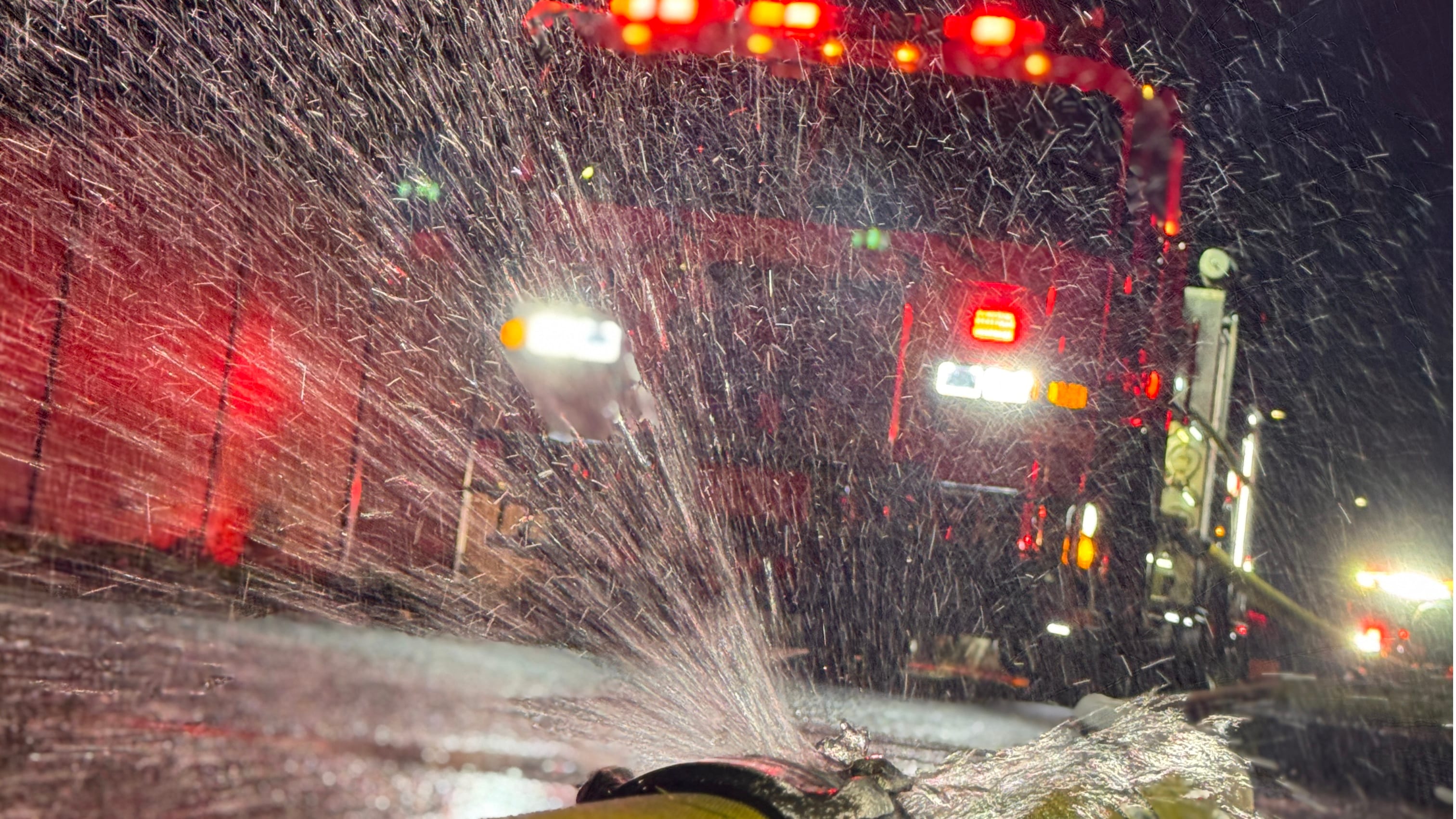
Photo by Steve Baer | FireDog Photos