
Most female firefighters learn a unique survival skill early, in the academy, before the tones ever drop on their first shift. They learn how to perform belonging.
You learn which parts of yourself to bring through the bay doors and which parts to leave in the parking lot. You calibrate your humor, your volume, and your ambition. You study the culture the way you study a building on arrival: looking for the load-bearing walls, the places it might give way, where it’s safe to put weight, and where it isn’t. You get good at it. You get so good at it that eventually you stop noticing you’re doing it at all.
And then one day, years into a career you fought hard to build, you realize you’re exhausted in a way that has nothing to do with the calls.
The research has a name for what’s happening: editing.
A friend from FireGals said something to me not too long ago that I haven’t been able to put down since.
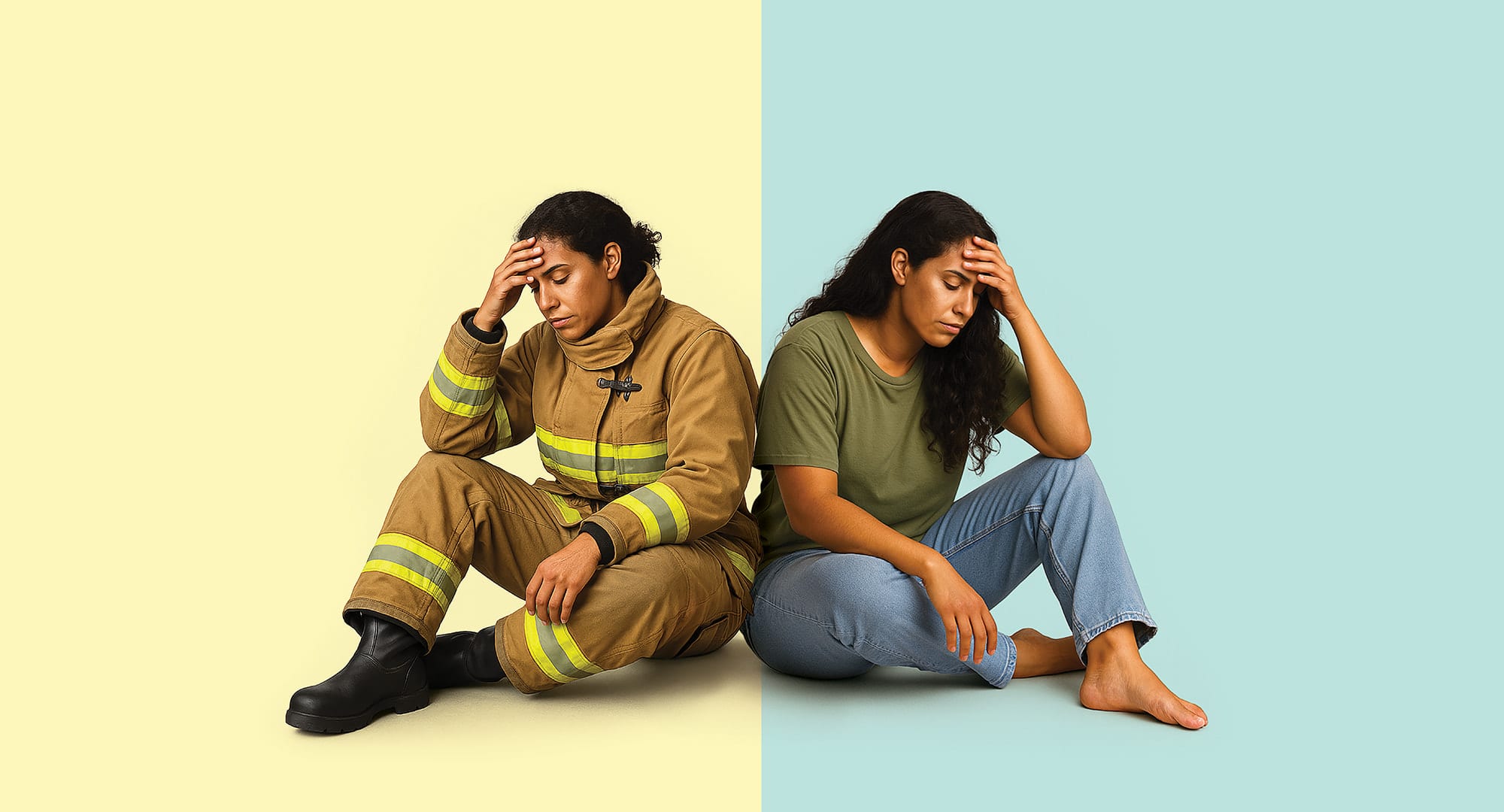
“I feel like I have to edit myself every single time I walk into work. Parts of who I am are valued in this career, but so many other parts are just not welcome.”
I knew exactly what she meant. If there is one word that encapsulates what gets rewarded in the fire service, it’s “aggressive.” Aggressive training. Aggressive personalities. Hard chargers. Go-getters. The culture of “one more rep” and “I’ll sleep when I’m dead.” Masculine traits that make complete sense when you’re forcing a door or swinging an eight-pound ax into a structure fire, and they become the measuring stick for everything else, too.
What this culture hasn’t figured out yet is that women can show up exactly as they are and still get the job done. Completely. Efficiently. Every time.
But as long as that picture isn’t clearly painted, as long as the institution only knows how to value one version of what a firefighter looks like, women will keep wondering if they actually belong. Not because they don’t. Because the people around them don’t yet have a framework for recognizing excellence when it arrives in a different form.
That’s no small problem. That’s the edit she is making every single shift.
The research connects directly to that kitchen-table truth: editing yourself day after day, in a place where you are both essential and not entirely welcome, is not neutral.
The body treats it as a threat, the same as it would any other sustained stressor, and it suppresses the very system we need most to actually recover from trauma. The nervous system doesn’t fully come down when it never fully feels safe. And for many of us, the firehouse has never quite been that.
Here are the numbers that nobody is putting on recruitment posters.
The U.S. Fire Administration’s 2023 Fire Service Women: A Status Report shows that women represent roughly 4% of career firefighters in this country. Four percent. Two hundred years after Molly Williams made history, and despite decades of advocacy, mentorship programs, and hard-won progress, we remain at 4%. Roll in all the female volunteer firefighters, and the number only creeps up to 9%.
The women who do make it in? A 2024 study led by Dr. Brittany Hollerbach and published in Safety and Health at Work found that the longer women stay in the fire service, the worse their mental health outcomes become. Incumbent women firefighters report higher rates of PTSD symptoms, chronic workplace discrimination, and exclusion from the informal peer support network of the firehouse.
This isn’t a feelings problem. It’s a physiology problem.
Research consistently shows that social support is one of the strongest protective factors against PTSD. The ability to debrief: to sit around a kitchen table after a hard call and say “that one got me” to someone who was there. That’s medicine. That’s the nervous system doing exactly what it was designed to do when it feels safe enough to come down.
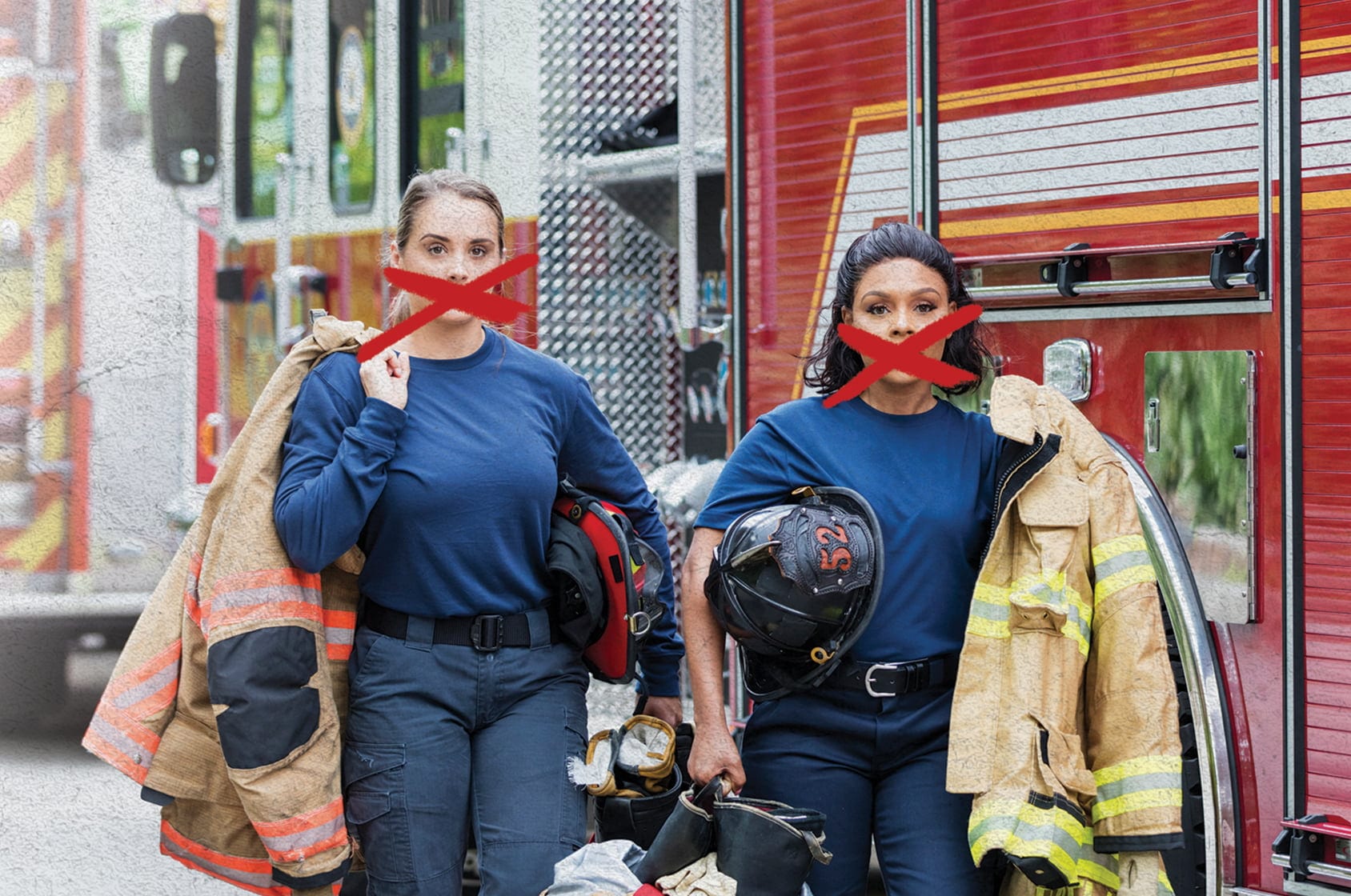
We are often systematically denied that medicine, and the data says we are leaving the career because of it. Not because we can’t do the job or because we don’t love it. Because we are running a critical system without the maintenance it actually requires, and nobody told us where to go get it.
This is where events like Women in Fire and FireGals Sleep Camp stop being nice-to-haves and start being the thing that keeps you in this job.
Women-focused spaces in the fire service are the rooms where you don’t have to edit yourself before you walk in. Not just community, though that matters. Not just continuing education credits, though those count, too. A room where the armor gets to come off. Where you can say the things you never say at the station and find out three other women in the room have been thinking the exact same thing, who know what it’s like to white-knuckle it through shifts, wondering if it will always be that way.
It doesn’t have to always be that way. But you have to be in the room to find that out. And what you are likely to find is what women-focused spaces actually do for us.
When I founded FireGals, it was because I had lived the research before I knew the research existed. I knew female firefighters were carrying something the institution had not built any infrastructure to hold. And I knew when we finally got in a room together, really together, not just as the only woman on the crew, something shifted that I couldn’t find anywhere else.
Here is what I have watched happen, over and over, in spaces designed specifically for women in the fire service.
Women name things they have never said out loud. Not because they suddenly became vulnerable, but because the room finally felt safe enough to be honest. That naming is the beginning of processing. Processing is the beginning of not burning out by year 15.
Women find mentors and peers they can’t find at their own stations. The woman who is five years ahead of you on the exact path you’re walking right now already exists. You just haven’t met her yet because she’s on a different shift in a different city. Women-focused events collapse that distance.
Women stop performing okayness and start actually recovering. There’s a measurable difference between rest that happens in isolation and rest that happens in community. The nervous system responds differently when it feels genuinely safe. That’s not a metaphor. That’s biology doing exactly what it was designed to do.
And maybe most importantly: women get to show up unedited. No measuring stick. No performance. The whole version of themselves: the parts that are valued in the firehouse and the parts that are not welcome there. Welcomed, finally, somewhere.
If you’re a female firefighter who has been wondering how much longer you can keep doing this: that question is data, not weakness. It’s your body telling you something true about what it needs.
What it needs is not more optimization. It’s not a stricter protocol or a better tracking app (though for the record, sleep is still the foundation, and I will die on that hill).
What your body needs is other women who get it. Women who know and understand what this world is like. Women who will tell you the truth and laugh at the right parts and sit with you in the hard ones. Women who do not need you to edit yourself before you walk through the door.
So go to the conference. Sign up for the retreat. Invest in the room full of women who are doing this same impossible, beautiful job.
Your career, and frankly your life, is worth showing up for. All of it. Unedited.