Research often asks participants to come to the investigators. For firefighters, that can be difficult. Between shift schedules, overtime, staffing shortages, family obligations, and the realities of working in the fire service, taking time away to travel for research participation is not always feasible.
So, we asked a simple question: What if we brought the laboratory to them?
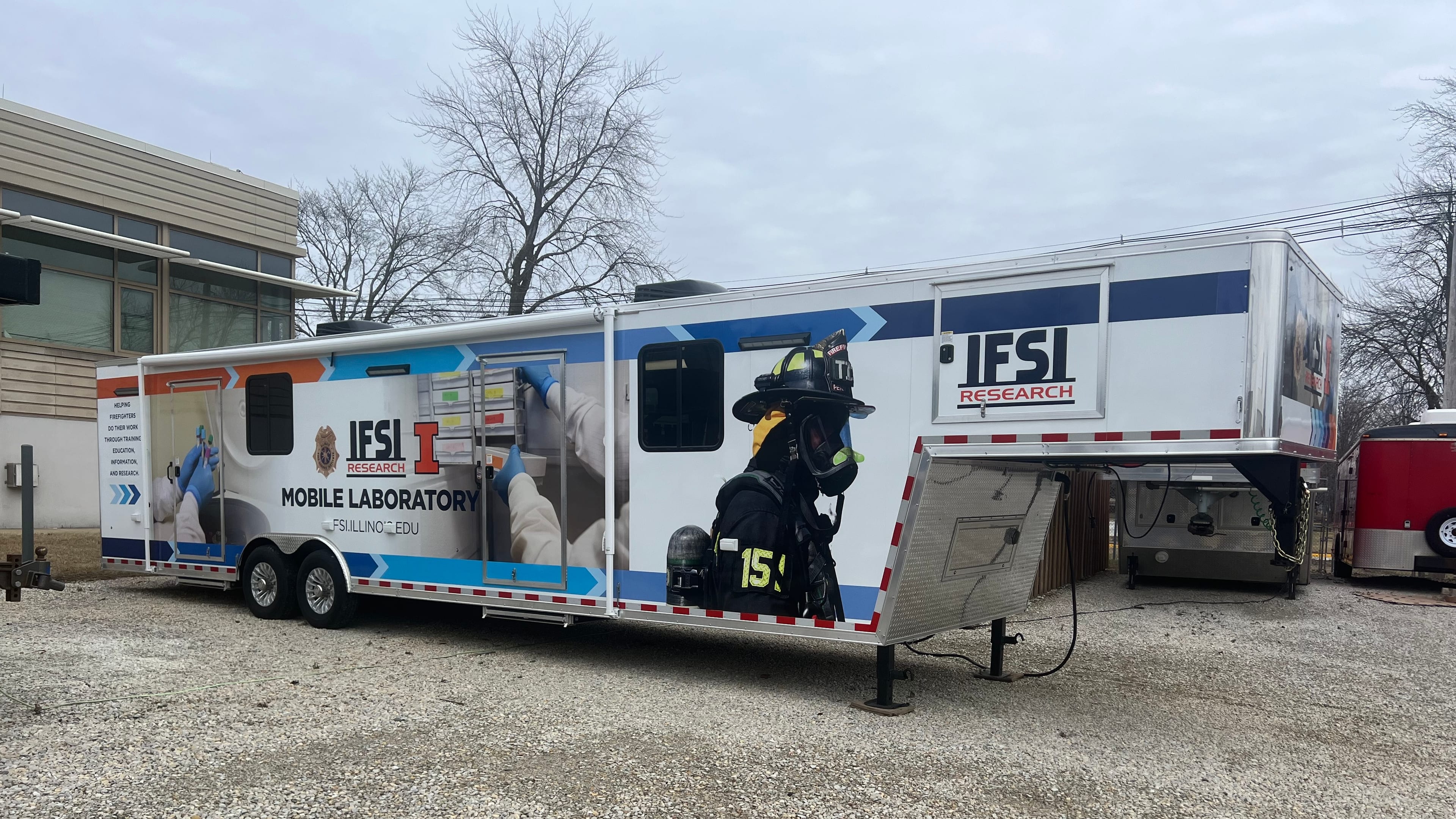
That question became the foundation for one of our most ambitious projects at the IFSI: a fully operational mobile laboratory designed specifically to support firefighter health research and increase participation in our Illinois Firefighter Cancer Risk Study (IFCRS).
What began as an idea eventually became a four-year journey. Working closely together, our Program Manager, Jason Rennert, and I designed the mobile laboratory from scratch. We envisioned a system that functioned as a true operational laboratory — one that provided a clean, safe, and portable space for collecting and processing biological samples while maintaining the same scientific rigor and standards as our main research facility.
Today, that vision is a reality.
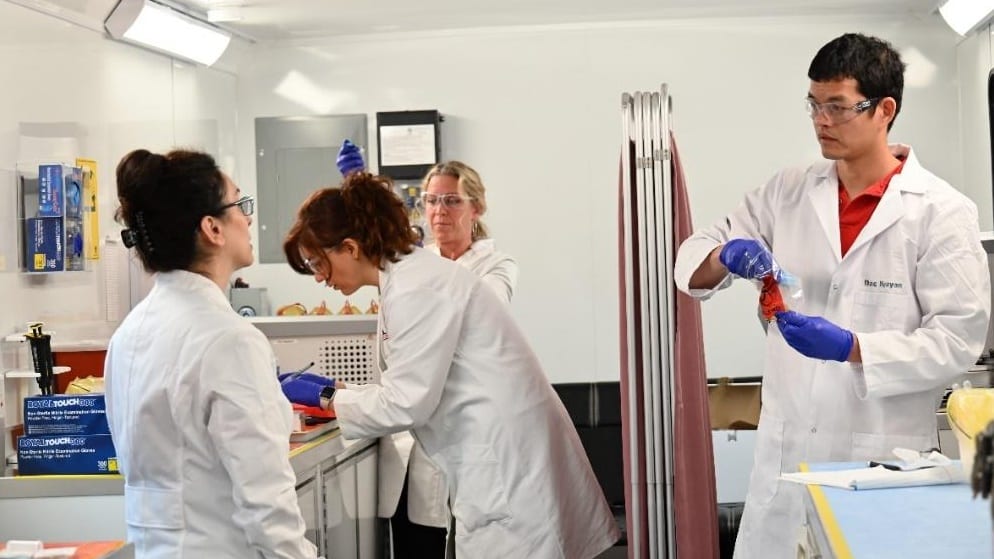
Our 40-foot trailer into a fully functional mobile laboratory devoted entirely to firefighter health and safety research. Like our primary laboratory at IFSI, the mobile unit contains dedicated phlebotomy stations for blood collection and processing stations. There, biological samples can be prepared for analysis in our main lab for occupational contaminants such as PFAS (per- and polyfluoroalkyl substances), PAHs (polycyclic aromatic hydrocarbons), and heavy metals, as well as markers of inflammation and oxidative stress.
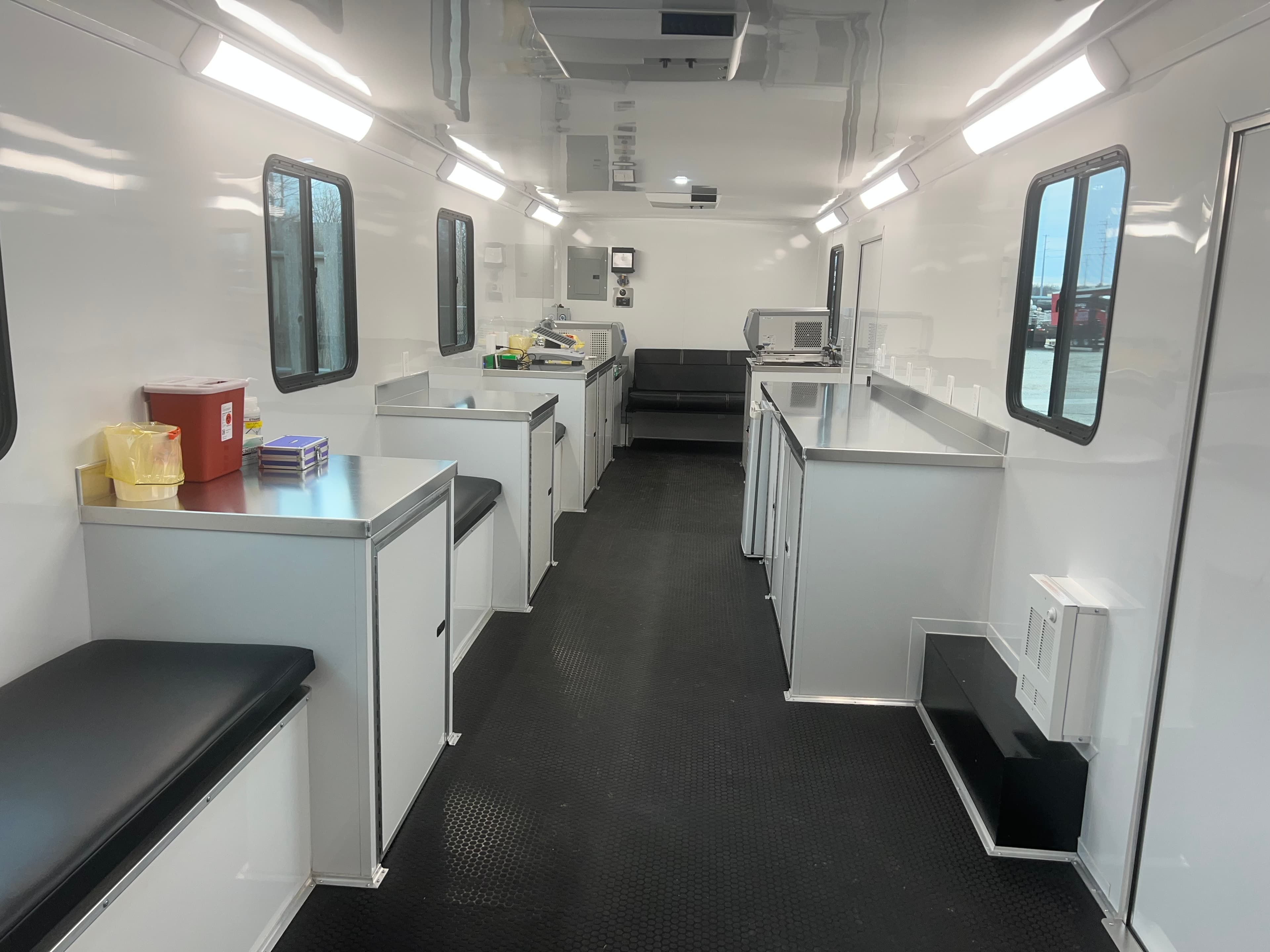
Our mobile laboratory is powered by either grid electricity or an onboard generator. The mobile laboratory also contains specialized storage systems that allow us to safely preserve biological materials while remaining on the road for extended periods. A full upright -20°C freezer and a mobile liquid nitrogen storage system help ensure that blood and urine samples remain at proper storage temperature and scientifically viable during travel.
However, the most important feature of the mobile laboratory is not the technology inside it. It is its accessibility.
One of the milestones we are particularly proud of was obtaining Biological Safety Level 2 clearance through the Division of Research Safety at the University of Illinois Urbana-Champaign. This clearance allows us to safely collect and process human biological samples at designated collection sites (such as fire departments, conventions, etc.) while maintaining strict safety and research standards.
In addition, our procedures operate under Institutional Review Board-approved protocols for the collection and processing of biological samples. These approvals help ensure that participants’ safety, privacy, and scientific integrity remain at the center of everything we do. The goal of the mobile laboratory is simple: meet firefighters where they are.
Through IFCRS, we are conducting a longitudinal effort designed to better understand how occupational exposures influence firefighter health over time. Longitudinal studies rely heavily on participation and continued engagement. The more firefighters we can enroll and follow over the course of their careers, the stronger the scientific evidence becomes.
We recognized early in the planning process that geography and the demanding schedules of firefighters could become barriers to participation. Illinois alone contains hundreds of departments spread across urban, suburban, and rural communities. Asking firefighters to travel to us would inevitably limit who could participate. The mobile laboratory changes that equation by making participation easier for Illinois firefighters across the state.
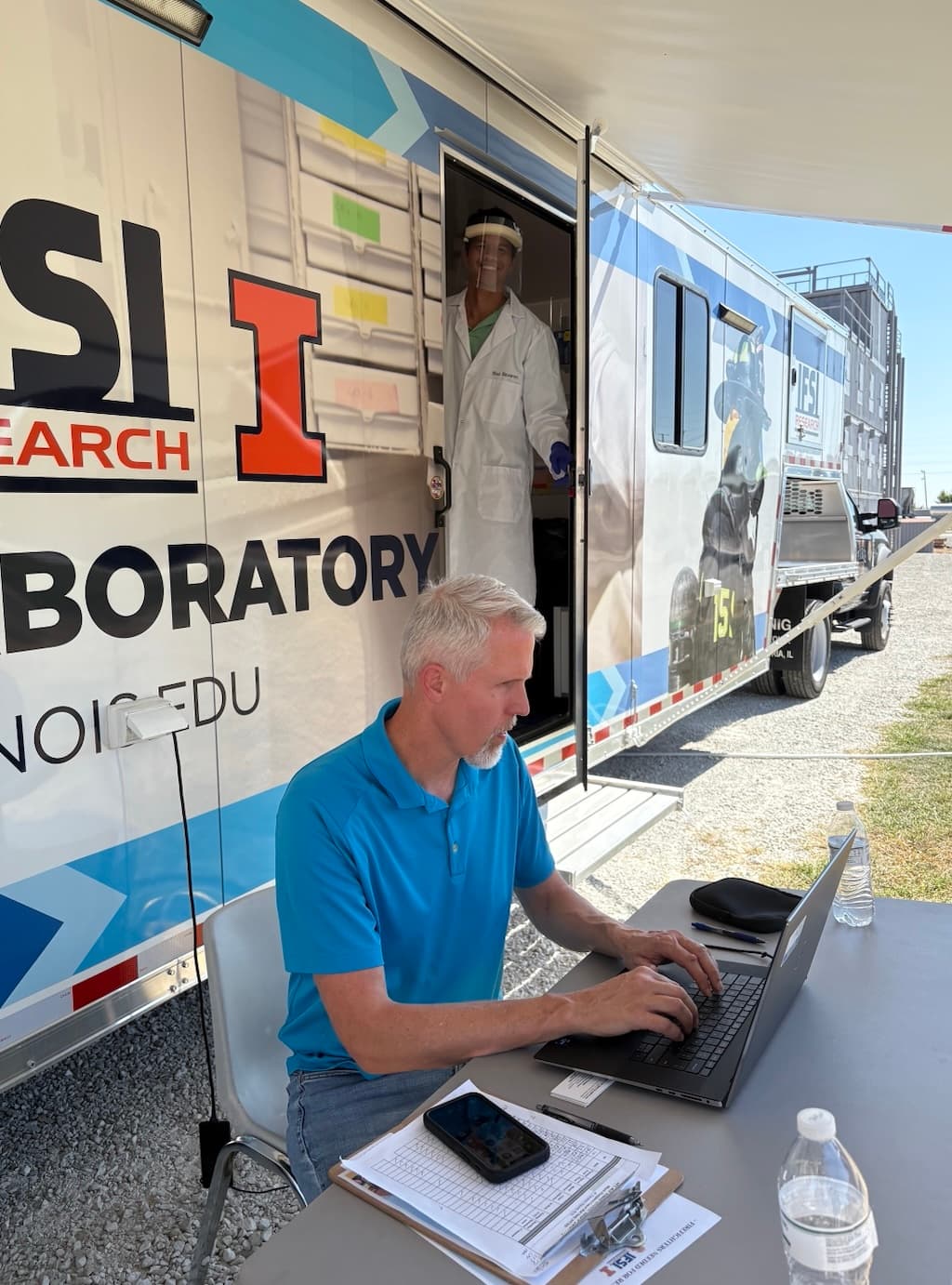
Today, fire departments across Illinois and in other nearby states that want to participate in our research contact our team to schedule enrollment events. Departments identify a central location where the mobile laboratory can be stationed, creating a hub for participation. Firefighters from neighboring stations often work together and cover shifts for one another so their members can participate in the study. Watching this process unfold has been one of the most rewarding aspects of the project.
What we envisioned as a research tool has become something larger: a collaboration between IFSI and the fire service community itself. Departments are not simply participants in the process; they are partners. Their willingness to coordinate schedules, identify locations, and support one another demonstrates the same teamwork that defines the fire service on the emergency scene. Research works best when it is built with the participating community rather than around it.
Every blood sample collected, every questionnaire completed, and every firefighter enrolled contributes to a larger goal: generating meaningful scientific evidence that can improve firefighter health and safety for future generations.
For us, the mobile laboratory represents more than a trailer filled with equipment. It represents a commitment to reduce barriers, expanding access, and ensuring firefighters have opportunities to participate in research that directly affects not only their lives and careers, but generations of firefighters to come. Most importantly, it reflects a belief that protecting firefighters should not stop after the call is over.
Sometimes, protecting firefighters means bringing the science directly to them.