

In Part 1, I shared how a bat in our bedroom exposed my wife, dog, and I to rabies. For emergency responders, the threat is just as real, and often less obvious. Here in Part 2, we’ll look at patient care considerations and how you can protect yourself from being exposed to this virus.
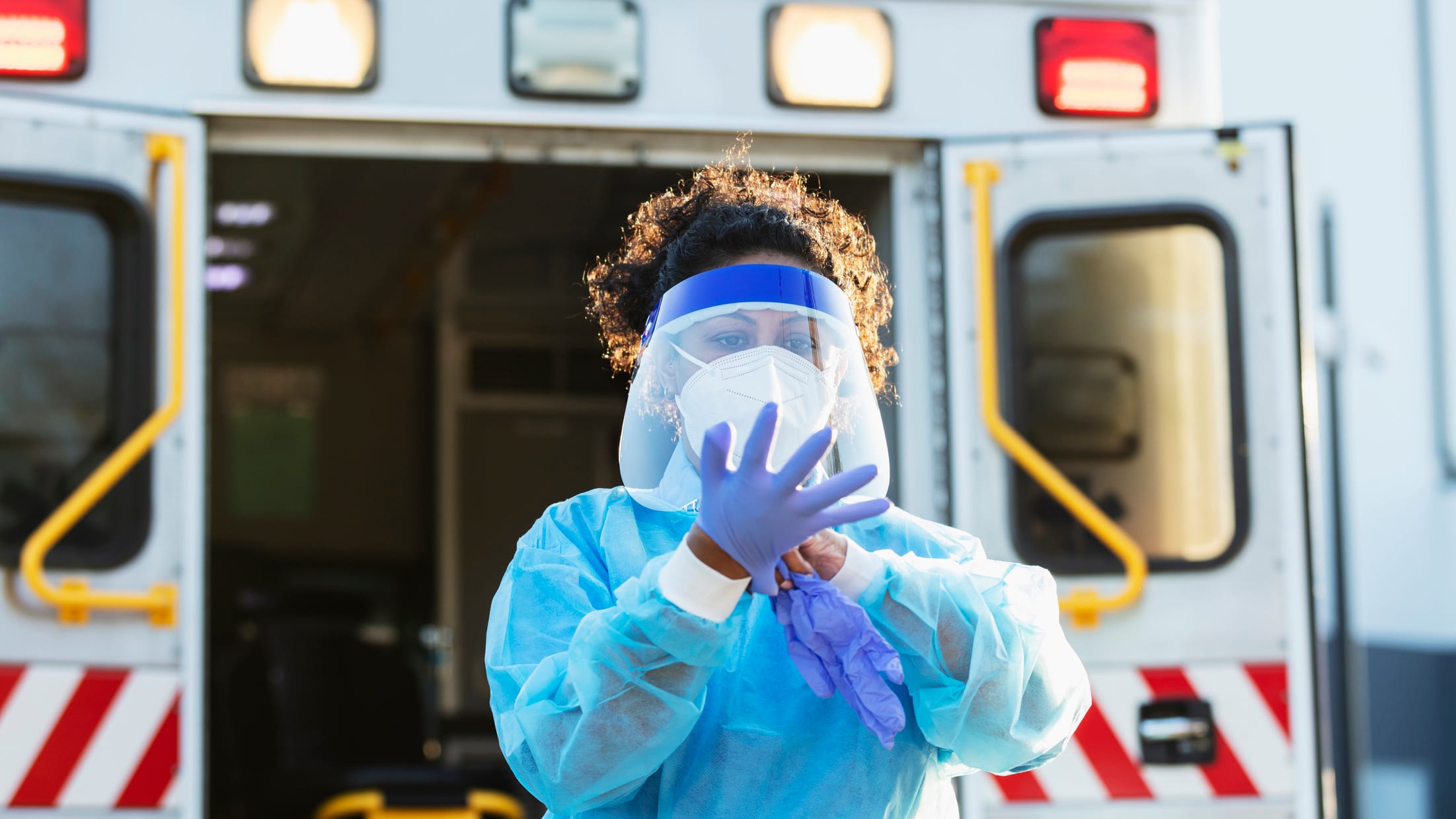
The rabies virus is lethal and spreads via saliva. That PPE you wear is your first line of defense, so take it seriously. Face, eye protection, gown and gloves should be mandatory. Exercise universal precautions whenever evaluating a patient who may have been exposed to rabies.
Pre-hospital Care and Treatment
- Scene safety and stabilization: Ensure the animal is not an ongoing threat to the patient or responders. Emergency dispatchers are going to be your first touch on this incident and can really help with this initial step.
- Control any bleeding: Apply direct pressure to control severe bleeding.
- Clean the wound site: Immediately flush the wound site with copious soap and running water for at least 15 minutes. This can drastically reduce the viral load and decrease the risk of transmission. It’s one of the most critical steps an on-scene firefighter can perform. Dispatchers may also ask the patient to clean the wound site prior to emergency responders’ arrival. Additionally, your department protocols may recommend irrigating the wound site with a virucidal solution such as Betadine.
- Avoid closing the wound of a suspected rabid animal bite in the field unless absolutely necessary for severe bleeding control. Leaving the wound open helps prevent the virus from being trapped in deep tissue.
- Apply a loose, sterile dry dressing once the wound has been cleaned.
- Ensure immediate transport to the hospital to begin rabies exposure screening.
- Document the species of animal, behavior (provoked or unprovoked) and exact time of exposure.
- Contact animal control if the animal needs to be captured, tested and quarantined for rabies.
Definitive Medical Treatment is Time Sensitive
The incubation period for rabies in humans is all over the map. From as little as five days to three months, and in extreme cases, incubation lasted more than a year. This timeline can be influenced by bite location and viral load. Bites to the face, head, neck and hands generally result in a shorter incubation period due to how the virus travels through the body.
Rabies is a “neurotropic” virus. This means it targets and travels through the nervous system rather than the bloodstream. And proximity matters. So, a bite near the head and neck results in a shorter travel distance. Additionally, our face, hands and fingers are some of the most nerve-rich (innervated) areas of our bodies. This can result in immediate access to the nerve highway that leads straight to the brain. Because of this, medical professionals treat bites to the head, neck, hands and fingers urgently.
How Hospitals Treat for Rabies Exposure
This medical protocol is called post-exposure prophylaxis (PEP) and it includes:
- Rabies immune globulin (HRIG): A fast-acting injection given once on the first day of treatment (Day 0) to provide immediate antibodies around the bite area. When a visible bite mark is not located, HRIG is still provided via intramuscular injection.
- The rabies vaccine series: A series of four individual vaccine injections given over a 14-day timeline as follows (Day 0, 3, 7, and 14). This series builds your body’s long-term defense. Keep in mind that full efficacy of this may only last 1-3 years. A rabies vaccine is not to be considered perpetual protection. Subsequent rabies exposures will likely require a booster treatment.
Rabies Shots in the Stomach Stopped in the 1980s
While it’s true that historically the rabies vaccine was administered to the abdominal wall, this practice ended more than 40 years ago. This legacy treatment required a painful series of abdominal injections, 20 to 30 in most cases. That method was replaced in the U.S. and most of the world in the late 1970s and 1980s.
My first exposure to rabies was in 1979. I caught a skunk in the back field, and as I was letting it go, it bit me on the finger. I will never forget those razor-sharp teeth and the amount of blood. I had enough sense to re-capture the skunk. Even then, I knew that a bite could mean rabies. And my Dad had always told me that if you get bitten, you’re going to have to get 20 shots to the gut, unless we can have the animal tested. Which, by the way, is still true today.
But this was an obvious exposure. Not all exposures are so clear and those are the ones that get missed, and can lead to terrible outcomes.
Treatment is Crazy Expensive
Despite rabies being well-controlled in the U.S., more than 6 million people report animal bites each year. Among these, 1.6 million seek medical intervention, and around 100,000 receive post-exposure prophylaxis (PEP).
These treatments are relatively easy to get, but generally require four separate visits to the hospital. And it’s crazy expensive. My insurance company was billed just over $15,000. I was never so happy to have medical insurance, and it left me wondering, “What’s in this stuff?”
My dog’s rabies shot cost less than $200. I’ll take what the veterinarian gave my dog, please. But not so fast: while both human and dog rabies vaccination is for the same virus, the dog vaccine is made specifically for animals. Its approval for use comes from veterinary bodies, like the USDA, and it has never undergone testing for human application, dosing requirements, or potential toxicities. In short, your vaccine is different from what your dog gets.
Furthermore, this vaccine is not easy to make and has a shelf life of two to three years. It requires strict temperature controls and may lose stability if exposed to out-of-range storage conditions. It must be kept refrigerated and never allowed to freeze.**With low demand, and an extremely sensitive product, hospitals are where you’ll likely get treated, and that means a visit to the emergency room. Couple all this with an unrestrained, profit-focused pharmaceutical philosophy and you arrive at that staggering bill. Typically, in the $10,000-$15,000 range.
The Milwaukee Protocol – ‘Hope Dashed’
In 2004, a bat bit a 15-year-old girl on the finger. She didn’t receive emergency PEP. One month later, she started showing symptoms of infection: slurred speech, fever and vomiting.
Doctors at Children’s Wisconsin hospital had an idea of how to protect her brain from the virus, and that was by a medically induced coma. The theory was this may provide her immune system with time to fight the virus. The patient was treated with ketamine and a number of antiviral drugs. This procedure was termed “the Milwaukee Protocol.”
Within days, doctors found antibodies against the virus in her spinal fluid. The infection cleared and the patient began to recover. However, despite the overwhelming success of this initial experiment, successive attempts failed. Similar procedures have been tried more than 50 times around the world, but only a handful of patients have survived. Today, the Milwaukee Protocol is widely considered a failed approach and is no longer recommended.
Terrestrial Rabies – Geography Matters
In the U.S., it’s rare for people to contract rabies. And how we get exposed doesn’t necessarily align with mammal infection rates. Infection rates amongst bat populations is estimated at less than 1% of the total population, and yet this is our primary route of exposure.
However, when it comes to terrestrial mammals, geography has some influence. And rabies variants are often localized. For instance, raccoon rabies is heavily concentrated along the Eastern Seaboard with known rates of infection to be in the 10% range, making them one of the highest rabies risks in the U.S. And yet, rabid raccoons are rarely reported outside of the eastern states. Fox variants are much more prevalent in the Midwest and Texas. And in California’s rabid terrestrial mammal population, the skunk is king.
Keep in mind that the common denominator for rabies is that the host must be a mammal. And so, any mammal could in theory be a biological host for this virus. For example, during the summer of 2026 in Maryland, three people were attacked by rabid beavers. An even stranger outbreak occurred in 2023, when the cape fur seal population in South Africa was found to have a rabies variant. Since 2024, more than 100 fur seals have been confirmed to have rabies. If you want to know more about rabies in your specific region, I recommend Rabies Watch.
Low Frequency/High Hazard Incidents
For our profession, this is exactly how we should treat every potential rabies-to-human exposure. As infrequent as they may be, we must be prepared when lightning strikes. If you suspect an animal bite may have exposed a patient to rabies, don’t take any chances.
Furthermore, if you wake up to find a bat in your room – and your daughter insists on you getting rabies treatment – don’t blow her off.