
Firefighters are trained to recognize danger. You see the flames. You feel the heat. You know when the smoke is thick, and visibility is disappearing. You understand the physical risks of the job and train to manage them. But some of the most significant risks are invisible. Every fire produces a complex mixture of chemicals and particles that can enter the body through inhalation, skin contact, and, in some circumstances, ingestion.
My colleague Dr. Crystal Sweeney described in her recent CRACKYL article that firefighters are rarely exposed to a single chemical at a time. Instead, every fire can create its own unique chemical “cocktail” of combustion products, volatile organic compounds, polycyclic aromatic hydrocarbons (PAHs), PFAS, metals, and other contaminants. But measuring these chemicals is only one part of the story. The bigger question is “What happens inside the body after exposure occurs?” That is one of the questions we are seeking to answer through the Illinois Firefighters Cancer Risk Study (IFCRS) at the Illinois Fire Service Institute (IFSI).
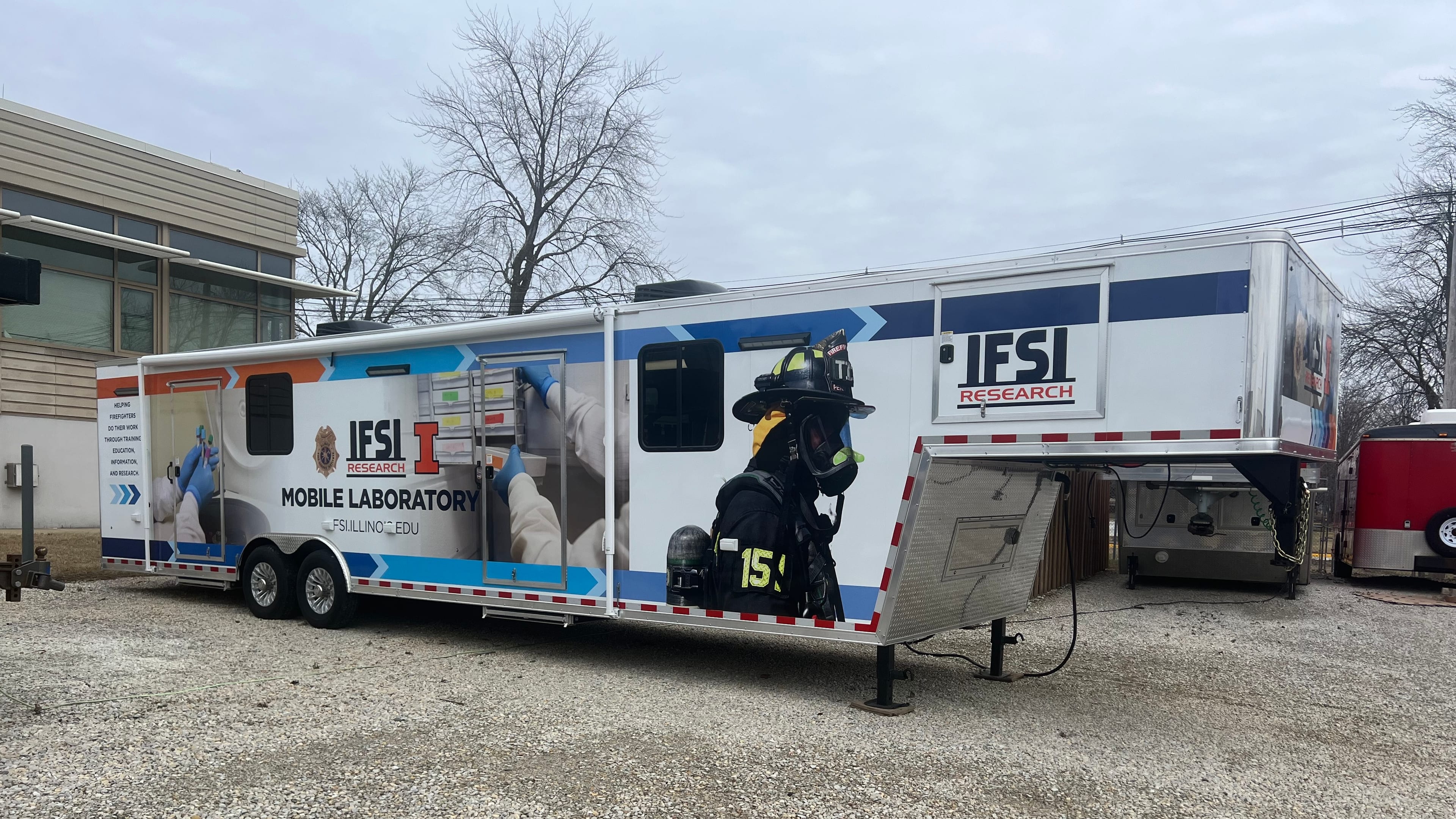
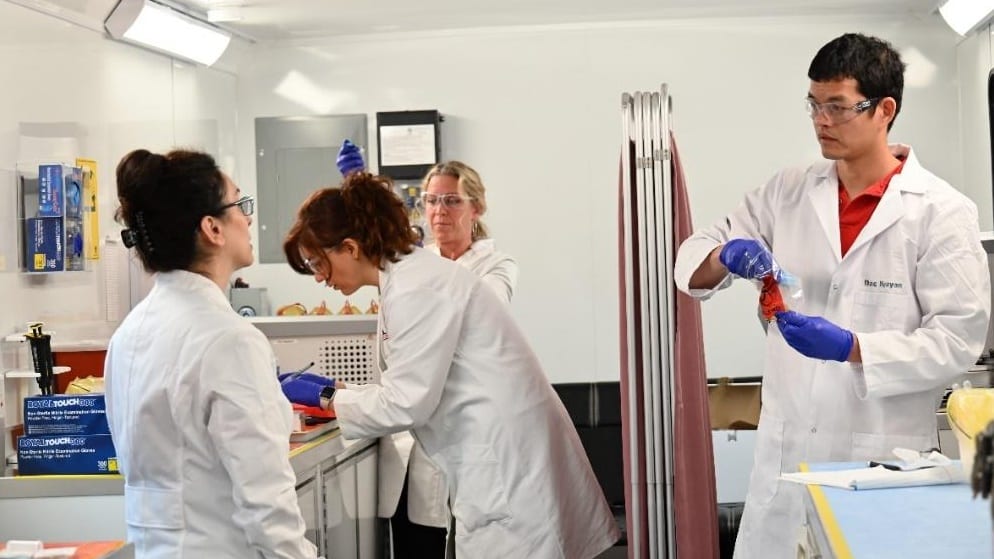
In previous CRACKYL articles, our team introduced the IFSI Research Laboratory, explained why longitudinal research is important for understanding firefighter health over time, and described how our mobile laboratory is bringing research directly to fire departments. Now, I want to take you one step further: inside the body!
Exposure Is Only the Beginning
When a firefighter encounters smoke and other contaminants, the body responds. One of the body’s most important responses is inflammation. Inflammation is a normal and necessary part of the immune system. When you get a cut, for example, your body immediately coordinates a response to protect the damaged area and begins the healing process. In the short term, inflammation can be beneficial. The concern arises when repeated exposure to contaminants causes cellular stress or activates the immune system, leading to inflammation that is repeatedly triggered or is not allowed to fully resolve.
That distinction is particularly important for firefighters. A single fire exposure may produce a temporary biological response, but firefighters may experience hundreds or thousands of calls throughout their careers. Those exposures occur alongside heat stress, intense physical exertion, disrupted sleep, and other occupational demands. Over time, repeated exposures may place cumulative demands on the body’s biological systems. So, how can researchers determine what is happening in a firefighter’s body in response to these repeated exposures?
Looking for Clues in the Blood
One way researchers can look for evidence of inflammatory responses is by measuring inflammatory biomarkers in blood. These biomarkers are measurable biological signals that can provide clues about what may be happening inside the body, including whether inflammatory processes may be occurring. One commonly measured inflammatory biomarker is C-reactive protein, or CRP.
CRP is produced mainly by the liver in response to inflammatory signals and can increase as inflammation intensifies. Other biomarkers, including interleukin-6 (IL-6) and tumor necrosis factor-alpha (TNF-α), are involved in regulating immune and inflammatory responses. But here’s the catch: biomarkers are clues, not verdicts.
An elevated inflammatory marker does not necessarily mean that disease is present, nor does it mean that firefighter exposure caused the inflammation. Infection, injury, physical activity, body composition, age, sleep, chronic disease, and many other factors can influence inflammation.
That is why researchers do not look at a single biomarker. Instead, they look for patterns. Researchers are more interested in questions such as:
- How do inflammatory markers relate to occupational exposure?
- Are certain contaminants associated with stronger inflammatory responses?
- Do firefighters with higher levels of certain chemicals also show differences in health outcomes?
- Are some firefighters more biologically responsive to similar occupational exposures than others?
- How might inflammatory responses interact with other biological and health indicators?
These are the kinds of questions that can help researchers understand how occupational exposures may affect the body. That is the kind of “detective work” the IFCRS is designed to do.
Why Does Inflammation Matter?
Inflammation does not exist in isolation. Persistent or dysregulated inflammation is often associated with chronic diseases, including cancer and cardiovascular disease. For firefighters, the question is whether repeated occupational exposures, together with other demands of the job, may influence biological pathways associated with long-term health. Importantly, exposure does not automatically mean disease.
Two firefighters can experience similar occupational exposures and may have very different biological responses. Body composition, metabolism, previous exposures, sleep, physical activity, and other individual factors all play a role. The body is not passive —it is constantly responding and adapting to what we encounter.
That is why no single biomarker measurement can tell the whole story. To understand the big picture, researchers need to look at exposure alongside biological responses and other health indicators.
Putting the Pieces Together
This is where IFCRS comes in. Rather than looking at exposure, inflammation, or health in isolation, IFCRS brings these puzzle pieces together. The study collects information about occupational exposures along with biological and health measures, including inflammatory biomarkers, body composition, and metabolic indicators, and because IFCRS is a longitudinal study, these measurements can be repeated over time.
Using this integrated and multidisciplinary approach, we can begin to see how these pieces may be connected and identify potential opportunities for prevention and support long-term health.
A single blood sample is a snapshot. It tells us something about what is happening at one particular point in a firefighter’s life. Repeated measurements add another dimension: time! They allow researchers to look at how those biological signals change as occupational exposures accumulate and as firefighters move through different stages of their careers. This longitudinal approach helps us look beyond a single measurement and ask broader questions:
- Do biological responses persist, increase, or decrease over time?
- Do these patterns differ among firefighters with different exposure histories or years in service?
- How do changes in body composition and metabolic health relate to inflammatory responses over time?
- Can repeated measurements help identify opportunities for mitigation and prevention?
These questions cannot be answered with a single study visit or single measurement. They require time. Longitudinal studies such as IFCRS allow us to look beyond a snapshot and begin to understand patterns over time.
Following the Biology Over a Career
The ultimate goal is not simply to measure inflammation. It is to understand the relationship between exposure, biological response, and health.
Imagine following firefighters from the beginning of their careers through years of service. We can document their occupational exposures, measure biological responses, and monitor changes in health over time. This creates a much richer picture than any one measurement could provide. It may help researchers identify patterns that would otherwise remain hidden and, importantly, identify opportunities to reduce exposures or intervene before health problems develop.
The fire may be out, but the biology does not necessarily end when the call does. A firefighter may leave the fireground, remove their SCBA, and return to the station, but the body may still be responding to what happened during that call. Through IFCRS, we are working to follow that story: from exposure to biological response, and ultimately to long-term health.
Protecting firefighters does not end when the fire is extinguished. It means understanding what happens after the call, after the shift, and throughout their career. In short, our goal is simple: Turn exposure into evidence, evidence into understanding, and understanding into better protection for the people who protect us.