
Fitness isn’t about the gym. It’s about whether your body can save your life when everything else fails
This article originally appeared in the Winter 2026 issue. Download the full issue here.
If you went down inside a fire, if your body gave out under the weight of your own habits, could you drag yourself out? It’s the question I had to face myself.
On day 15 in the hospital, an internist shook his head and told me, “You shouldn’t be here.” I was gaunt, chest tubes in place, barely able to walk. He said, “Most people who have that happen to them, what happened to you, don’t survive. The only reason you’re still alive is that you were in such good shape. Your body was able to compensate.” It was the second time my world stopped. The first was when the ER doctor told me they had found a mass on my lung.
I shouldn’t be here. But I am. And I want to tell you why.
My fire service career began as a volunteer with the Bowie Volunteer Fire Department in Prince George’s County, Md. On my 16th birthday in 1981, I rode my bicycle to the firehouse and handed in the application. The son of a World War II Marine veteran, who was a Baptist minister and a mailman for 30 years after the war, I became a first-generation fire service member.
Back then, there was zero direction or interest in fitness as a necessity. While there was a cursory entrance physical, there was no program like CPAT, no agility test of any kind. Sign up, show up, take a 40-hour class, get the pager – that was it.
When I was hired six years later in PGFD’s recruit school 18, I was not ready for the physical rigors. At Silver Hill Station 29, I was assigned with firefighter Joe Farri, a competitive powerlifter – the superman lifter in the firehouse. Joe showed me how much I still had to learn. I wasn’t a powerlifter, but I learned that fitness mattered if you wanted to survive in this business.
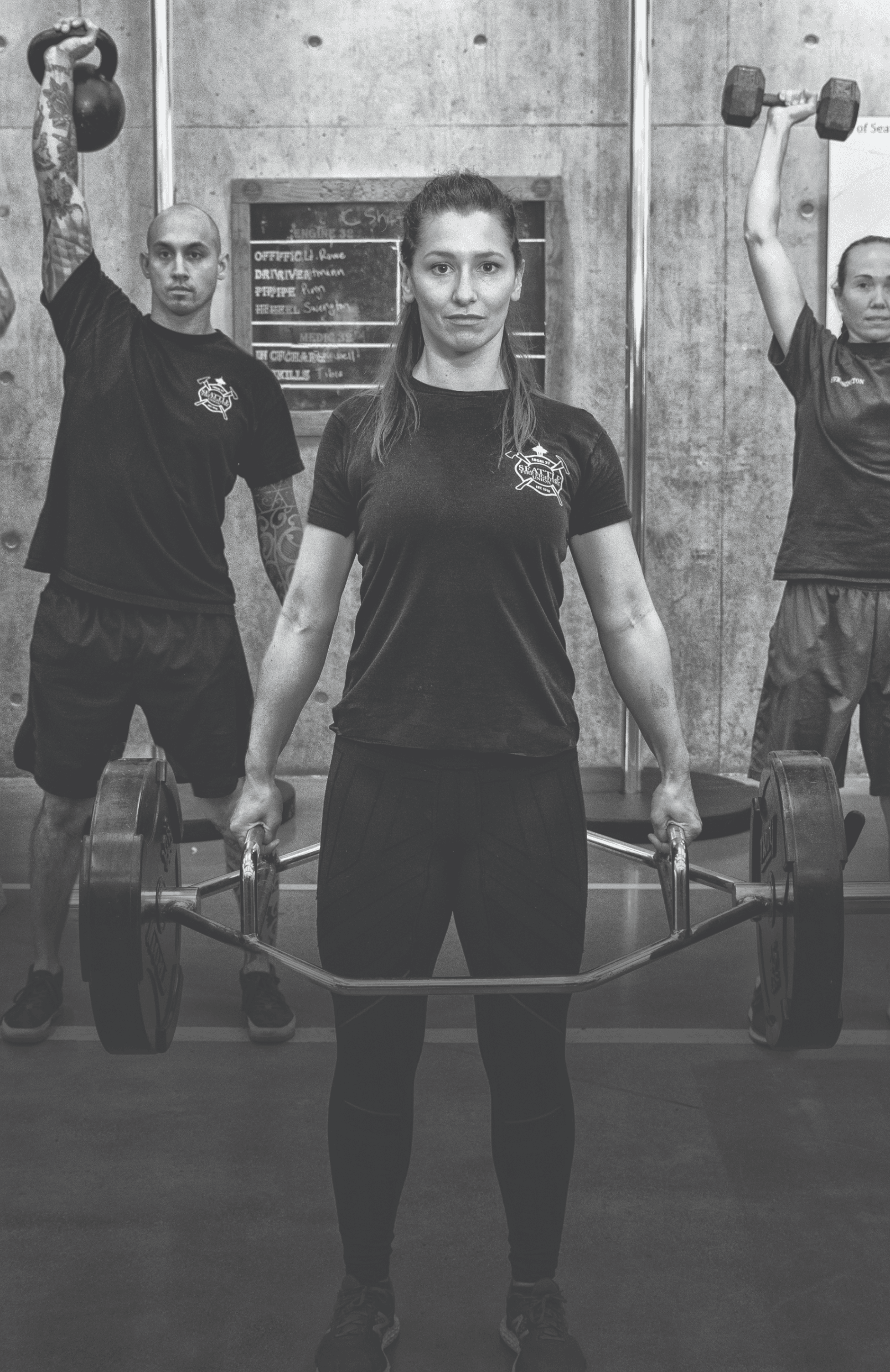
As I moved through the ranks, gyms became my second home. And if fitness wasn’t a priority for management, I made sure it was a priority for my crews. Nobody was going to outwork us – that was our plan.
‘Who’s That Fat-Ass?’
After my first retirement, I let myself go. Little to no fitness, eating whatever I wanted, my waistline expanding one belt hole at a time.
In 2007, my wife was reading the newspaper when I looked over and asked, “Who’s that fat-ass on the front page?” Without missing a beat, she flipped it around: “That would be you, hon.”
I literally didn’t recognize myself. Vanity hit first, but then the reality – how could anyone pull me out of a fire if I went down? That picture flipped the switch. I started taking care of myself again, setting the example, and thinking about our firefighters having to pull my fat ass, plus 85 pounds of gear, out of a fire. That thought alone kept me moving forward.
People talk a lot about “motivation” to go to the gym, but what you really need is discipline. You need the discipline to walk through the door every day, and then the motivation to train with purpose. Motivation without discipline just fades away.
Over the years, I’ve had my share of yo-yo weight loss, but I eventually settled on what worked for me. I learned that every body and everybody is different. There’s no single plan. But some things are constant:
- Calories in vs. calories out
- Extra sugar is your enemy
- Water is your friend
- Carbonated drinks are not your friend
- Amino acids matter
I wasn’t a doctor or a nutritionist, but I didn’t need to be. These basics carried me. And they ended up saving my life.
By 2023, I was in the best shape of my life, even placing third in my age class in a “Mr. Fitness” photo competition. Then came the cough. Just a bad cough, I thought. My doctor gave me pills and told me to come back if I had a fever.
In January 2024, I carried a low-grade fever for a few days. I was also losing a little weight without trying. Then, at 2 a.m. on Feb. 23, I woke up with sharp pain tearing through my back. I couldn’t breathe. My wife rushed me to the ER. The doctor looked at my X-ray and said, “Mr. Bashoor, we found a mass on your lung.”
Two days later, at a third ER, a doctor finally told me what nobody else had – I had a collapsed lung. Within minutes, they were inserting tubes into my chest. Six surgeries later, a last-ditch stapling method finally reinflated it. I lost 20% of my lung capacity, but I survived.
When they sent me home after 33 days, I weighed 126 pounds. My neighbors didn’t even recognize me as I shuffled outside with a cane. But with physical therapy and nutrition support, I began the climb back. Within four months, I was nearly back to weightlifting and muscle growth, about 10 pounds lighter but squarely healthy.
That recovery reshaped not only my body but also my message.
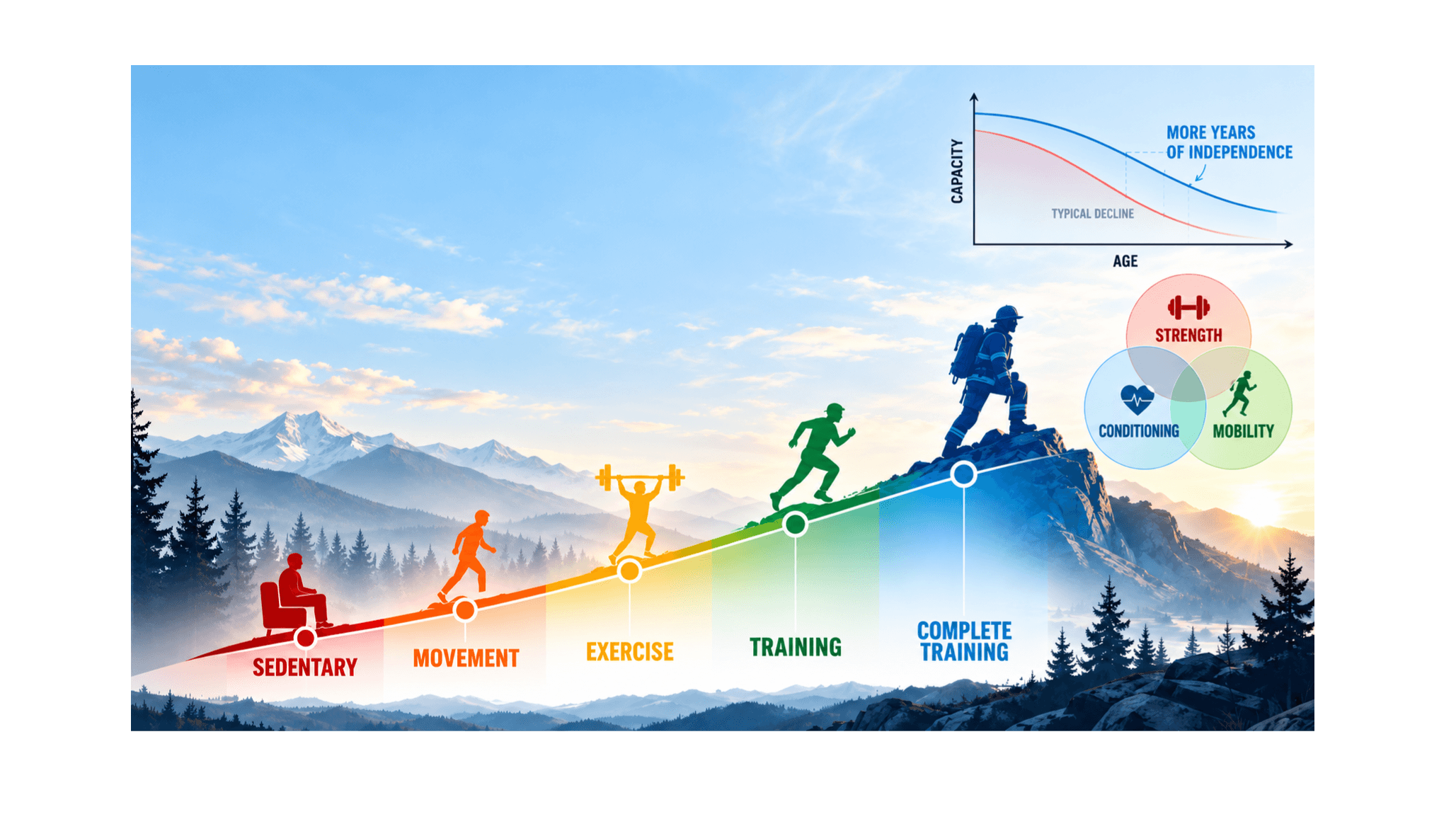
Even before this, I had been delivering a program called Could You Rescue You? At first, it was about operational and functional readiness in the fire service. After my collapse, it became personal. Doctors told me I only survived because I was in shape. My wife even found a study of 15,000 lung-collapse patients – only one with circumstances like mine had lived. One in 15,000.
So now I ask every firefighter what I had to ask myself: Could you rescue you? If you went down, could your body handle it? If your habits caught up with you, would you survive?
The uniform won’t save you. The crew won’t always save you. It’s on you.
There’s more to fitness than lifting weights, and there’s more to life than the fire service. You only get one body. Be your own advocate. Be disciplined. Protect it. Because one day, it might be the only reason you’re still here.
This article originally appeared within the Winter 2026 issue. Download the full issue here, or browse all back issues in theCRACKYL Library.