
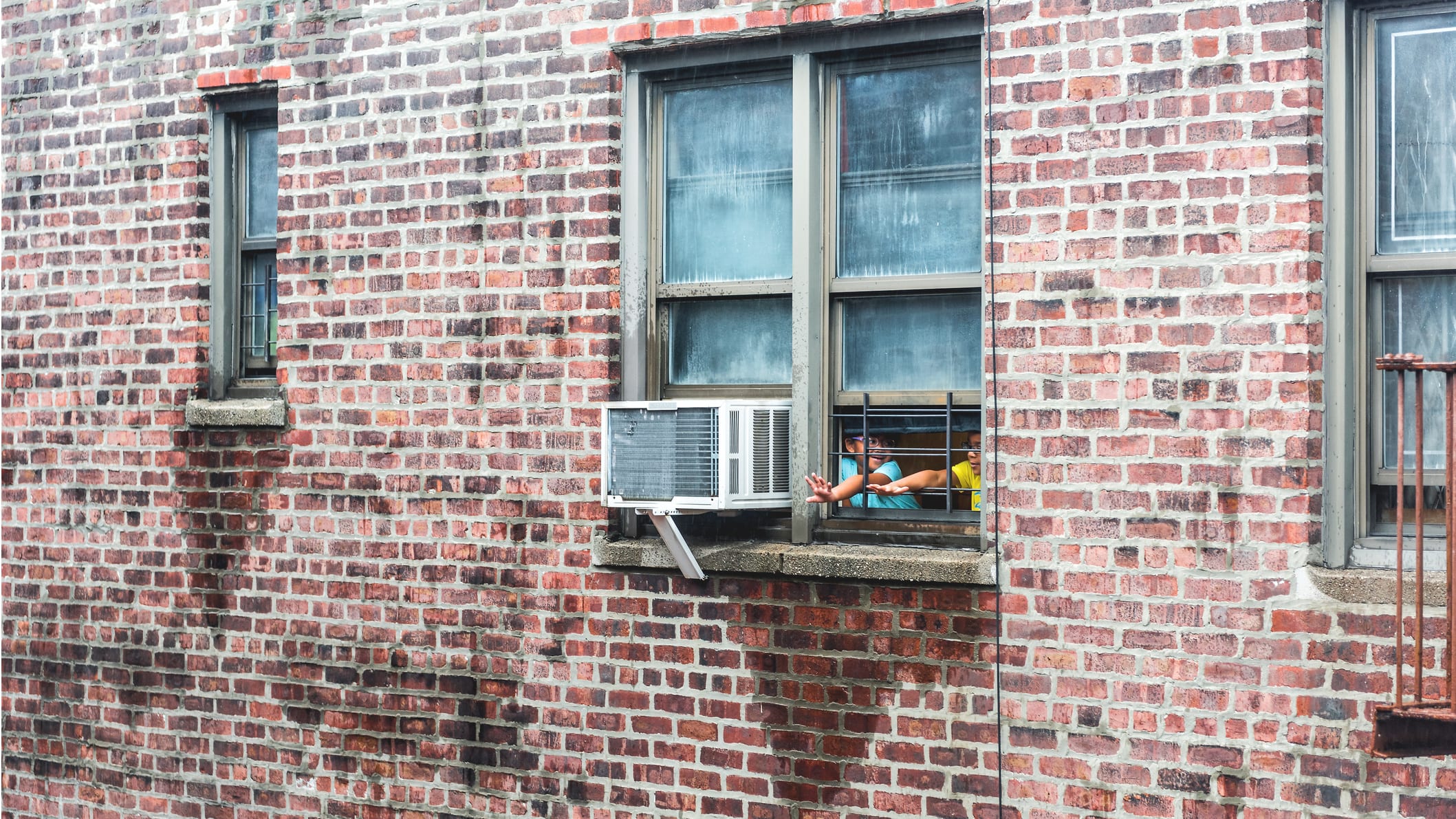
Earlier this month, while the FDNY was operating at an advanced fire in a three-story attached residential structure, fire conditions caused a window air-conditioning unit to fall from a top-floor window, striking a firefighter operating below. Thankfully, the firefighter will be OK, but the outcome could have been far different.
This incident reinforces a hazard I have frequently discussed at fire conferences, particularly when addressing newer firefighters, leadership, training, the concept of “tracking small failures,” and our collective ability to recognize and learn from close calls. Close calls that are investigated, discussed, and shared can prevent line-of-duty death investigations. Our safety depends on our willingness to recognize these small cracks in the foundation before they widen.
A Growing Awareness of a Hidden Hazard
My focus on window air-conditioning units as a fireground hazard began in earnest following a 2021 fire in Brooklyn, where a window unit fell from an upper floor and struck a firefighter, resulting in serious injury. At the time, I was serving as chief of the fire academy, and I immediately recognized the incident for what it was: a training issue.
In that 2021 fire, the air-conditioning unit fell while being removed by a firefighter. The intent was operationally sound, but the outcome highlighted a gap in awareness and risk recognition. After learning the details of that incident, I was reminded of a fire I had responded to many years earlier, when I was a newly promoted captain working in Manhattan.
I was assigned to work a tour in Truck 25, a well-respected and solid ladder company on the west side of Manhattan. We were tasked with overhauling the fire apartment following an upper-floor apartment fire in a mid-rise residential building. I was working with a new firefighter and instructed him to clear the windows. One of those windows contained a window air-conditioning unit.
A Close Call That Went Unrecognized
Before I could say another word, the firefighter opened the window sash — and immediately, the air-conditioning unit fell out of the window.
My heart sank as I quickly moved to the opening and looked down into the courtyard below. Thankfully, no one was there. The unit fell without striking anyone, and the incident ended without injury or further thought. Aside from some good-natured ribbing that followed the firefighter for years afterward (every time I saw him), the incident wasn’t discussed much. (Today, that firefighter is an outstanding firefighter with more than a decade of service under his belt.)
That 2021 Brooklyn incident completely changed my mindset.
Reframing the Risk
I realized that what had happened years earlier under my command wasn’t just a funny story or a learning moment for one firefighter — it was a close call. And close calls that go unexamined and unshared are missed opportunities to prevent future injuries or deaths.
Window air-conditioning units are a legitimate and often underestimated fireground hazard. Many are poorly secured in windows. While manufacturers provide screws and brackets intended to anchor these units in place, anyone who has come across these units knows how rarely those safety measures are used properly. Over time, vibration, weather, and makeshift installations degrade whatever limited stability may exist.
Add fire conditions to that equation, and those limited attachment points weaken rapidly. These units are also top-heavy. In many cases, simply opening the window sash is enough to cause the unit to tip and fall. Gravity does the rest.
Consequences and Collapse Zones
When these units fall, they become objects capable of seriously injuring or killing firefighters operating below. They also reinforce the importance of establishing, maintaining, and respecting collapse zones, not just for walls and parapets, but for any overhead hazard that fire conditions can compromise.
This is why sharing close calls matters so much.
When we talk openly about near misses, whether they happened yesterday or 20 years ago, we give other firefighters the opportunity to recognize hazards sooner, slow down when necessary, and make better decisions under pressure.
Turning Experience Into Knowledge
These conversations turn experience into institutional knowledge.
Credit is due to the FDNY for highlighting and sharing both the 2021 Brooklyn incident and the recent fifth-alarm fire in Tips from Training and Safety. That transparency is a testament to a learning organization and a reminder that training never ends.
It is all about training, as safety truly is a byproduct of our training.
Window air-conditioning units may seem mundane, even insignificant, compared to other risks on the fireground. But it’s often the ordinary, overlooked hazards that cause us harm. If sharing these stories prompts one firefighter to pause, secure a unit, adjust a collapse zone, or warn a member below, then those close calls will have served their purpose.
And that is how we honor our responsibility to one another, by learning, sharing, and never assuming that experience alone makes us immune to the next close call.