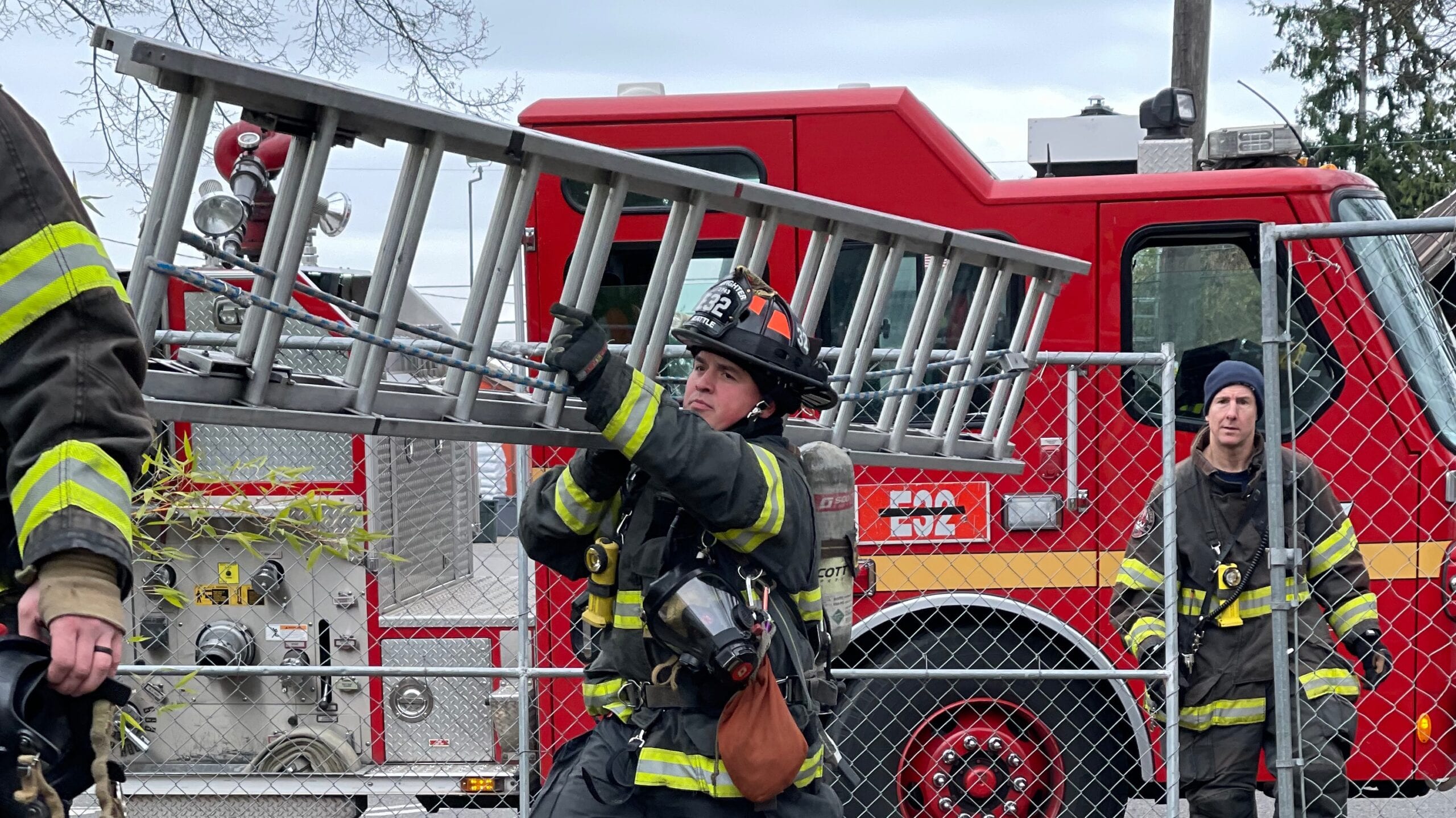
Photo by Steve Baer | FireDog Photos
On the fireground and emergency incident scene, fire and emergency services personnel appear to be prepared for tactical engagement with fire and other emergencies. The reality, beneath the layers of protective gear and rapid-response protocols, lies a complex biological and psychological landscape that influences their performance, decision-making, and ultimate ability to save lives. Understanding these hidden forces isn’t just academic; it’s critical for optimizing outcomes in the face of complex and ever-changing emergency scene environments, including the chaos, danger, and challenges of reducing death and disability.
Emergency responders operate in environments designed to push the human body and mind to their limits. Physiologically, they battle intense heat, toxic smoke, and the crushing weight of exertion while their cardiovascular and respiratory systems are pushed to the brink. As Dr. Robert Sapolsky meticulously details in Behave: The Biology of Humans at Our Best and Worst, stress triggers a cascade of hormones like adrenaline and cortisol, preparing the body for “fight or flight.” While vital for acute survival, chronic activation of this stress response – a constant companion in emergency services – can lead to detrimental effects on, but not limited to, brain function, anxiety, depression, and PTSD.
The Mental Impact
But the challenge extends far beyond the physical. The mental burden is immense. Making rapid decisions in a dangerous environment, amidst experiencing emotional trauma, violence, and death, can create intense psychological arousal. These impacts affect both cognitive and psychomotor performance.
Emergency responders may believe they did not perform to public or departmental expectations, which can lead to moral injuries – a deep, internal, metaphorical wound arising when personnel feel their core values have been violated.
Decision-making, already a high-stakes endeavor, is further complicated by incomplete information, time pressure, and the influence of cognitive biases. For example, one such bias is confirmation bias. This happens when a responder seeks only information that confirms an initial (and potentially incorrect) assessment, while the availability heuristic (our brain’s natural ability to short-cut) can cause an overestimation of rare events due to vivid past experiences. These biases, if unchecked, can lead to critical errors in judgment.
Human factors can be direct and/or indirect, such as lack of sleep, unfamiliarity, or even executive pressures (departmental) that add another layer of complexity. The very environments that shape a responder’s worldview can also dictate their coping abilities and reaction to stimulus. For example, a culture that rewards stoicism can inadvertently discourage personnel from seeking help for mental health struggles, exacerbating the silent suffering that is a known precursor to burnout and substance abuse.
Tools to Manage Responses
The goal, then, is not to eliminate these biological and psychological responses – for many are essential for survival – but to equip responders with the tools to recognize, manage, and even leverage them. This is where insights from elite training programs, such as those of the Navy SEALs, become highly relevant.
SEAL training famously employs stress inoculation training (SIT), progressively exposing individuals to escalating stressors in controlled environments. Desensitizing trainees to the chaos they might encounter allows them to practice maintaining cognitive function under extreme duress. Since firefighters and EMS can work under extreme duress, as well, the same principle applies. Repeated, realistic scenario-based training helps to build a mental library of patterns, and fosters recognition-primed decision making (RPD). As experienced responders encounter familiar cues, they can bypass lengthy analytical processes, making rapid, effective decisions based on learned instincts.
However, recognizing when to engage and when not to is equally crucial. Developing Firefighter Resilience, a text focused on positive psychology for first responders, emphasizes building emotional wellness and self-efficacy. It advocates for comprehensive training that includes not just technical skills but also stress regulation techniques and mental preparedness.
The insights found in texts exploring “Mind of Fire” would likely delve into the internal landscape of fireground cognition, illuminating how stress can distort perceptions, and how mental clarity is paramount for accurate interpretation and action.
What Are Your Red Zones?
Crucially, responders must learn to identify their own “red zones” – those physiological and cognitive indicators that signal impaired performance. This might involve a racing heart rate, tunnel vision, difficulty recalling basic protocols, or overwhelming anxiety. Consider this recent event:
A physically and mentally fit, and well-trained fire lieutenant, responded to a structure fire with people trapped. While his crew made an interior attack, he attempted the VEIS (vent, enter, search) technique to the second-floor window. This is where a patient was located. The lieutenant was unable to enter the window due to various factors. He then climbed down the ladder and entered the house to assist his crew. It was previously known the lieutenant had auditory exclusion, where he couldn’t hear sounds clearly, and diminished cognitive function. He went from a heart rate of mid-60s to 179 in the span of 2-3 minutes. Such an extreme heart rate change is most likely attributed to his cognitive and psychomotor capability decline in the moment.
Up until recently, we had little data on the impact of these types of stressors during firefighting activities. This is why techniques such as “tactical breathing” (a staple of SEAL training) can help regulate the stress response by controlling the breath; it allows for a critical “tactical pause” before acting.
It becomes prudent that both leaders and peers also be trained to recognize these signs in others. It fosters a culture where asking for help or stepping back from an overwhelming situation is seen as a sign of strength, not weakness. A mayday call shouldn’t just be solely for a physical emergency; recognizing and acknowledging a cognitive or emotional mayday is equally vital to prevent catastrophic errors and preserve long-term well-being.
Ultimately, optimizing performance in high-stress emergencies requires a holistic approach:
- Physical fitness training: Regular fitness training for strength, agility, flexibility, and aerobic stamina to meet the demands of fire and emergency response challenges
- Proactive preparedness: Rigorous, realistic stress inoculation training, mental rehearsal, and foundational physical and psychological wellness
- Real-time strategies: Intentional use of physiological regulation techniques (e.g., tactical breathing), active bias countering, conscious maintenance of situational awareness, and effective communication
- Strategic disengagement and post-incident support: Knowing when to tactically withdraw, utilizing formalized rehab, and engaging in structured debriefings and accessible mental health support
Like an iceberg, where we just see what’s above the waterline, this article touches on some of the surface physiologic and mental stressors of firefighting and emergency response work. There’s so much more below it. In fact, there’s a world of information yet to be seen in the fire service industry because the industry itself is choosing to remain insular.
The information in this article gives you, the reader, a basic understanding of what can impact your performance at an emergency incident. Fire officers and firefighters would be wise to seek to become industrial/tactical athletes: someone who invests in building the mental in addition to the physical strength.
Only by choosing to integrate these biological and psychological truths into every facet of training, operations, and organizational culture will emergency services cultivate a new generation of responders. When faced with the hidden forces that strive to undermine them, those operating at their peak not only become brave but also resilient, adaptive, and capable first responders of our communities.
Anthony Correia is a 49-year veteran of the fire and emergency services and a strong advocate for health and wellness initiatives, serving as the President of the NJ State Fire Chiefs Association and having retired as director of the Burlington Township, NJ Fire Dept. He has been instrumental in securing FEMA grants to develop comprehensive health and wellness programs that have included mandatory physicals, nutrition classes, and yoga for firefighters and their families.
James Rychard is a 23-year firefighter/instructor from Burlington, Ont. He is an accomplished author writing for both Firefighting in Canada and Canadian Firefighter magazines on topics that challenge the status quo; introducing ideas that are unconventional. In 2022, James joined 23 other Canadian professionals with his article “Guarding Against Burnout in the Emergency Services: A Firefighter’s Perspective” published in the Canadian Journal of Criminal Justice Report, Special Issue for Public Safety Personnel*.*