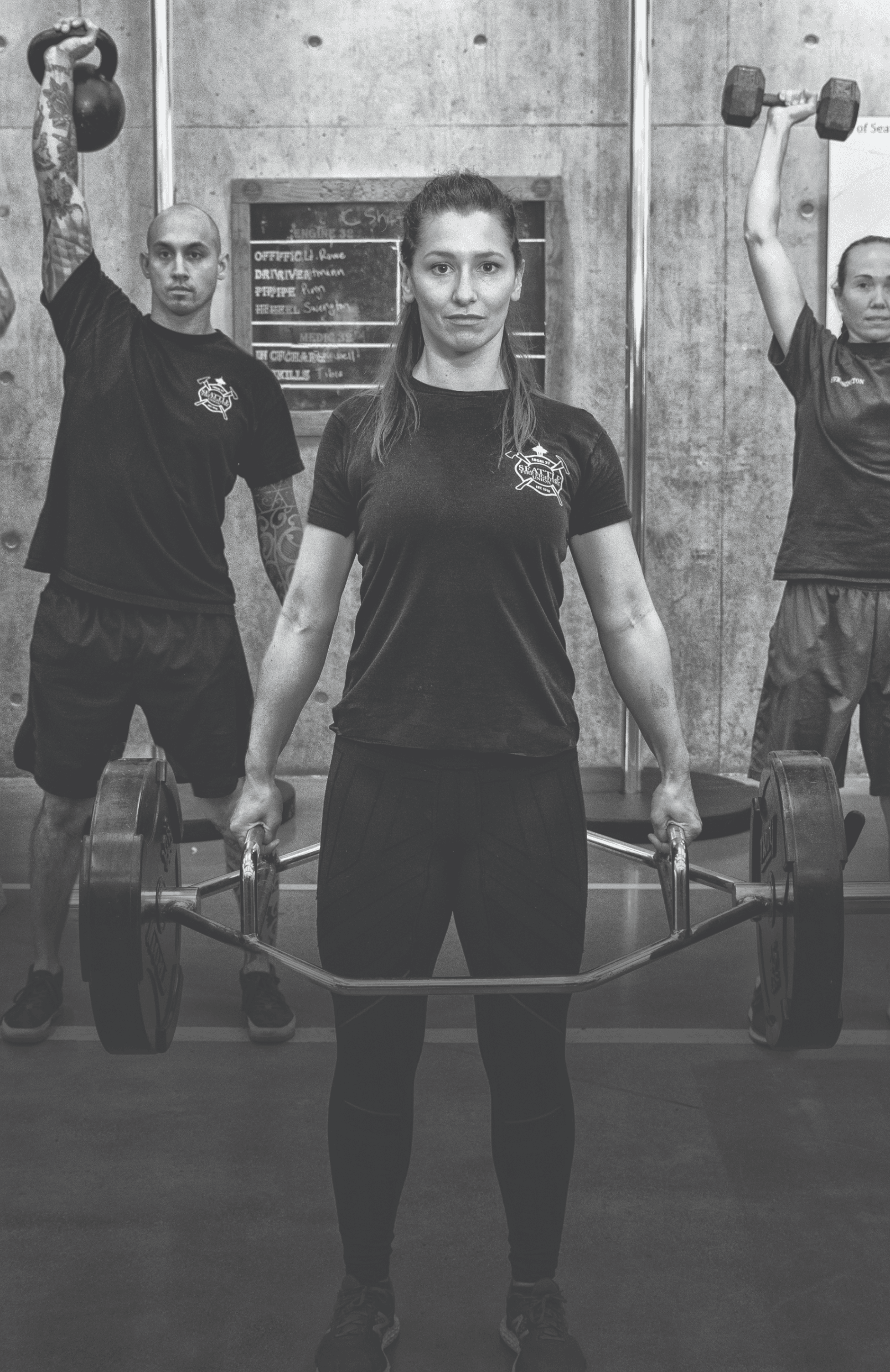


This firefighter-specific workout combines lower-intensity aerobic training with foam rolling and a structured flexibility circuit to develop aerobic endurance, maintain mobility, and support recovery
Firefighter fitness does not require every workout to be hard.
It requires intentional training that develops the physical qualities needed for the job while managing the overall demands placed on the body.
The Firefighter Tactical Fitness Series is a collaboration between Firefighter Peak Performance and CRACKYL Magazine, highlighting practical training strategies that support firefighter readiness through deliberate physical preparation.
CRACKYL Workout 25-1 focuses on lower-intensity training.
Lower-intensity training serves an important role within a comprehensive firefighter fitness program. It provides an opportunity to develop aerobic endurance, maintain mobility, support recovery, and continue training without adding the same level of fatigue associated with more demanding workouts.
Aerobic endurance is a key component. Firefighting may require climbing stairs, advancing hose, carrying equipment, performing search, completing overhaul, and transitioning between physically demanding tasks over extended periods. A well-developed aerobic system helps sustain that work, supports recovery between repeated higher-intensity efforts, and contributes to cardiovascular health.
But training does not occur in isolation. Calls, disrupted sleep, occupational stress, recreational activity, and higher-intensity training all contribute to the total workload placed on the body.
Sometimes the most productive training decision is not to work harder. It is to intentionally lower the intensity while continuing to develop the physical qualities that support performance and long-term readiness.
Lower-Intensity Training for Firefighters
Lower-intensity training is not the same as doing nothing, and it does not always mean recovery.
The purpose depends on how the session is structured.
In this workout, continuous aerobic training provides the primary training stimulus, while foam rolling and flexibility address muscular tension, available range of motion, and recovery.
Together, these components create a productive lower-intensity session that complements strength, power, and higher-intensity conditioning without every workout becoming another high-stress training day.
Workout Instructions
Aerobic Training
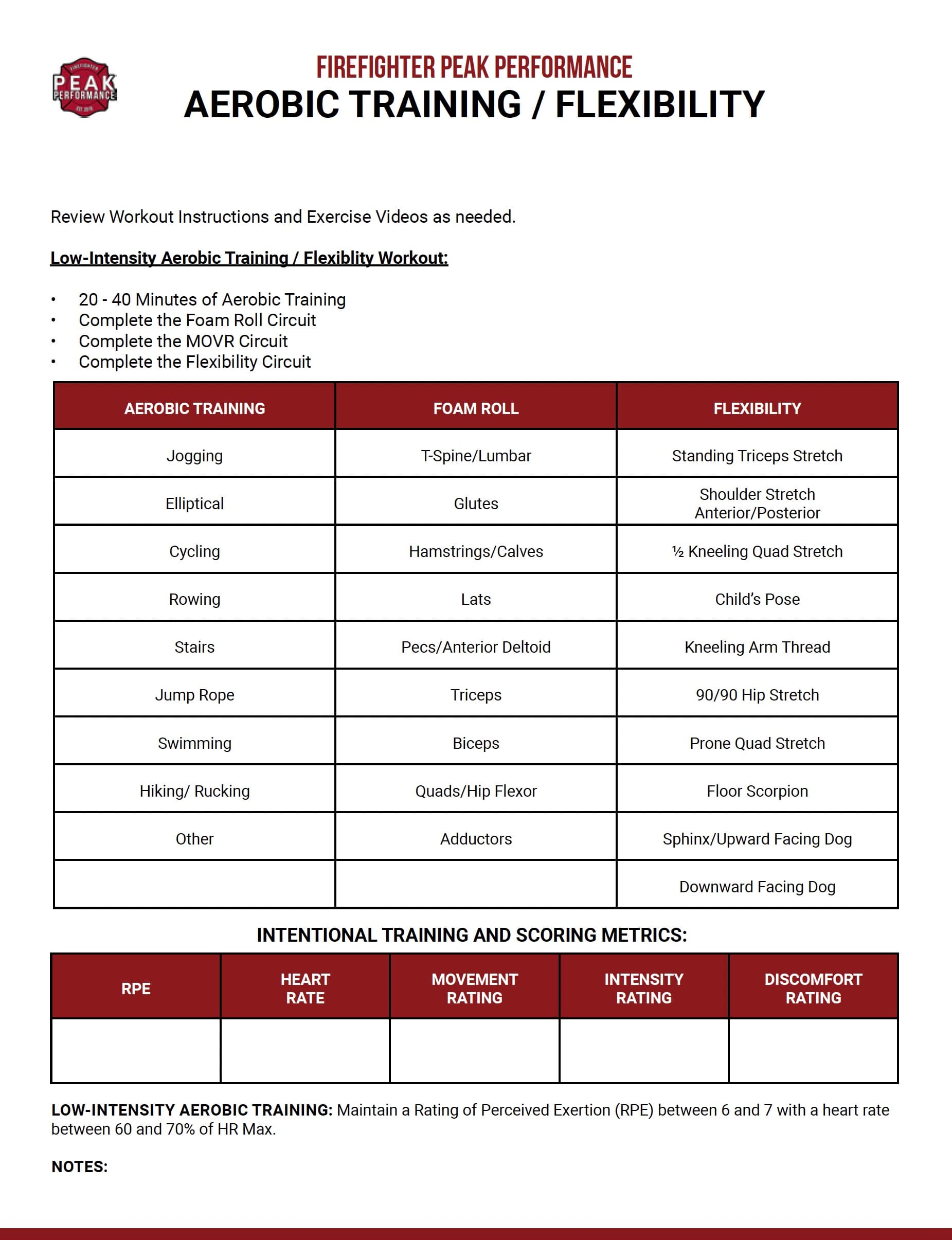
Complete 20–40 minutes of continuous aerobic training using walking, jogging, incline treadmill, elliptical, cycling, rowing, or another modality that allows you to maintain a steady effort.
The specific modality matters less than maintaining the intended training intensity.
Heart Rate: 60–70% of estimated maximum RPE: 5-7
Maintain a controlled, sustainable effort throughout the session. The goal is to develop aerobic endurance, not maximize distance, speed, or calories burned.
Foam Roll Circuit
Following aerobic training, complete the Foam Roll Circuit, focusing on areas of muscular tension or soreness.
Use moderate pressure and controlled breathing while avoiding excessive discomfort.
Flexibility Circuit
Complete the prescribed Flexibility Circuit using a contract-relax approach during each one-minute interval.
First 30 Seconds: Contract + Relax Actively contract the target area during the inhale for approximately five seconds, then relax during the exhale for approximately five seconds. Continue this cycle for the full 30 seconds.
Final 30 Seconds: Relax + Release Focus on relaxation and stay just below the edge of discomfort. With each exhale, gradually relax further into your available range of motion without forcing the position.
Managing Intensity
One of the most important skills in firefighter fitness is learning to match training intensity to the objective of the workout.
High-intensity training has an important place in firefighter tactical fitness, but not every session should push toward maximum effort. The objective of this workout is to develop aerobic endurance and support movement and recovery while keeping overall intensity controlled.
Duration
Start with a duration appropriate for your current fitness level and available training time. Twenty minutes provides a useful starting point, while progressing toward 30–40 minutes increases aerobic training volume.
Heart Rate and RPE
Use heart rate and perceived exertion together to manage intensity. Heart rate provides an objective measure of workload, while RPE helps account for how that workload feels based on fatigue, sleep, stress, environment, and other factors.
Stay within the prescribed range and adjust as needed based on how you respond that day.
Pace
Adjust speed or resistance as needed to maintain the intended intensity. Pace may change based on the modality, environment, accumulated fatigue, and your current level of fitness.
The goal is not to maintain a predetermined pace at all costs.
Training with purpose means selecting the intensity that matches the objective rather than making every workout harder than it needs to be.
Scoring the Workout
Scoring lower-intensity training is different from scoring a workout built around rounds, repetitions, or completion time.
The objective is not maximum output. The goal is to determine whether you maintained the intended training stimulus.
Objective metrics may include total training time, average heart rate, distance, pace, resistance, or training modality.
Subjective metrics may include Intensity Rating, Movement Rating, Discomfort Rating, and Focus Rating.
Tracking these measures over time can help you evaluate aerobic development, understand how your body responds to a given workload, and make more informed decisions about training intensity.
Score Sheet
CRACKYL Workout 25-1 demonstrates that productive firefighter training does not always require high intensity.
This workout can serve as a dedicated lower-intensity training day, complement higher-intensity conditioning, or provide a productive option when managing accumulated demands from training, calls, disrupted sleep, and everyday life.
Firefighter tactical fitness is not defined by how exhausted you are at the end of every workout.
Strength matters. Power matters. High-intensity work capacity matters. So do aerobic endurance, mobility, and recovery.
A comprehensive training program develops each of these qualities and applies the appropriate intensity at the appropriate time.
There is a time to push and a time to intentionally control intensity.
Both are part of training with purpose.
Use this workout as a standalone session, plug it into your current training plan, or combine it with other sessions from the Firefighter Workouts Playlist to build a more comprehensive tactical fitness program.