

In 1993, two decisions shaped the course of my life. I changed my major from athletic training to exercise science. And I joined the fire service as a volunteer firefighter.
At first, those paths felt separate — one rooted in science and sports, the other in duty and real-world performance. It didn’t take long to realize they were connected.
In the classroom, performance is studied in controlled environments. On the fireground, it is tested under pressure, fatigue, and uncertainty. The same principles that drive human performance show up on every call.
But there was a gap. In sports, performance is built on structure and progression. In the fire service, the expectation is just as high, with far more at stake. Yet many firefighters lack a clear research-based direction on how to prepare.
We may not have seasons, but we do know the demands. That allows us to take a structured approach to preparation, building a foundation, developing strength and work capacity, and progressing toward job-specific readiness.
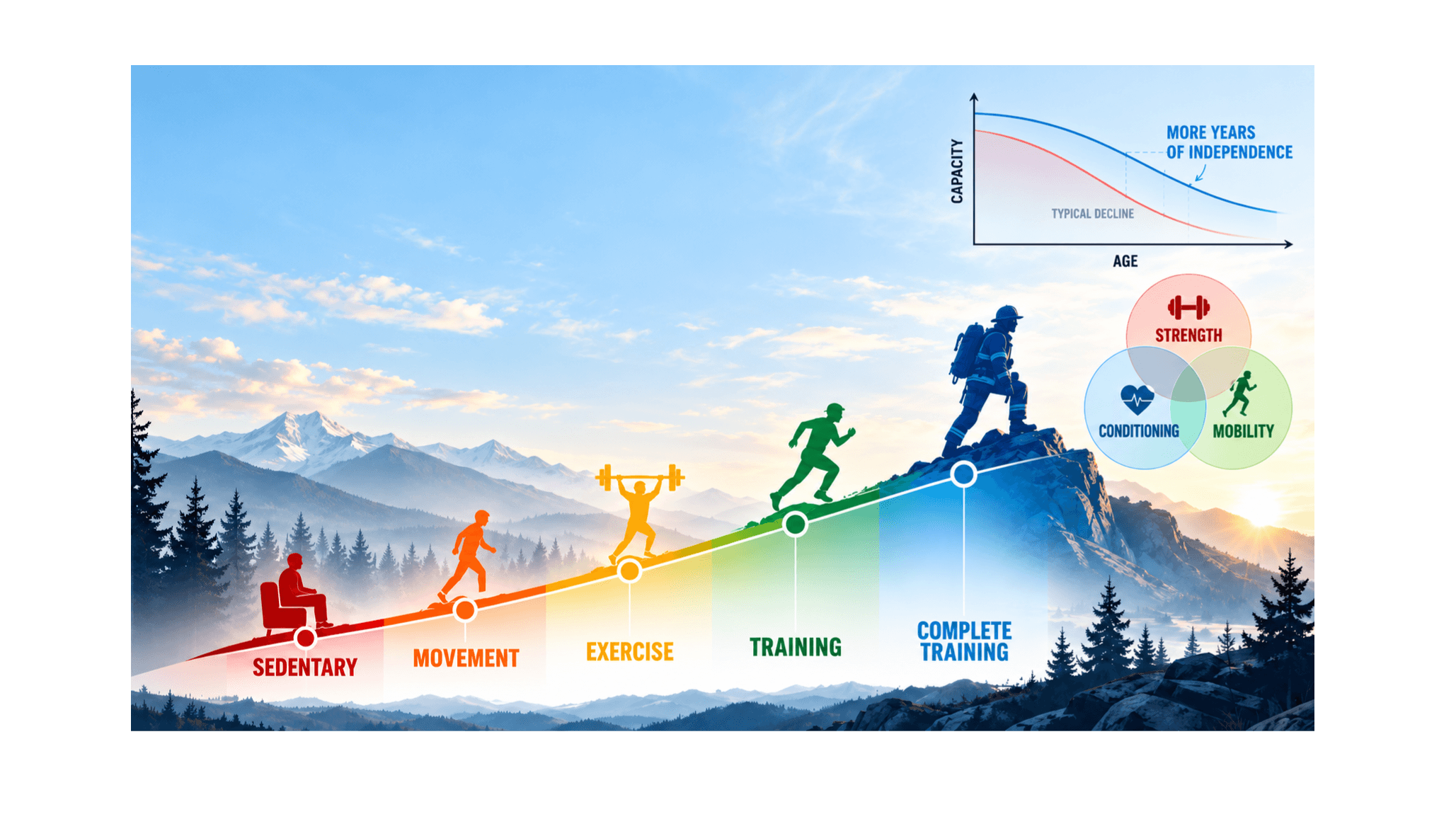
This is where the distinction lies. General fitness builds capacity. Functional fitness improves how you move. Tactical fitness prepares you for the job. Science and research are driving all three.
The firefighter tactical fitness framework is a system built on exercise science and real-world experience to improve performance, reduce injury risk, and support long-term readiness. It provides a clear structure for assessing, building, and applying fitness to meet the demands of the job.
Size Up Your Fitness
Every effective training plan begins with understanding the starting point. In exercise science, this is known as a baseline assessment. It provides both objective and subjective insight into capacity, limitations, and potential risk.
For firefighters, this goes beyond general fitness. It demands movement quality, aerobic capacity, strength, endurance, and power, along with the ability to perform under stress. These attributes must be developed and evaluated over time to ensure they hold up under load, fatigue, and pressure.
Starting with a size-up ensures training addresses the most important attributes first. It creates direction, improves efficiency, and reduces injury risk before it becomes a problem on the fireground.
Once the baseline is established, the next step is building a plan.
In exercise science, this is where principles like progressive overload and periodization come into play. Training must be structured to develop capacity over time, not just deliver effort in the moment.
For firefighters, this means moving beyond random workouts and toward a defined strategy. Training should progress from building a general foundation to developing strength, work capacity, and job-specific performance.
At the same time, that structure must remain adaptable. Shift work, call volume, sleep disruption, and accumulated fatigue all influence how the body responds to training. Without structure, training becomes reactive. Without adaptability, it becomes unrealistic.
A clear strategy balances both, allowing each phase to serve a purpose while adjusting to the realities of the job. The result is consistent, sustainable progress that supports performance over time.
Workout to Drive Adaptation
Daily workouts are where the plan comes to life.
The body adapts to the demands placed on it. This principle, known as specific adaptation to imposed demands, means training must align with performance expectations.
Firefighting requires sustained effort, repeated high-intensity output, and the ability to recover quickly between tasks. Training must develop both aerobic and anaerobic systems while supporting movement quality and durability.
Each workout should have a clear focus, aligned with a specific adaptation goal, using light, low, moderate, or high intensity based on the desired outcome. This does not involve random workouts chasing sweat and fatigue. It is targeted training that builds the capacity to perform, recover, and sustain performance when it matters most.
Exercise science shows that strength and coordination are expressed through movement, not isolated muscles. Biomechanics and kinesiology explain how force is generated, transferred, and absorbed through the body.
For firefighters, this means training movements that reflect the physical demands of the job. These demands include pushing, pulling, hinging, squatting, lunging, rotating, and locomotion. They must be trained across multiple planes, under varying loads, and in dynamic conditions.
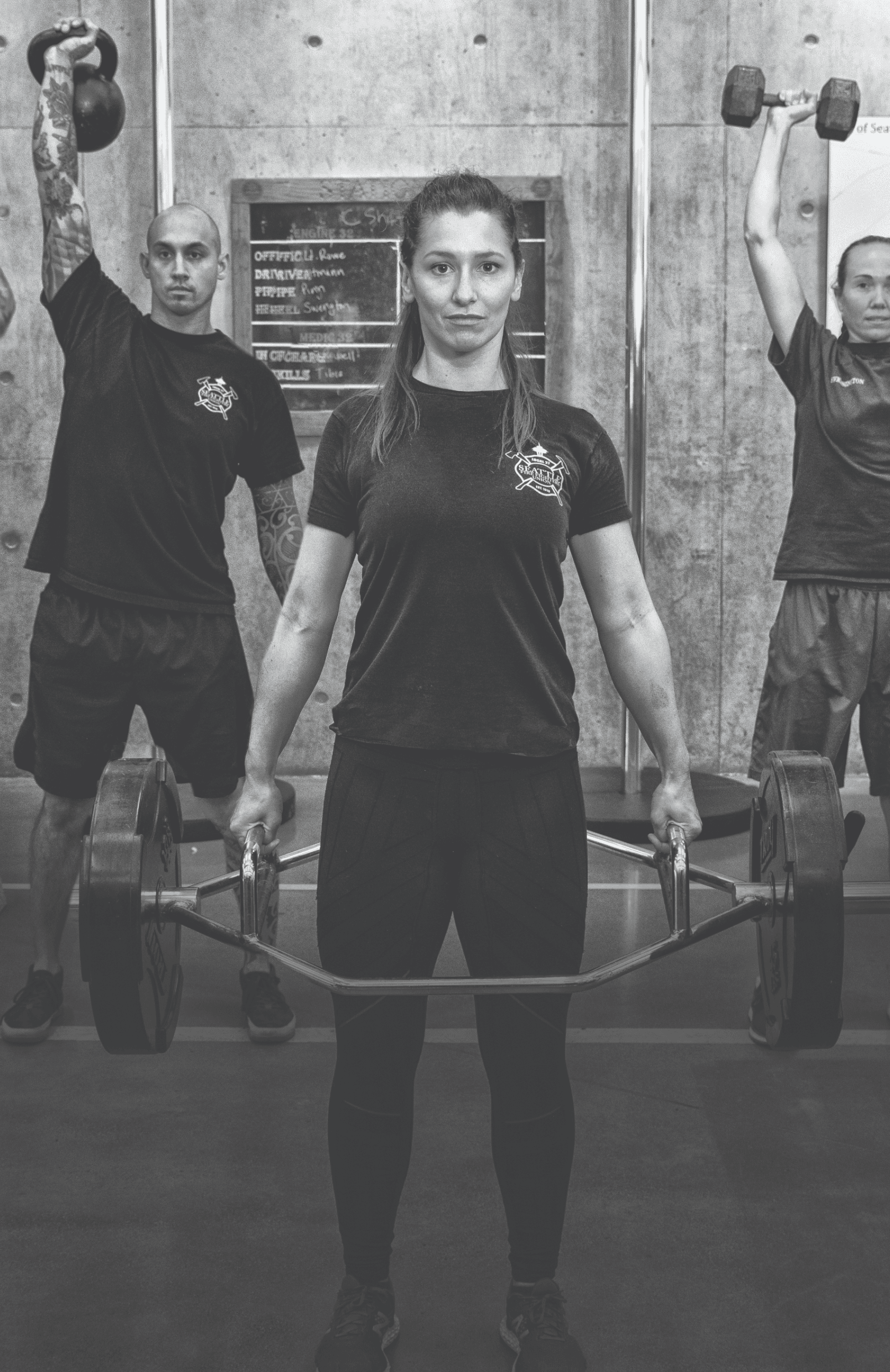
Simple tools such as kettlebells, sandbags, medicine balls, and steel clubs are effective because they create shifting loads that require coordination, stability, and full-body engagement.
The result is strength, endurance, and power that transfers. Not just in the gym, but on the job, where movement demands are unpredictable and rarely isolated.
Scoring the Workout
In both the fire service and performance science, performance must be measured and evaluated. This data provides the feedback needed to drive adaptation and improve future performance.
On the fireground, this happens through the after action review. In physical training, scoring the workout is part of the workout.
Objective data such as time, load, and repetitions measure performance. Subjective feedback reflects readiness, including movement quality, effort, and discomfort. Together, they guide informed adjustments and continuous improvement.
Each session builds on the last, turning training into a continuous process rather than a series of isolated workouts, so you are better prepared when the next call comes in.
In exercise science, autoregulation is the ability to adjust training based on readiness and response. Performance is influenced by total training load and allostatic load, including physical stress, sleep, and recovery. Readiness determines how the body responds, and that response drives adaptation over time.
For firefighters, autoregulation is the practical application of performance data, using both objective measures and subjective awareness to guide training focus and intensity.
In daily workouts, adjust load, tempo, and volume to match readiness while maintaining movement quality and control. Across a training cycle, select intensity based on recovery and preparedness to drive steady progression over time.
Shift work, call volume, sleep disruption, and accumulated stress all influence readiness. Autoregulation allows training to adapt in real time while maintaining structure. It is not a step away from the plan. It is what makes the plan sustainable.
Firefighters are not short on effort. But effort alone is not enough.
Without structure, training becomes inconsistent. Without specificity, it loses relevance. Without evaluation, it lacks direction.
The goal is not to make training more complicated. The goal is to make it intentional. The intentionality is grounded in scientific principles that drive specific adaptation, connecting assessment, strategy, execution, evaluation, and feedback into a system that improves performance, reduces injury risk, and supports long-term readiness.
That is the standard.