This article originally appeared in the Winter 2026 issue. Download the full issue here.
For years, first responders have tracked physical health using objective indicators – resting heart rate, heart rate variability, sleep efficiency, and physical strain. These tools offer early insight into how the body is functioning and recovering. But until recently, we haven’t had a similar set of tools to monitor brain function in everyday life.
That’s starting to change.
For more than 60 years, scientists have been measuring brainwaves – tiny electrical signals generated by neural activity. They’ve used it to study everything from attention and fatigue to emotional regulation and sleep quality. This has mostly been done in academic or medical settings, using complex equipment operated by trained specialists.
But just as electrocardiograms (EKGs) made their way from hospitals into smartwatches, brainwave-sensing technology is now beginning to emerge in wellness-oriented wearable devices. These developments are powered by advances in computing power, battery life, and sensor miniaturization.
Understanding Brainwaves in Daily Life
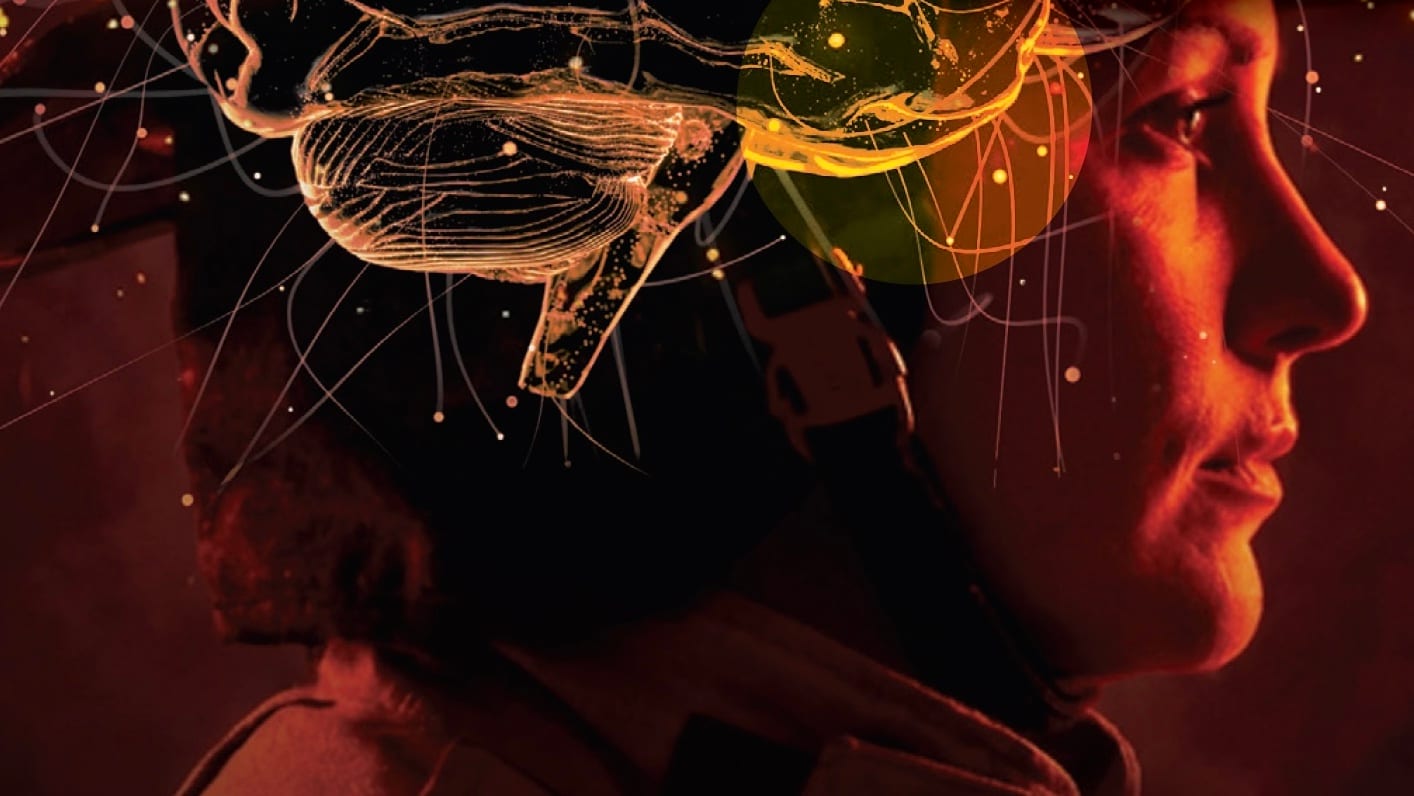
Brainwaves reflect how alert, calm, focused, or fatigued we are. By using electroencephalography (EEG) – a technique for measuring brain electrical activity – researchers can detect subtle shifts in mental state long before they become noticeable to the person experiencing them.
Until recently, this kind of monitoring was limited to labs and clinics. But wearable EEG devices are now becoming more accessible, lightweight, and user-friendly. They’re being developed for everyday use – not as diagnostic tools, but as wellness aids designed to help users understand their mental state over time. That’s particularly significant for high-stress professions like firefighting, where maintaining mental sharpness and resilience is critical, but where invisible signs of fatigue or burnout can be hard to catch early.
This shift mirrors earlier transitions in health technology. Devices that once required a hospital visit – like pulse oximeters or heart rate monitors – are now common in consumer fitness tools. The same trajectory is beginning for brain health.
For example, using a National Science Foundation grant, researchers at the University of Pennsylvania developed a headband EEG. That work began in 2017 and has included testing on college and professional athletes. Now it is refined to a point where it can be used in a health care setting or at home, the researchers say.
“About 40% of college-going students are anxious or depressed in the U.S. This is a staggering number,” one of the developers said in a Penn Today article. The challenge is that people aren’t often self-aware regarding their own mental health situation, he adds. Backed by a Brain & Behavior Research Foundation grant, the Platt Labs team is working on a take-home kit that includes games and the portable EEG, which could objectively track several days of a person’s emotional peaks and valleys. An already-completed lab component showed that Platt’s team could identify participant levels of anxiety with about 84% accuracy using novel algorithms that combined EEG-based features with heart rate variability and skin conductance, the article went on to say.
Rather than diagnosing conditions, these new tools help track cognitive changes over time. That could mean weekly check-ins to see how your focus, recovery, or stress response is shifting. Over time, they help build a personal baseline – offering early warnings when something is trending in the wrong direction.
This can be particularly valuable in professions like firefighting, where stress and sleep disruption are common and where mental fatigue may accumulate gradually. Catching those changes early doesn’t mean taking drastic action – it may simply mean adjusting sleep, recovery routines, or workload before problems develop.
The goal isn’t perfection – it’s awareness.
Some of this technology is already on the market. Search through Amazon and you’ll find a range of neurosensing headbands that can cost more than $500.
Here is what researchers who reviewed studies comparing wearable EEG devices one could use at home with technology now used in health care settings said in a 2024 paper.
“The findings revealed a breadth of applications across mental health, neurological, sleep, and pain disorders using primarily consumer-grade EEG headsets that provided reasonable signal fidelity. However, there is still work remaining in terms of improving device usability, validating their performance against lab-based protocols, and ensuring ethical data practices.”
Proactive Mental Fitness
Just as people train their bodies to stay strong and reduce injury risk, cognitive fitness can also be built and maintained. Early data from brain-monitoring devices can inform decisions about sleep, nutrition, training, or downtime. Rather than relying on how we feel, users can make informed adjustments based on actual patterns in brain activity.
This kind of proactive approach doesn’t replace therapy, medical care, or peer support. Instead, it adds another layer – giving individuals more data about how they’re doing and what’s helping or hindering their recovery and performance. For first responders, where the margin for error is slim, this kind of self-knowledge can be a valuable tool for long-term health.
The emergence of these tools is part of a broader trend: healthcare and wellness are moving closer to the individual. As technology becomes more powerful and portable, it’s increasingly possible to catch issues early, track progress over time, and make informed choices before small problems become big ones.
For firefighters, staying mentally sharp isn’t just about surviving the job – it’s about performing well and recovering well. It’s about knowing when to push and when to pull back. The brain, like any other vital organ, gives us signs. The difference now is that we can start to hear them more clearly.
Mental wellness has always been a part of operational readiness. What’s changing now is how we measure, understand, and act on it.
This article originally appeared within the Winter 2026 issue. Download the full issue here, or browse all back issues in theCRACKYL Library.