Ask any firefighter with more than a few wisps of gray hair why they joined, and unless they followed a parent, you can bet all your chips they'll tell you: Emergency!
Johnny and Roy were wholesome heroes in the hugely popular 1970s TV series: the firefighters that parents wanted their daughters to date and marry. They inspired a generation to become firefighters and medics. They were fire service icons who were too good to be true.
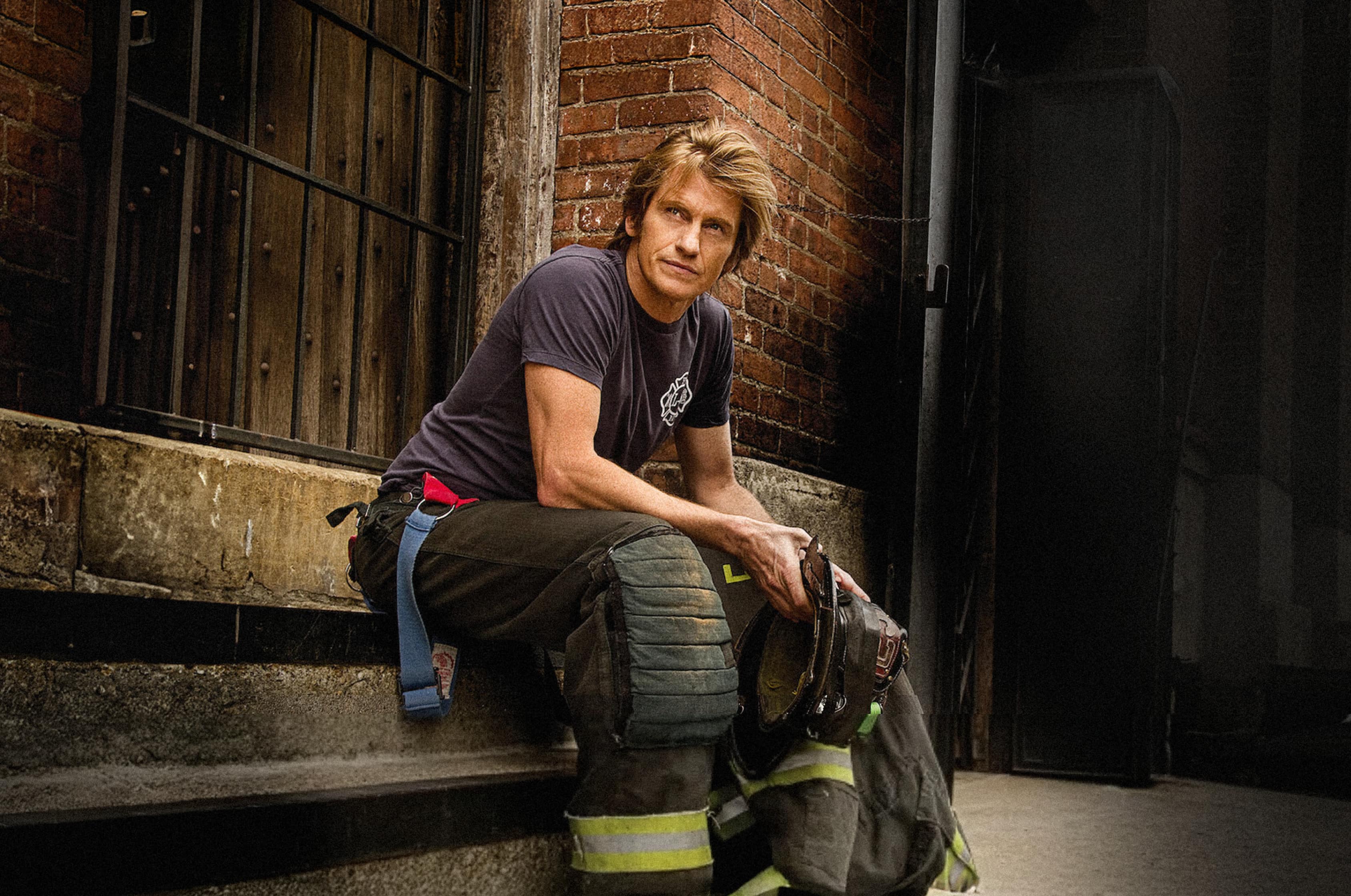
Then came 9/11 and with it the fire service got a new icon, Tommy Gavin. He and his crew were too good not to be true. Rescue Me co-creator and star Denis Leary lifted the rock and showed viewers all the squirmy, icky funny-looking things crawling around underneath it. Things that those of us in the business recognized all too well: the off-color jokes, the pranks, the substance abuse, the competitiveness, and on and on.
But Leary is more than a one-trick pony — even if that amazing trick is Rescue Me. His International Movie Database listing is a doom scroll of acting, writing and producing credits. Four Primetime Emmys and two Golden Globes are among his 19 award nominations. He’s done stand-up comedy, music (most notably I’m an Asshole), authored books (including Why We Suck and Why We Don’t Suck), voice-acted in animated features and started a charity for firefighters (more on that later). And the actor who took Leary under his wing and mentored him? None other than Robert De Niro.
So perhaps it’s not surprising that Leary’s office wall sports a full-size promotional poster for the De Niro movie Mean Streets, the gritty 1973 private detective film set in 1930s Los Angeles.
Even with a resume like Leary’s, you don’t roll out of bed one day and simply decide to become the face of the post-9/11 fire service.
During his hour-long interview with CRACKYL, Leary said that in the Worcester, Mass., neighborhood where he grew up, the only kids who could afford to go to college were stand-out athletes who landed scholarships. The rest, he said, went to work at a local soft drink plant, for the postal service, joined the police department or became firefighters. Many of his friends went into the fire service, including his cousin Jerry Lucey and childhood friend Tommy Spencer.
And if you are wondering if this is the same town that lost six firefighters to line-of-duty deaths at an abandoned cold storage warehouse fire on December 3, 1999, it is. Both Lucey and Spencer were among those who died that night.
CRACKYL: Did you feel like you were breaking new territory in addressing firefighter mental health?
LEARY: Yes, because we kept getting told that. Sometimes when we did recreations of 9/11, those scenes, those flashbacks — I think the process of going through it helped them to talk about their feelings. Because they wouldn't have been talking about it. They would have to explain to us how they felt, while they were doing it, it was like it bonded us. It was an experience I don't think I'll ever have again as an actor or as a writer. You'll never have something that present while you're doing it.
These guys were there to explain to us how it felt; we were able to witness how they felt. They were a great support group, but I think they felt like we were showing the world what it was really like. Both the funny parts and the really heavy parts for them. I mean even that thing when Lou dies in the final season and we're driving to spread his ashes, and the ashes explode inside my pickup truck. That was a version of what really happened to these guys.
CRACKYL: How did you pull yourself out of that shit? Because you really had to do a dive deep into some dark territory and then go home to your wife and kids, right?
LEARY: Yeah, it was tough. It was, listen man, obviously it scratched the surface, whether we’re talking about 9/11 or talking about my cousin. It's that grief, and the anger and all the things that go with it. You never get over it. You just get used to it. But it's right below the surface.
As an actor, it is a good thing to be able to access it. But yeah, it weighs you down. The great thing about Rescue Me is you're shooting this incredibly heavy scene on Tuesday, then on Wednesday you're filming a dick-measuring contest. So the show itself would bring you out because there was never a dramatic scene that wasn't briefly followed by something comedic – sometimes in the same scene – so that always got you out of it.
And, again, there’s more to Leary than Rescue Me. He’s a high achiever, constantly taking on big projects, and all the associated stress that comes with them. His wife, Ann Leary, is a best-selling author with four novels, a memoir and numerous contributions to big-name publications under her belt. They are kind of a power couple.
One of Ann Leary’s contributions was an essay for the New York Times, where she talked about their marital problems. That was so well received that it was turned into an episode of Modern Love, which laid bare their difficulties keeping their marriage intact, balancing careers and raising two kids. It was there that we learned about “Denis tennis”, the term his family coined because he made up whatever rules he wanted while playing tennis with them.
Spoiler alert: the Leary marriage survived, but not without a lot of hard work. Sound familiar? One sign of a strong relationship is when asked about their partner, the other grabs the opportunity to talk them up, to brag about them.
CRACKYL: Your wife did a remarkable essay for the New York Times that then became a Modern Love episode. How did it feel to have all of that exposed in such a way? This is a very personal, yet public issue.
LEARY: I was really proud of the piece that she wrote. She's a great writer. Her last book, The Foundling, which was just, I mean, unbelievable, got five-star reviews across the board. It's an amazing piece of historical fiction. She's got a book of comic essays that's coming out this year that's just hilarious.
So I was very proud of the essay itself because it was a beautiful piece of writing. And we had survived that problem area in our marriage through therapy and a lot of work. We both looked at it the same way, which is an example of what could be right if you're open to talking about the issues.
Leary sits in an interesting place in the scope of the fire service. He clearly understands it on a personal, visceral level. He experienced line-of-duty deaths in Worcester more closely than anyone should ever have to. And he experienced 9/11 and the other traumas of firefighting vicariously. Yet, as he says, he’s only fought fake fires. It gives him a perspective that many of us don’t have.
CRACKYL: In what direction does the fire service need to go collectively to make life better for firefighters?
LEARY: My good friend, Michael J. Fox, who started his Parkinson's Foundation, had a great line: “I'm starting this organization with the hope of going out of business one day because we find a cure.” About my own foundation, which is – my God, it's been over 20 years now – I used to say jokingly I love the work we do but I hope one day we don't have the foundation anymore. I hope one day city, state and federal governments step in and start to fund the people doing this noble profession in a way that means we no longer have to worry about taking care of them.
The other thing which has been a part of my foundation is to see what we can do for mental health. The profession needs to have mental health support. I mean, it goes without saying, especially in this day and age, that this should be something they don't even have to worry about, that's available to them. Something like their physical training in order to make the job right.
CRACKYL: We’ll pay for physical exercise programs and equipment but not for mental wellness programs.
LEARY: It's unbelievable. What's the physical requirement to do the job? Your brain is part of your body. So how are we not thinking about that in terms of your ability to do the job at the highest level of heroics and safety?
CRACKYL: Let's assume the problem doesn't go away. Where's the Leary Firefighters Foundation - five, 10, 15, 20 years out?
LEARY: It’s a given that we are heading in the right direction. And we’re going to keep spending money on it. My dream is that five or 10 years from now, mental health will become part of the government funding. We just have to keep spreading the word.
CRACKYL: So the Leary Firefighters Foundation is going to keep charging forward, no matter what?
LEARY: Yes, absolutely, absolutely, yeah.
This interview has been edited for length and clarity.