As we continue to look back at the terrorist attacks of Sept. 11, 2001, it’s still astounding to try and comprehend what we lost.
In the assault on New York City’s World Trade Center, firefighters from the Fire Department of New York (FDNY) accounted for one of every eight fatalities. In the span of just a few hours, 343 brave FDNY firefighters died as they struggled to rescue victims in the smoke and rubble of the attacks; and nearly 1,000 children lost a firefighter parent who had died in the effort to save another.
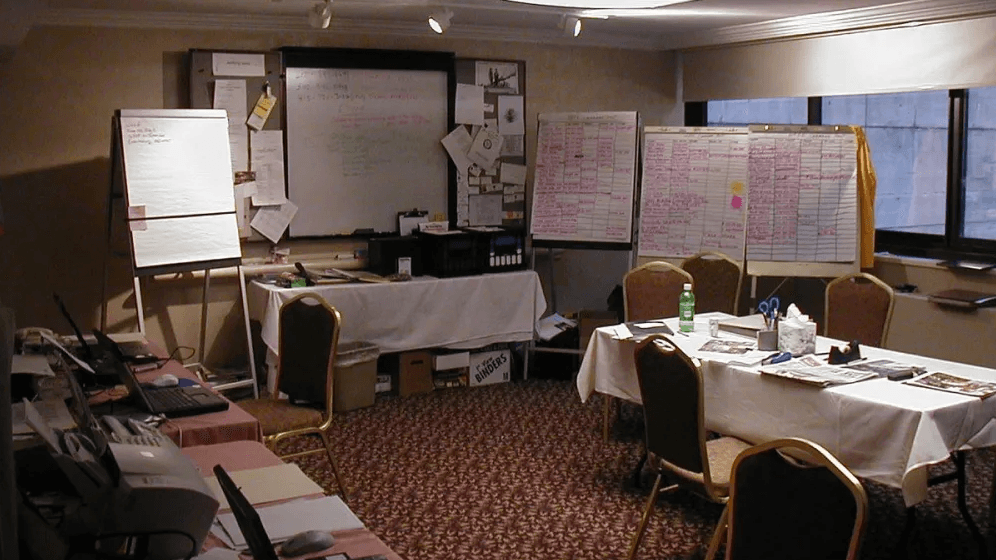
Within days of the disaster, the National Fallen Firefighters Foundation (NFFF) established an office in New York City and began efforts to provide support to the survivors of deceased and missing FDNY firefighters, as well as remaining members of the department. This led the NFFF to providing logistical and peer support to FDNY’s Counseling Service Unit (CSU) and its eventual deputy director, Frank Leto.
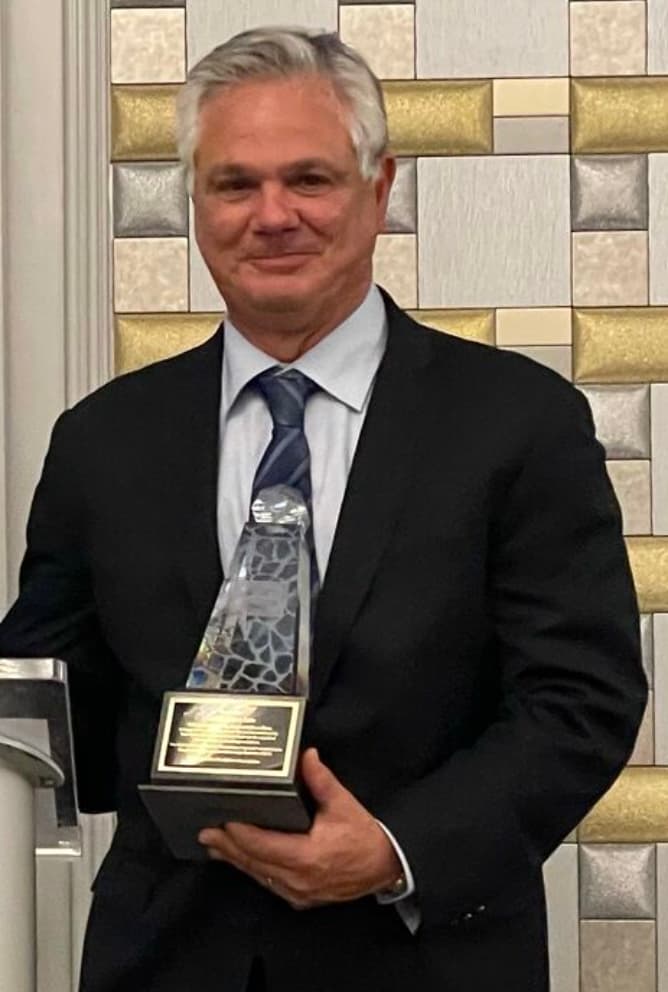
A member of the FDNY since 1983, the Brooklyn- and Queens-based firefighter had begun working with the CSU — helping to manage major events and line-of-duty deaths — in the early 1990s. But after Sept. 11, things changed — dramatically.
Firefighters and their families needed help. To meet these needs, CSU partnered with the NFFF to enable further support for survivors and coworkers of the fallen firefighters through the critical early days after the 9/11 attacks — and lay the groundwork for long-term emotional support for those directly impacted.
Now retired after 38 years with the FDNY and a career spent overseeing an expansion of size and scope of the CSU, Leto recently took some time to reflect on a day that changed everything in the fire service, and how connecting with NFFF led to big steps forward in managing through traumatic events and supporting those across the fire service community.
Take me back to Sept. 11-12, 2001. Where were you stationed, and what did your work consist of on those first days following the attacks?
Frank Leto: On Sept. 11, I responded to the World Trade Center and arrived shortly after noon. I was assigned a group of firefighters and spent the remainder of the day working at the site. Like everyone there, we were trying to do whatever was needed in an environment unlike anything any of us had ever experienced.
In the early morning hours of Sept. 12, I was sent from the World Trade Center to Fort Totten to help establish the FDNY Family Call Center. The purpose of the center was to create a place where families could call looking for information about their loved ones and, just as importantly, provide information that could help the department account for its members.
I was still in my bunker gear and had not slept. We worked with constantly changing lists of members who were still unaccounted for, communicating information back and forth with FDNY headquarters as families called in.
Once the call center was operational, I returned to the World Trade Center and continued working there. At the same time, the Counseling Service Unit was expanding at a pace none of us had ever seen before.
In the weeks and months that followed, CSU personnel were deployed throughout the department. We were in firehouses, at funerals and memorials, with families, at the World Trade Center site, and anywhere else members needed support. We also brought in additional clinicians and resources to help meet the enormous demand.
One of the most important things we learned was the value of peer support. Firefighters were often much more willing to talk first with another firefighter who understood the job, the culture, and what they had experienced. Those peers became the most effective bridge to whatever additional support might be needed, including professional counseling.
That changed the way we thought about behavioral health support. We could not simply sit in an office and wait for firefighters to come to us. We had to go to them, be present, earn trust, and use that peer connection to help people take the next step when needed.
In the months and years that followed the Sept. 11 attacks, what did you learn about the relationship between counseling and fire service?
FL: What we learned very quickly was that counseling could not be something separate from the fire service. It had to understand the culture, the language, the relationships, and the way firefighters process difficult experiences.
Trust was everything. A firefighter might not walk into an office and ask to see a clinician, but they might talk to another firefighter they trusted. That peer relationship often became the bridge to whatever level of support was needed next.
We also learned that support had to be non-punitive. If firefighters believed that being honest about what they were experiencing could threaten their career, assignment, or how they were viewed by others, they were far less likely to ask for help. Reducing stigma meant creating a system where seeking support was seen as a normal part of taking care of yourself and staying effective on the job.
Another major shift was recognizing that behavioral health was not only about responding after something went wrong. We had to prepare members for the next difficult event, build resilience before it was needed, and give people tools they could use throughout their careers.
Sept. 11 also reminded us that support could not be focused only on the firefighter. Spouses, children, parents, siblings, and the families of the 343 members we lost were all carrying their own grief, fear, and uncertainty. Over time, the goal became to weave behavioral health into the fabric of the department rather than treat it as something firefighters only turned to during a crisis.
When did a relationship form between the FDNY CSU and NFFF, and how has this partnership evolved over the past two decades?
FL: The relationship between the FDNY Counseling Service Unit and the National Fallen Firefighters Foundation began almost immediately after Sept. 11.
The Saturday after the attacks, I was asked to leave the World Trade Center site and meet with a group from the NFFF at a hotel in Queens. I remember arriving still in my bunker gear.
Malachy Corrigan, who was the director of the CSU, was there, along with Chief Ron Siarnicki, who was then the executive director of the NFFF, and Victor Stagnaro, who is now the foundation’s executive director.
During that meeting, Ron and Victor made a number of commitments about how the foundation would support the CSU and the members and families of the FDNY. I remember leaving that meeting thinking, “I doubt we’ll ever see these people again.”
I could not have been more wrong.
They never left. They made good on every promise they made and then some. Their support became part of the long-term growth of the CSU, and the foundation continues to support programs within the FDNY to this day. Over the years, the relationship developed into a true partnership. We were able to share what we were learning in New York with departments across the country, and NFFF helped create opportunities to bring those lessons to firefighters, families, and departments dealing with line-of-duty deaths and other major incidents.
My relationship with the NFFF has been one of the most rewarding relationships of my career. What began in a hotel in Queens during one of the darkest weeks any of us had ever experienced became a partnership that has lasted for more than two decades.
How has the role of the CSU — and the role of counseling as a service — advanced over the past 25 years?
FL: Over the past 25 years, the role of the CSU has grown well beyond responding after a crisis. The work became much more structured around prevention, education, peer support, resilience, and giving firefighters practical tools they could use before, during, and after difficult events.
The partnerships with the National Fallen Firefighters Foundation and the International Association of Fire Fighters were a big part of that evolution. They helped us expand resources, share lessons nationally, and develop approaches that could be used well beyond the FDNY.
One example I’m especially proud of was the work with Dr. Patricia Watson, Vickie Taylor, and Dr. Richard Gist to develop the Stress First Aid model for the fire service. It gave firefighters, officers, peers, and departments a practical framework for recognizing stress injuries early, having better conversations, and connecting people to additional support when needed. Over time, Stress First Aid became widely used throughout the fire service.
That kind of work represented a major shift. We were no longer thinking only about how to respond when someone was already in trouble. We were building systems that helped departments recognize problems earlier, support their members more effectively, and make behavioral health part of normal fire service operations.
Is there a development you’re particularly proud of?
FL: There are a number of things I’m proud of, but the development of peer support probably stands out the most.
After 9/11, we saw very clearly that firefighters were often most willing to first speak with someone who understood the job and the culture from the inside. A trusted peer could recognize when someone was struggling, start the conversation, and then help connect that person to whatever additional support was needed.
I’m also proud that the mental health of firefighters is no longer treated as an afterthought. In good departments today, behavioral health is increasingly built into policies, procedures, training, peer programs, and the way departments prepare for and respond to major events.
And I’m proud that many of the lessons we learned at FDNY did not stay in New York. Through our work with the NFFF, the IAFF, and others, those ideas were shared with departments across the country. Seeing approaches that grew out of some of the hardest years in our department go on to help other firefighters and families has been incredibly meaningful to me.
What are some changes that still need to happen for firefighters and their families?
FL: We have made a great deal of progress, but there is still work to do.
One of the biggest challenges is making sure behavioral health support is consistent across the fire service. Some departments have strong peer programs, experienced clinicians, family support, and clear protocols. Others still have very little. Access to help should not depend on the size of your department or where you happen to work.
We also need to continue reducing the fear that asking for help could have professional consequences. Support has to be confidential, non-punitive, and clearly separated from discipline whenever possible.
Another important area is connecting members with clinicians who are culturally competent, or at the very least open to learning the fire service culture. Firefighters should not have to spend the first several sessions explaining the job before they can begin talking about what is actually going on.
I also think we need to pay more attention to retirement. Firefighters spend decades in a close-knit culture with a strong sense of identity, purpose, and belonging. Retirement can be a major transition, and we need to do a better job preparing members for it and making sure support does not simply end when their career does.
Finally, I think we need to stop looking at mental health and physical health as two separate things. We should be thinking in terms of total wellness. Sleep, physical health, stress, relationships, substance use, nutrition, fitness, and mental health all affect one another. If we really want healthier firefighters and healthier families, we have to look at the whole person.
The goal should be a system where wellness is treated as part of readiness throughout a firefighter’s entire career and into retirement.
When you now look back over the past 25 years, what’s your biggest takeaway of where the FDNY — and U.S. fire service — was and how far they’ve come as a supportive entity for their firefighters and their families?
FL: When I look back over the past 25 years, the biggest change is that behavioral health is no longer viewed as something separate from the job.
There was a time when the fire service was very good at taking care of people physically, but much less comfortable talking about the emotional and psychological impact of the work. We have come a long way from that. Today, the better departments understand that supporting firefighters means looking at the whole person and their families, and making behavioral health part of training, preparation, response, recovery, and long-term wellness.
We have also learned that support has to be proactive. You cannot wait until someone is in crisis. You have to build trust before it is needed, develop peer programs, connect members with clinicians who understand the culture, support families, and prepare people for the difficult events they are likely to face over the course of a career.
We still have work to do, but the fact that these conversations are now happening openly — and that behavioral health is becoming part of the fabric of good departments — is a tremendous change from where we were 25 years ago.
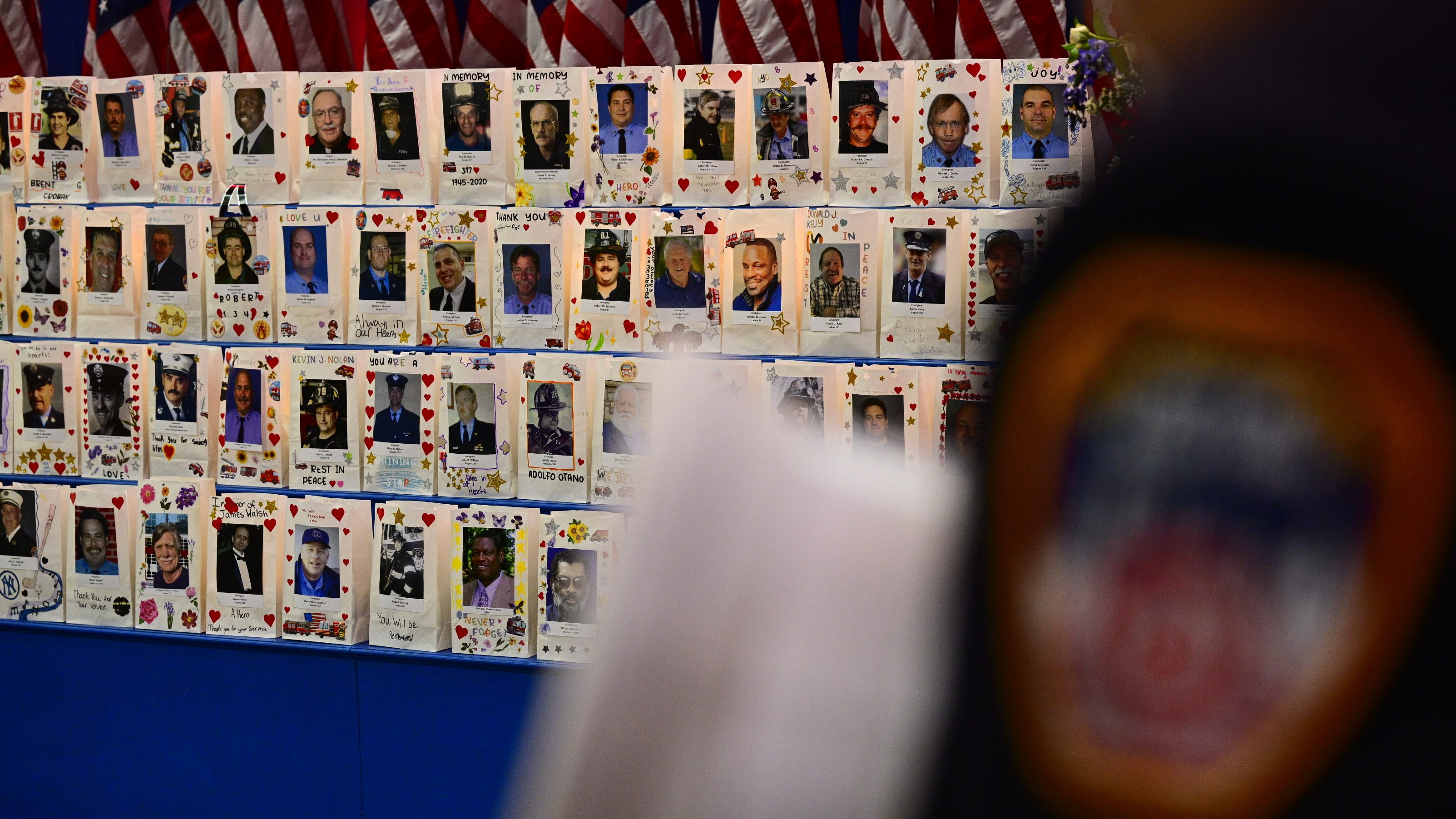
Photos, from top to bottom:
- A wall featuring some of the FDNY firefighters lost to post-9/11 illnesses.
- Capt. Frank Leto
- The NFFF's makeshift command post at the Sheraton Towers Hotel, Manhattan, September 2001.
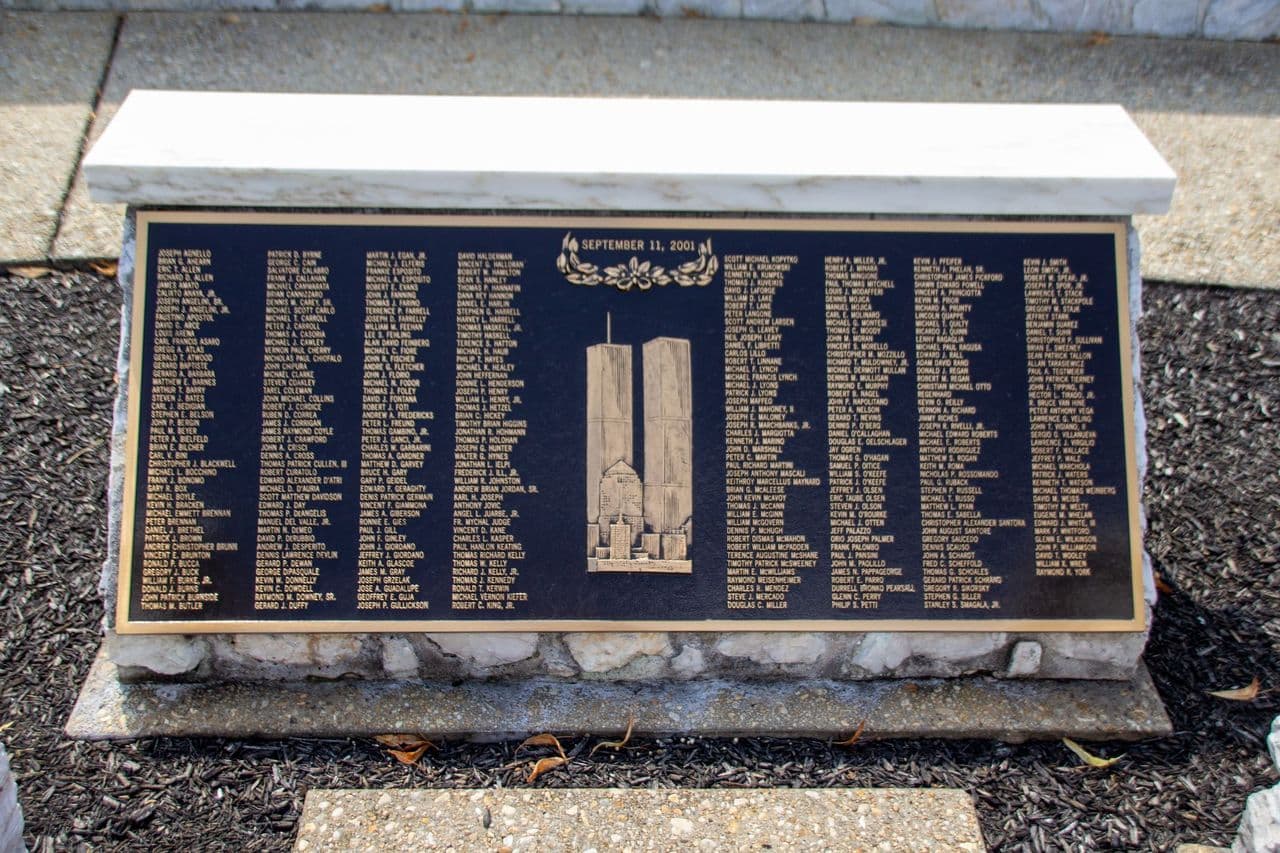
- The Sept. 11, 2001 plaque at the National Fallen Firefighters Memorial in Emmitsburg, Md.