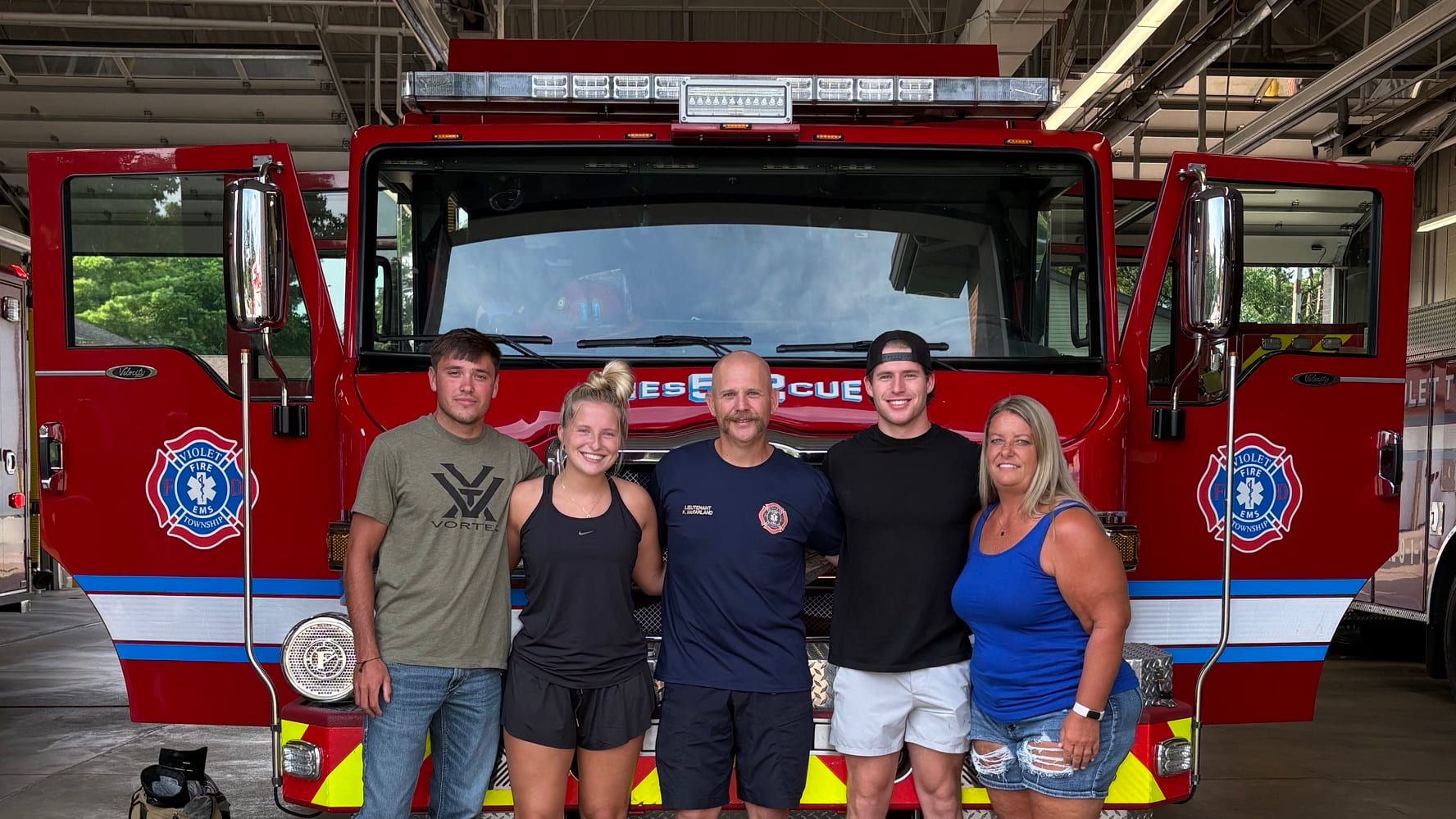

A federally funded clinical trial ran on 150 of my firefighters. I was San Diego Fire-Rescue’s Health and Safety Officer and the department’s point man on it.
Every one of us had eaten something at 0300 to stay sharp. This study tested the clock instead of the plate. The clock won.
Getting it Onto the Floor
We already had reason to care. Our own 2016 wellness screening put the average body mass index at 27.8 and average blood pressure at 120 over 78. The individual maximums ran a long way past both. I put my name on that report.
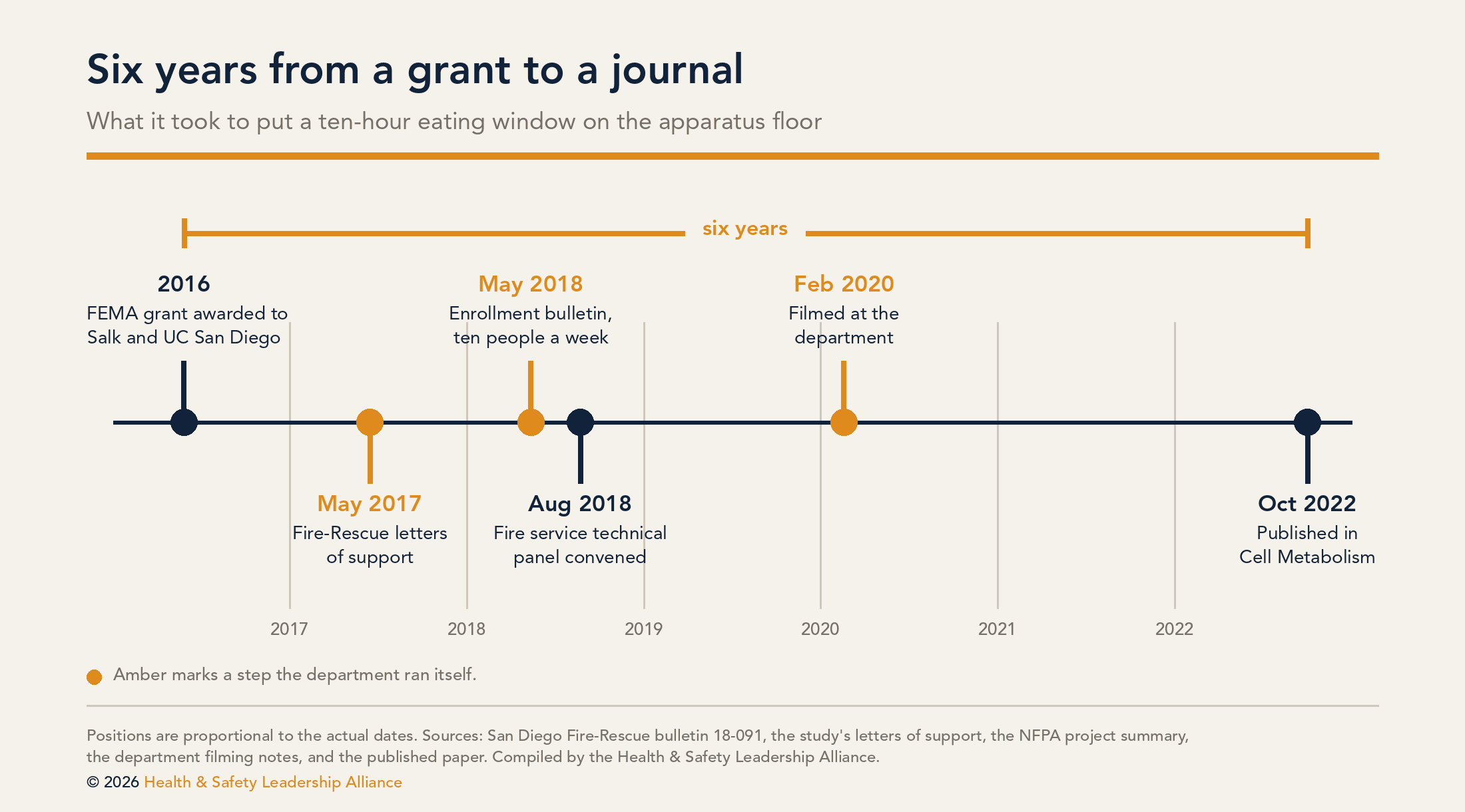
Salk and UC San Diego won a FEMA grant in 2016 to run the first trial of its kind on firefighters working shift work. I put the bulletin out in May 2018. We had two information meetings at the training facility, then 10 people enrolled a week until we had 150. It was a year-long commitment with six clinic visits at UC San Diego, and our people made those visits on their own days off.
Recruiting was not the hard part. The distance between the research world and ours was. The researchers had a picture of an optimal lifestyle. They did not have 24-hour shifts, forced overtime, or a two-week strike team tour. We spent several meetings on that, and then they volunteered to ride a full 24 at a busy house.
That changed the protocol and it changed how the crews saw the study. Scientists who have sat through a night of calls design better clinic visits and get taken more seriously on the apparatus floor.
What They Were Asked to Do
The entry rules were written widely on purpose, with firefighters in the room, so signing up did not mark you as the guy with a problem.
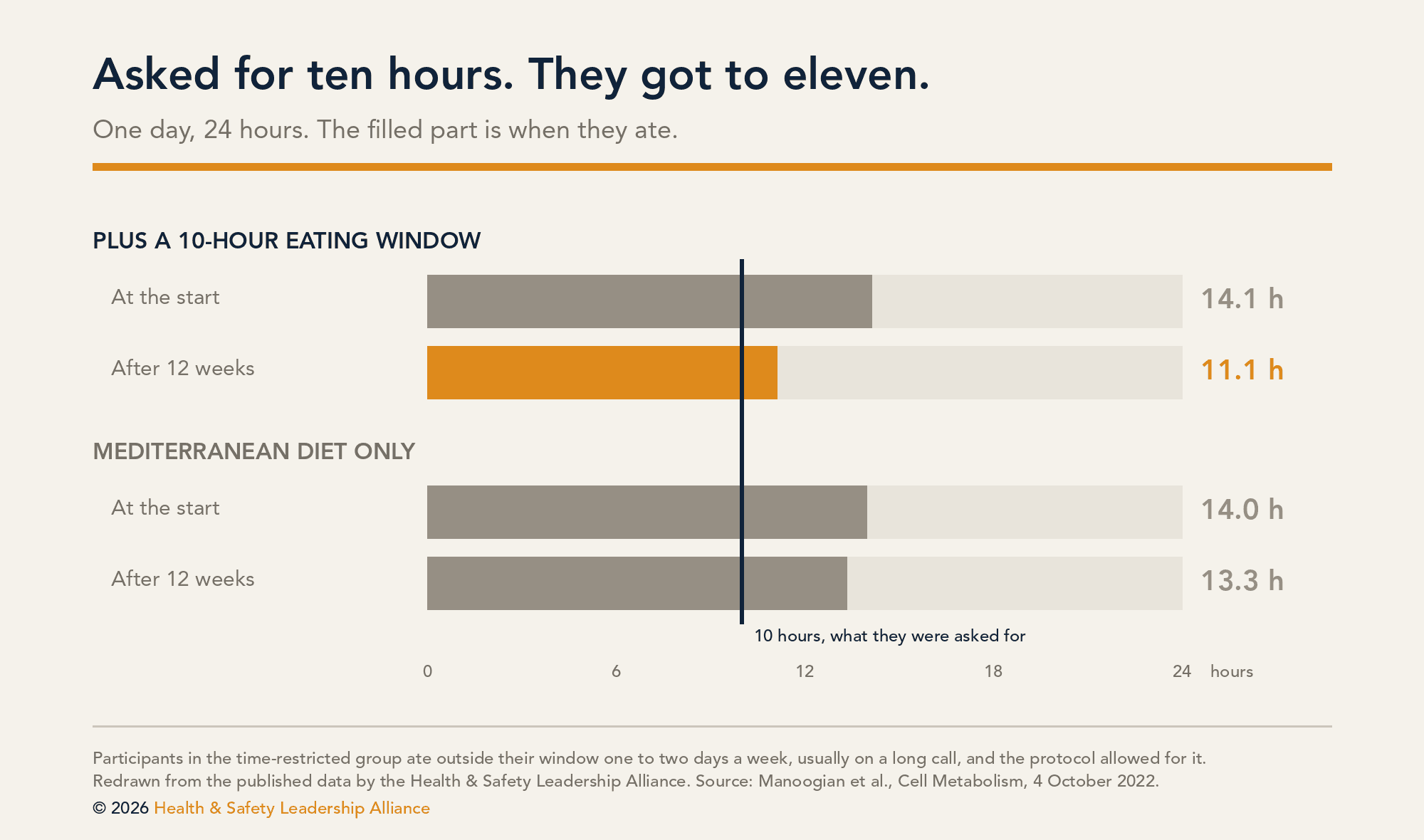
Both groups ate a Mediterranean diet. One group also held all of its eating to a 10-hour window it picked itself. Most picked 9 a.m. to 7 p.m. Nothing else changed, so the variable was timing.
They were asked for 10 hours. They got to 11, down from 14. They ate outside the window one or two days a week, usually on a long call, and the protocol allowed for it.
Twelve of the 150 dropped out, and eight of those were in the control group. No one reported adverse events, hunger or fatigue on shift. Nobody said it got in the way of the work.
What Came Back
The overall numbers are modest. Most participants were healthy at the start, and the control group was already eating a Mediterranean diet, which is a hard bar to clear.
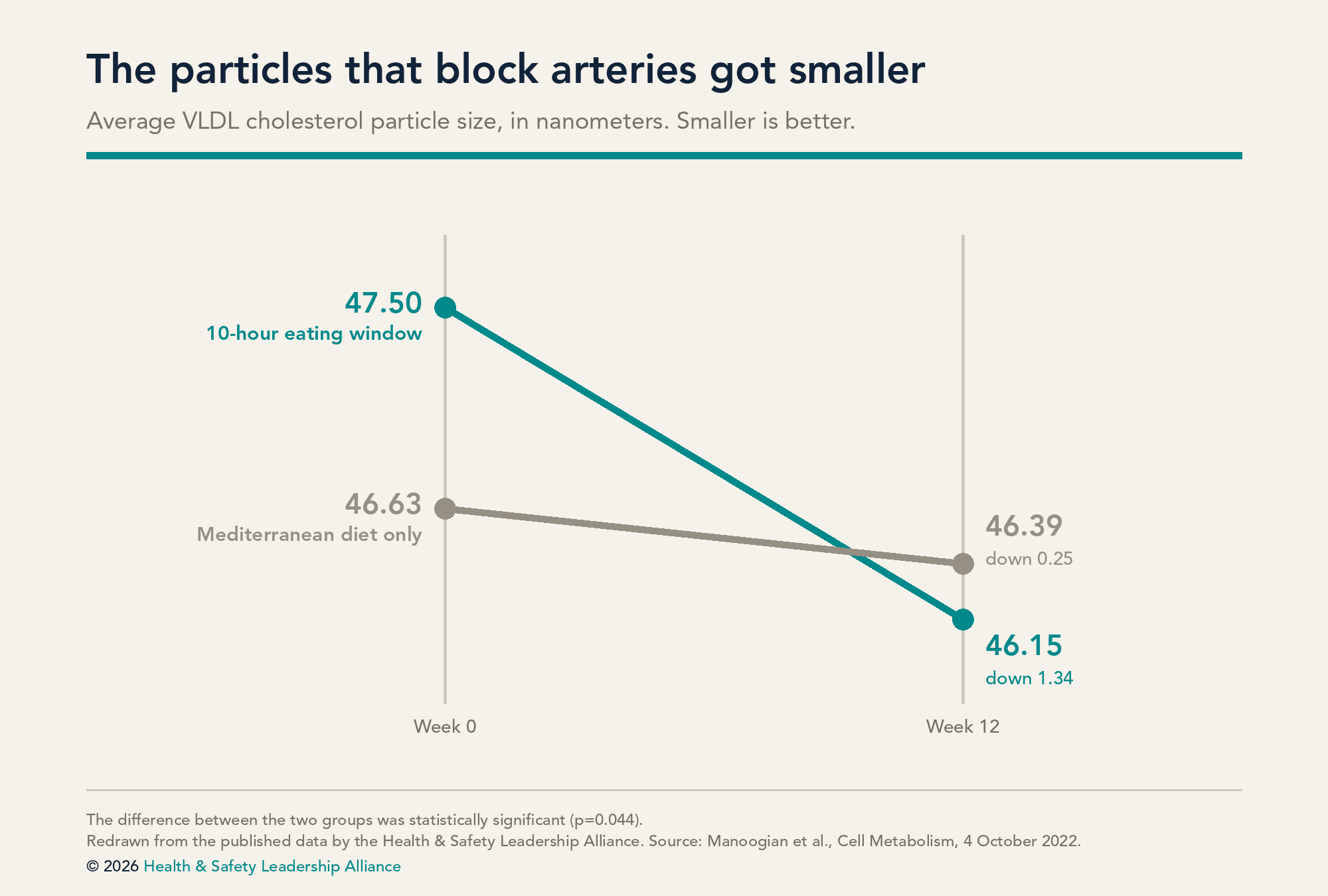
Two things moved for the control group. VLDL cholesterol particles got smaller, and smaller particles are less likely to block an artery. On the quality-of-life questionnaire, the control group’s scores for emotional well-being fell over three months, and the window group’s scores held.
Weight, blood pressure and sleep disturbance improved inside the window group compared to where those firefighters started. That is a weaker claim than a difference between groups. Read it that way.
Who it Moved
Seventy-one percent of participants carried at least one cardiometabolic risk factor at the start: High blood pressure, blood sugar, cholesterol, weight, or inflammation. Young, fit, passing their physicals, yet carrying something.
Among those who arrived with high diastolic blood pressure, the window group came down 12.2 points over 12 weeks. The control group came down 3.8 points. The same pattern appeared in those who arrived with an elevated A1c, the marker for blood sugar over the previous three months.
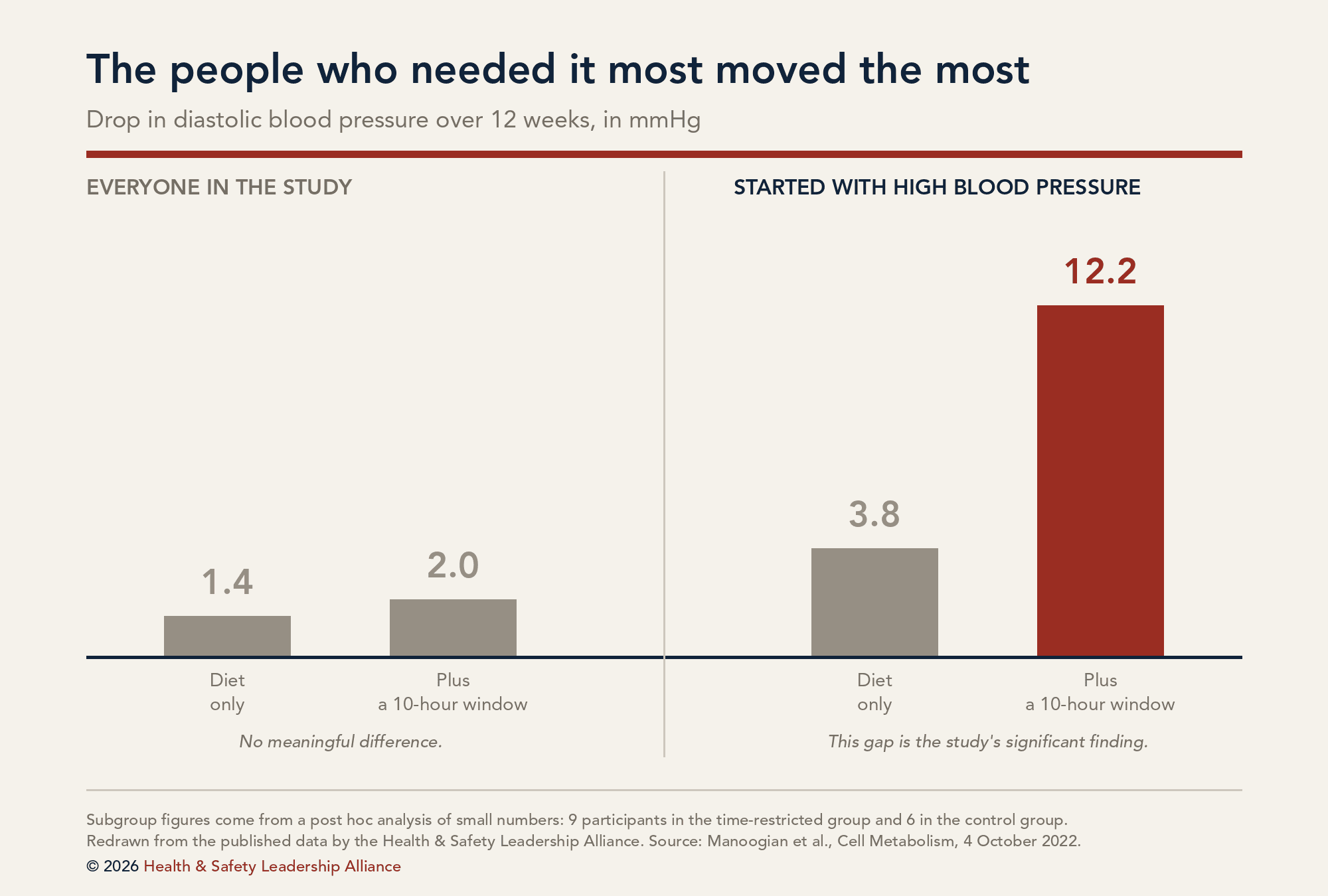
I wrote the results up for the department the day before they were published. My closing line was that the biggest changes appeared in participants who started with abnormal values, so time-restricted eating may be most beneficial for those who need it most. Nothing since has given me a reason to change it.
What You Can Do
None of this costs money or needs approval. Move the window of time in which you eat, not the food. Yours is probably running about 14 hours, so pull it to 12 before you try 10. Twelve is a real change. Pick the hours around your life the way these crews did: 9 a.m. to 7 p.m., normal meals, nobody skipping a meal and nobody eating less.
You will miss it once or twice a week. The participants did, and it still worked. Start on a day off, get two clean days behind you, then take it to work. And if a doctor has already named a number for you, this is aimed at you more than anyone else in the firehouse.
What Happened After
I asked Emily Manoogian what has followed. She is the first author of our study, the protocol it was based on, and much of the research underpinning the entire idea. The idea itself is Satchin Panda’s. He built the circadian science this study sits inside, going back to the early animal work, and he is senior author on our paper. They applied for funding to keep the work going but did not receive it. There is follow-up data from the continuous glucose monitors that never made the paper. Emily says it shows no big changes, and they still plan to analyze it and publish the findings.
So the study on my own department is not finished. It is waiting.
Six years ran from that grant to the journal cover. The part you can use costs nothing and starts on your next shift.
The healthier you already are, the less this moves. The further behind you are, the more it does. That is backwards from how we talk about health on this job, where the one who needs it least is already in the gym at 0600.
They ran it on my department, on my people. The window is free.