


The paperwork that follows you out the door isn’t the paperwork you thought it was. It’s thinner, it belongs to somebody else, and by the time you need it, the people who wrote it have retired, too.
A file gets built about you across a career whether you pay attention to it or not. Incident reports, exposure logs, a periodic exam here and there, a claim if one ever opened. It’s assembled by the agency, for the agency, to answer the questions the agency had at the time. None of those questions were, “What will this person need to prove in 2044?”
The other file, the one that answers that question, doesn’t exist unless you build it. Most people start building it the week they need it, which is the week it’s worth the least.
This is the third time this column has arrived at the same place from a different direction. Installment 3 said the system won’t tell you what it needs. Installment 4 said the injury nobody wrote down is the one that costs you. Both of those are documentation problems wearing different clothes. This one is about the only part of it you control outright.
Jill Degnan ran workers’ compensation and insurance for the City of San Diego before she retired. She’s read more of these files than anyone I know, from the far end, years after they were written, when what’s in them is the whole of what a person can prove. I asked her what actually holds up.
“Filing a minor injury report when an incident occurs but does not require medical care is an excellent way to document the history of an incident or injury,” says Degnan.
The minor ones are the ones nobody files. No transport, no doctor, back in service before the paperwork would be done. They’re also the ones that add up, and 20 years later nothing says they happened.
“Although public safety personnel can keep their own documentation, incident and minor injury reports are more supportive documentation, as they provide proof the employer was aware,” Degnan says. Having the report signed by a department supervisor acknowledges the employer was aware of the incident.”
That’s the difference between a record and a claim. Personal logs and apps are worth keeping, and nothing here says stop. But a note on your phone proves you remembered. A report with the employer’s own entry on it proves the employer knew.
In San Diego, every incident report in the department’s records system requires a yes or no on personnel exposure. A yes opens a second screen where the officer picks from a short list of broad exposures, and those tie to every member on that incident number. The records system pulls in everyone signed into each unit from dispatch, the CAD, so whatever the officer or incident commander enters tags every one of them. It isn’t a substitute for the minor injury report. If you know you got hurt, you still file it.
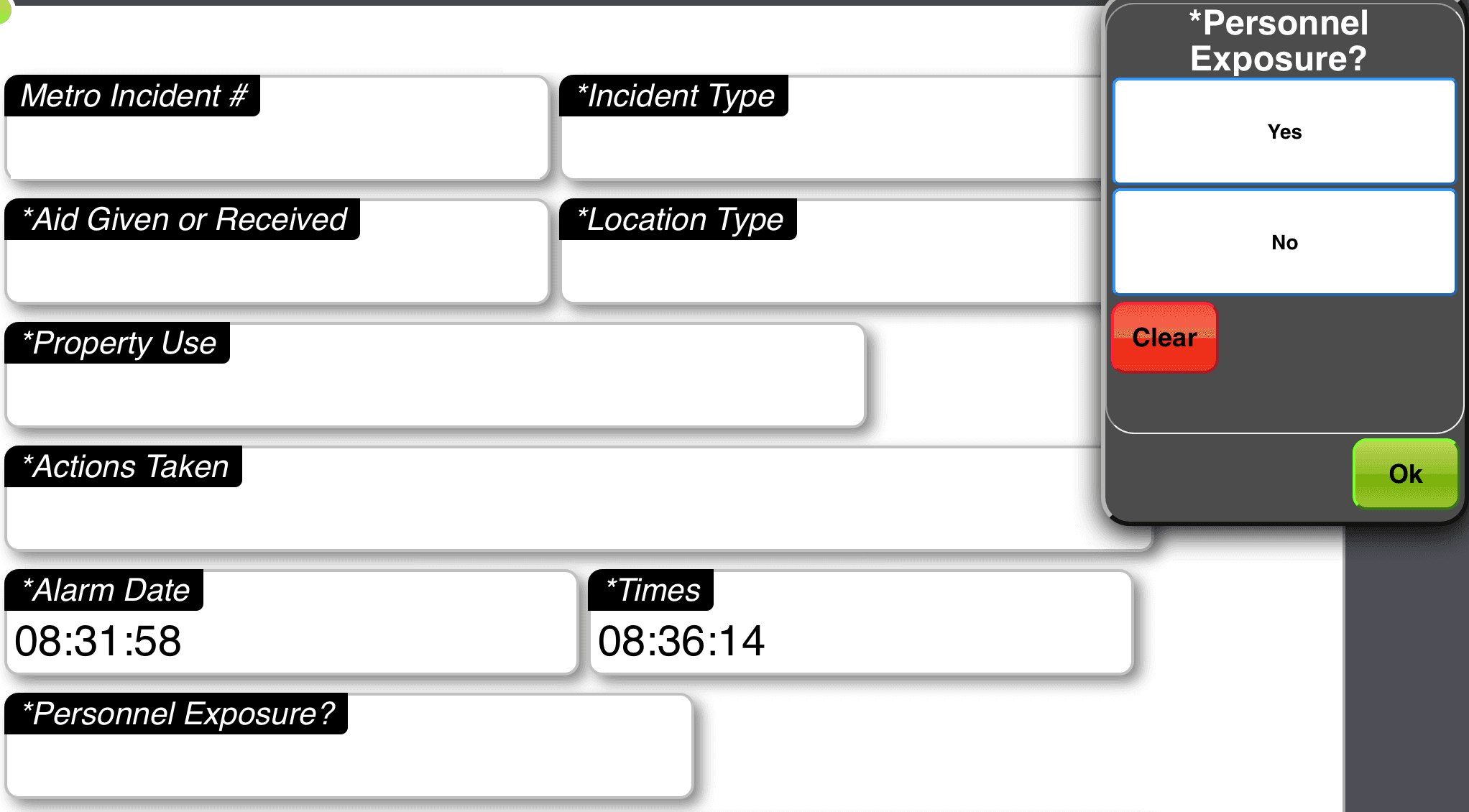
Image: The personnel exposure question in San Diego’s incident records system. A yes opens a short list of exposures that tie to everyone on the incident.
Any member can ask Health and Safety for a printable history of every incident on their record. That exposure data is kept on separate, secure servers and isn’t sent with the incident data the department reports nationally. NFPA 1500 already asks for this: the data system “shall also maintain individual records of any occupational exposure.” That’s the standard worth asking your agency for.
Degnan made one more point. A cumulative trauma claim that falls under a presumption shouldn’t need that documentation, because the law already presumes the job caused it. In San Diego that holds, because those claims are accepted. Most places it doesn’t work that cleanly, and the member needs every piece of paper they can get.
Two things make this worse for public safety than for almost anyone else. The first is time. An occupational disease claim can turn on what happened decades before anybody knew to write it down. The second is turnover of custody. Agencies reorganize, vendors change, systems get migrated, and records that were never wrong become records that can’t be found.
I asked Degnan the question this column always ends on. If a firefighter or a medic wanted to keep their own record from day one, what would you tell them to write down and hold onto?
Her answer starts with the report nobody bothers to file and ends with the copy nobody thinks to keep.
“How long an employer keeps those reports is important, as well, so members should retain copies of them.”
What to Do Now
- File the minor injury report. No transport, no doctor, file it anyway, the same shift
- Get a supervisor’s signature or entry on it. That’s what shows the employer knew
- Keep your own copy of everything you file or sign. Incident reports, exposure forms, periodic exam results, fit tests, immunization records. Keep them in a folder you own, not an agency system or a work email account
- Ask how long your agency keeps those reports, and whether it can print your exposure history. If the answer to either is no, your copy is the only one that lasts
- Keep your own log, too. Date, incident, what you were exposed to, how long, what you had on. It backs up the report. It doesn’t replace it
- Tell one person at home where the file is. Most of the claims that turn on this are filed by someone who isn’t in a position to go looking
Contact HSLA at info@hslalliance.org for what agencies are doing to make this easier on their people.