
Two Iowa City firefighters show why the future of the fire service depends on intentional outreach, mentorship, and recruitment

Recently, the First Responder Center for Excellence (FRCE) hosted its Mental Health Awareness Conference in Iowa City, Iowa. As always, one of the greatest benefits of attending these events is the opportunity to meet firefighters from across the country, hear their stories, and learn what brought them into our beloved profession.
During the conference, I met many dedicated firefighters, but two Iowa City firefighters stood out for their passion, enthusiasm, eagerness to learn, and remarkably similar paths into the fire service. Their names are Bri and Emma. While they are different individuals with their own unique experiences, the journeys that led them to the firehouse shared many commonalities.
Both Bri and Emma became EMTs while still in high school. Both were drawn to helping people and serving their communities. Yet neither had firefighting on their radar as a career. Neither grew up dreaming of becoming a firefighter. Neither knew much about the fire service nor fully understood the opportunities it could provide.
Then, during their senior years of high school, something changed. Someone encouraged them to take an EMT course. Their reasons for enrolling may have been different, but both completed the training, earned their certifications, and soon found themselves working as EMTs.
That exposure opened a door.
Through this early exposure, both gained insight into public service, emergency response, and the impact first responders have on their communities. They discovered a profession built on teamwork, purpose, and service. And both continue to work as first responders, now with the Iowa City Fire Department, and both love their career paths.
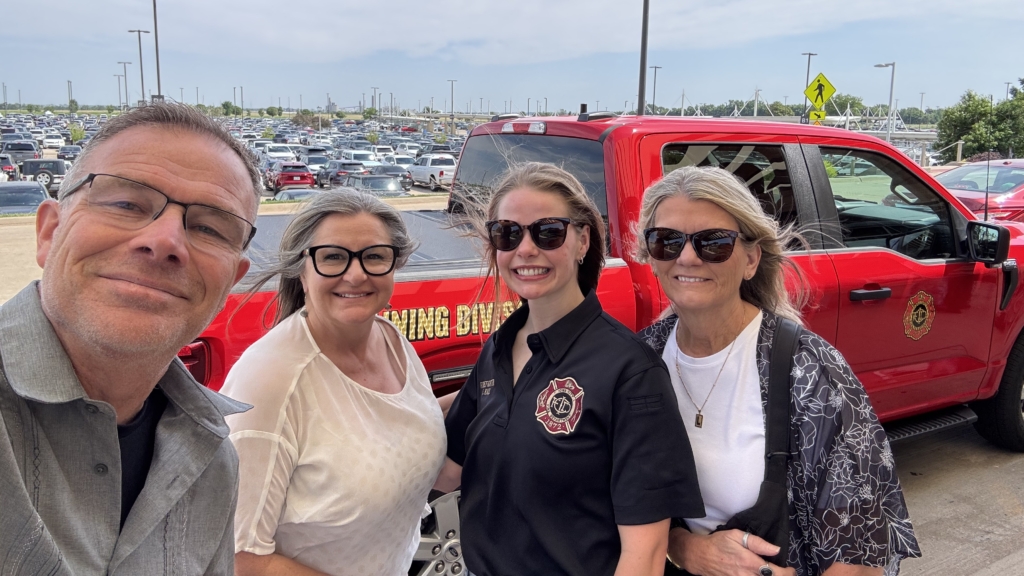 Chief Frank Leeb, left, with Emma, second from right.
When I asked them how they ended up becoming firefighters, both used a similar phrase.
“I got lucky.”
In many ways, they are right. They were fortunate to cross paths with people who introduced them to opportunities they might never have considered otherwise. They were fortunate that someone encouraged them to take that EMT class.
The fire service was fortunate, as well.
We gained two talented, motivated, and passionate firefighters who are making a difference in their communities every day.
But their stories also highlight an important challenge facing our profession.
We cannot rely on luck alone.
For every Bri and Emma who happen to discover the fire service, how many others never do? How many talented young people are searching for meaningful work, careers built on teamwork, service, and purpose, yet never consider firefighting because they simply do not know enough about it?
The fire service must recruit with greater intention.
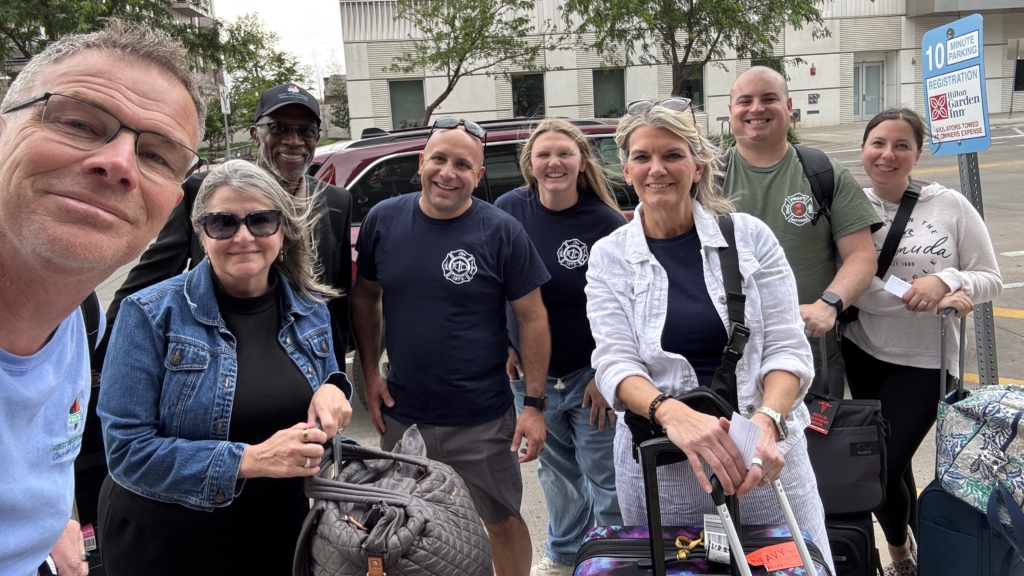 Chief Frank Leeb, left, and Bri, fourth from right.
High school programs, career days, EMT courses, cadet programs, junior firefighter programs, and community outreach efforts all provide opportunities to introduce young people to the profession. I joined my volunteer fire department as a junior firefighter, and that experience played a significant role in shaping the path that followed.
These programs allow young people to see firsthand what the fire service has to offer. They learn it is about serving others on their worst days, developing leadership skills, building lifelong friendships, and finding purpose in helping people and communities.
Many departments across the country are struggling with recruitment. At the same time, there are exceptional young men and women searching for careers that matter. Too often, those two realities fail to connect.
That connection cannot be left to chance.
The stories of Bri and Emma remind us that future firefighters are already out there. They are sitting in our classrooms, playing on athletic fields, volunteering in their communities, and looking for opportunities to make a difference. Many may never consider the fire service simply because no one has introduced them to it.
As leaders, firefighters, and advocates for this profession, we must do a better job of telling our story. We must actively engage young people, create pathways into the profession, and demonstrate the opportunities that exist.
While Bri and Emma may describe their journeys as luck, successful recruitment cannot depend on luck.
The future of the fire service depends on our willingness to reach out, educate, mentor, and inspire the next generation.
I feel fortunate to have met Bri and Emma. Their enthusiasm for the profession is contagious, and their futures are bright. The fire service is fortunate that they found their way into our ranks.
The question is: How many more future firefighters are out there waiting to be discovered?