Three calls, three decades and one backpack.
It was 1994, in Langley Township. I’m 22 years old and two years into the fire service, Paid-on-call, and still figuring out where my hands go. The call is a toddler, in critical condition. Her father had backed over her in the driveway on his way to the liquor store; intoxicated. She was dragged down the street before he stopped. I rode along in the ambulance to help manage her airway. She was posturing in the back — the kind of posturing you never forget once you’ve seen it. I was 22, no wife, no kids, and no framework for what was climbing into me through my hands, my eyes and my ears. She lived, but that call stuck with me for a long time anyway. I tucked it into the backpack and went back to work.
Roughly 20 years later, in Coquitlam, I’m a newly acting captain. A seven-year-old girl, medical emergency. Paramedics are drilling an intraosseous line into her shin because they can’t get access any other way. That sound is its own thing. If you know, you know. I’m not on the airway this time. I’m with the parents. And here’s the part that changed everything: my daughter Chiara was seven years old. Same age, same size, same everything. The child on the floor had my daughter’s face. She lived, too. I drove home the next morning after shift and stood in Chiara’s doorway longer than I usually did. The backpack got a little heavier. I zipped it up and went back to work.
One month before my retirement date, in Coquitlam. I’m a captain at another pediatric call. Another toddler having a grand mal seizure. My crew handled it in the kitchen, and I managed the family. The dad came in, and I could feel his fear before he said a word — that particular fear that only a parent watching their child seize knows. I looked him right in the eyes and told him my crew was doing everything they could for his little girl. I pointed the paramedics down the hall. Then I stepped out onto the porch, alone, and it hit me. Grief, sadness, worry and heartache. Twenty-eight years of it, all at once, on a stranger’s front porch on an ordinary morning. Tears welled up, but I didn’t let them fall — not there, not yet — but I knew. I had witnessed enough suffering. I pulled myself together, stepped back inside, checked on my crew, and finished the call. On the ride back, I was quiet. My guys probably thought I was tired. I wasn’t tired. My backpack was full. One month later, I hung up my helmet. That porch confirmed what I think I’d known for a while: it was time.
Retirement Isn’t a Financial Event. It’s an Identity Event
The fire service has spent decades getting good at one part of retirement: the money part. Pensions, RRSPs, benefit bridges, financial planners in the union hall, spreadsheets with green cells and red cells and a projected date that feels like a finish line.
We’re terrible at the other part. Nobody sits you down at Year 28 and asks, “Who are you going to be when the tones stop?” Nobody asks what you’re retiring to. Nobody warns you that the uniform did more than cover your body — it told you where to stand, who to call, what to say at parties, and how to introduce yourself at your kid’s soccer game. “I’m a firefighter” is a whole personality in three words. Take those three words away, and a lot of us don’t know what’s left. Retirement isn’t a financial event. It’s an identity event. And the same service that trains us for flashover, mayday, active assailant, and pediatric arrest sends us out the door on identity with a handshake and a plaque. That’s the gap.
The Patio
A few months after I hung it up, I was sitting on the patio with my partner, Jen, looking out over Lake Okanagan. Twenty-two years in dispatch behind her. She’d left the headset and taken a role at a local winery. Jen and I met at the end of 2023, about a year and a half before I retired. She never knew the captain version of me in full flight — she met the version already starting to look toward the door. Maybe that’s why she could see it before I could. The lake was doing that thing it does in late afternoon — lying flat, glassy, and unbothered.
“Do you miss it?” I asked. She thought about it longer than I expected. “I miss the people. I don’t miss the weight.”
I nodded. I knew the weight.
“What’s different at the winery?”
“No 911 vibe,” she said, and laughed. “Nobody’s having the worst day of their life when they walk in. If I mess up an order, nobody dies. I can take a Tuesday off. I can go to a family thing. I can contribute without carrying.”
Contribute without carrying.
I’ve thought about that phrase every week since. She told me the transition wasn’t clean for her, either. There were weeks she felt useless. Weeks she missed the identity more than the job. Weeks she’d hear a siren in town and feel her shoulders tighten out of habit, then remember it wasn’t hers anymore.
“But I’m still me,” she said. “I just had to figure out which parts of me were the job and which parts were mine.” That’s the work nobody trains us for. And it’s the work Jen and I are doing together now — two people who spent decades running toward other people’s emergencies, learning how to sit still on a patio and let the lake be the loudest thing in the room.
Caring vs. Carrying
A few weeks ago, I sent a text to a firefighter I’ve been supporting. He’s been off the job for several years. He’s still struggling, but I’m retired now, and I had to say something I’d never said before. This is the text I sat on for a long time:
“Brother — I have to be honest with you. My window of tolerance is smaller these days. I care about you. That hasn’t changed and it won’t. But I don’t have the capacity I used to have for the PTSIs — the psychological injuries, the middle-of-the-night stuff. My parents are aging, my daughter needs me. My own nervous system is asking for quieter days. I can still care about you. I can’t carry you the way I used to. I need you to hear the difference, because it matters.”
I sat with my thumb over the send button for a long time, and then I hit send. He wrote back within the hour. He got it. He thanked me. He said he’d been feeling the same shift in his own life and hadn’t known how to name it. That’s the line I didn’t know existed until I crossed it: caring is not the same as carrying.
On the job, we carry. That’s the deal. You call, we come, we lift — physically, emotionally, spiritually. In retirement, if you keep carrying at that same intensity, you don’t get a retirement. You get a second unpaid career with worse hours and no backup. Caring is a lifetime commitment. Carrying is a shift. The shift ends. Nobody told me that. I had to learn it with my thumb over a send button.
The Pre-Shift Discussion We’re Not Having
In the fire service, we do pre-shift discussions for everything. Truck checks, route familiarization, tactical considerations, weather, staffing and hazards. We don’t do a pre-shift discussion for the last shift. Here are four questions I wish someone had put in front of me at Year 25. I’d like every department, every peer support team, every union executive, and every member within five years of a pension to sit with these — honestly, out loud, and more than once.
1. Who am I when the tones stop?
Not what I did. Who I am. If the answer is only “firefighter,” we have work to do before the boots come off.
2. What am I retiring to?
Not away from. To. A role, a rhythm, a purpose, a people. Something that gets you out of bed on a Wednesday in February.
3. Which responsibilities still belong to me, and which ones don’t?
Aging parents. Adult kids. A partner who waited 30 years for your attention. A body that’s been asking for maintenance. These are yours. The pager isn’t anymore.
4. What stays the same when the uniform is gone?
Your values, humor, loyalty, and love of the people. The uniform was a container; it wasn’t the contents.
What the Service Owes Us, and What We Owe Ourselves
I’m not writing this to blame the fire service. The service gave me a career, a family, a purpose, and the best 32 years of working life I could have asked for. I’d do it again tomorrow. But we owe each other better on the way out.
Departments can build identity-transition into the last five years the same way they build in pension planning. Peer teams can be trained to talk about the after, not just the during. Retired members can be brought back, not to run calls, but to sit with the ones coming up behind them and say, “Here’s what nobody told me.”
And members? We owe ourselves the honesty of asking the four questions before the porch moment picks the date for us. Because the porch moment is coming. For every one of us. Mine came on a stranger’s front step, one month before my retirement date, after three toddlers across three decades finally added up to a full backpack. I got lucky. I had a patio, a partner who’d already made the crossing, and a text message I finally had the courage to send.
Not everyone will. Let’s fix that.
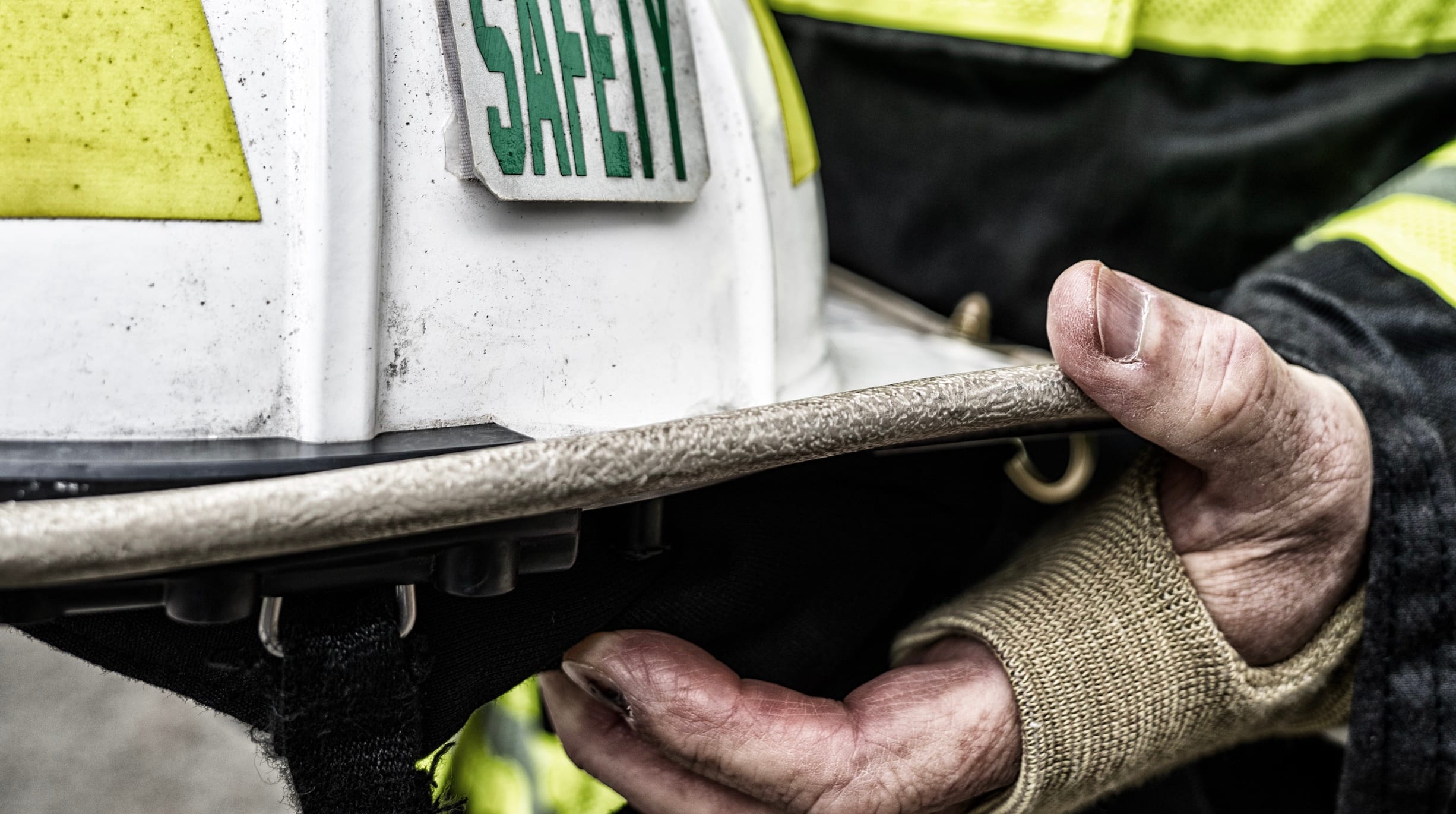
Photo by Steve Baer | FireDog Photos