The Shift Firefighters Didn’t See Coming
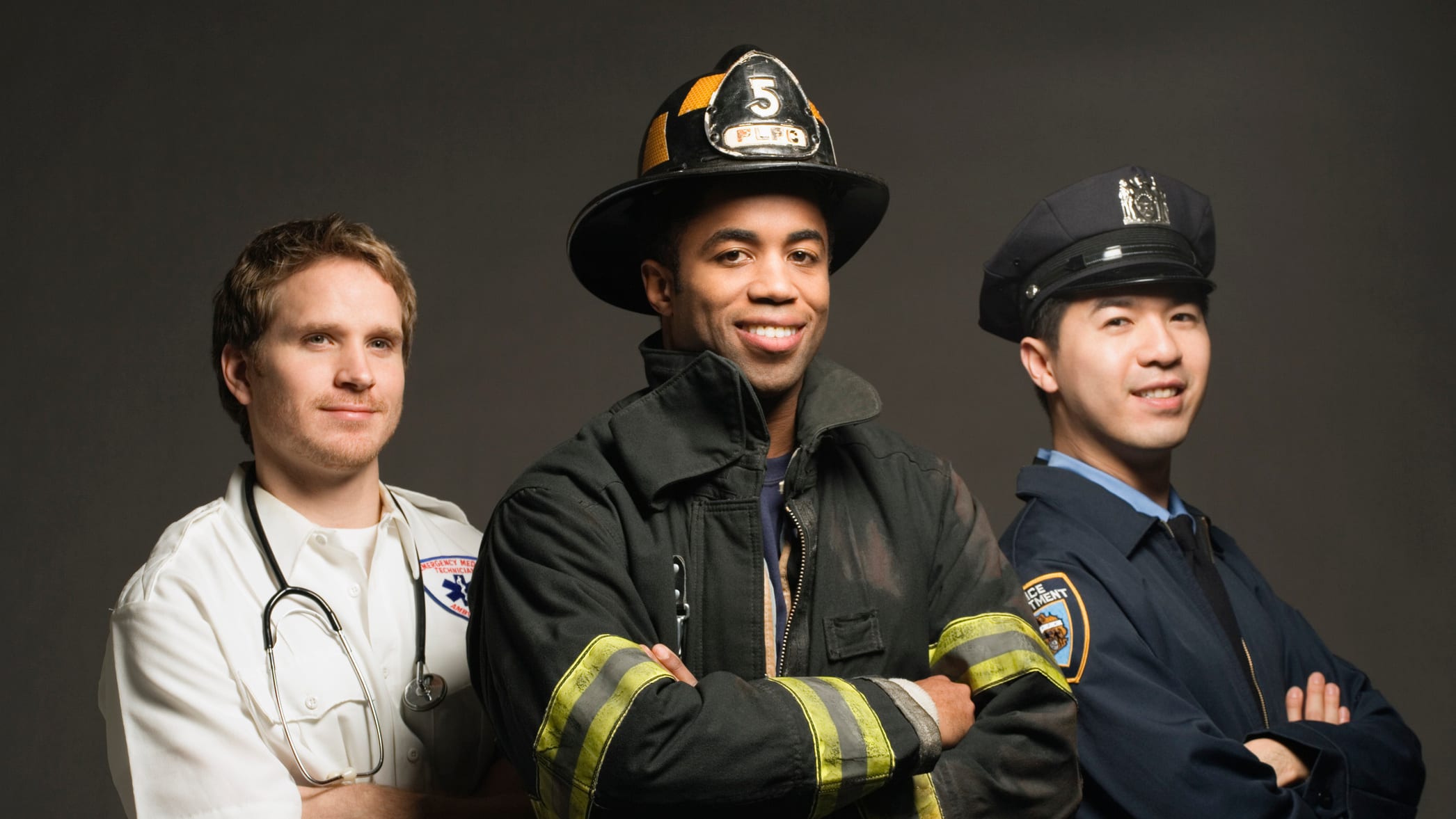
Police officer, paramedic and fireman, on black background, portrait
Men’s Health Nursing becomes a specialty and firefighter wellness just got a new playbook
Firefighters understand “shift change” as an operational event. But there’s another kind of shift happening, one that will shape how our bodies are assessed, how prevention is delivered, and how career survival is measured across the fire service.
The American Nurses Association (ANA) has formally recognized Men’s Health Nursing as an official nursing specialty, supported by a new scope and standards of practice. In healthcare terms, this is a structural change: a national framework now exists that defines what clinicians, especially nurses, should assess, document, teach, and improve when caring for men. In fire service terms, it’s more practical than it sounds. It means the healthcare system is beginning to catch up to the reality that many firefighter health threats do not behave like “general population” problems because firefighting isn’t a general population job.
I’m writing about this not as an outside observer, but as a fellow firefighter and as the lead of the national effort that helped bring Men’s Health Nursing to this moment. Through the American Men’s Health Nursing Alliance (AMHNA), I spearheaded the development and advancement of this specialty pathway alongside a national team of nursing experts. The reason I pushed this forward is simple: men in high-risk occupations, especially firefighters, keep getting lost in prevention models that were never designed around our lived reality.
What Just Changed and Why it Matters to Firefighters
For years, men’s health has been discussed as a lifestyle category; weight loss, gym routines, “optimize your testosterone,” and the usual internet noise. The ANA’s recognition is something different. It creates a standard that shifts men’s health away from self-help and toward system-level prevention: repeatable screening practices, clinical competency expectations, and a stronger expectation that health systems address men’s risk patterns with consistency.
For the fire service, that matters because the threats that take firefighters out of service; sudden cardiac events, certain cancers, behavioral health crises, sleep disorders, and metabolic disease, often build quietly. A firefighter can be physically capable, outwardly tough, and still carry silent risk that grows year over year. Too often, traditional annual medical evaluations function like clearance paperwork rather than a trend-based safety system. We check a box, we get back on the truck, and we assume we’re fine until we aren’t.
This specialty recognition signals that nurses are being equipped and increasingly expected to deliver care that accounts for how men seek help, how men minimize symptoms, and how culture and stigma shape whether prevention is used at all. If you’ve ever heard “I’m fine” from a guy with a blood pressure that could blow a gasket, you already know why this matters.
Firefighter Realities are Outgrowing Old Prevention Models
Firefighters don’t just experience stress. We experience cumulative load, physiologic, psychological, and occupational. It’s not one bad shift; it’s years of interrupted sleep, adrenaline spikes, chronic inflammation, exposure to heat and toxins, diesel exhaust, irregular meals, and a culture that rewards pushing through. That isn’t a moral failing. It’s the job. But it means standard prevention assumptions break down.
Shift work changes the body. Poor sleep can worsen blood pressure, glucose regulation, appetite signaling, and mood. Chronic stress shifts how the nervous system operates over time – it can become normal to feel “wired and tired,” quick to anger, emotionally numb, or disconnected at home. Exposure is not theoretical. It’s in turnout gear, on skin, in station environments, and sometimes embedded in decades of practice norms.
Most prevention models still behave like the average patient: sleeps at night, eats regular meals, has predictable days off, and seeks care early when symptoms start. That’s not our world. Firefighters often delay care because they don’t want to be pulled from duty, don’t want to appear weak, or don’t have the time. Many volunteer firefighters don’t have the occupational health structure that career departments may access, and even career firefighters can face fragmented systems that don’t track trends across years.
Men’s Health Nursing as a specialty is a response to this mismatch. It pushes the system toward a more realistic approach: screening and prevention that accounts for male help-seeking behavior, risk denial, cultural expectations, and the unique biology of chronic stress, sleep disruption, and exposure.
Men’s Health Isn’t Lifestyle Optimization It’s Operational Readiness
Firefighters already understand readiness. We don’t call training “optional.” We don’t treat SCBA checks as “self-care.” We treat them as survival.
That’s exactly the reframing this moment invites: men’s health is operational readiness. It isn’t about chasing aesthetics or perfect macros. It’s about career survival and coming home intact. It’s about being able to perform, recover, and remain healthy enough to enjoy the life you worked for after the last call.
This shift matters because the fire service has long treated prevention as an add-on: posters, wellness challenges, occasional screenings, a program that depends on one motivated champion. A recognized specialty is infrastructure. It makes prevention less dependent on who happens to be in your department this year and more dependent on a national standard that clinicians can train into and departments can partner with.
It also signals that we need to talk about men’s health honestly. For many men, depression doesn’t look like sadness, it can look like irritability, isolation, risk-taking, heavier drinking, or being emotionally unavailable. Testosterone symptoms can overlap with sleep apnea, metabolic disease, or depression. Weight gain can be downstream of broken sleep and chronic stress, not simply “lack of willpower.” If we treat these issues as character flaws, we lose firefighters. If we treat them as operational risks, we prevent harm.
What This Means in the Station
If this shift is going to matter, it must land on the apparatus floor, not just in a policy document. Here’s what it means in practical terms.
First, annual medical evaluations should become trend-based, not moment-based. Don’t accept “normal today” as the end of the conversation. Ask for year-over-year comparisons: blood pressure trends, A1C/glucose trends, lipid trends, weight and waist trends, sleep indicators, and mental health screening results that are discussed, not just checked.
Second, sleep needs to be treated as a readiness metric. If you snore, wake up unrefreshed, wake with headaches, or feel chronically tired, request screening for sleep apnea. Sleep apnea and chronic sleep disruption are not “annoyances.” They are multipliers for cardiovascular risk, metabolic disease, mood instability, and impaired recovery.
Third, behavioral health should be screened like we screen SCBA. If a firefighter is withdrawing, short-tempered, reckless, or emotionally flat, that is not simply “personality.” Normalize mental health screening and peer support models that fit firefighter culture. If it feels clinical and foreign, people won’t use it. If it feels safe, real, and crew-supported, they will.
Fourth, departments can shift the culture without spending a fortune. Start with policy-level expectations: require follow-up when abnormal findings appear, protect privacy, and make it clear that prevention is not punishment. Create partnerships with local clinicians, nurses and nurse practitioners included, who understand firefighters and can provide accessible, credible care. For volunteer departments, this can mean building relationships with regional clinics and creating a structured pathway for annual screenings and follow-up.
Finally, firefighters can bring a simple “readiness checklist” to their next physical. Ask your clinician to track trends; screen sleep; evaluate cardiovascular risk beyond fitness; discuss exposure history; and build a plan that fits shift realities. Prevention that doesn’t fit the job will fail. Prevention that fits the job becomes another tool in the toolbox.
The Bottom Line
Firefighters are trained to run toward the crackle. But the threats most likely to take us out aren’t always dramatic. They accumulate between calls. They grow in silence. They hide behind strength and capability.
The recognition of Men’s Health Nursing as a specialty is a timely signal that healthcare is shifting toward a more realistic, standardized, and culturally competent approach to men’s prevention, an approach that aligns naturally with firefighter wellness and career survival. It’s not a headline for nurses only. It’s a moment the fire service should pay attention to, because it supports a new prevention playbook built for the men who keep showing up.
Operational readiness isn’t only about the rig. It’s about the body that wears the gear.
Julian L. Gallegos, PhD, MBA, FNP-BC, NREMT, CNL, CMHE, FAUNA, FADLN is a volunteer firefighter/EMT with Tippecanoe Township Volunteer Fire Department in Indiana and a board-certified family nurse practitioner specializing in men’s health. He serves as a tenure-track assistant professor at Purdue University’s School of Nursing and leads a men’s health service line in a federally qualified health center. Gallegos founded and leads the American Men’s Health Nursing Alliance and helped drive the American Nurses Association’s recognition of Men’s Health Nursing as an official specialty. His work advances firefighter health through prevention-focused screening, culture-aware behavioral health support, and exposure-informed care.