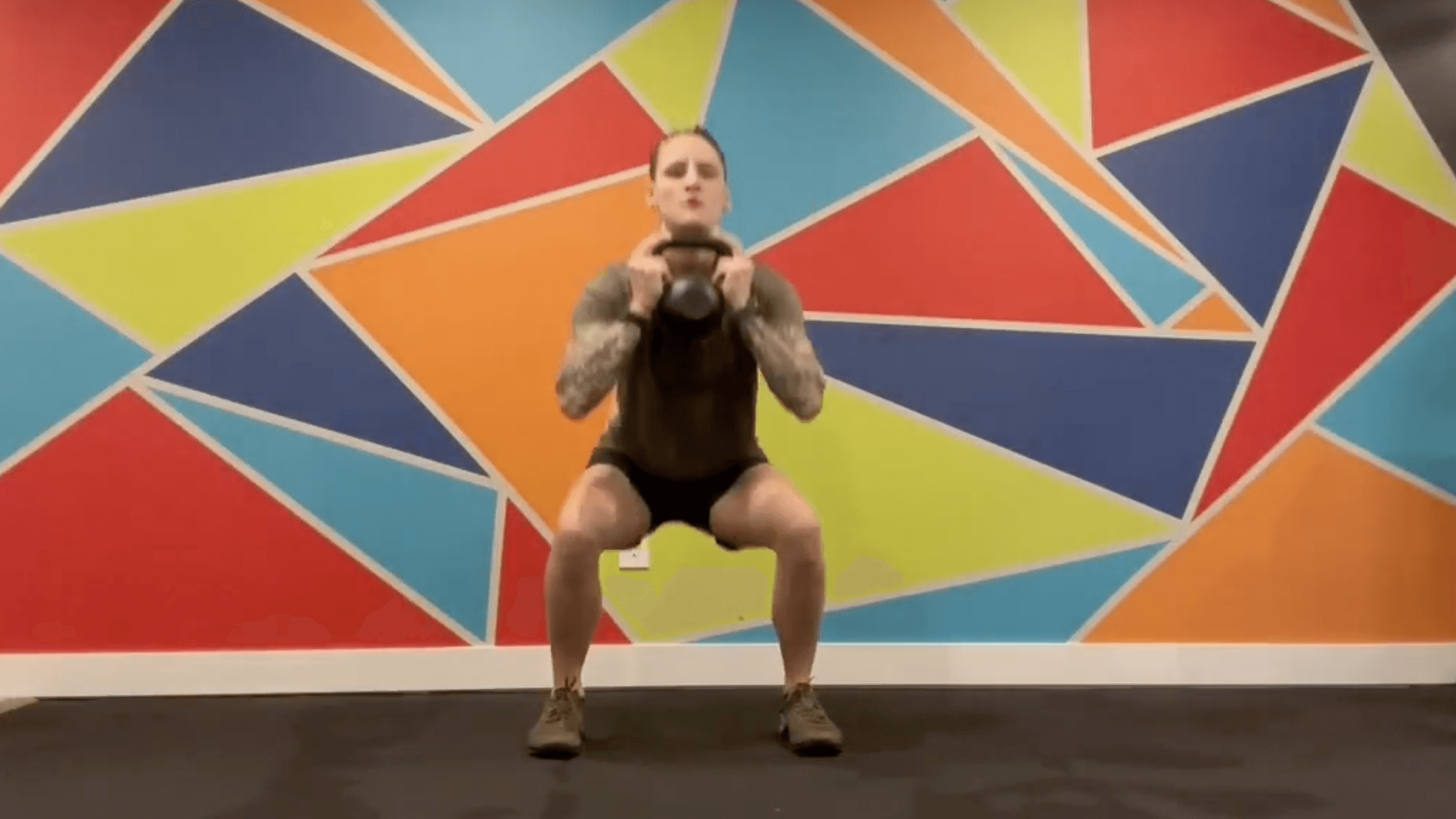
Here’s a move that pays dividends on the job: the goblet squat with a kettlebell. You know we’re constantly lifting, hauling, and maneuvering, whether it’s a patient, tools, or heavy equipment. This exercise directly translates to those real-world demands. Let’s break it down on how to do it right, focusing on keeping you strong and injury-free.
Starting Position
- Position the feet in a shoulder-width stance with knees bent slightly
- Hold the kettlebell in a front-loaded position with arms flexed
- Spine is in a neutral position with chest up and eyes forward
Downward Movement
- Hinge at the hips as you sit back with your spine in a neutral position and knees aligned over feet
- Continue flexing the hips and knees until until the tops of the thighs are parallel to the floor
- Keep the kettlebell close to your chest
- Exhale into the bottom position
Upward Movement
- Drive knees out slightly to maintain engagement in the hips
- Control the weight as you extend your hips and knees
- Maintain neutral position of the spine with torso upright
- Inhale into the starting position
6-Point Self-Check
Maintain proper body position and movement quality for each repetition as fatigue sets in. Be mindful of this quick “self-check” as you perform this exercise as directed above:
1. Head: Maintain a neutral position with eyes forward, avoid moving head up or down.
2. Torso: Keep the torso rigid and upright, avoid leaning too far forward placing stress on low back.
3. Hips: Drive knees out slightly to maintain engagement in the hips.
4. Legs: Knees are aligned over feet, thighs parallel to floor in the bottom position.
5. Shoulders: Shoulders are packed back and down with the kettlebell close to your chest.
6. Arms: Arms are flexed with a slight upward push to stabilize the kettlebell throughout the movement.
This exercise originally appeared on Firefighter Peak Performance’s YouTube channel.