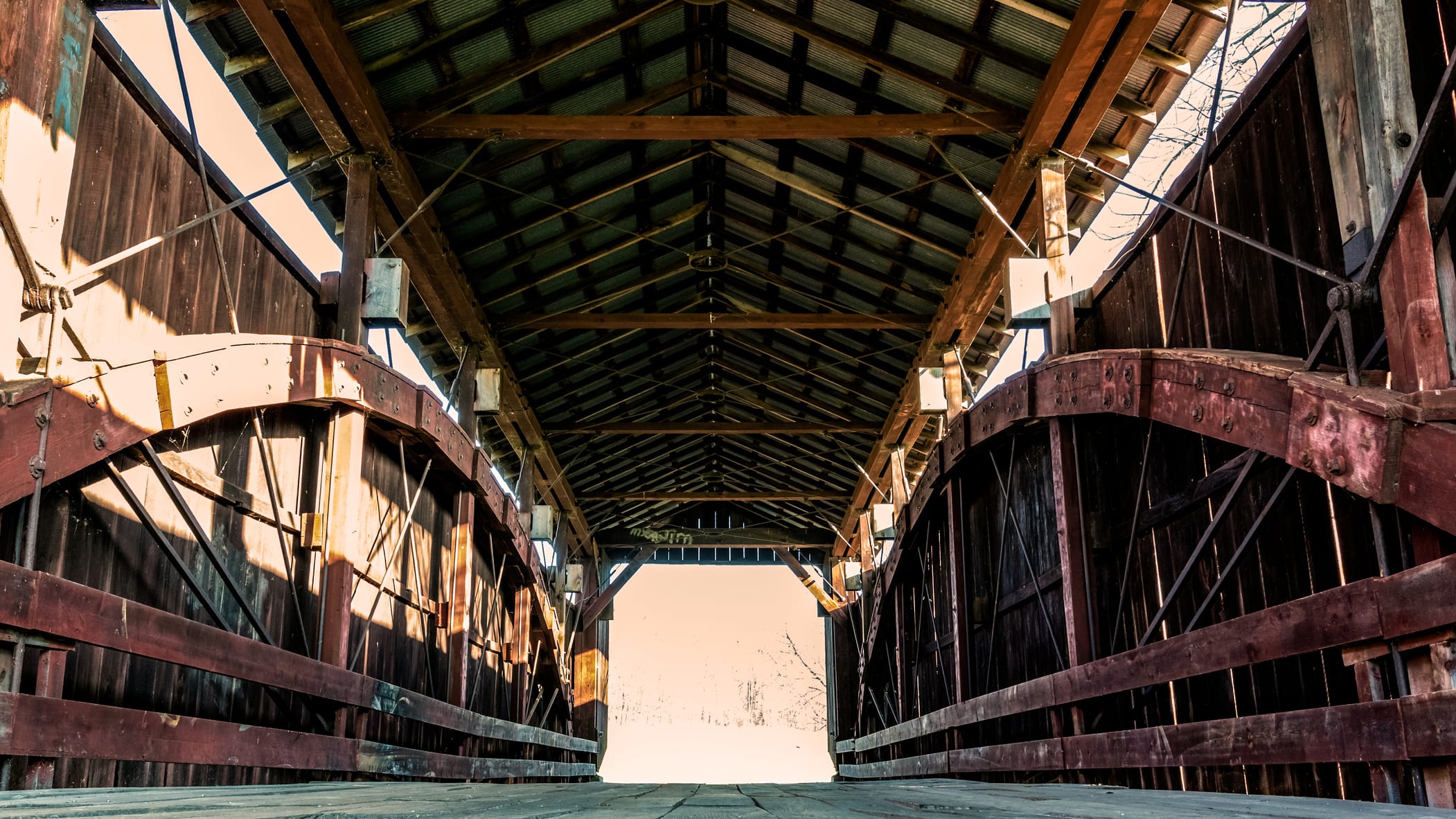
Bowstring truss roofs, which are often hidden in plain sight, remain some of the deadliest structural traps firefighters face
Bowstring truss buildings are some of the most dangerous structures that we fight fires in. Firefighters have paid a terrible price in these buildings. In 1967, five firefighters were killed when a wall collapsed on them in Cliffside Park, N.J. They were on the exterior of the building. In 1978, six FDNY firefighters were killed when they fell through a collapsing roof. In 1988, five firefighters from Hackensack, NJ were killed when the roof collapsed on them. They were operating on the interior. Three fires, all within 10 miles of each other, all within about 10 years of each other, and in each, firefighters were operating in different places — same results. These dangerous roof types are still around in many communities, and we have to make sure that we are heeding the lessons learned in the past with this type of building and construction.
First and foremost, we have to be able to recognize when a bowstring truss is present. In the first picture, the humpback design of the bowstring truss is apparent. Firefighters should never work on this type of roof and if we were going to evaluate the roof area, it should be done from an aerial device, utilizing the skylights seen here. If there are no skylights, I wouldn’t be cutting this roof just to see what’s under it as the slicing of a top chord could cause a major collapse even if the cutting is done from an aerial device. One issue with this first picture: we are looking at the rear of the building. If you look up towards the front side of the building, you will see a parapet wall which has obscured most of the humpback design from the street. If this is in your area, you better know about it.

The second picture shows an example of what is happening with a lot of these type buildings. Renovations, that is extensive renovations, often mask the appearance of the bowstring truss and weakens the structural integrity of the building. In the second picture all that is visible of the bowstring truss is the small arch area underneath the large People’s sign on the wall. Prior knowledge of this building is critical.

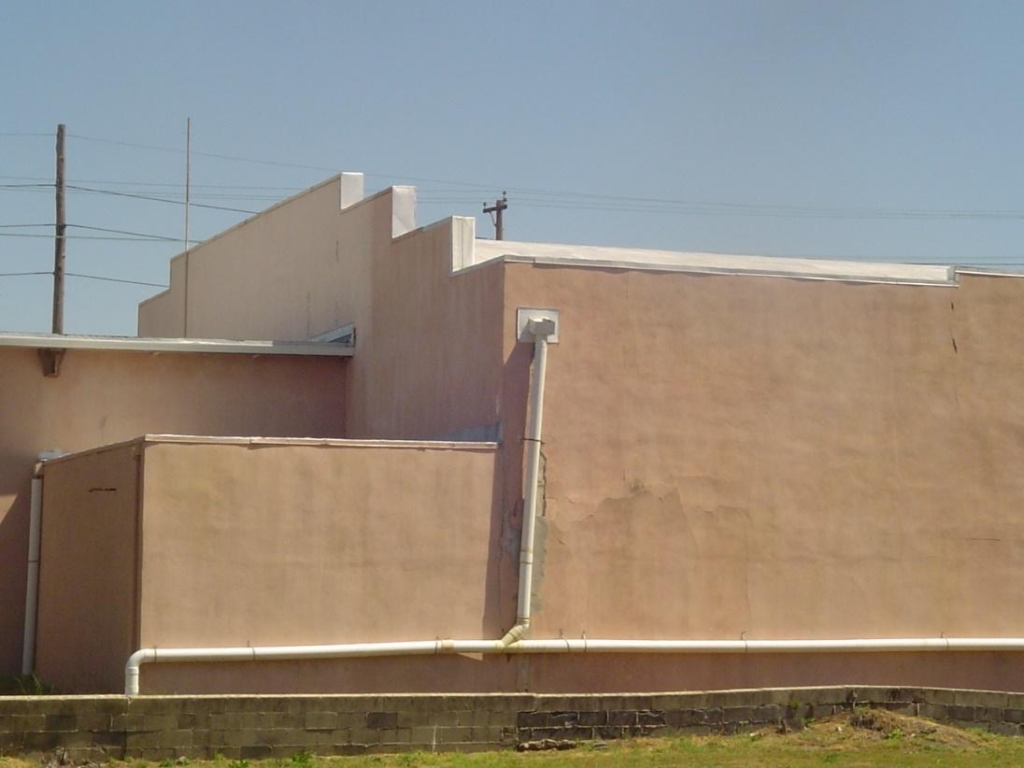
The third picture also shows an obscured bowstring truss. This one is behind a rather large parapet. A clue as to the height of the parapet on the D side wall would be done by observing the position of the downspout located on the upper wall. The downspout scupper has to be even with the roof. So, everything above that downspout here is a parapet wall which also serves to hide the appearance of the bowstring truss.
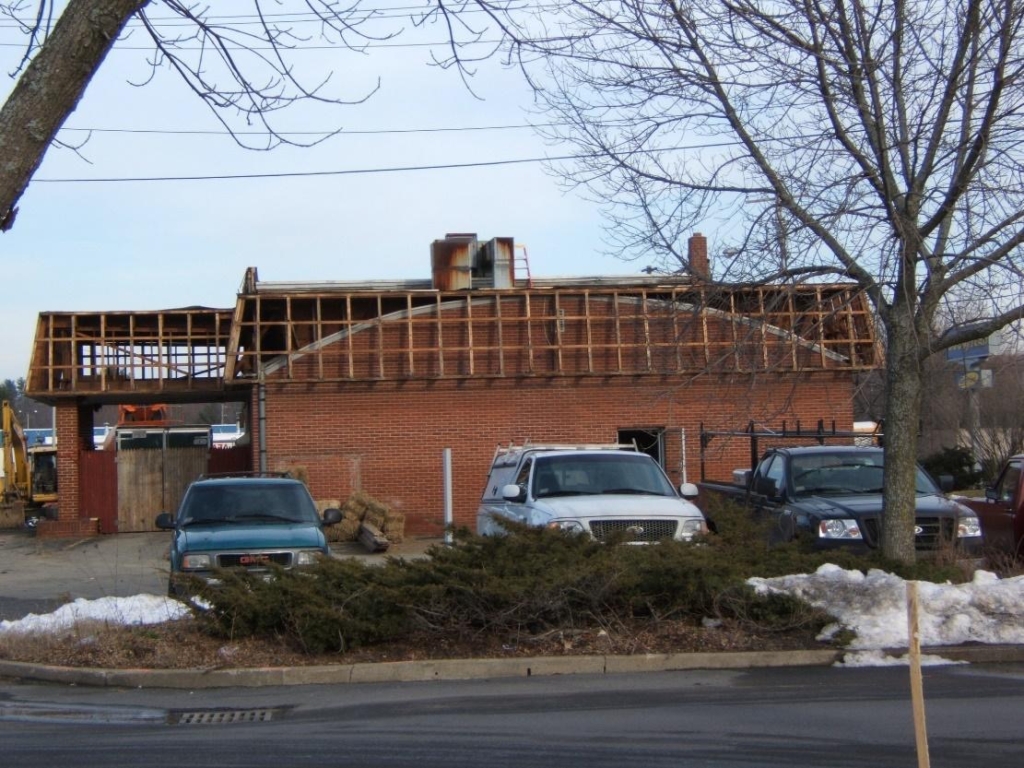
The fourth picture shows a renovation in progress. In this case the bowstring truss will be covered up with a mansard roof. Unless you know this building has a bowstring truss roof, it can be mistaken for a common flat roof. This mansard construction is essentially a rain roof. The bowstring roof appears to still be intact, and the mansard roof is being built over it. Don’t even bother trying to ventilate this roof. If the department does not know there’s a bowstring truss here and they try to do an extensive ventilation cut on the roof, the consequences could be deadly. Pre-fire street intelligence is everyone’s responsibility.
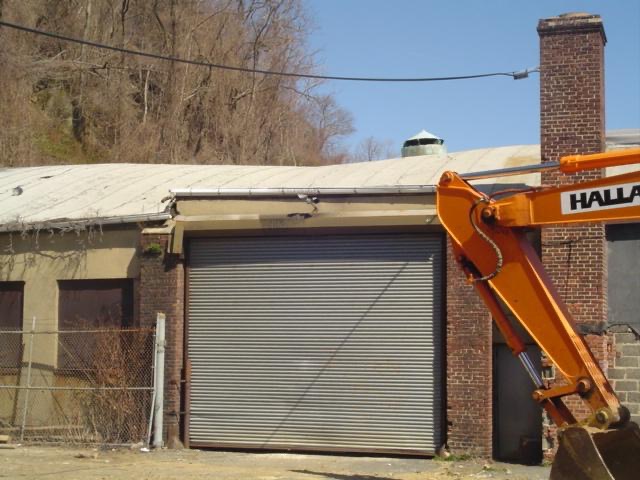
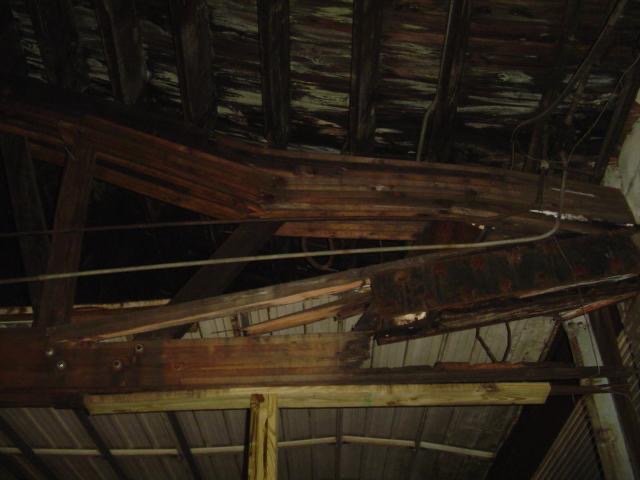
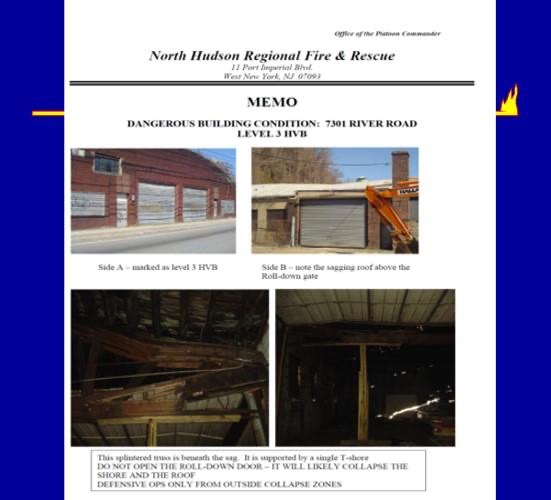
Lastly the two pictures below were from a building that we knew was a bowstring truss, but it was vacant. We noticed there was a sag in the roof, so we burrowed our way into the building and discovered that the sag was actually a bowstring truss that was splintered and being held up with a single T-shore. We sent out a safety memo (pictured below) to all companies about this issue. This building has since been torn down. Firefighters from every city and town should be seeking out the dangerous buildings and ensuring, through mechanisms such as safety memos, that all personnel are aware of the hazards involved.
As Chief Vincent Dunn said, “The building is the enemy. Know your buildings.”
Quotes for thought: Don’t let today be the best you’ll ever be.
Anthony Avillo, MS, with over 40 years in the fire service, retired as deputy chief of North Hudson (NJ) Regional Fire & Rescue after 30 years of service. As an urban fireground commander, Avillo commanded fire and emergency operations in the most congested cities in the United States. He is the author of Fireground Strategies, 4thed. (2025), and coauthor of Full Contact Leadership (2017). Avillo is a former Region 3 Director of the ISFSI and retired Director of the Monmouth County (NJ) Fire Academy. He is a member of the Fire Engineering / FDIC Editorial Advisory Board and was the recipient of the 2012 IFSFI George D. Post Instructor of the Year Award. He has a B.S. degree in fire science and an M.S. degree in national security studies. Avillo is a level II NJ Certified Fire Instructor. Avillo also speaks around the United States and Canada on such topics as Command and Control, Leadership, Building Construction, Fireground Strategies and Tactics, and Operational Safety.