
If you haven’t been following what’s happening in Colorado, a well-respected fire chief — Chief Tim Sendelbach — was placed on administrative leave, and his governing board has moved toward termination. The details have largely been described as a confidential personnel matter, which means very little concrete information has been released publicly. At the same time, a large portion of his department, members of the community, and voices across the fire service have rallied in visible support of him.
So what we’re left with is a strange and uncomfortable picture: a leader with decades of service, a strong professional reputation, and broad backing from the people closest to the work — now standing opposite the very board charged with overseeing the organization. No clear headline incident. No clear public explanation. Just uncertainty, process, and a human being at the center of it.
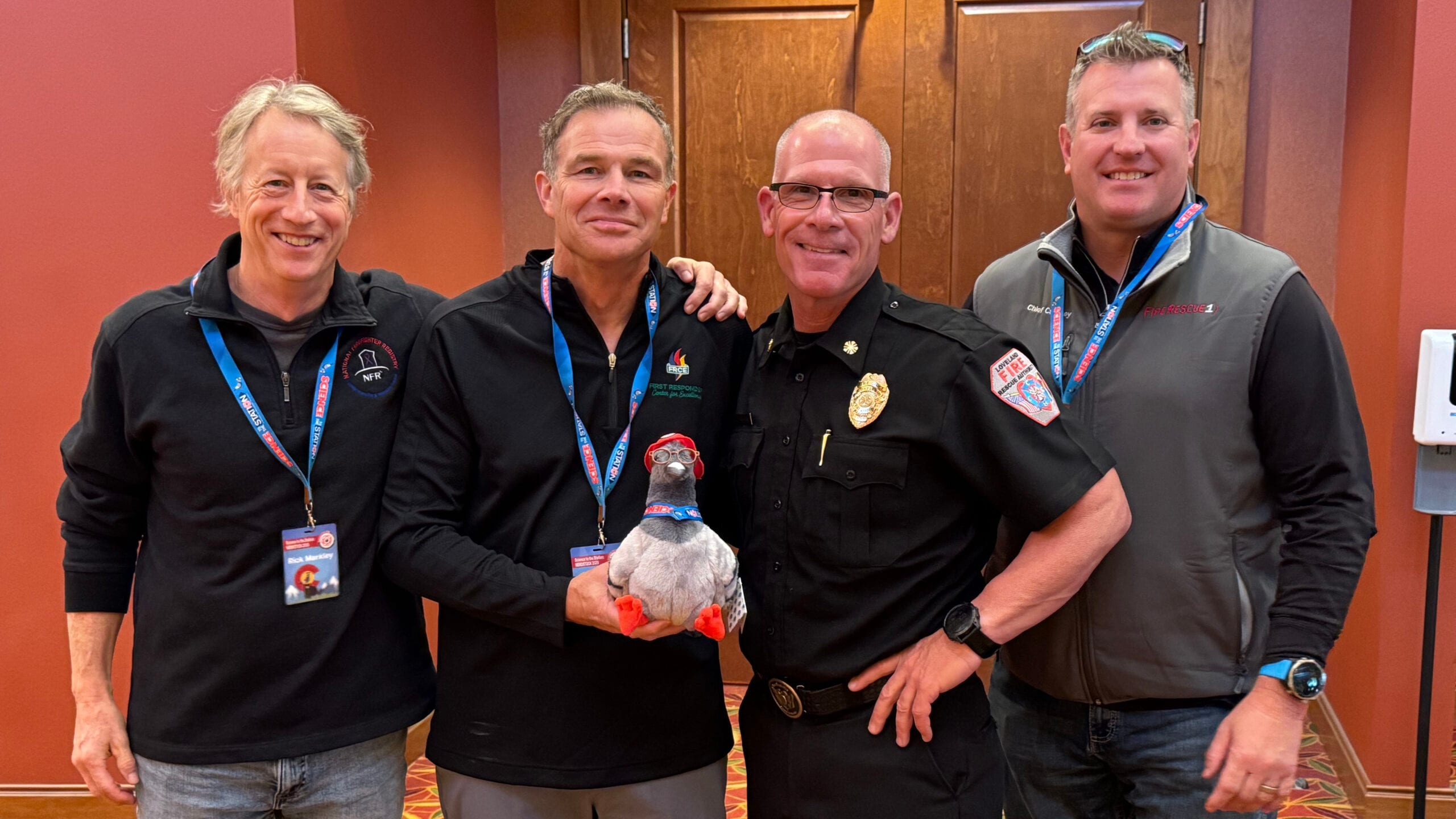
I had the opportunity to meet Chief Sendelbach once and hear, firsthand, a kind of history lesson on his career — his path through the fire service, his involvement in leadership, his role in publishing, and the broader impact he’s had on the profession. What struck me most wasn’t a résumé or a list of accomplishments. It was his presence.
There was an instant kinship in that conversation. Some people you meet are just leaders. It’s easily recognizable. You don’t need a title, a uniform, or a formal introduction to see it. It shows up in their tone, their dialogue, their confidence without arrogance, and the depth of knowledge that comes from having actually carried the weight of the job. You quickly understand you’re in the presence of someone who has done meaningful things and paid the price for them.
Watching him go through this is a reminder of something I say often: we don’t really know how fragile we are until we’re tested.
Here you have a chief who is widely respected — by firefighters, by peers across the profession, by many in his own community — yet he finds himself in a situation that would shake almost anyone. Regardless of the ultimate facts, the public nature alone is enough to rattle a person’s foundation.
Most of us spend an entire career building something: credibility, identity, purpose, a sense that what we’ve done matters. When that suddenly feels threatened — especially late in the game — it doesn’t just touch the job. It hits who you are. It challenges your sense of worth. It interferes with the forward momentum you thought you had left.
Something like this would break a lot of people. It attacks identity. It disrupts purpose. It leaves you exposed in a way the fireground never could. The punitive impact on a person’s character — regardless of outcome — is difficult to measure because reputation isn’t something you can rebuild overnight.
And yet, what stands out to me isn’t the controversy itself. It’s the way he’s carrying it.
Winners find a way. That’s something I believe deeply. And Chief Sendelbach is clearly a winner. Not because he’s immune to hardship, but because of how he’s absorbing it. From what the public can see, he has remained composed, respectful, and steady — not reactive, not theatrical, not vindictive. Just present. Just professional. Just unwavering.
That kind of couth is rare.
Leadership under pressure isn’t loud. It isn’t dramatic. It’s controlled. It’s disciplined. It’s choosing what not to say as much as what to say. I’m sure there have been difficult moments behind the scenes — anyone in that position would have them — but publicly, he has shown restraint and dignity that speaks volumes.
If you could bottle that kind of character and sell it, you wouldn’t just be wealthy — you’d change the profession.
Because what we’re really seeing isn’t just a personnel situation. We’re seeing a human being navigate adversity while the spotlight is on, while opinions are forming, while the outcome is uncertain. That’s a different kind of fire.
The Leadership Yardstick
In this job, we often measure leadership by how someone performs on the incident scene — command presence, decision-making, calm in chaos. But sometimes the real test happens far from the fireground, when there’s no hose line, no radio traffic, no immediate resolution. Just patience, integrity, and the ability to endure uncertainty without losing yourself.
I’m grateful we have people like Chief Sendelbach in this profession. Not because they’re perfect, but because they remind us what steadiness looks like when things get uncomfortable. He is someone many of us can measure ourselves against, whether we hold a formal leadership role or not.
Whatever the final outcome, moments like this become reference points. They shape how we think about governance, trust, due process, and how quickly a lifetime of work can be placed under a microscope.
My hope — like many others — is that fairness prevails and that the process ultimately reflects the values we claim to hold as a profession. Not just for one chief, but for every firefighter who may one day find themselves vulnerable to forces outside their control.
Because none of us are immune.
Leadership isn’t proven when things are easy. It’s revealed when everything feels uncertain and you still choose to stand tall.
The truth is this a person’s character isn’t measured by how they lead when they’re in command — it’s measured by how they carry themselves when they are not.