
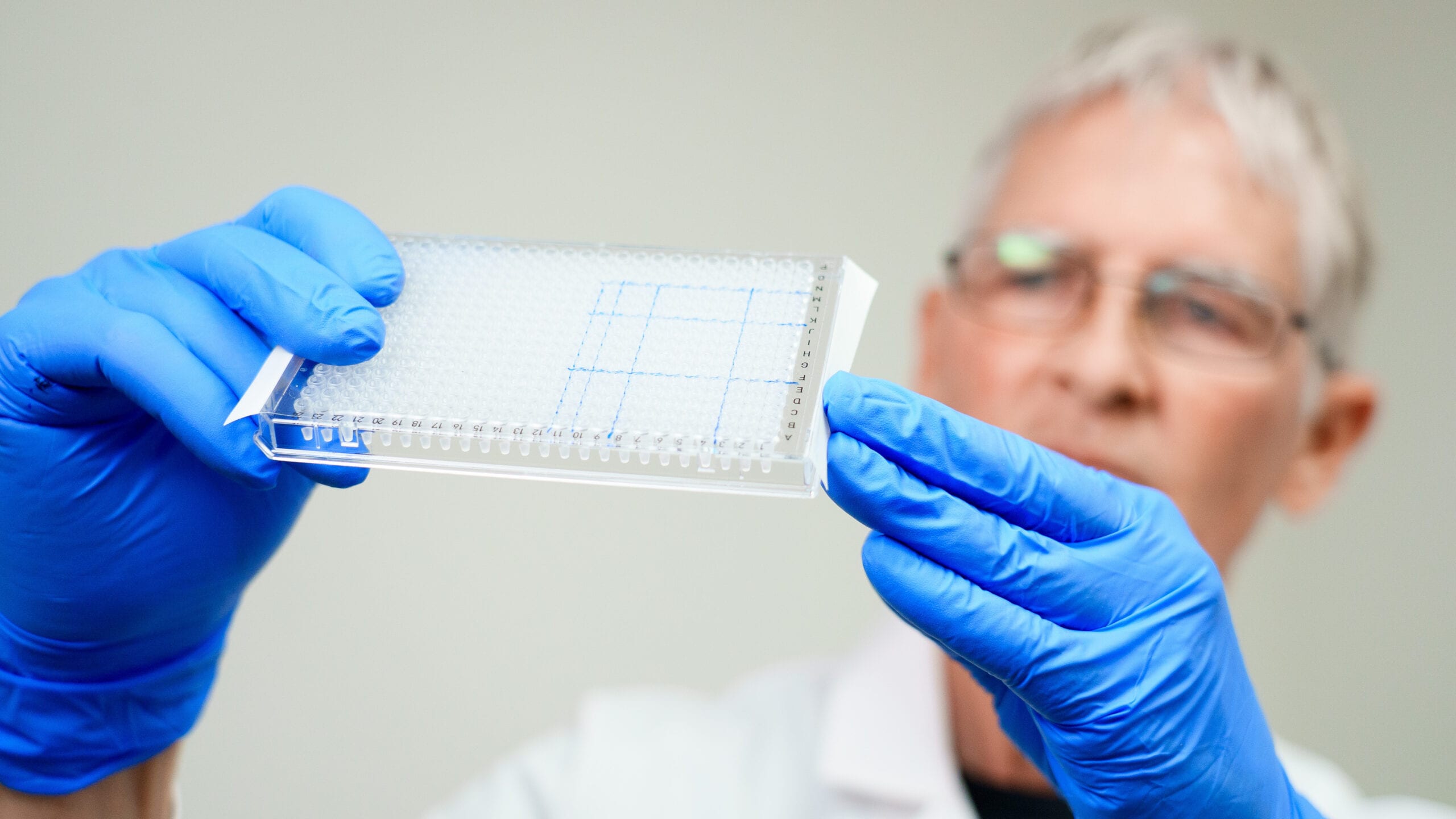
Why Firefighters Are Being Offered Cancer Screening Blood Tests
… And what many departments don’t understand yet
We all know the stats. Firefighters face a documented, heightened risk of developing cancer due to the toxic soup they face and the lifestyle factors that come with the job. We also know that finding the problem early — Stages I & II — is our best shot at beating it. Sadly, most cases of cancer are identified at late stages (III & IV) when outcomes tend to be poor. Conventional cancer screening has helped but detects only 15% of new cases. Most presumptive cancer types — think brain, esophagus, bladder, kidney, blood — are not detected at all by current screening tests.
Some municipalities now require more comprehensive screening. Because of this, departments and occupational health programs are exploring additional cancer screening tests. Enter the Multi-Cancer Early Detection (MCED) blood test, offered by Precision Epigenomics. MCED tests are designed to detect the deadliest cancers earlier — when treatment is most effective. MCED tests can be powerful tools in our arsenal, but like a thermal imaging camera or a 4-gas monitor, they are only effective if you know how to read the display.
You’ll hear terms like sensitivity, specificity, accuracy, PPV, and NPV thrown around by sales reps and medical providers. If you don’t know what they mean, you can’t rely on the tool. Here is the no-nonsense breakdown of what these numbers actually tell you about the value of an MCED test.
Why Cancer Blood Screening Is Different
First, a reality check. Unlike checking your blood sugar or cholesterol, cancer screening tests are not diagnostic. They don’t give you the final answer.
Think of an MCED test like a filter. It’s designed to sort firefighters into two groups: “low concern” and “needs further evaluation.” It is a sorting tool, not a verdict. Its job is to detect potential issues early, often before you feel symptoms, so you can get a tactical advantage.
Sensitivity: Catching the Fire When It’s Small
The Question: If a firefighter truly has cancer, how likely is the blood test to spot it?
Sensitivity is about minimizing missed cancer. A test with high sensitivity is designed to catch the “fire” while it’s still in the earliest stage.
The Math: A test with 60% sensitivity will correctly flag 60 out of 100 firefighters who actually have cancer, ideally at an early stage.
The Risk: That means 40 out of 100 might get a “false negative” — a normal result when something is wrong.
Be careful when comparing tests. Company A might claim 65% sensitivity because they tested mostly late Stage III and IV patients (a fully involved structure fire — easy to see). Company B might report 55% sensitivity but tested mostly Stage I and II patients (smoke showing from the attic — harder to spot). Always ask for sensitivity data on early stage cancers specifically.
Specificity: Reducing the False Alarms
The Question: If a firefighter is healthy, how likely is the test to correctly say “No Cancer Detected”?
Specificity is about trust. A test with high specificity reduces the chances that a healthy firefighter gets sent down a diagnostic odyssey of additional testing.
The Math: A test with 97.5% specificity will correctly reassure 975 out of 1,000 cancer-free firefighters.
The Risk: About 25 of those healthy firefighters will get a “false positive” — essentially a nuisance alarm. With 99.5% specificity, it drops 5x to only 5 false alarms.
False positives can cause anxiety. They lead to more lab work, advanced imaging, and time away from work. High specificity protects you from unnecessary harm, but there is always a trade-off: as sensitivity (catching cancer) goes up, specificity (avoiding false alarms) goes down.
Accuracy: The “Overall” Trap
The Question: How often is the test right overall?
The Truth: Ignore this metric. It’s useless for cancer screening tests.
Because cancer is (thankfully) relatively rare, a test can claim 98% accuracy just by telling everyone they are negative.
Scenario: If 2 out of 100 firefighters actually have cancer, a test that says “everyone is fine” is still 98% accurate.
The Problem: It missed the two people who needed help the most. Accuracy claims can be misleading. Do not use it to judge an MCED test.
Positive Predictive Value (PPV): What an “Abnormal” Result Means
The Question: If my test lights up, what is the chance I actually have cancer?
This is the number that matters most. PPV cuts through the noise since it takes sensitivity AND specificity into account.
- The Math: A PPV of 40% means that if 10 firefighters get a positive result, only 4 of them actually have cancer. The other 6 need further testing to get the “all clear.”
Don’t panic. Even with good tests, screening catches many signals that turn out to be nothing. A positive result is an alert, not a diagnosis. For many, the additional work-up lasts 6-12 weeks (about 3 months) for clarification.
Negative Predictive Value (NPV): The Reassurance Factor
The Question: If my test is negative, what is the chance I’m truly clear?
This is the deep breath. Since most firefighters screened won’t have cancer, MCED tests usually have a high NPV (98% or higher).
- The Math: A 99.5% NPV means 995 out of 1,000 firefighters with a negative test are truly cancer-free.
The Firehouse Context:
A high NPV offers genuine comfort, but it is not a “get out of jail free” card. If you are due for a colonoscopy, mammogram, or prostate exam, an MCED test does not replace them. MCED tests are “in addition to,” not “instead of.”
The Firehouse Summary Table
| | |
| --- | --- |
| Term | What It Means for You |
| MCED | Multi-Cancer Early Detection: The new tool in the bag. |
| Sensitivity | The Lookout: How well the test spots the fire when it’s there. |
| Specificity | The Filter: How well the test avoids nuisance alarms. |
| Accuracy | The Trap: Overall correctness. Usually misleading. Ignore it. |
| PPV | The Alert: The chance a positive signal is the real deal. |
| NPV | The All-Clear: The chance a negative result is truly safe. |
Final Thoughts
Cancer blood screening tests are risk-management tools. Just like your turnout gear, SCBA, and gas monitors, they work best when you understand their limitations. A tool that is misunderstood can be misused and then cause confusion.
By understanding these numbers, screening becomes what it was meant to be: a protective tool, not a source of fear.
Questions for Prospective MCED Providers
Don’t just take the pamphlet’s word for it. If your department is looking at MCED providers, ask some questions:
May I see the CLIA validation study? (Show me the data.)
Does the MCED test detect ALL presumptive cancers?
What are the PPV and NPV?
What is the specificity? (How many false alarms will we get?)
What is the sensitivity for Stage I & II cancers? (Specifically ask about lung, pancreas, bladder, kidney, and other cancers of interest to you.)
What makes your MCED test a better choice when compared to other options?
Knowledge is your best PPE. Stay informed, stay safe.
Questions or comments? Email Richard Bernert, MD, at rbernert@precision-epigenomics.com