
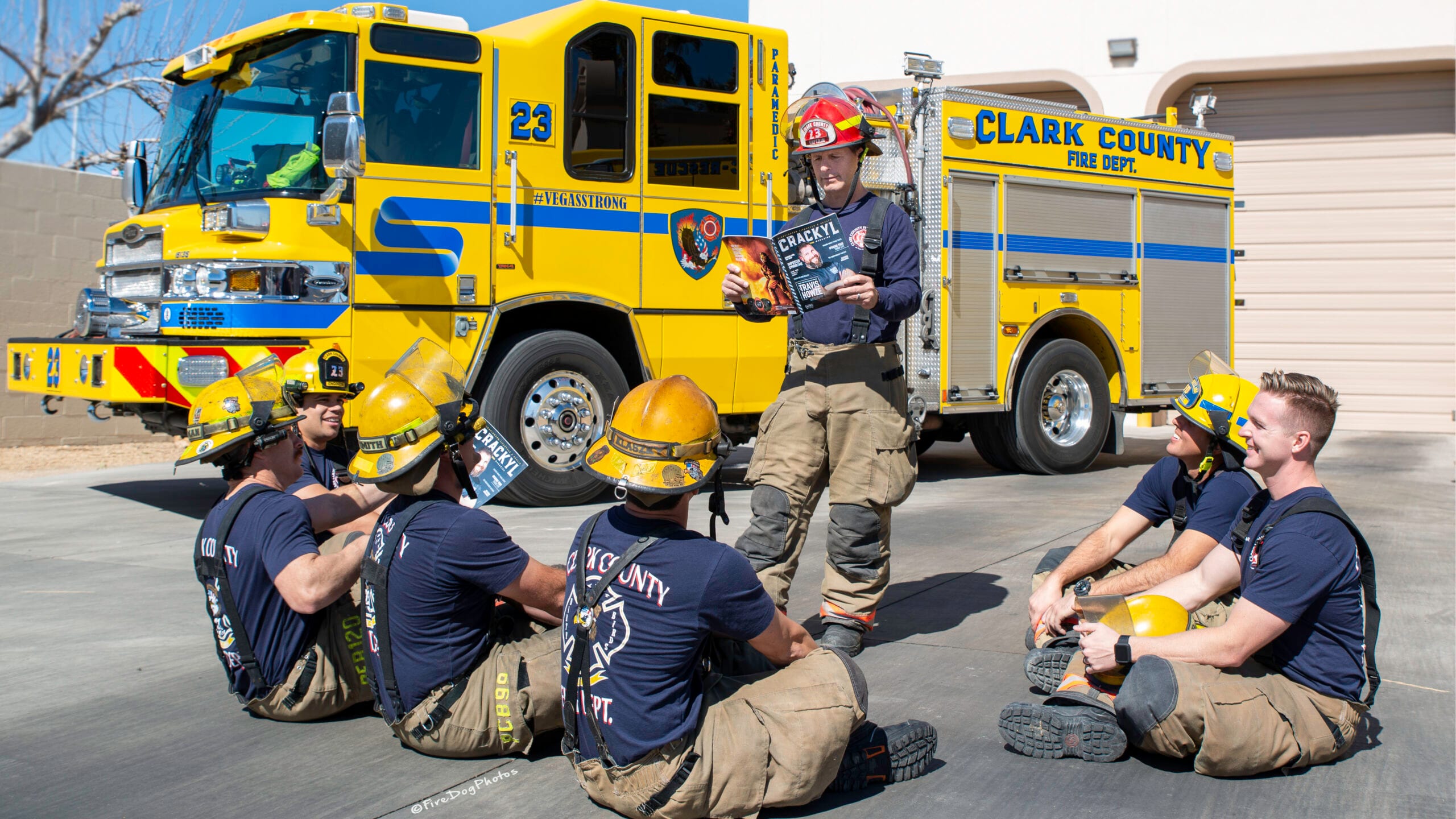
Photos by Steve Baer | FireDog Photos
Lately, I keep thinking about how rare real mail has become. Almost everything in our lives is paperless now — bills, statements, reminders, even personal messages. News shows up in fragments between notifications and ads, then disappears with a swipe. So when something physical lands in the mailbox, it feels different. A magazine has weight to it. You hold it. You flip through it. You leave it on a counter or a coffee table and come back to it later. It takes up space in your world in a way digital things never really do.
In a strange way, it feels like we have gone backward and forward at the same time. Years ago, magazines were how people discovered stories, ideas, and art. They were part of daily life. Now, because they are no longer everywhere, they feel special again. The tactile experience — paper, photography, layout, typography — hits differently than scrolling. It slows you down. It asks for attention instead of stealing it. There is something about a well-made magazine that feels closer to an art form than a product, and over the last few years I have become completely enamored with that again.
Print has been part of my life for a long time. Being involved in it for more than 16 years has shaped how I think about storytelling and information. Watching something go from blank pages to a finished piece you can hold still feels meaningful to me. Someone chose every word. Someone chose every image. Someone decided how it would be seen. It is not endless. It has edges. It has a beginning and an end. That limitation is part of what gives it value.
How Scarcity Made Print Feel Special Again
At the same time, the world has shifted hard toward digital. The selling points are obvious: speed, accessibility, convenience. We can curate our own feeds now. We can skip what does not interest us and fast-forward through everything else. Platforms built around short videos and minimal text train us to move quickly and consume in bursts. Dozens of posts in minutes. That kind of efficiency feels powerful, but it also changes how we relate to information. Instead of sitting with something, we skim past it. Instead of choosing what matters, algorithms choose for us. Enjoying certain books, music, or ideas has become a way to build an online persona rather than a way to spend real time with something.
Print asks for something different. It is not consumed in fragments. It is not designed for interruption. It invites you to slow down and stay with it. Digital content often tries to appeal to everyone at once. A magazine feels more personal. It reflects interests and values in a way that is visible. When it sits on a table or on a shelf, it becomes part of the environment. It says something about what matters to the person who keeps it there.
I also think about the firehouse when I think about print. For all the ways the world has changed, the fire service still learns from physical material. We still use books. We still use manuals. We still have binders and shelves and libraries in stations. New firefighter books are published every year. Training material still lives on paper. Even as everything else goes digital, our profession continues to trust printed knowledge as a primary reference. To me, that says something. When something matters, we want it to be tangible. We want to be able to return to it. We want it to be there when the screen is not.
There is also something about ownership that digital never really gives us. When a magazine shows up in the mail, it becomes yours. It is not rented space. It is not borrowed from a platform that might change its rules tomorrow. It is yours to keep, to lend, to stack, to mark up, or to leave on a table. In a world where so much of what we consume disappears as soon as we scroll past it, there is something grounding about having a thing that stays.
I notice this at home, too. Magazines are just part of the environment in our house. They sit around like books do. My kids are growing up with them in their presence, and that feels unusual now. In most homes, everything lives on a screen. Here, printed pages are just normal. They are not treated as special or old-fashioned. They are simply there. That alone feels like a bridge between generations.
Preserving Craft in a World That Moves Too Fast
I know print is harder now. The costs are higher. The logistics are heavier. Shipping and production are real challenges. It would be easier to say it belongs to the past and move on. But I keep coming back to the same feeling: some things are worth preserving because they carry more than information. They carry culture. They carry craft. They carry a way of slowing down long enough to actually absorb something.
There is an old idea that we do not just read things — we live with them. Magazines live in kitchens, in lockers, in trucks, in waiting rooms. They become part of the spaces where conversations happen. That is different from something that only exists behind glass.
What print means to me is that it waits for you. It does not chase you. It does not try to predict you. It does not interrupt you. Digital media lives in front of you, constantly trying to guess what you want next, shaping what you see, nudging what you think about, and rarely letting your mind sit still. We are surrounded by content that fills every quiet moment. But creativity does not come from constant stimulation. It comes from boredom. It comes from sitting. It comes from thinking. It comes from reading something slowly with no pressure to react to it.
The Small Joy of Finding Something Real in the Mail
Magazines and publications ask you to come to them. They sit there until you are ready. They do not refresh. They do not scroll. They wait. And when you finally open them, the experience belongs to you, not to an algorithm.
And the truth is, there is something quietly exciting about opening a mailbox and finding a magazine instead of another notification. It reminds me that not everything meaningful has to be instant, and not everything worth keeping has to live in the cloud.