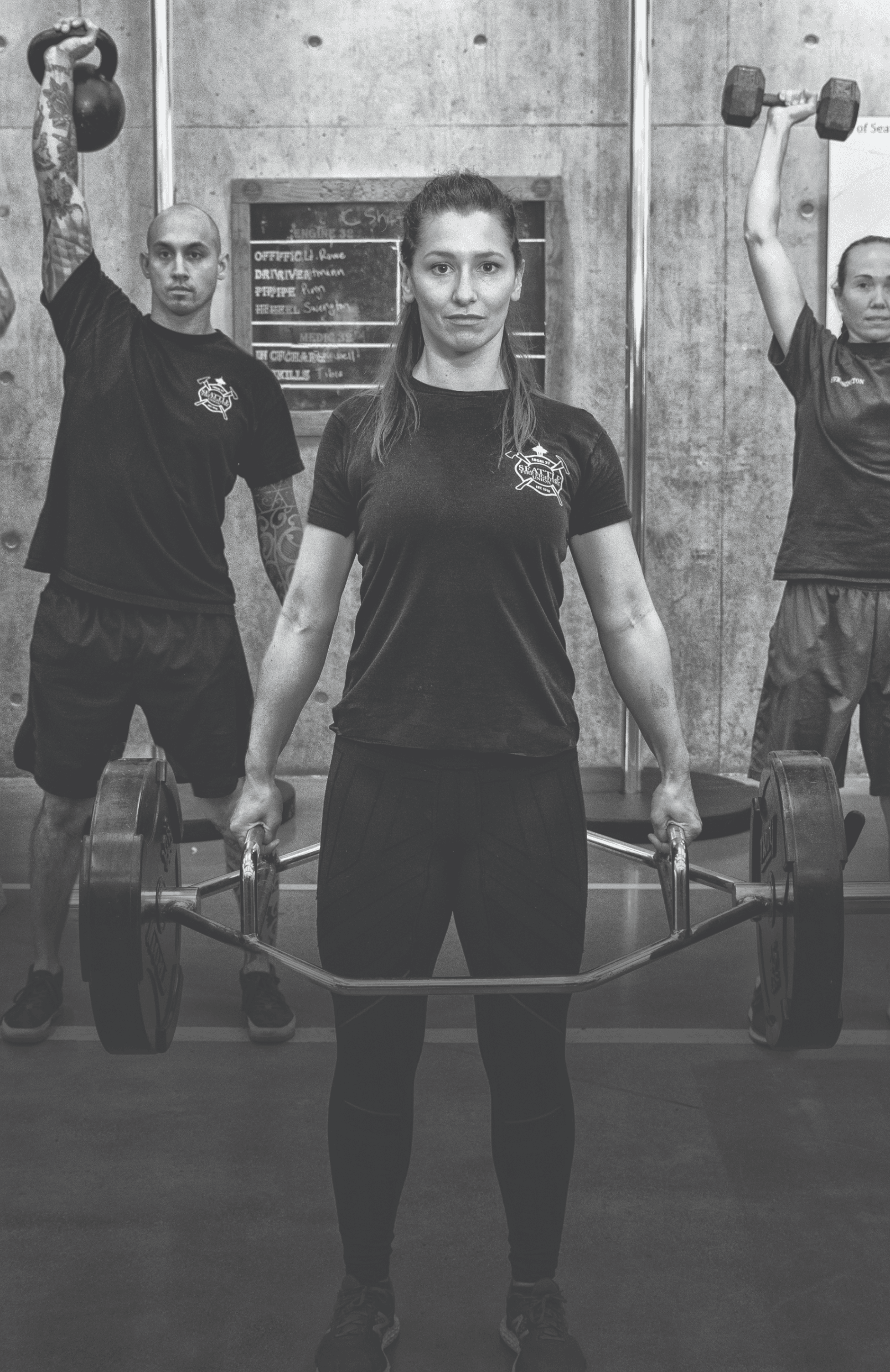

Are we training as efficiently as we could to be prepared for the strain fireground tasks will place on our bodies? Training preparation is a diverse concept, as many trainers and firefighters have various perspectives on the “right” program. The problem is, there are many routes to achieve the same goal. Different programs, different tools/equipment, and different training formats.
Not all programs are equal, and not any one single program is the absolute answer. Instead, we offer key principles of strength and conditioning that can support long-term health and enhance your performance on the fireground.
Focus on Movement Quality
Unintentionally, the initial approach to training can consist of minimizing and sacrificing our quality of movement for loading more and more weight that our joints, tendons, and ligaments can’t handle. We may feel like just performing the exercise and adding weight to the bar is the sole approach to resistance training.
Although not completely wrong regarding progression overload, without appropriate movement, this can lead to short-term injury or even long-term pain and discomfort. To combat the aches and pains that come with relying entirely on packing the bar, start working on movement proficiency, available range of motion, and stability through movement before adding load.
Establish Appropriate Exercise Technique
Many of us base our exercise form on what we picked up in PE or from athletic programs that didn’t have a qualified strength coach. For example, like in my own experience, you might’ve been told to just watch the person ahead of you max out, then jump in and do the same. But those early experiences don’t mean we fully understand the movement.
It’s important to pause, reflect, and relearn techniques to lower injury risk. How we perform an exercise can make a huge difference in how our body feels and adapts over time.
Improve Core Bracing
Resistance training and recreational lifting culture inevitably come with equipment and accessories – lifting straps, belts, chalk, gym bags full of supplements, and more you can probably picture.
One popular item, the weightlifting belt, is often seen as essential for training efficiency. However, like any tool, it can become a crutch. Relying on a belt for every lift may mask poor core bracing habits. While belts can make lifts feel more stable and allow heavier loads, it’s crucial to first learn proper breathing and bracing techniques – especially before tackling free weights or foundational compound movements. Belts are best reserved for high-intensity or near-maximal lifts.
Work ‘Balance’ Into Your Routine
Common practice is to rely on the big 3 (squat, bench, deadlift), or big 4 (plus overhead press), or big 5 (plus pull ups). All these exercises are foundational and can significantly enhance muscular strength. Yet, this doesn’t mean they’re the only exercises required to build symmetry and functional fitness into your training regimen that carries over to the fireground.
Instead, focus on categories of movement, such as squatting, lunging/step-ups, pressing, pulling, hinging, carrying, dragging, rotation, and locomotion. Make sure you incorporate a few from each category throughout your training week and start implementing various unilateral (single limb) techniques that encourage stability, muscle recruitment, and joint integrity.
Address the Foundation
Although training “pretty” muscles, like your arms and shoulders, may be aesthetically pleasing, they should not be the sole focus or priority within a physical fitness training program.
The true “powerhouse” and foundation of performance movements rely on the glutes, hamstrings, and back (aka, posterior chain). Build a greater portion of your exercise plan towards stimulating the large muscle groups that generate force and stability for functional fireground tasks.
Emphasize Discipline
Not every workout has to leave you gassed, drenched in sweat, and sore for days. Stop crushing yourself in the gym day in and day out. For those of you that train, discipline does not ONLY mean the discipline to train.
Discipline also means utilizing active recovery days when necessary and going through the “not so glamorous” mobility work that will benefit you now and later in life. Active recovery days include low-impact movement to assist with blood flow and improve range of motion. These days can be planned or adjusted on the fly when coming off a rough call or shift.
Strategize your Warm-up
The last thing we need to be doing is jumping straight into a workout or stretching our arm over our head for 30 seconds and calling it good. We need to add 5 to 10 minutes of dynamic movements into our pre-training regimen after a 5-to-10-minute general warmup (like walking, jogging, or something to increase your heart rate).
Dynamic stretches do not have to be high impact and can also assist with improving work capacity with some individuals. Some dynamic stretches may include the world’s greatest stretch, wall-based arm circles or thoracic spine rotations, single-leg RDL, or shoulder passovers with a PVC or band.
Embrace Tactical Fueling Methods
Be mindful of your nutrition, hydration, and pre-training fueling strategies. Nutrients fuel your performance for the day and replenish your body for recovery. Mindful nutrition does NOT mean eliminating everything, but rather, try to dedicate a larger portion of your diet to nutrient-rich whole foods, and understand how different types of nutrient sources can shift energy levels and mood.
Take the time to understand the important impact different macronutrients (protein, carbs, fats) and appropriate hydration has on the human body. From there, piece together meals or snacks before training that help fuel your training, that don’t upset your stomach or cause bloat, and that don’t hinder your mood or alertness.
Justify Exercise Selection
You don’t need to cram 15 exercises into one workout just because you saw them on social media. Not everything online – or what others are doing – will fit your body, needs, or limitations. Instead, focus on the purpose of each movement: what muscles it targets, what stabilizers are involved, and what mobility it demands.
Build workouts with intentional exercise choices that transfer to fireground tasks. And don’t be afraid to mix in tools like sandbags, kettlebells, or battle ropes to challenge your body in different ways.
Move in all Three Planes
Your traditional exercises can involve a bunch of forwards and backwards motions that neglect other ways the human body was designed to move. Keep those forwards and backwards movements but begin to add lateral and rotation movements to stimulate the muscles that assist with stability and joint control. These types of movement patterns will develop the musculature to support our bodies when we’re performing fireground tasks with gear.
The first step in your journey was to begin training, with that alone being a vital step in the pursuit of being fireground ready. From here, we hope all firefighters evaluate how they train and aspire to learn appropriate training methods that will help them optimize their performance and reduce their risk of injury.