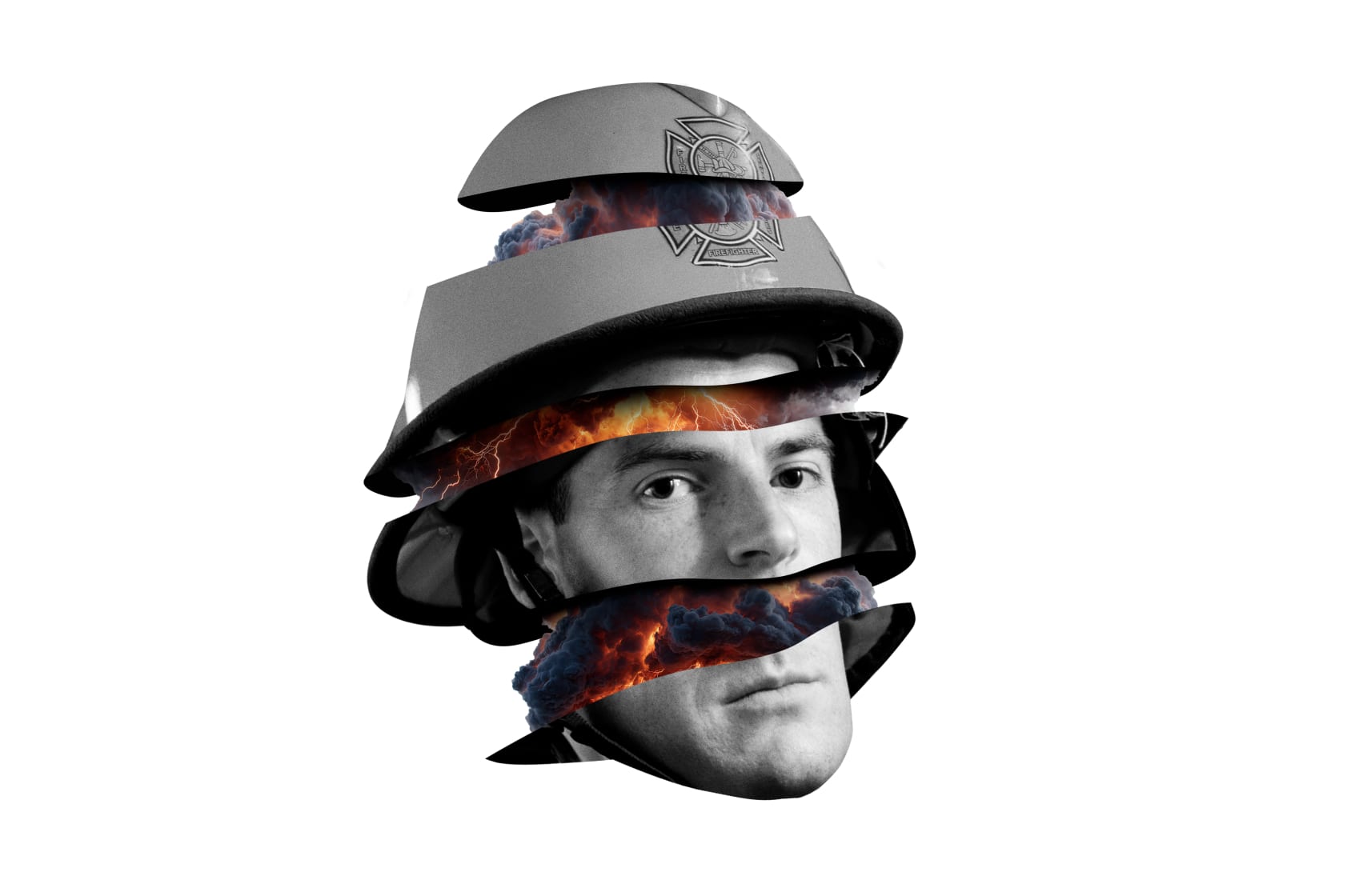

There’s certainly something to be said for striving for excellence at work – especially in a line of work where mediocre effort or performance could mean a tragic outcome.
No wonder the ethos of firefighting highlights integrity and responsibility. It’s why, as a rookie, you get hammered to pay attention to detail, study nonstop, anticipate problems and be unfailingly squared away. It’s why you spend hours in the gym.
Whether civilian or military firefighting, the platinum rule remains "semper paratus" (always ready) because when the priority of readiness prevails, safety entails.
But there’s a catch… you might end up doing a faceplant.
Think about it: when you’re trying hard to force yourself to sleep, you can’t easily fall into dreamland, but when you loosen the pressure to get those craved ZZZs, off you go. It’s the same story when your kid is a novice soccer player and seems to kick directly to the goalie instead of the open space between the posts.
Hell, the same concept applies to sexual intimacy … the harder you try, the harder you fall (forgive the double entendre and irony).
Letting go of a desire in order for it to be fulfilled doesn’t mean that you sit back and wait for things to turn out just as you wanted. You still need to be the agent of change to keep evolving. When it comes to wanting the presence of something good (like money, acknowledgment or attention) or wanting the absence of something bad, focusing fiercely on it can have the opposite effect to the one you intended.
Being perpetually ready for the next challenge or emergency can keep you farther from the here and now, the state that mainstream gurus describe as "woosah": a state of calm, relief and absence of anticipated chaos.
Being in constant go mode makes it a struggle to be at ease. Whether it is FOMO or your body’s fight against its own parasympathetic “turn down” nervous system, it can simply be uncomfortable to get comfortable.
If that’s not tough enough, you are also up against the law of reversed effort, or the “backward law.” In other words, the more you pursue, the less you obtain. The tighter we squeeze, the more likely we are to snuff out the result. It’s a kind of psychological finger trap. And if it seems like a paradox, that’s because it is.
The more coin-operated a person becomes, the more they chase that coveted reward in the hope of reaching the pinnacle. But, as we’ve all learned over the years, the pursuit of happiness does not lead to happiness and what we seek is sometimes obscured by our search.
It is important to recognize that happiness and satisfaction are not the same thing. Happiness is a state of temporary bliss after we attain something, but satisfaction is a longer-term sense of contentment. Here’s the connection: Satisfaction cannot exist when desire is present.
Many feel most content when they have very little around them. Don’t believe it? Ask anyone who spends time camping in the great outdoors. There is something about living a spartan life – being without – that causes us to feel… well, just more. Something about being without causes us to feel like we have more.
In an operational firefighting setting, one mitigation technique is the act of doing nothing. For example, in the hazmat realm, not mitigating is mitigation when it means minimizing secondary or tertiary danger and damage. In other words, doing nothing is doing something.
Visualize a fuel truck on fire. Hitting it with water could slosh fuel on the ground and create a running fuel fire. Simply letting it burn off contaminates avoids the destruction of the ground and surrounding area.
Likewise, a magnesium flare from an industrial facility would need an Olympic-size pool to extinguish it, so it makes more sense to let it burn hot and ruin the road at most. And electric-vehicle and electric storage-system fires? Yeah, those too.
All in all, to achieve professional fulfillment and personal satisfaction, it’s important to balance the immaterial (what you need) with the material (what you want). It’s clear the more you try either to get hold of or get rid of something – especially those things that cause anxiety, frustration, sorrow, or boredom – the less likely it is that you'll succeed.
Whether it’s insomnia, anticipatory anxiety, fear of locking up, or being alienated by co-workers, the effect is the same. The stronger our desire, the greater our feelings of inadequacy and deprivation, which only serve to interfere with reaching our goals.
So you’ve got the idea now … be invested and engaged, but dial back the intensity
and lower the threshold so your sabotaging preoccupation with the chase subsides. Enter contentment.