
What elite athletes figured out about sleep — and what it means for how long we last in this job
“I feel like I’ve lost my mojo.”
A buddy of mine said that to me about a year into researching firefighter sleep. And it stopped me cold.
This guy is athletic. Well-liked at the bureau. Known as a kick-ass firefighter — the kind of guy other people on shift want next to them on a bad call. Two years at a busy station, and he sat there and told me he felt like he was losing his ability to perform the way he used to.
Turns out, it wasn’t a discipline problem. It wasn’t a willpower problem.
It was a science problem — and it turns out elite athletes already know exactly how to solve it.
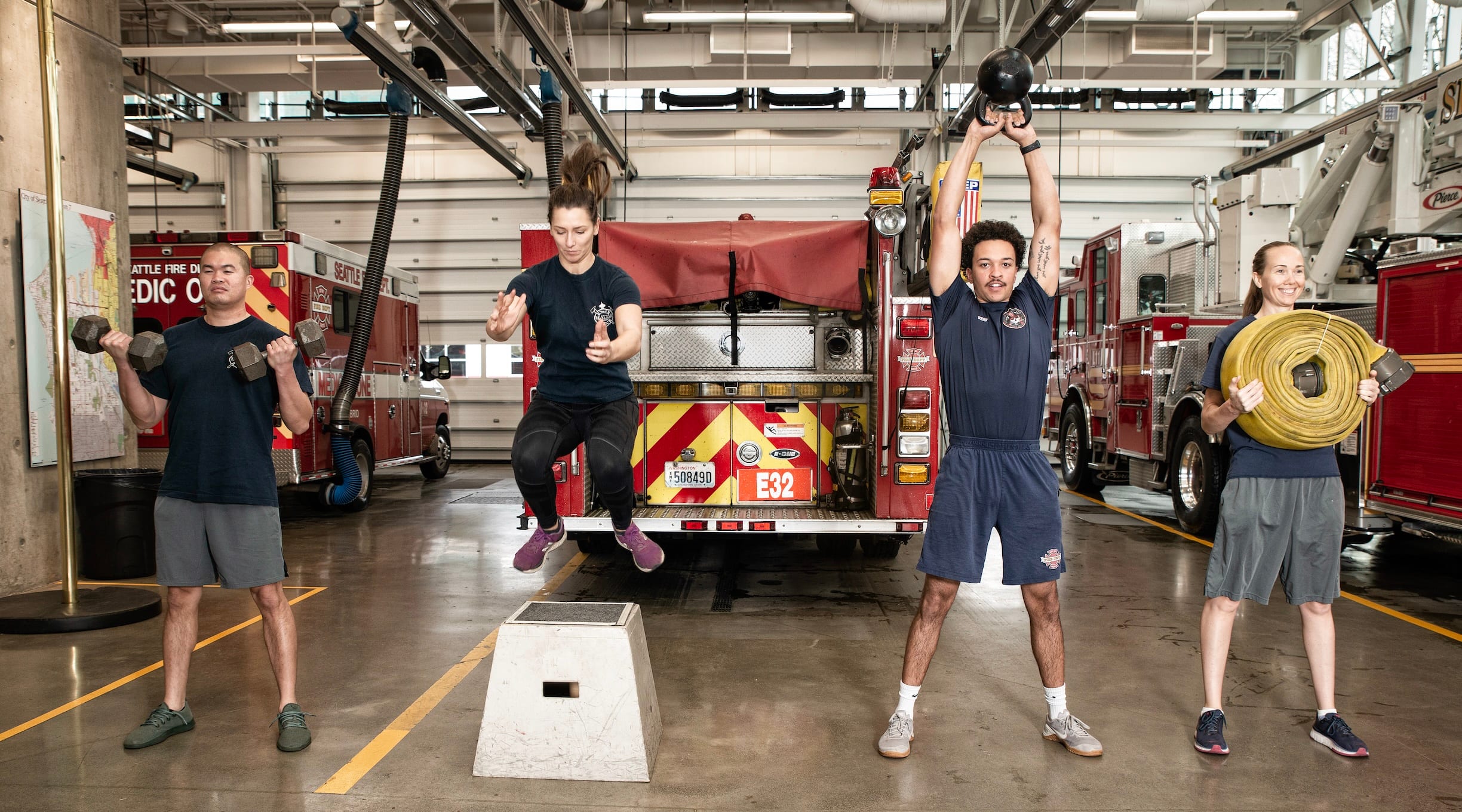
Think about what it actually takes to force a door — full gear, SCBA on your back, working against resistance in heat and zero visibility, usually hours into being awake. That’s not just a fireground skill. That’s the same neuromuscular demand as a linebacker driving through a line, or a wrestler breaking a hold. Aerobic capacity. Anaerobic power. Grip strength. Reaction time. Cognitive sharpness under load, at 3 a.m., on command.
Peer-reviewed research actually classifies firefighters as tactical athletes. Not a motivational label — a physiological one. Our demands have been measured and compared to competitive sport, and the science confirms what our bodies already know: this job is athletic. It demands athletic preparation.
Here’s the part elite sport figured out decades ago that we still haven’t caught up to:
Sleep isn’t where performance gets recovered. It’s where performance gets built.
LeBron sleeps 12 hours a day. Federer does, too. Brady’s in bed at 8:30 p.m. to protect nine hours minimum. Usain Bolt — the fastest human being to ever run a race — said it plainly: sleep is what lets his training actually get absorbed by his body. These aren’t soft men prioritizing comfort. They’re the most physically dominant performers in the history of their sports, and they treat sleep as a non-negotiable training variable, the same way they treat conditioning, nutrition, and film study.
We already train like athletes in almost every other way. We condition our bodies, refine our technique, and show up ready to perform on demand. Sleep is the one variable we’ve been treating like it just happens to us between shifts, instead of something we actively train.
We can close that gap, and closing it is more straightforward than most firefighters realize. Here’s how it works.
What Sleep Deprivation Is Actually Doing to Your Body
This isn’t about feeling tired. It’s about measurable, documented degradation of the exact capacities this job demands.
A systematic review covering 1,591 firefighters across 15 studies found poor sleep consistently produced worse cognitive function and worse overall health — across the board (Adams et al., 2021). Reaction time. Situational awareness. Decision-making under pressure. All of it degrades as sleep debt stacks up.
A 2023 case series in the peer-reviewed journal Cureus tracked cortisol in firefighters across 72-hour shifts and found chronic sleep deprivation elevated cortisol while suppressing testosterone and growth hormone (Sundberg and Millis, 2023). That’s the same hormonal combination driving cardiovascular disease, obesity, hypertension, and metabolic syndrome. Seventy percent of U.S. firefighters are currently overweight or obese. That’s not a discipline problem. That’s a recovery deficit.
The door force suffers. The overhaul suffers. The 3 a.m. medical call where you need a clear head suffers. We train obsessively for the moment the tones drop — then show up to that moment already running on empty.
What the Best Athletes in the World Do Differently
Elite sport didn’t stumble into this. It got there through data, and it changed everything about how they train.
Researchers at Poznan University of Medical Sciences reviewed the physiological and molecular mechanisms behind athletic sleep performance and confirmed what performance coaches have built entire programs around: sleep drives tissue repair, training adaptation, and injury prevention (Kaczmarek et al., 2025). Cut sleep short, and muscular strength drops, power output falls, endurance declines, cognitive sharpness fades.
A 2025 meta-analysis found aerobic endurance and anaerobic power are the metrics most vulnerable to sleep loss, and named the mechanism: adenosine builds up in the brain during extended wakefulness and makes physical effort feel harder — measurably, neurologically harder (Kong et al., 2025). That held true in non-athletes, too.
That last part matters most for us. The adenosine slowing a linebacker’s first step off the line is the same mechanism working against your grip, your drive, your read of the fire on hour 19 of a shift.
Sleep scientist Matthew Walker — who works directly with elite athletic organizations — has called sleep “probably the greatest legal performance-enhancing drug that few athletes are abusing enough.” The best programs in professional sport now track sleep the way they track training load and nutrition. It’s not adjacent to the performance model. It is the performance model.
Why the Frame Matters as Much as the Science
This job has taught me something significant: give a firefighter the right information in the wrong frame, and it doesn’t matter how true it is. It won’t land.
Wellness messaging in the fire service has a ceiling. We’ve all sat through it — a presentation gets made, information gets shared, and largely nothing changes. Not because the information is wrong. Because “take care of yourself” doesn’t move anybody in a house full of people who signed up to run into other people’s worst days.
A 2025 analysis in Homeland Security Affairs backs this up directly, documenting how traditional wellness programs, on their own, have consistently failed to address the firefighter health crisis, and calling for a performance-based framework as the alternative (Register, 2025). The distinction isn’t cosmetic. Wellness framing asks a firefighter to take care of himself or herself. Performance framing tells them that sleep is what makes the door force possible at 2:13 a.m. of a working fire. What separates a sharp midnight call from a bad one. Sleep is the variable that the best performers alive protect on purpose, because they know exactly what it costs when they don’t.
That argument lands somewhere entirely different. That’s the argument Tactical Sleep Rescue is built on.
An Intro to How This Looks Practically
The athletic sleep model isn’t complicated. What makes it work is intentionality — treating sleep with the same deliberateness we already bring to conditioning.
Consistency above all. Get in bed at the same time every night (if at all possible). Wake up at the same time within a 90-minute window. On or off off-shift, this practice regulates your internal clock and measurably improves sleep quality. Elite athletes protect this across time zones and travel. We can protect it across a 24.
Strategic napping is a maximization tool, not laziness. Most NBA players nap on game days. A planned rest period on shift isn’t slacking — it’s the same recovery strategy elite performers have used for decades.
The sleep environment is part of the training. Temperature, light, and your pre-sleep routine all shape sleep architecture and how well you actually recover. Elite programs engineer these variables deliberately. So can we.
Track recovery like you track output. If you’re measuring your fitness, measure your recovery input, too. Wearable sleep monitoring is already standard in athletic performance programs. We just haven’t made it standard here.
Find training resources to level up. Tactical Sleep Rescue, First Responder Sleep Recovery, and SixtyTwoRomeo were built as sleep performance programs for career firefighters to level up their sleep and recovery. These programs were built specifically for firefighters from the foundations of athletic and military sleep systems.
We respond to the worst moments in other people’s lives. That demands a level of physical and cognitive readiness that can’t be faked or pushed through on willpower alone. The athletes who last longest at the top of their sport already know this — they don’t leave their recovery to chance.
Neither should we. We’re tactical athletes. The research says so. The demands of the job say so. It’s time our recovery model reflected that.
The best athletes in the world don’t leave this to chance. Neither should we. Train it like you train everything else that keeps you alive.
Photo by Steve Baer | FireDog Photos