Being a firefighter, you already know your job demands more than just muscle and grit.
You operate in one of the most physically punishing and mentally intense professions in the world. Every time you respond to a call, you’re making split-second decisions under extreme conditions, decisions that can mean the difference between life and death (Smith, 2019). That kind of performance doesn’t happen by accident. It’s built, maintained, and protected by how well you take care of yourself when you’re off the clock.
Self-care isn’t just about feeling good, it’s your first line of defense against fatigue, burnout, and mistakes. Think of it as your personal plan for readiness. Just like you wouldn’t head into a fire without checking your gear, you shouldn’t head into a shift without checking on yourself. Three critical building blocks are sleep, proper nutrition, and hydration – these form the foundation for peak performance.
Sleep: Your Reset Button
Sleep is often the first thing that gets sacrificed, especially for a firefighter’s schedule. Long shifts, mandatory overtimes, and family obligations may make it feel impossible to get rest and feel caught up on sleep. But here is the reality: sleep isn’t optional; it’s a vital component of these building blocks. Research shows that sleep deprivation can slow reaction time, impair memory, and increase risk-taking behaviors (Kilgore, 2010).
Quality sleep allows your brain to reset, your muscles to recover, and your decision-making capabilities to sharpen. When your life is on the line, these are skills you surely want to have.
Here’s how to make the most out of your sleep:
- Prioritize sleep whenever possible: If you have a window between shifts, prioritize it. Try to schedule pockets of rest when you have time to spare
- Control your sleep environment: Keep your bedroom cool, dark, and quiet. Blackout curtains and using white noise can improve overall sleep quality (Irish et al., 2015). Minimize use of technology and screens before you begin your sleep routine
- Use naps strategically: Studies show even a 20-minute nap can restore alertness and boost cognitive performance (Brooks & Lack, 2006)
Nutrition: Fuel for the Fight
Fighting fires is a full-body job. You need endurance for long calls and shifts, strength for hauling gear, and mental clarity for split-second decisions under pressure. This requires a steady supply of quality fuel.
It’s not just about how or when you eat, it’s also about what you put into your body that makes a difference. “Convenience eating,” like fast food, vending machine-style snacks, or sugary energy drinks may help in the moment, but in the long term, these foods can spike your energy levels and cause you to crash, leaving you feeling sluggish and unfocused (Harvard T. H Chan of Public Health, 2020).
Food doesn’t have to be complicated:
- Eat balanced meals: Incorporating protein, complex carbohydrates, and healthy fats can keep your energy steady and help with sustained attention, and mental clarity (U.S. Department of Agriculture [USDA], 2020)
- Plan for the shift: Have meals handy for grab-and-go situations, and plan meals ahead of time with colleagues to decrease consuming foods considered “junk foods”
Watch caffeine time and intake: Coffee can enhance alertness, but too much late in the shift can interfere with post-shift sleep (Clark & Landolt, 2017)
Hydration: The Hidden Lifeline
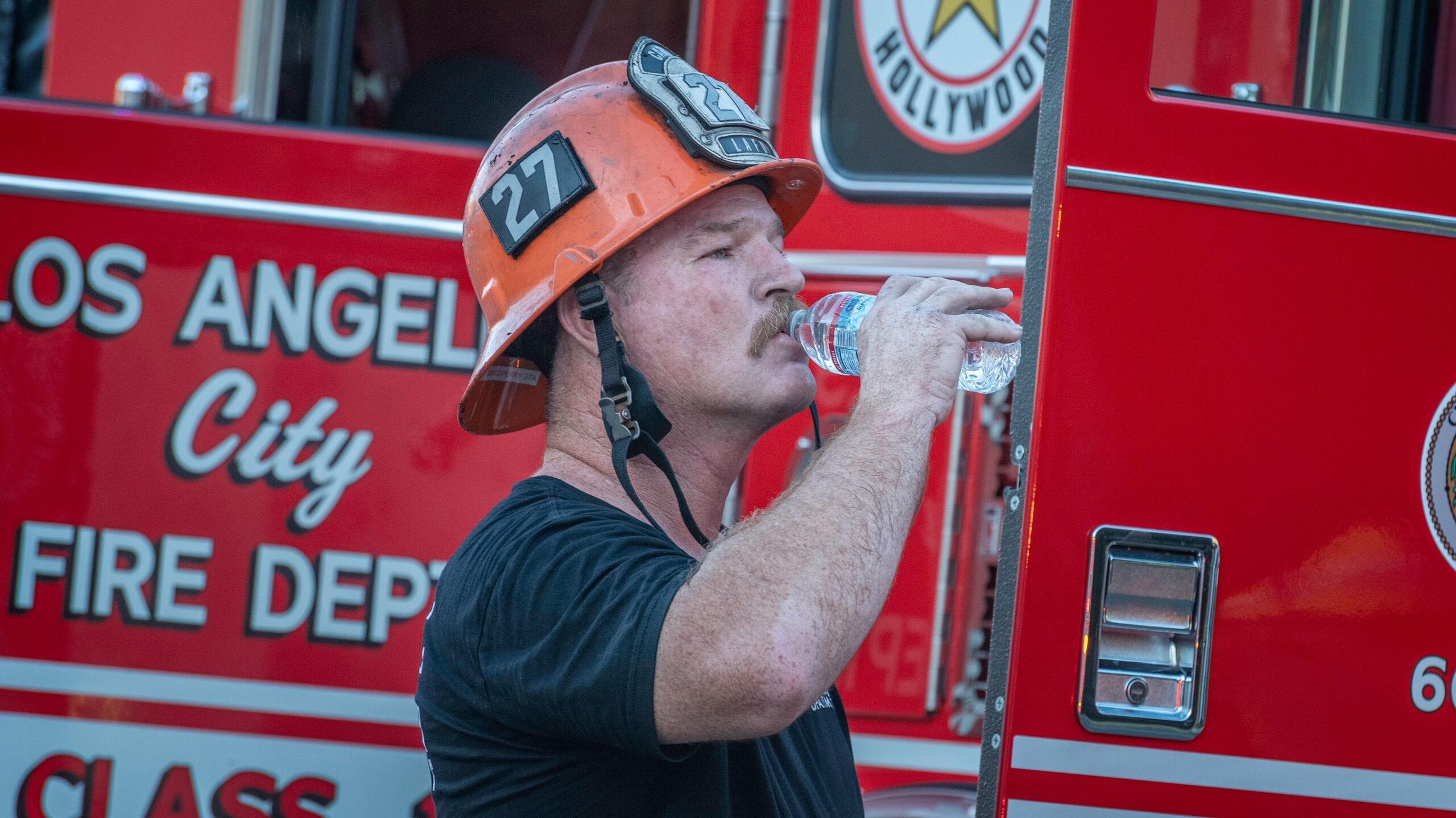
Firefighting is hot work – literally. Heavy PPE, high heat, and intense exertion cause rapid fluid loss. Even mild dehydration can affect your ability to think clearly and move effectively.
Research shows that losing just 2% of your body water can impair reaction time and cloud judgment (Mohamed et al., 2024). During a call, that could mean slower rescues, poor decision-making, or dangerous mistakes.
Here’s how to stay ahead of dehydration:
- Drink water regularly: Don’t wait until you’re thirsty – by then, you’re already behind (Sawka et al., 2005)
- Pre-hydrate before calls: If you know a big training or shift is coming, increase your water intake ahead of time
Putting Them Together
Sleep, nutrition, and hydration don’t work in isolation, they form a cycle that either builds you up or wears you down. When all three are in sync, you create a powerful baseline. You recover faster, think more clearly, and have more energy to push through challenges (American College of Sports Medicine, 2021).
On the flip side, neglecting them can be detrimental. Poor sleep leads to poor food choices, which can lead to dehydration, which worsens sleep, and so on (Chaput et al., 2016). Over time, this increases your risk of injury, burnout, and long-term health issues.
By treating self-care as part of your tactical readiness plan, you’re not just doing yourself a favor, you’re protecting your squad, your family, and those around you. A healthy firefighter is a safer firefighter, and safety is everyone’s priority.
Actionable Steps You Can Start Today
You don’t need to overhaul your life overnight. Start small, pick one area, and build from there.
- Tonight: Aim for one extra hour of sleep. If that’s not possible, schedule a short nap tomorrow.
- Tomorrow: Pack two healthy snacks for your shift instead of relying on the vending machine or station.
- During your next call: Keep a water bottle nearby and make it a habit of sipping between activities.
- Next week: Track your hydration, sleep, and nutrition for several days to see where you can improve.
These steps may seem small, but over time they’ll add up to noticeable changes in your energy, focus, and endurance.
Brendan Guarino, PsyD, is a licensed psychologist, co-author of The Embers That Burn and the Marks They Leave Behind: The Intersection of Psychology & the Fire Service*, and director of Guardians for Guardians at Baker Street Health, a mental health program supporting first responders and their families. In addition to his clinical work, Dr. Guarino serves as an assistant professor in the Doctor of Counseling Psychology (PsyD) program at Felician University in Lodi, N.J.*
References
American College of Sports Medicine. (2021). ACSM’s guidelines for exercise testing and prescription (11th ed.). Wolters Kluwer.
Brooks, A., & Lack, L. (2006). A brief afternoon nap following nocturnal sleep restriction: Which nap duration is most recuperative? Sleep, 29(6), 831–840.
Chaput, J. P., et al. (2016). Short sleep duration is associated with inadequate hydration: Cross-cultural evidence from U.S. and Chinese adults. Sleep, 39(5), 1675–1683.
Clark, I., & Landolt, H. P. (2017). Coffee, caffeine, and sleep: A systematic review of epidemiological studies and randomized controlled trials. Sleep Medicine Reviews, 31, 70–78.
Harvard T.H. Chan School of Public Health. (2020). Carbohydrates and blood sugar.
Irish, L. A., et al. (2015). The role of sleep hygiene in promoting public health: A review of empirical evidence. Sleep Medicine Reviews, 22, 23–36.
Killgore, W. D. S. (2010). Effects of sleep deprivation on cognition. Progress in Brain Research, 185, 105–129.
Mohamed, M., et al. (2024). Effect of dehydration on cognitive performance and reaction time.
Journal of Advanced Medical and Pharmaceutical Sciences, 7(2), 157–162.
Sawka, M. N., et al. (2005). Human water needs. Nutrition Reviews, 63(6), S30–S39.
Smith, D. L. (2019). Firefighter fitness: Improving performance and reducing injury risk.
Current Sports Medicine Reports, 18(6), 215–222.
U.S. Department of Agriculture. (2020). Dietary guidelines for Americans 2020–2025.